


More news on this day
An interim peace roadmap involving the United States, Iran and regional actors is beginning to shift expectations for travel in the Middle East, with analysts pointing to early signs of recovery in air connectivity and tourism demand even as security warnings and route disruptions continue across key corridors.
Get the latest news straight to your inbox!
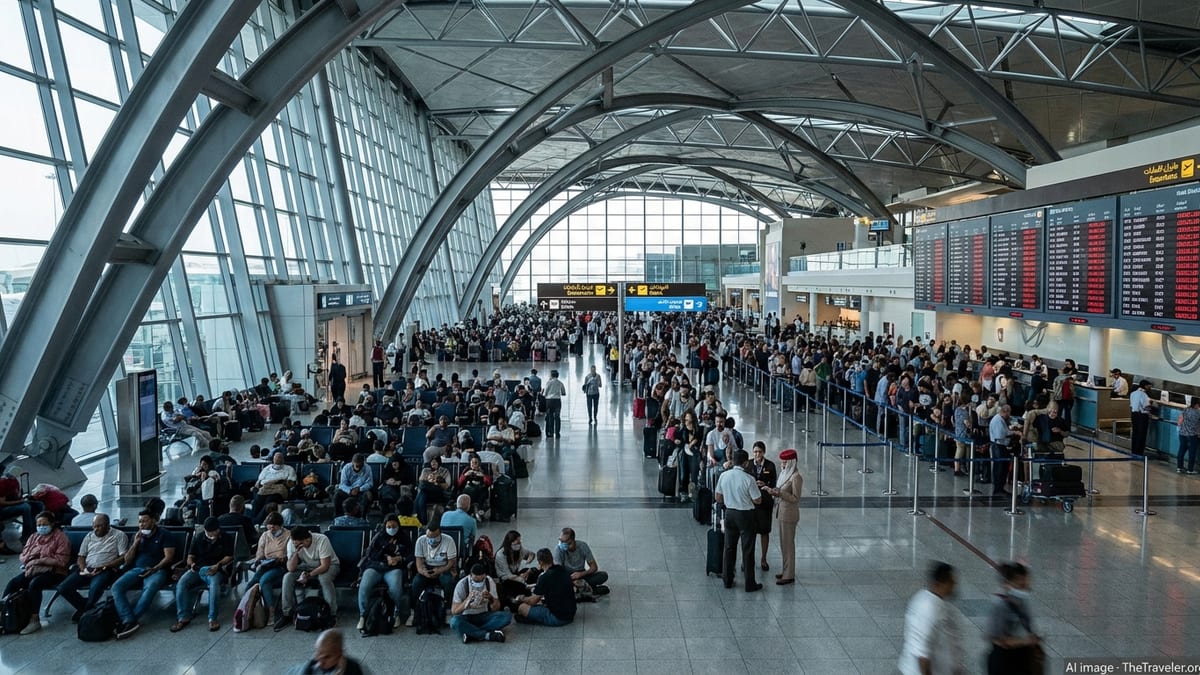
A peace roadmap in a region still on edge
After months of conflict that closed airspace, triggered naval blockades and stranded thousands of travelers, a series of ceasefires and an emerging roadmap toward a broader peace deal have started to change the outlook for movement across the Middle East. Recent coverage of talks in Switzerland describes negotiations aimed at turning temporary truces into a more durable agreement and reopening critical chokepoints such as the Strait of Hormuz, a key artery for both passenger and cargo traffic.
The discussions follow earlier temporary ceasefires in the Iran war and on the Israel–Lebanon front, which had already allowed some air routes and maritime lanes to reopen on a limited basis. Security briefings tracking the region note that as of mid‑June many Gulf airspaces, including Saudi Arabia, Qatar and the United Arab Emirates, are technically open again, even if airlines and governments remain cautious about routing decisions.
Analysts emphasize that the process is still fluid, with reports of sporadic strikes and delays to diplomatic timetables. For travelers, that means the peace moves are reducing the likelihood of sudden, large‑scale shutdowns, but have not eliminated the risk of localized flare‑ups that could affect specific routes or destinations with little warning.
Before the conflict, the Middle East was on track for one of the fastest tourism rebounds worldwide, driven by megaprojects in Saudi Arabia, new attractions in the Gulf and a surge in stopover traffic through regional hubs. Industry research published this year suggests the war erased hundreds of millions of dollars in daily visitor spending at the height of the crisis, underlining how much hangs on whether the current diplomatic momentum hardens into a lasting settlement.
Airspace, flight routes and overflight risk
The clearest impact of the tentative peace has been on airspace closures and overflight restrictions. During the peak of the conflict, large portions of Iranian, Iraqi and Lebanese airspace were effectively off‑limits to many carriers, forcing long detours for flights between Europe and Asia and sharply reducing transit traffic through the Gulf. Aviation safety advisories from European regulators now indicate that while the overall risk has decreased since the latest agreement, operators are still urged to avoid or treat with caution the skies above Iran, Iraq and Lebanon, and to exercise care across a broader belt that includes Bahrain, Kuwait, Israel, Jordan, Qatar, Oman, Saudi Arabia and the United Arab Emirates.
Strategy papers from aviation consultancies describe how the conflict had already diverted millions of passengers away from traditional Middle Eastern hubs over the past year. With ceasefires in place and a roadmap under discussion, some of that traffic is beginning to return, particularly on routes into and out of the Gulf where carriers are reinstating frequencies that were cut earlier in 2026. Yet the same reports caution that a meaningful recovery in connecting traffic will depend on airlines’ confidence that restrictions will not suddenly snap back.
For travelers, this translates into a patchwork of options. Nonstop flights into major Gulf cities are once again widely available, but itineraries that rely on overflying Iran or transiting points close to active front lines may still see schedule changes, longer flight times or equipment swaps. Travel planners recommend building in extra connection time and remaining flexible on routings, especially for long‑haul journeys between Europe and Asia that historically passed through the region.
Industry observers also point to the psychological effect of risk maps that still show clusters of advisories across parts of the Middle East. Even when flights are operating normally, lingering warnings can depress bookings or push travelers to choose routes that feel more predictable, delaying the full restoration of pre‑war connectivity.
Tourism markets weighing opportunity against caution
Beyond aviation, the prospective peace deal is reshaping expectations for tourism flows across the region. Economic analyses from international travel bodies earlier this year estimated that the Iran war and its spillover had been costing Middle Eastern destinations hundreds of millions of dollars a day in lost visitor spending, prompting governments to roll out support packages for hotels, attractions and tour operators.
As diplomats move closer to a framework that could cap or end the conflict, some of the hardest‑hit destinations are already positioning for a rebound. Tourism boards in Gulf states have resumed international campaigns that were scaled back during the height of hostilities, betting that a sustained reduction in risk will encourage travelers to resume city breaks, desert trips and cruise itineraries in and around the Arabian Gulf.
At the same time, researchers studying the impact of geopolitical shocks on tourism warn that recovery is rarely uniform. Academic work on conflict and travel patterns highlights a contagion effect in which safety concerns spill over to neighboring countries, even when those states are not directly involved in fighting. In practice, that can mean slower demand returning to areas closer to past front lines, while more distant or historically neutral destinations in the wider region absorb redirected visitors.
Booking data cited in recent industry briefings suggest that some travelers who might once have chosen holidays in the eastern Mediterranean or the Gulf have shifted plans to southern Europe, North Africa or other long‑haul markets. Whether a final peace deal reverses that trend will depend not only on security conditions but also on how quickly marketing campaigns, air capacity and travel trade partnerships can be rebuilt.
Insurance, traveler sentiment and corporate risk policies
Another area where the emerging peace deal is beginning to register is in travel insurance, corporate duty‑of‑care policies and individual traveler sentiment. During the most volatile weeks of the conflict, many insurers either raised premiums for trips involving the Middle East or carved out exclusions for events linked to war and civil unrest, narrowing protection for customers. Large companies introduced blanket restrictions on business travel to affected countries, or required senior sign‑off for any exceptions.
With ceasefires holding in more areas and a roadmap for a broader agreement under discussion, risk specialists report a gradual shift in tone. Some corporate travel departments have moved from outright bans to case‑by‑case approvals for trips to Gulf business hubs, relying on regular security assessments and local ground partners. Insurers are reassessing specific exclusions, particularly for destinations far from prior combat zones but still grouped into the same regional risk categories.
Surveys conducted this spring by travel research firms indicate that leisure travelers remain cautious but are not uniformly deterred. Respondents often distinguish between metropolitan centers viewed as highly managed and secure, such as certain Gulf capitals, and destinations perceived as closer to potential flashpoints. The interim peace deal and the prospect of a more durable settlement appear to be nudging some undecided travelers toward booking, especially those with previous positive experiences in the region.
Nevertheless, experts in risk and tourism law stress that advisory levels from foreign ministries and multilateral bodies currently remain elevated for several countries, and these notices strongly influence insurance coverage and corporate decision‑making. Even under a peace framework, it is likely that advisories will be downgraded only in stages as monitoring organizations gain confidence that security improvements are lasting.
What travelers should watch as the deal progresses
While the details of a final peace agreement are still in negotiation, several concrete developments are likely to matter most for travelers and the industry. One is the status of key maritime and air corridors, especially the Strait of Hormuz and neighboring airspace. Announcements confirming that these chokepoints will remain open under internationally monitored arrangements would remove a major source of uncertainty for airlines, cruise operators and logistics companies.
Another is the timeline and scope of any revisions to government travel advisories. Historically, these have lagged behind events on the ground, but a coordinated easing by multiple major source markets would send a powerful signal to both travelers and insurers that the region is entering a more stable phase. Analysts are also watching for large carriers to restore suspended routes or launch new services, often a leading indicator of confidence in a destination’s safety and commercial prospects.
On the ground, investors and developers are closely tracking whether flagship tourism projects in Saudi Arabia, the United Arab Emirates, Qatar and elsewhere proceed at their original pace. Reports of new hotel transactions and continued construction on resort complexes suggest that long‑term bets on the region’s appeal remain intact, even after the shock of the recent war.
For now, travel specialists describe the Middle East as sitting between crisis and renewal. The interim peace moves have reduced immediate disruption and opened the door to a gradual normalization of cross‑border movement. Whether that progression continues will depend on diplomatic follow‑through and the absence of fresh escalations, factors that will determine if today’s fragile opening for travel becomes the foundation of a more durable era of tourism growth.