


Renting a car can turn a smooth trip into a stressful one the moment a damage waiver or liability add-on flashes onto the screen at 35 dollars a day. Bonzah positions itself as an alternative to those high counter prices, offering primary rental car protection you buy online before you travel. Understanding how it actually works in the real world is key to deciding whether it fits your next road trip, work trip, or overseas adventure.
Get the latest updates straight to your inbox!
What Bonzah Is and Where It Fits in Your Travel Plans
Bonzah is a standalone rental car insurance provider that lets you purchase coverage online instead of buying expensive waivers directly from the rental company. In practical terms, this means that when you show up at a counter in places like Los Angeles International Airport or Orlando, you can decline the rental company’s collision damage waiver and some liability extras because you already have an independent policy in place. Travelers typically buy Bonzah coverage for trips within the United States, and in some cases for rentals in Canada, depending on the specific product and state rules at the time of booking.
Unlike traditional auto insurance, Bonzah is designed specifically for temporary rentals and car share vehicles. It is often used by travelers who either do not own a car back home and therefore have no personal auto policy, or who want to avoid making a claim on their own insurance after a fender bender in a rental. For example, a New York City resident who relies on the subway and rents cars only for weekend getaways might use Bonzah to get both damage and liability coverage without having to buy a full personal auto policy.
Bonzah also appeals to frequent travelers who are wary of rental desk pricing. It is common to see damage waivers quoted at 25 to 40 dollars per day at major brands in the United States. Bonzah’s pricing generally undercuts that, with third party research often finding daily costs in the low double digits for primary damage coverage, and higher but still competitive rates for combined damage and liability protection, depending on coverage and state. Exact prices vary by itinerary, dates, and coverage selections.
Because Bonzah is not tied to a single rental brand, its policies are compatible with most well known rental companies as long as they are properly licensed. Travelers commonly use Bonzah with rentals from companies such as Hertz, Avis, Budget, Alamo, National, and Enterprise, as well as with certain peer to peer platforms and car share providers, when those vehicles meet policy eligibility rules.
Core Coverage: How Bonzah Handles Damage to the Rental Car
The heart of Bonzah’s product is its collision damage coverage, which protects the rental car itself if it is damaged in an accident with another vehicle. Current product information shows that Bonzah typically covers up to around 35,000 dollars in collision damage per incident on eligible vehicles. There is usually a deductible on this portion of the policy, commonly about 1,000 dollars, which is the amount you would be responsible for before the insurance responds to the rest of the loss.
Consider a real world example. You rent a mid size sedan in Phoenix for a week at 55 dollars per day. At the counter, the agent offers a collision damage waiver at 32 dollars per day, which would add roughly 224 dollars before taxes. Instead, you purchased Bonzah collision damage coverage in advance at around 12 dollars per day. On day three, another driver rear ends you at a traffic light, crumpling the trunk and bumper. The rental company estimates repairs at 6,500 dollars and intends to charge that amount plus loss of use fees to your credit card. With Bonzah in place, you would file a claim with Bonzah, pay your deductible if applicable, and have the insurer reimburse the rental company’s bill up to the policy limit, instead of having your personal auto insurer or your credit card bear that cost first.
It is important to note that Bonzah’s standard collision coverage does not behave like a blanket “no questions asked” waiver. Coverage is designed for damage from a collision with another vehicle. Policies may exclude issues such as mechanical breakdown due to misuse, damage from off road driving, single vehicle crashes, or certain high value or specialty vehicles. For instance, current Bonzah information specifies that some luxury models, such as Corvettes or any BMW models, are excluded. If you plan to rent a performance car for a weekend in Las Vegas, you will want to read the fine print carefully to confirm eligibility.
Another practical detail is that Bonzah’s collision coverage is primary in many cases. This means it is intended to respond before your personal auto policy or credit card rental coverage. For a Colorado driver with a mid range SUV insured at home, this can be significant. A crash in a Denver rental that triggers a claim under a personal auto policy might lead to a premium increase at renewal. If Bonzah pays first, it can help you avoid putting that claim on your long term record, although outcomes can vary by insurer and situation.
Liability, Personal Accident, and Belongings: What Else Bonzah Can Cover
Beyond collision damage to the rental car, Bonzah also offers liability products that address injuries and property damage you might cause to other people. Its Renter’s Contingent Liability Insurance typically provides at least the minimum state required liability limits in the United States. This can be particularly important for travelers who do not have a personal auto policy at home. For them, the Renter’s Contingent Liability policy can operate as their main liability protection while driving the rental.
On top of this base, Bonzah sells supplemental liability insurance that boosts the overall liability limits, often into the hundreds of thousands of dollars or higher, subject to state rules. As of mid 2026, Bonzah materials describe supplemental liability options that can reach total aggregate limits up to around 1 million dollars in the United States and Canada for covered rentals. In a practical scenario, if you accidentally rear end a luxury SUV in Dallas and injure its passengers, hospital bills and vehicle repairs could easily exceed a state minimum liability limit. Supplemental liability coverage helps shield your own assets by stepping in above that minimum amount.
Bonzah also offers optional personal accident and personal effects coverage. Personal accident coverage can contribute to medical expenses for you and your passengers if you are injured in a covered accident. Personal effects coverage can reimburse you up to a modest limit if your baggage or certain personal items are damaged or stolen from the rental car. For example, if you are on a family trip to Yellowstone, park at a scenic turnout, and return to find a window smashed and your suitcase missing, personal effects coverage could help replace clothing and travel documents up to the policy maximum, though high value electronics typically have limited or no coverage.
Travelers often stack these options based on their existing protections. A business traveler from Chicago whose employer provides strong medical coverage might be less concerned about personal accident insurance but very interested in higher liability limits, especially when driving in dense areas such as Los Angeles. A backpacker with a basic health plan but many low cost belongings may instead opt for personal accident coverage while relying on a separate travel insurance policy for baggage protection.
Buying Bonzah: Step by Step From Quote to Rental Counter
Purchasing Bonzah typically happens online before your trip, often right after you have booked your flights and car rental. You start by entering the pickup and drop off locations, dates, and times, along with your residency and destination. The system then returns pricing for collision damage coverage and, in many cases, separate or bundled options for liability, personal accident, and personal effects. Some states and countries are not eligible for certain coverages, so you may see different options if you are renting in California compared with renting in Florida or Canada.
Imagine you are planning a ten day road trip from Seattle to the Oregon coast in August. Your compact rental from a major brand is priced at 45 dollars per day, and the company quotes a bundled damage waiver and liability package at 34 dollars per day, which would add about 340 dollars plus taxes. When you check Bonzah, you might see collision coverage quoted in the low teens per day and a combined package with supplemental liability in the mid to high teens or low twenties, depending on current pricing and your state. Even assuming a total of about 220 dollars for a robust Bonzah package over ten days, you could still be saving over 100 dollars versus buying at the counter, while also keeping claims off your primary auto policy.
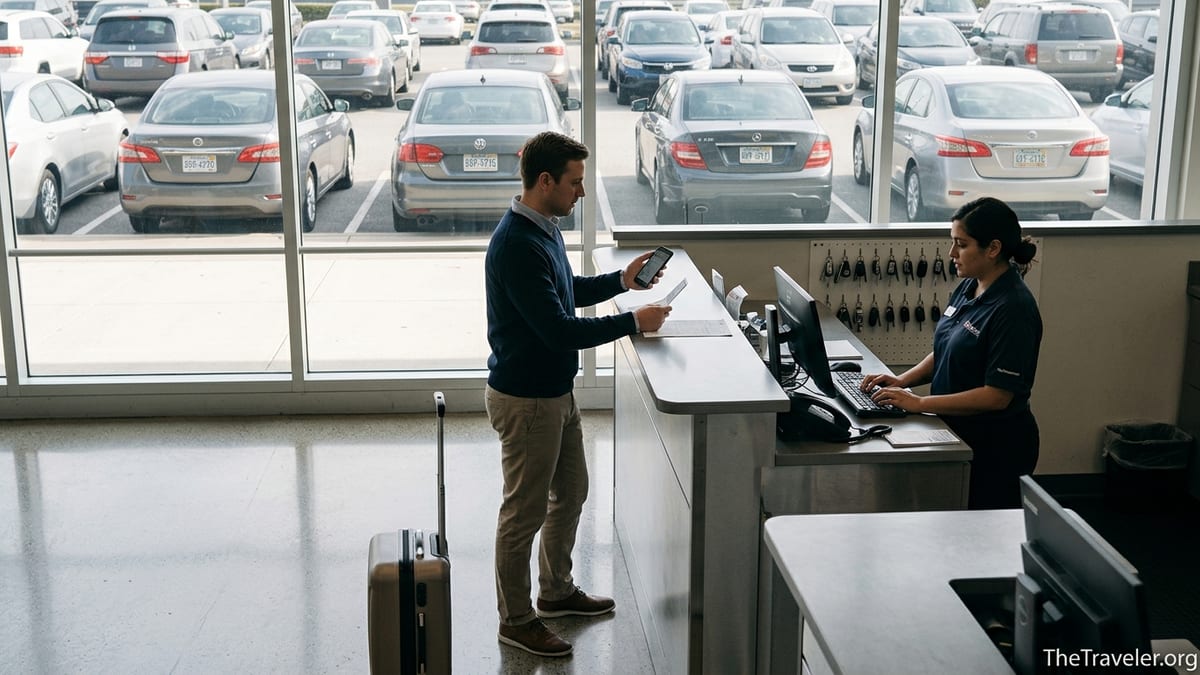
Once you purchase the coverage, Bonzah provides a confirmation and policy documents by email. It is wise to save a copy to your phone and print a spare sheet to carry with your driver’s license. At the rental counter, when the agent offers you the company’s collision damage waiver or liability add ons, you can confidently decline those you do not need and mention that you already carry independent coverage. Some agents may still try to upsell or warn you that outside policies are hard to claim on, so having your Bonzah policy details handy helps you stand your ground and confirm you are protected according to your own research and comfort level.
An additional practical detail is timing. Bonzah coverage usually must be purchased before your rental period begins, not after you drive off the lot. Policies are often structured in 24 hour increments starting from your scheduled pickup time. If you rent from noon on September 1 to noon on September 5, you need coverage for four days. Returning the car significantly late could require an extra day of coverage, so it is worth buying a little buffer if you foresee heavy traffic at drop off locations such as Miami International Airport or San Francisco.
How Claims Work in Real Life After an Accident
Understanding the claims process is essential to assessing how Bonzah fits into your risk planning. If you are involved in an accident, your first steps mirror what you would do in any collision. Ensure everyone is safe, call emergency services if needed, exchange information with other drivers, and document the scene with photos and notes. Then, contact the rental company to report the damage and follow its instructions, which may include filling out an incident report or returning to a nearby branch.
Next, you would notify Bonzah and initiate a claim. In practice, this often means completing an online claim form or contacting a designated claims administrator listed in your policy documents. You will generally be asked to supply the rental agreement, police report if one exists, photos of the damage, invoices from the rental company, and proof of payment if the rental company has already charged your credit card. For example, if a side scrape in a parking garage in Atlanta results in a 2,400 dollar repair bill plus 10 days of loss of use charges, you would send Bonzah the itemized statement and supporting documents so the insurer can evaluate and reimburse eligible costs.
Because Bonzah is typically primary for collision damage, its claims process tends to avoid the added coordination sometimes required when relying on secondary credit card benefits. With secondary card coverage, you might first need to file with your personal auto insurer, obtain a decision, then coordinate remaining payments with the card’s insurance provider. By contrast, travelers using Bonzah often deal directly with the Bonzah claims administrator, which can shorten the overall timeline in straightforward cases. However, complex accidents involving disputed liability, injuries, or multiple vehicles can still take weeks or months to resolve, regardless of the insurer.
Travelers who have used Bonzah in the past frequently highlight the importance of keeping all rental documents and correspondence from the moment of pickup. A missing inspection report or unsigned incident form can slow down a claim. Before leaving the rental lot anywhere from Boston to Honolulu, photograph the car from all angles, including close ups of any pre existing scratches, and confirm that those are noted on the rental company’s paperwork. This helps protect you if the rental company later attributes old damage to your contract, and it gives Bonzah stronger evidence should a dispute arise.
Key Limitations, Exclusions, and State Specific Rules
No rental car insurance product is without limitations, and Bonzah is no exception. One of the most important practical limits is where coverage is available. Bonzah’s current materials indicate that certain products are not available for rentals originating in specific U.S. states, such as New York, Michigan, or Pennsylvania, and they may not be offered for rentals that start in Canada. Policy terms can change, so it is critical to check current availability when you quote. If you are a New York resident flying to Los Angeles to rent a car, for instance, you may encounter special rules about whether separate liability or damage policies can be purchased and how they coordinate with your home state’s insurance laws.
Another key limitation concerns the type of vehicle you rent. Coverage is typically restricted to standard private passenger vehicles that seat eight or fewer people. Large passenger vans, cargo vans, box trucks, motorcycles, and many specialty or exotic vehicles are commonly excluded. Bonzah’s current guidelines also exclude some makes and models outright, including vehicles such as Corvettes and all BMW models. A traveler planning a group ski trip in Colorado in a 12 passenger van or someone renting a luxury convertible on the Pacific Coast Highway might find that Bonzah cannot be used for those specific vehicles.
There are also usage exclusions. Bonzah does not insure vehicles that are used for rideshare, delivery, or other commercial transport services. If you intend to rent a car in Miami and drive for a rideshare platform for a few hours to offset costs, that would fall outside standard Bonzah coverage. Similarly, off road use, racing, or driving under the influence are not covered and can void your policy. Any serious violation of the rental agreement itself, such as letting an unauthorized driver take the wheel, can also jeopardize coverage.
Finally, every state has its own insurance regulations that affect how liability products like Renter’s Contingent Liability Insurance and supplemental liability coverage are structured. For instance, state minimum liability limits in California differ from those in Texas or Florida. Bonzah’s policies are designed to meet or exceed those minimums where offered, but coverage amounts and legal details vary. Before relying on Bonzah as your sole source of liability protection for a high risk road trip, such as a winter drive through the Rockies or a long interstate journey with family, review your policy schedule and ask the company’s customer support team for clarification about how limits apply in your destination.
Comparing Bonzah With Rental Desk, Credit Card, and Travel Insurance Options
To decide whether Bonzah makes sense for your trip, you need to compare it to other common sources of coverage. The default option at most counters is the rental company’s own collision damage waiver and liability packages. As a real example, a major brand at Denver International Airport might quote 30 dollars per day for collision damage coverage and 15 dollars per day for supplemental liability, turning a 60 dollar base rental into a 105 dollar per day bill before taxes. Over a seven day ski trip, that could add more than 300 dollars to your costs. Bonzah’s bundled damage and liability product, priced in the teens or low twenties per day in many scenarios, can frequently undercut that by a wide margin while keeping coverage roughly comparable for everyday accidents.
Credit card benefits are another alternative. Several popular travel credit cards, including some premium products, offer rental car damage waiver coverage at no additional cost when you pay for the rental entirely with that card. However, those benefits often provide only collision and theft protection for the rental vehicle, not liability coverage for injuries or damage you cause to others. They may also be secondary in the United States, meaning they pay only after your personal auto policy. For a traveler from Atlanta who owns a car, a credit card with secondary rental coverage might still leave their personal insurer handling the claim first, with potential premium consequences.
Bonzah’s advantage over many credit cards lies in its primary collision coverage and its ability to offer separate liability options. A traveler from Boston who does not own a car and rents vehicles for a few weekend trips and a two week summer vacation may have no personal auto policy at all. In that case, relying solely on a credit card’s damage waiver leaves a significant liability gap. Bonzah’s Renter’s Contingent Liability Insurance and supplemental liability coverage can fill that gap, so the traveler has both damage and liability protection without buying high priced coverage at the rental desk.
Finally, some travelers hold comprehensive travel insurance policies that include rental car protection as a rider. These can be attractive if you want trip cancellation, medical evacuation, and baggage coverage in one package. However, not every travel insurer offers robust rental car options, and many are structured as reimbursement coverage with specific geographic limits and maximum rental durations. Cross checking those limitations against Bonzah’s more focused rental products gives you a clearer picture of which combination offers the best value and peace of mind for your specific itinerary.
The Takeaway
Bonzah aims to give travelers more control over rental car protection, especially in markets where rental counter prices for damage and liability coverage can be steep. With primary collision coverage up to tens of thousands of dollars for eligible vehicles, optional liability add ons that can reach into seven figures in coverage, and extras such as personal accident and personal effects protection, it can offer a coherent alternative to piecing together coverage from multiple sources.
In real world terms, Bonzah tends to appeal most to travelers who do not own a car, those who want to preserve a clean personal auto claims history, and anyone facing particularly high insurance prices at popular U.S. rental locations. Buying coverage online in advance, carrying your policy documents, and clearly declining redundant coverage at the counter can streamline your rental experience while keeping costs predictable.
However, Bonzah is not a universal solution. State specific restrictions, vehicle exclusions, usage limits, and the focus on collision with other vehicles all narrow the scenarios where it works best. Travelers still need to review their personal auto policy, credit card benefits, and any existing travel insurance before deciding how Bonzah fits into their protection strategy.
If you invest a bit of time before your trip to map out your existing coverages and compare Bonzah’s current offerings to rental counter prices and credit card perks, you can choose the combination that matches your budget and risk tolerance. When that planning is done well, you are far more likely to enjoy the open road, whether that is a Pacific Coast drive, a Florida beach hop, or a national park loop, with confidence that you know exactly how your rental car protection will work if something goes wrong.
FAQ
Q1. Does Bonzah replace the rental company’s collision damage waiver?
In many cases, yes. Bonzah’s primary collision coverage is designed to stand in for the rental company’s own damage waiver on eligible vehicles, so you can often decline the waiver at the counter. You must confirm that your specific rental and destination are covered under your policy before relying on it.
Q2. Is Bonzah coverage available in every U.S. state?
No. Bonzah’s product availability varies by state. Certain products may not be offered for rentals that originate in states like New York, Michigan, or Pennsylvania, and some coverages may not be available for rentals starting in Canada. Always check current eligibility when getting a quote.
Q3. How much damage coverage does Bonzah typically provide for the rental car?
Current Bonzah materials indicate that standard collision coverage usually offers up to around 35,000 dollars in protection per accident on eligible vehicles, subject to a deductible. Exact limits and terms are shown in your policy schedule when you purchase.
Q4. Does Bonzah include liability coverage for injuries or damage I cause to others?
Bonzah sells separate liability products, including Renter’s Contingent Liability Insurance and supplemental liability coverage, which can provide state minimum liability limits and higher aggregate limits. These are distinct from the collision coverage for the rental car itself and must be purchased specifically if you need liability protection.
Q5. Can I use Bonzah if I do not have personal auto insurance at home?
Often yes, and that is one of the main use cases. Travelers without personal auto insurance can use Bonzah’s collision and liability options, where available, to create a protection package for rental trips. You must make sure the liability limits are adequate for your needs and that your state and rental location are eligible.
Q6. How does Bonzah compare on price with rental desk insurance?
Rental company damage waivers and liability packages frequently cost between about 20 and 40 dollars per day each in U.S. markets, while Bonzah’s daily rates for collision and bundled coverage are often in the low to mid teens or twenties, depending on coverage and state. Actual savings are trip specific, so comparing quotes for your dates and destination is essential.
Q7. What types of vehicles are excluded from Bonzah coverage?
Bonzah typically covers standard private passenger vehicles that seat eight or fewer people. Exclusions often include large vans, trucks, motorcycles, many commercial vehicles, and certain high value or luxury models such as Corvettes and BMWs. Check the list of eligible and excluded vehicles in your policy documents.
Q8. Does Bonzah cover peer to peer car sharing platforms?
In many cases, yes. Bonzah has offered coverage for certain car share and peer to peer rentals, provided the vehicle and use meet policy criteria. Availability can change, and some platforms have their own mandatory insurance, so verify that Bonzah is compatible with your specific car share booking before purchase.
Q9. How long can a single Bonzah policy cover a rental?
Bonzah policies are usually sold in daily increments and may have maximum rental durations, often around 30 days for a single policy. Travelers planning longer road trips sometimes structure multiple consecutive policies or combine other insurance solutions, but you need to confirm current duration limits when you quote.
Q10. What should I do at the scene of an accident when I am covered by Bonzah?
Follow standard safety steps first: check for injuries, call emergency services if needed, and move to a safe location if possible. Then document the scene with photos, exchange information with other drivers, report the incident to the rental company, and contact Bonzah or its claims administrator using the details in your policy. Keep all paperwork and receipts to support your claim.