


If you live in Germany and are planning a holiday, semester abroad, cruise or long-haul trip, two names will appear again and again when you search for travel insurance: TravelSecure and ERGO. Both are established German providers with a wide portfolio of policies, frequent top ratings from consumer magazines and strong brand recognition. Yet their products, target groups and pricing can feel confusingly similar. This guide unpacks the real-world differences, using concrete examples and current product details so you can decide which insurer is the better fit for your next trip.
Get the latest updates straight to your inbox!
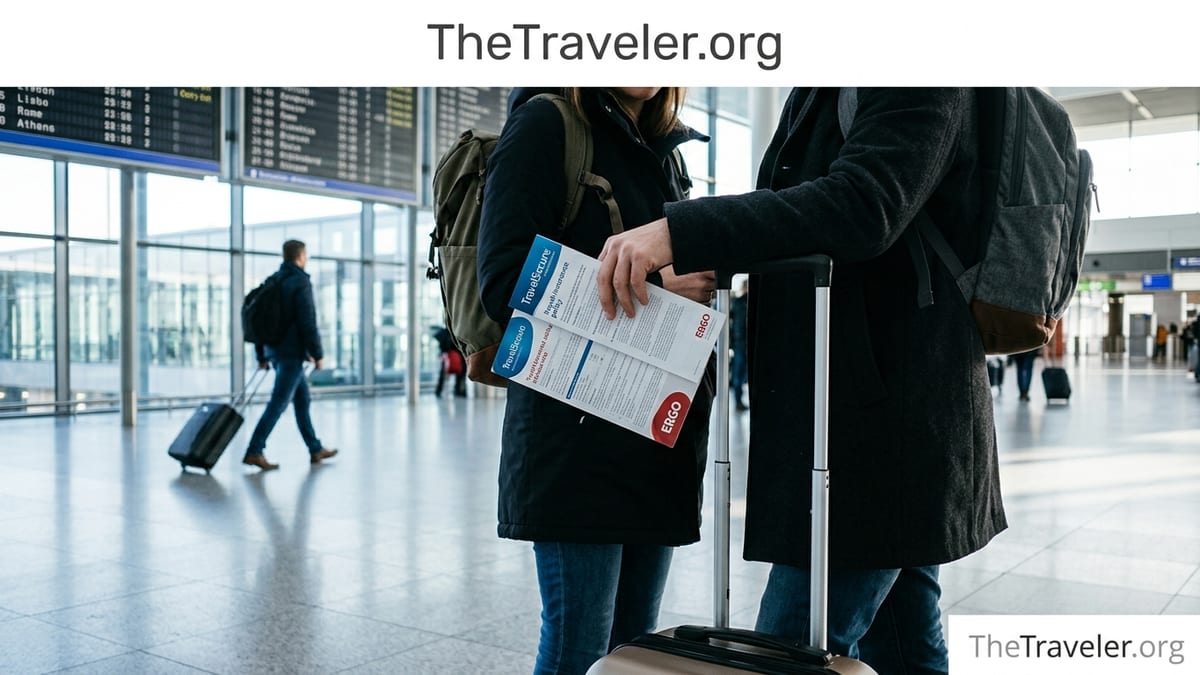
Who Are TravelSecure and ERGO, and How Do They Differ?
TravelSecure is the travel insurance brand of Würzburger Versicherungs-AG, a smaller specialist insurer based in Bavaria. It focuses almost entirely on travel products: trip cancellation and interruption, annual multi-trip packages, travel medical, policies for language students, au pairs and work-and-travel stays, plus special add-ons like mountain and trekking cover. The brand has won multiple top ratings from Stiftung Warentest’s Finanztest for its trip cancellation and travel medical tariffs, including very strong scores in recent test rounds for 2024 and 2025, which has driven a lot of word-of-mouth among frequent travelers in Germany.
ERGO Reiseversicherung is part of the ERGO Group, one of Germany’s largest insurance groups and owned by Munich Re. ERGO’s travel arm grew out of the former Europäische Reiseversicherung and today positions itself as a broad “one-stop shop” for travel protection. Its product line covers classic stand-alone policies like reiserücktritt (trip cancellation) and Auslandskrankenversicherung (travel health), but also bundled “RundumSorglos” packages that combine medical, cancellation, baggage and assistance into a single contract. ERGO’s size means it has a very visible presence at German travel agencies and with airline partners, as well as an English-language interface that appeals to many expatriates living in Germany.
In practical terms, the difference is not so much in basic reliability as in focus. TravelSecure behaves like a lean specialist that aims to win comparative tests with sharp coverage at competitive prices, especially for private holidaymakers and younger long-stay travelers. ERGO behaves more like a full-service giant, with a dense range of product variants and the ability to insure everything from a quick city break to complex corporate trips, cruises and long-term stays abroad. Understanding this strategic focus is the first step toward choosing the right insurer for your situation.
Both companies are subject to German insurance regulation and must meet strict solvency and consumer protection standards. For a typical leisure traveler booking a summer holiday from Germany, the key question is therefore less about “safety” of the insurer and more about how well the specific tariff design matches the trip you are planning.
Key Product Types Compared: What You Actually Buy
When people compare TravelSecure and ERGO, they are rarely comparing the whole companies. They are usually looking at a specific product type, such as “trip cancellation for a 1,500 euro package holiday” or “annual travel medical for worldwide trips.” It is useful to look at how the two brands structure their main categories.
For trip cancellation and trip interruption, TravelSecure offers clear tariff levels often labelled along the lines of Grundschutz and Topschutz. Grundschutz typically covers classic reasons such as unexpected serious illness, accident, job loss, or death of a close relative, and includes cancellation costs before departure. Topschutz usually adds stronger trip interruption coverage and slightly wider triggers. TravelSecure is particularly well known for sharp pricing here: for a 1,000 euro package holiday for a couple in their 30s, a one-trip cancellation plus interruption policy might cost in the middle double-digit euro range, with competitive premiums even for annual multi-trip variants.
ERGO sells trip cancellation in two ways. There is a stand-alone Reiserücktrittsversicherung with optional Reiseabbruch cover, and there are bundled products like the RundumSorglos-Reiseversicherung, which includes cancellation, interruption, travel medical and baggage in one annual package. For example, ERGO advertises a RundumSorglos annual family policy for trips up to around 2,000 euros per trip starting at roughly a low three-digit annual premium for a family under 40, while a simple annual cancellation package for a single person with a 1,000 euro insured trip value begins roughly around the low two-digit yearly mark. The exact price depends heavily on age, trip value and whether you accept a deductible.
For travel medical coverage, TravelSecure sells separate Auslandskrankenversicherung tariffs for short-term trips and longer stays, including specialized variants for students, au pairs and work-and-travel participants. These often cover medically necessary treatment abroad, worldwide emergency care and medically necessary repatriation. TravelSecure also markets a dedicated trekking and mountain sports policy that focuses on rescue and recovery in alpine terrain, something of interest if you spend weekends in the Alps or plan a trekking trip in Nepal or South America.
ERGO offers several travel medical options as well. A standard annual travel medical plan for short trips abroad starts at a low two-digit euro amount per year for a person under 65, with worldwide protection and coverage for medically necessary treatment and medically sensible repatriation. For long stays of up to 12 months, ERGO lists specific long-term Auslandskrankenversicherung tariffs that cover extended stays abroad, with monthly premiums from around the higher two-digit range depending on age and coverage level. The line-up is broad enough that German statutory health insurers and some airlines partner with ERGO for their recommended travel cover.
Price and Value: Concrete Examples for Typical Trips
To understand where TravelSecure or ERGO might be better value, it helps to think in real numbers. Consider Anna and Lukas, a couple in their early 30s living in Munich, planning a 1,800 euro package holiday to Greece in July. They want protection against cancellation and early return, but their European Health Insurance Card already gives them a basic medical safety net in the EU, so travel medical is less urgent. For this pair, TravelSecure’s trip cancellation plus interruption package is often aggressively priced, especially if they only insure this one trip and accept a small deductible. A TravelSecure Grundschutz or Topschutz policy for such a trip is likely to cost somewhere from the mid to higher double-digit euro range, keeping the premium proportion of the trip price modest.
Now imagine a family of four in Hamburg who travel several times a year: a skiing week in Austria, a summer beach holiday in Spain and at least one long weekend in Italy. Their annual total of prepaid travel easily exceeds 4,000 euros, and they want a “set-and-forget” solution that covers trip cancellation, early return, baggage and medical for every trip in the year. ERGO’s RundumSorglos annual family policy becomes attractive because it bundles all major elements. ERGO itself advertises an example premium of a little over 100 euros per year for a young family with trips up to around 2,000 euros in value per journey, which can be good value compared with booking separate single-trip policies multiple times per year.
In a third scenario, picture Julia, a 24-year-old from Cologne heading to Canada and the United States for a nine-month work-and-travel adventure. Her biggest risk is not trip cancellation but serious illness or accident abroad, which could generate hospital bills in North America worth tens of thousands of euros. Here, TravelSecure’s long-stay products for work-and-travel and young people can be compelling, as they explicitly target that market segment with tariffs that combine extended medical coverage with rescue and sometimes liability components. At the same time, ERGO’s long-term travel medical insurance, with coverage up to 12 months, is also designed for exactly this kind of trip, and may be easier to manage if she already uses ERGO for other insurance lines and wants an all-in-one brand.
On a pure price basis, TravelSecure often comes out ahead for single-trip cancellation policies and specialized youth and student tariffs, especially when tested by consumer organizations. ERGO can deliver better perceived value when you factor in bundled services, 24-hour hotlines, existing customer benefits and integration with package holiday bookings. The smart move is to compute premiums for your exact trip parameters on both websites and compare side by side, since a few euros either way can easily shift the balance.
Coverage Details That Matter in Real Life
Focusing only on price is tempting, but the way coverage is defined can make a much bigger difference in an actual claim than whether a policy costs 10 euros more or less. Both TravelSecure and ERGO offer cancellation for classic reasons such as unexpected serious illness, significant accident, pregnancy complications and death of a close relative. Both also typically include coverage if you are made redundant for economic reasons, called to court at short notice or experience significant property damage at home shortly before departure.
One important nuance is how broadly each insurer defines “serious illness” and whether existing conditions are included. For instance, if you have a known chronic back problem and suffer a flare-up just before a long-haul flight, whether that is seen as an insured event can depend on how stable your condition was before booking and what your doctor certifies. TravelSecure’s and ERGO’s detailed terms of conditions both include clauses about pre-existing diseases and what counts as an “unforeseen” deterioration. Travelers with complex medical histories should read these sections carefully and, if necessary, call the hotline to clarify.
In travel medical coverage, both brands include outpatient and inpatient treatment abroad, medicines, pain-relieving dental treatment and medically sensible repatriation to Germany. A concrete example helps: suppose you break your leg while skiing in Canada. Under a TravelSecure or ERGO travel medical policy, you can expect coverage of ambulance transport to the hospital, X-rays, surgery and hospitalization, often as a private patient, as well as organization and cost of medically sensible transport back to Germany if required. Without travel medical insurance, you would rely on your home health insurance, which often does not fully reimburse treatment outside the EU, leaving you potentially with a five-figure bill.
Rescue and recovery in alpine settings is another real-world topic. TravelSecure’s trekking and mountain sports add-ons explicitly mention coverage of helicopter rescue and mountain search operations, which can cost thousands of euros even in Austria or Switzerland. ERGO’s travel medical and accident-related assistance services generally also include search, rescue and recovery up to certain limits, though the exact cap might differ between tariffs. For someone who spends winter weekends off-piste in Tyrol, those details matter more than whether a policy has a slightly higher cancellation cap.
Cancellations or interruptions linked to pandemics and contagious diseases are now a standard concern since the coronavirus pandemic. Both TravelSecure and ERGO have adjusted their tariffs in recent years so that an unexpected serious illness due to something like Covid-19 is normally treated as an insured event for cancellation or interruption. However, trips to countries with active travel warnings or border closures may be excluded, and fear of travel without diagnosed illness is generally not insured. When booking during uncertain times, it is worth checking how each brand currently handles officially declared epidemics and government travel warnings for your destination.
Service, Claims Handling and User Experience
Service quality is harder to quantify than coverage limits, but it plays a crucial role once something actually goes wrong. ERGO’s scale means it operates a large 24-hour assistance center with multilingual staff, which can be a comfort if you have to call from a hospital in Thailand at 3 a.m. and would rather communicate in English or German. Many large tour operators in Germany also partner with ERGO, so if you book a package holiday via a travel agency or a big online portal, you may often find ERGO’s cancellation or RundumSorglos policies offered at checkout with integrated documentation and easier claim reporting.
TravelSecure, being smaller and more specialized, relies heavily on its digital platform and email communication. Policies can be arranged quickly online, and documents are usually delivered by email within minutes. For many straightforward medical or cancellation claims, you can submit scans or photos of invoices electronically. Travelers who value speed and low friction over personal in-branch service often appreciate this leaner approach, particularly younger customers booking via comparison sites.
In anecdotal reports, both providers receive a mix of positive and negative reviews, as is normal in the insurance sector. Customers tend to praise quick reimbursement when documentation is complete and complaint handling when misunderstandings occur. The more critical reviews often revolve around rejected claims where the reason for cancellation did not meet the policy’s exact wording, or deadlines were missed for reporting. This pattern is similar across both brands and highlights a key point for travelers: reading and following the insurer’s instructions for immediate notice and required documents is just as important as choosing the “best” brand.
For English-speaking expatriates in Germany, ERGO’s advantage is that policy documents and customer interfaces are more often available in English, particularly for travel medical insurance sold through airline or embassy channels. TravelSecure does also provide English information on some pages and products, but it is historically more German-centric. If you are not fully comfortable with German legal wording but plan to live and travel from Germany for a few years, this language factor may tilt you toward ERGO even if a TravelSecure tariff looks marginally cheaper.
Which Insurer Fits Which Traveler Profile?
Different traveler types have different priorities, and this is where the comparison between TravelSecure and ERGO becomes more concrete. For price-sensitive families, TravelSecure’s tested top tariffs in trip cancellation and annual multi-trip packages are often attractive when booked as stand-alone products. Suppose a family from Stuttgart plans a single expensive long-haul holiday to Mauritius worth 5,000 euros. A TravelSecure Topschutz cancellation and interruption policy specifically for that trip could work out slightly cheaper than a comparable ERGO one-trip policy, particularly when booked early and with a deductible. For families who only take one big trip a year, that difference can matter.
Frequent city-break travelers, on the other hand, might prefer ERGO’s annual RundumSorglos pack. Take a couple in Berlin who take six or seven short trips across Europe each year, sometimes booking flights and hotels separately. An annual ERGO package that quietly covers all their trips, from cancellation to medical to baggage, can save them from having to think about each booking individually. They may pay a bit more upfront than the cheapest niche alternative, but the convenience of all-in-one cover can outweigh the marginal cost.
Students, au pairs and work-and-travel participants form another distinct group. A 19-year-old from Frankfurt taking a gap year as an au pair in Ireland or a 23-year-old heading to Australia on a working holiday visa need insurance that not only covers emergencies but also satisfies visa conditions in destination countries. TravelSecure has built a strong reputation in this space with targeted youth and education tariffs that often combine extended medical coverage, early return, and sometimes liability cover tailored to stays of several months up to a few years. ERGO’s long-term travel medical and youth-oriented products can offer similar protection, but TravelSecure’s specialist reputation and competitive pricing often make it a first stop for young Germans planning such trips.
For older travelers, especially those over 65, ERGO’s wide corporate infrastructure and more nuanced age-based tariffs can be a plus, even if premiums are naturally higher. A retired couple from Düsseldorf planning a world cruise around South America might find that ERGO’s cruise-optimized cancellation and medical packages, sometimes offered directly via the cruise operator, give them confidence that itinerary changes and complex emergencies will be handled smoothly. TravelSecure also insures older travelers, but age limits and premiums differ, so anyone in this group should explicitly configure quotes for their exact age and medical situation before deciding.
The Takeaway
TravelSecure and ERGO are both strong options for travelers starting from Germany, but they shine for slightly different reasons. TravelSecure positions itself as a specialist with sharp, test-winning tariffs in core areas like trip cancellation, trip interruption and travel medical, especially for private holidaymakers and younger long-stay travelers such as students and work-and-travel participants. Its strengths are clear product structures and often very competitive prices for single-trip and annual policies.
ERGO, by contrast, is the heavyweight generalist with a broad product catalog, strong bundled packages like the RundumSorglos annual cover and a well-developed international assistance network. It tends to be particularly attractive for frequent travelers who value an all-in-one annual solution, families wanting one contract to cover every holiday in a year, and older travelers booking complex itineraries or cruises through travel agencies that already work closely with ERGO.
In practice, the “better” choice comes down to your trip pattern, age, tolerance for deductibles and need for specialized coverage. For a single, pricey holiday where cancellation risk is your main concern, TravelSecure may hold the edge on value. For a year filled with multiple trips where you want cancellation, medical, baggage and assistance under one umbrella with 24-hour support, an ERGO annual package can be compelling. Whatever you choose, take the time to read the coverage triggers and exclusions, align the insured sum with your real trip cost and keep your insurer’s emergency number handy. That combination matters far more in a crisis than the brand printed on your policy document.
FAQ
Q1. Is TravelSecure or ERGO better for a single expensive holiday?
For one high-value trip where your main concern is cancellation and interruption, TravelSecure often offers very competitive stand-alone policies, especially if you are under about 65 and accept a deductible. ERGO can be similar in price but tends to stand out more with bundled packages, which may be less necessary if you are not traveling frequently.
Q2. Which company is better for frequent travelers who take several trips a year?
If you take several trips per year, ERGO’s annual RundumSorglos packages are designed to cover cancellation, interruption, travel medical and baggage across all trips, which many frequent travelers find convenient. TravelSecure also has annual products, but ERGO’s integrated approach and partnerships with airlines and tour operators can make it particularly appealing when you travel often.
Q3. I am a student going abroad for a semester. Should I choose TravelSecure or ERGO?
Students and young people on semesters abroad or work-and-travel programs often gravitate to TravelSecure because of its specialized youth and education tariffs and strong reputation in this segment. ERGO also offers long-term travel medical options, so it is worth getting quotes from both, but TravelSecure’s focus on these scenarios means it is often on a short list for students.
Q4. Are pre-existing medical conditions covered by TravelSecure and ERGO?
Both insurers typically cover unforeseen serious worsening of existing conditions, but they do not usually cover predictable treatment for stable chronic illnesses. The exact wording and requirements for medical certificates differ by tariff, so travelers with significant pre-existing conditions should read product conditions carefully and, if in doubt, contact the insurer before buying.
Q5. Do TravelSecure and ERGO cover Covid-19 or other contagious diseases?
Both providers generally treat an unexpected serious illness from something like Covid-19 as a valid reason for cancellation or interruption, and travel medical policies cover treatment as they would for other acute illnesses. However, trips to destinations under official travel warnings or cancellations purely due to fear of infection are usually not covered, so you should check the latest conditions for your chosen tariff.
Q6. Which insurer is better if I need documents and support in English?
ERGO often has an edge for English-language documentation and assistance, particularly for travel medical contracts sold through international partners. While TravelSecure does offer some English-language information, its core focus remains German-speaking customers, so expatriates in Germany who prefer English may find ERGO more comfortable.
Q7. Is TravelSecure cheaper than ERGO in general?
There is no universal answer, but TravelSecure is frequently aggressive on price for single-trip cancellation and certain annual tariffs, which is why it performs well in consumer tests. ERGO may be slightly more expensive in some direct comparisons but offers broader bundled packages and strong service infrastructure, which can justify the difference for some travelers.
Q8. How do I decide on the right insured sum for trip cancellation?
You should match the insured sum to the non-refundable cost of your trip, including flights, accommodation and prepaid tours. If your holiday costs 2,000 euros in total per person, you should not choose a tariff capped at 1,000 euros per person, regardless of whether you buy from TravelSecure or ERGO, because that would leave you underinsured.
Q9. Are rescue and mountain search costs covered by these insurers?
Both TravelSecure and ERGO offer tariffs that cover search, rescue and recovery after accidents, but coverage limits and conditions vary. TravelSecure’s dedicated trekking and mountain sports options are particularly explicit about helicopter and mountain rescue, while ERGO includes such costs within certain travel medical and assistance modules, so checking the exact limits is important if you spend time in alpine or remote regions.
Q10. Can I buy TravelSecure or ERGO travel insurance if I do not live in Germany?
Most travel insurance tariffs from both brands require that you have your primary residence and regular health insurance in Germany, because they are designed for people traveling from Germany to other countries. Non-residents typically need to look for travel insurers based in their own country of residence or choose international providers that explicitly accept foreign residents.