


More news on this day
Flight schools and airlines are rapidly reshaping how pilots learn, turning to virtual reality, tablet-based simulators and data-driven training platforms to expand capacity and cut costs while trying to preserve hard-won human judgment in the cockpit.
Get the latest news straight to your inbox!
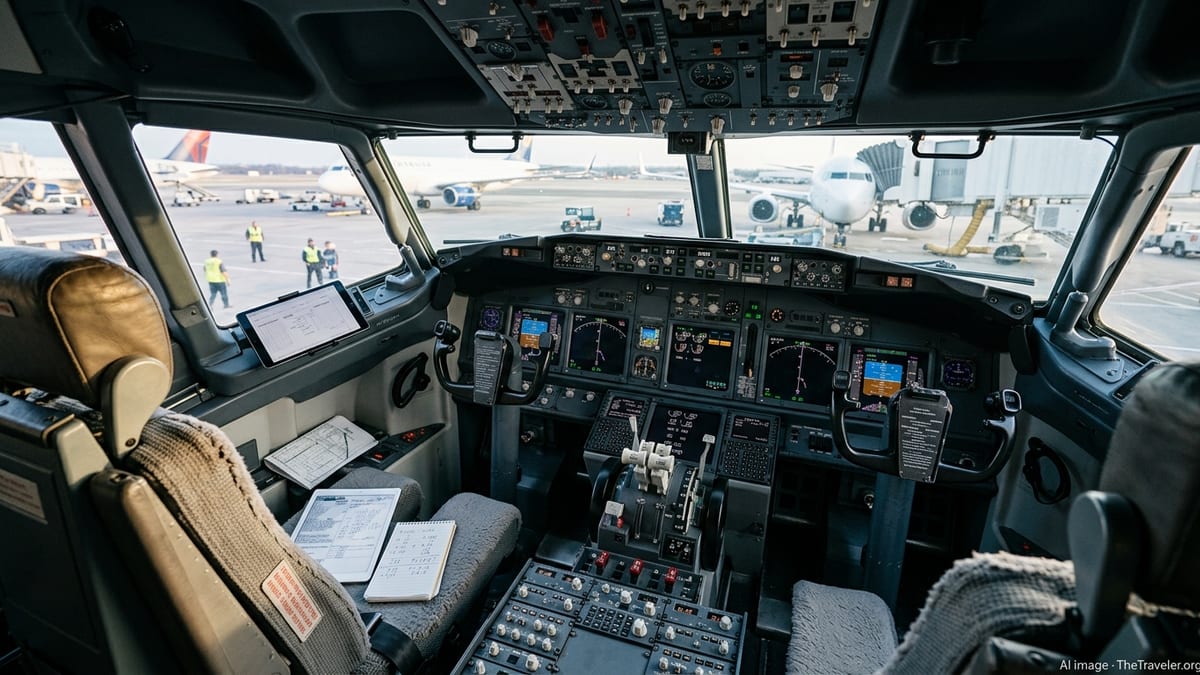
VR headsets move from gaming to the flight deck
Virtual reality, once seen mainly as a consumer technology, is now moving into mainstream aviation training. Airlines in North America and Europe have begun issuing VR headsets to pilots for cockpit-familiarization and procedure drills, allowing trainees to rehearse checklists and flows from home or in dedicated VR rooms instead of competing for time on traditional fixed training devices.
Reports indicate that regional carriers such as Envoy Air in the United States are rolling out VR-based procedure trainers to supplement simulator sessions, framing the technology as a way to get new hires comfortable with complex flight decks before they step into a full flight simulator. In Canada, Nolinor Aviation has publicized the creation of a dedicated VR training room that pilots can access around the clock, positioning the facility as a flexible tool for continuous skills refresh rather than a one-off event tied to annual checks.
European operators are moving in the same direction. Brussels Airlines has highlighted the introduction of VR modules for initial and recurrent training as part of a wider digitalization push across the Lufthansa Group. Low-cost carriers such as Wizz Air have also promoted virtual procedure trainers and mobile learning suites for Airbus narrowbody fleets, portraying VR as a way to scale up pilot numbers while retaining a common training standard across bases.
VR’s advance is being helped by improvements in commercial headsets and graphics hardware, which now provide higher-resolution visuals and more precise hand tracking. Training providers argue that this has made virtual cockpits sufficiently detailed for pilots to build muscle memory for switches and panels, even if the technology cannot yet fully replace the motion and sensory cues of a full flight simulator.
Augmented reality and high-fidelity simulators target emerging aircraft
Beyond VR, training companies are experimenting with augmented reality overlays and mixed-reality devices that blend physical controls with digital visuals. Canadian-based simulation specialist CAE has showcased an AR system that uses headsets to project aircraft systems, procedures and guidance into the trainee’s field of view while they interact with real hardware, presenting this as a way to tighten the connection between theory and hands-on flying.
Such tools are gaining attention in advanced air mobility, where electric vertical takeoff and landing aircraft present unfamiliar handling qualities and flight control systems. CAE and other manufacturers describe enhanced-reality training cockpits that combine physical control sticks and force feedback with AI-generated traffic, weather and urban environments, arguing that this can expose pilots to complex urban operations before the aircraft are widely deployed.
Regulators are watching these developments closely. Recent Federal Aviation Administration technical reports and advisory material discuss flight training devices that use VR and AR displays, signaling growing interest in how immersive technologies might qualify for training credit. In Europe, the safety focus includes oversight of flight simulation training devices and how they are used within airline and training-organization systems, underscoring that novel displays must still fit into existing competency and licensing frameworks.
Industry analysts note that mixed-reality devices are particularly suited to abnormal and emergency scenarios that are difficult to replicate safely in the real aircraft. Training organizations are testing scenarios in which pilots practice low-visibility approaches, system failures and urban obstacle avoidance, with the intent of strengthening recognition and decision-making skills before those events occur in live operations.
Competency-based training backed by data and AI
The shift toward digital tools is unfolding alongside a broader move to competency-based training and assessment. Rather than structuring courses solely around flight hours and checkrides, training providers are drawing on simulator data and structured scenarios to track how pilots manage threats, workload and automation, with evidence-based training concepts now widely discussed in industry journals and conferences.
Recent academic work describes collaborative virtual reality simulators designed specifically for multi-crew cooperation, where first officers in training must handle routine and abnormal situations together under time pressure. These systems capture granular data on control inputs, checklist use and communication patterns, which can then be reviewed to identify strengths and gaps in core competencies such as leadership, situational awareness and resilience under stress.
Artificial intelligence is beginning to appear in this space as well. Research groups have outlined AI-enabled advisory tools that run within simulators, scanning aircraft manuals and operational procedures to generate context-specific prompts and debrief material. Other studies describe experimental virtual copilots, built on large language models, that can surface quick-reference procedures and highlight missed steps, raising the prospect of highly tailored coaching layered on top of traditional instructor feedback.
Proponents argue that these data-rich systems can make training more responsive, spotting difficulties earlier and adjusting scenarios to individual needs. They also claim that AI analysis can help standardize debriefs across large training organizations, reducing variability in how human instructors interpret a pilot’s performance in complex, high-workload events.
Safeguarding manual flying skills and human judgment
As digital training expands, regulators and operators are confronting the risk that pilots might become overly reliant on screens and automation. Safety reviews on both sides of the Atlantic have pointed to cases where crews struggled when automation behaved unexpectedly or disengaged, reinforcing long-standing concerns about manual flying proficiency and basic instrument skills.
Publicly available guidance from safety agencies continues to stress the importance of robust upset recovery training, hand-flying practice and strong mental models of aircraft systems. Some training organizations are responding by deliberately increasing the share of simulator time devoted to low-tech scenarios, such as raw-data approaches and hand-flown climbs and descents, even while they integrate more sophisticated digital tools elsewhere in the curriculum.
Human-factors specialists emphasize that VR and tablet-based trainers cannot fully replicate the physical sensations of turbulence, acceleration and g-loading that shape a pilot’s real-world responses. For this reason, many airlines position immersive technology as an addition to, rather than a replacement for, full flight simulators and line-flying experience. Industry commentary also notes that high-fidelity eye tracking and biofeedback, now being tested in some research simulators, could eventually provide new ways to monitor workload and attention, but that such tools need careful validation to avoid overconfidence in automated assessments.
There is also debate over how much digital personalization is appropriate. Tailored, AI-driven training plans may accelerate learning for some pilots, but they could complicate standardization across fleets and bases if not carefully controlled. Training managers are weighing the benefits of individual pacing against the need for common reference points, especially in multi-crew operations where shared expectations and procedures are critical.
Closing the gap between desktop sims and airline training
One notable development is the gradual convergence between consumer-grade flight simulation and professional training ecosystems. High-profile partnerships in 2025 saw major manufacturers adapt advanced commercial simulation platforms for cockpit-familiarization tools, running on standard laptops and tablets and leveraging detailed 3D cockpit models originally built for the home-simmer market.
Online flight-simulation networks and virtual aviation organizations, long used informally by student pilots to practice radio phraseology and airspace procedures, are also edging closer to the professional domain. Some training providers now recognize that time spent in structured online scenarios can help prepare ab initio pilots for high-density air traffic environments, provided the virtual operations mirror real-world rules and are framed as a supplement rather than a substitute for formal training.
Full integration is still some way off. Professional training remains governed by strict regulatory standards for devices, instructor qualifications and curricula, while desktop simulations are largely unregulated. However, industry observers suggest that low-cost, widely available software and hardware are beginning to fill a gap between theory classes and high-end simulators, giving trainees another venue to rehearse procedures, experiment with scenarios and build confidence before high-stakes checks.
For now, the center of gravity in aviation training is shifting, but not yet transformed. Digital tools, immersive displays and AI-driven analytics are expanding the training toolkit, while regulators and operators focus on ensuring that the fundamentals of airmanship, judgment and crew coordination remain firmly anchored in the real world.