


More news on this day
Boeing increased its commercial jet deliveries by roughly one third in May compared with April, signaling a gradual rebuild in production even as the U.S. planemaker continued to lag European rival Airbus in the global delivery race, according to newly released industry data and published coverage.
Get the latest news straight to your inbox!
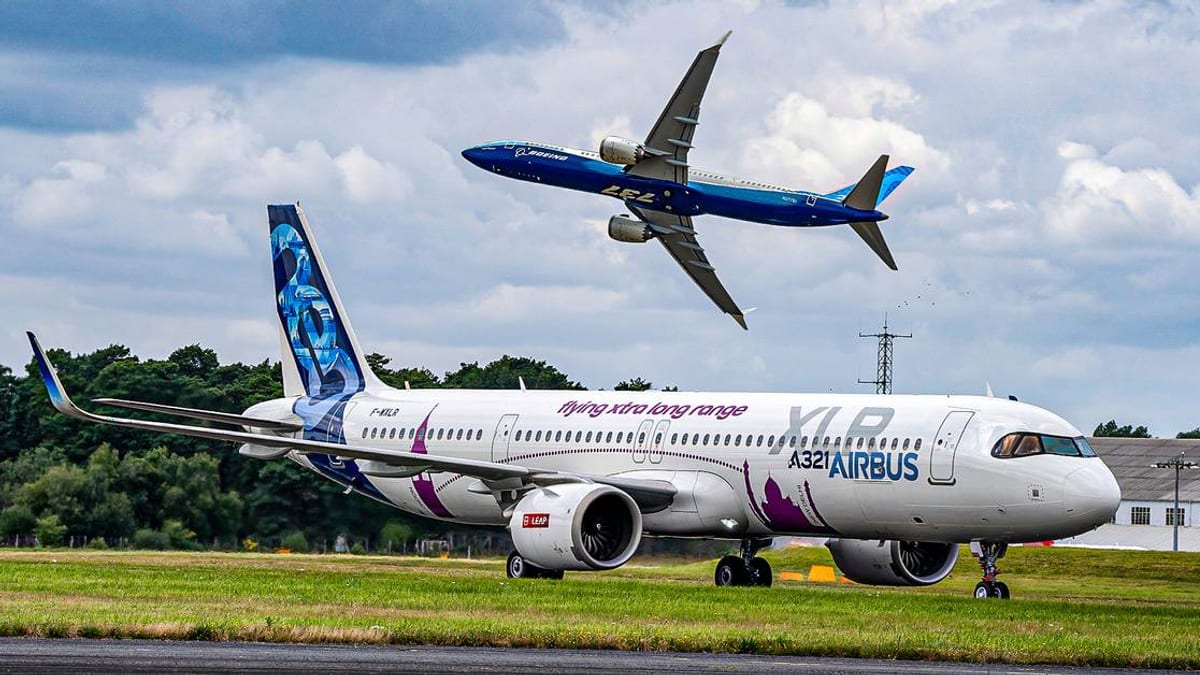
Stronger May Output Marks Momentum Shift for Boeing
Publicly available delivery tallies indicate that Boeing’s commercial handovers in May rose about 33 percent from the previous month, extending a steady climb from the low levels seen earlier in 2026. The improvement follows a period of intense regulatory scrutiny, factory inspections and supplier disruptions that have constrained the company’s narrowbody production.
The higher monthly total points to progress in clearing aircraft already built or near completion, particularly 737-family jets that had been awaiting final work or documentation. Industry analysts note that manufacturers typically recognize most of a jet’s sale price upon delivery, so each additional handover provides a direct boost to quarterly revenue.
Even with the May rebound, Boeing’s year-to-date output reflects a careful balance between safety-driven checks and airline pressure for new capacity. Earlier in the year, data for the first four months of 2026 showed Boeing slightly ahead of Airbus on cumulative deliveries, underscoring how individual months can swing sharply as aircraft transition from production lines to customer fleets.
For airlines, the uptick in May deliveries offers some relief after multiple schedule revisions tied to delayed aircraft. Carriers in North America and Europe have repeatedly cited Boeing’s slower handover pace as a headwind for planned capacity growth during the busy northern summer travel season.
Airbus Maintains Monthly Lead Despite Its Own Constraints
While Boeing’s May figures improved markedly, they remained below Airbus’s estimated handovers for the month, based on industry forecasts and recent guidance. Analysts tracking Toulouse-based Airbus expect that its May deliveries continued a rising trend from earlier in the spring, when the European manufacturer moved from roughly three to four dozen jets per month to significantly higher levels as supply bottlenecks eased.
Airbus has been contending with persistent challenges of its own, particularly engine supply issues for the A320neo family. Despite those constraints, recent market commentary suggests Airbus is still on course to retain its position as the annual delivery leader in 2026, helped by a deep backlog of single-aisle aircraft and comparatively smoother production flow.
The contrasting positions of the two manufacturers highlight a familiar pattern in the duopoly. Airbus has generally delivered more jets in recent years, even in periods when Boeing has scored larger order wins. May’s data appears to reinforce that dynamic, with Airbus capitalizing on its relative operational stability while Boeing works to fully normalize manufacturing after several years of disruption.
For airline planners, Airbus’s sustained lead in deliveries translates into more predictable fleet induction schedules, particularly in Europe, the Middle East and parts of Asia where the A320neo and A321neo have become the dominant workhorses on short and medium-haul routes.
Order Backlogs and Travel Demand Keep Pressure on Production
Despite Boeing’s delivery gap with Airbus in May, demand for new jets remains robust for both manufacturers, supported by high global travel volumes and airlines’ drive to retire older, less fuel-efficient aircraft. Recent reporting on 2025 performance showed Boeing booking more net orders than Airbus for the first time since 2018, even as the European group retained a wide margin in deliveries for the year.
That ordering strength underscores how airlines view Boeing’s long-term product line, especially the 737 MAX and 787 Dreamliner, as critical to future network plans. Large commitments from carriers in North America, the Middle East and Asia, combined with ongoing interest in widebody jets for intercontinental routes, are keeping Boeing’s backlog elevated despite short-term operational constraints.
At the same time, Airbus continues to build on record order books for its A320neo family and the A321XLR, models that offer airlines additional range and seating density on narrowbody frames. Many carriers see these jets as ideal for high-demand leisure and visiting-friends-and-relatives markets that have surged since the pandemic, particularly on transatlantic and intra-Asia routes.
The combination of strong backlogs and resilient travel demand keeps pressure on both manufacturers to convert orders into deliveries more quickly. Any monthly shortfall, whether driven by regulatory checks, engine shortages or supplier issues, tends to ripple directly into airline capacity planning and, by extension, into ticket pricing and route choices for travelers.
Implications for Airlines and Global Route Networks
For airlines, the divergence between Boeing’s improving but still constrained delivery pace and Airbus’s continued lead has tangible operational consequences. Carriers awaiting Boeing aircraft may be forced to extend leases on older jets, delay planned route launches or trim capacity growth on popular leisure corridors just as peak summer travel begins.
Some airlines have responded by flexing mixed Airbus and Boeing fleets to cover gaps, reallocating newer aircraft to long-haul or premium-heavy markets while deferring cabin upgrades or retirements on lower-yield routes. Others have shifted near-term fleet strategies by increasing utilization of existing aircraft, adding red-eye frequencies or relying more on seasonal wet leases from charter operators.
In regions where tourism recovery is strongest, particularly across Europe, the Mediterranean and parts of North America, aircraft delivery timing can shape which destinations receive additional nonstop links. A carrier that receives an expected batch of narrowbodies in time for the season may add new secondary city pairings or upgauge aircraft on crowded resort routes, directly influencing traveler options.
Conversely, if deliveries slip, airlines often prioritize core hubs and high-yield business markets over point-to-point leisure routes, potentially limiting nonstop access to smaller islands, coastal towns or emerging adventure destinations. This interplay between factory output and route planning is increasingly visible as travel demand outpaces the pace at which new, fuel-efficient jets can be brought into service.
What May’s Numbers Signal for the Rest of 2026
Industry observers view Boeing’s 33 percent month-on-month increase in May deliveries as a cautiously positive sign for the remainder of 2026. The company has been working under close regulatory oversight and has indicated that it aims to raise output gradually while embedding tighter quality controls across its factories and supplier network.
If Boeing can maintain or build on May’s pace without further disruptions, it could narrow the delivery gap with Airbus over the second half of the year, especially on key narrowbody programs. That outcome would help airlines relying on Boeing jets to stabilize fleet plans heading into the 2026 to 2027 winter season and beyond.
However, the structural advantages currently enjoyed by Airbus, including a more consistent production trajectory and sustained lead in total annual deliveries, suggest that the European manufacturer is likely to remain ahead on handovers through year-end. For travelers, that may translate into a slightly greater share of new Airbus aircraft entering service in global fleets, even as Boeing’s presence gradually expands from today’s constrained base.
For now, May’s figures underline that the commercial aerospace recovery remains uneven but forward moving. Boeing’s latest jump in deliveries shows that production challenges can be managed, though not erased overnight, while Airbus’s continued lead underscores how critical steady manufacturing performance has become in a world where airlines are hungry for capacity and passengers are eager to keep flying.