


More news on this day
From high-speed tunnels in Austria to busy cross-border corridors, Europe’s railways are shifting from trackside signals and manual oversight to data-driven monitoring that aims to follow every train, asset and passenger movement in real time.
Get the latest news straight to your inbox!
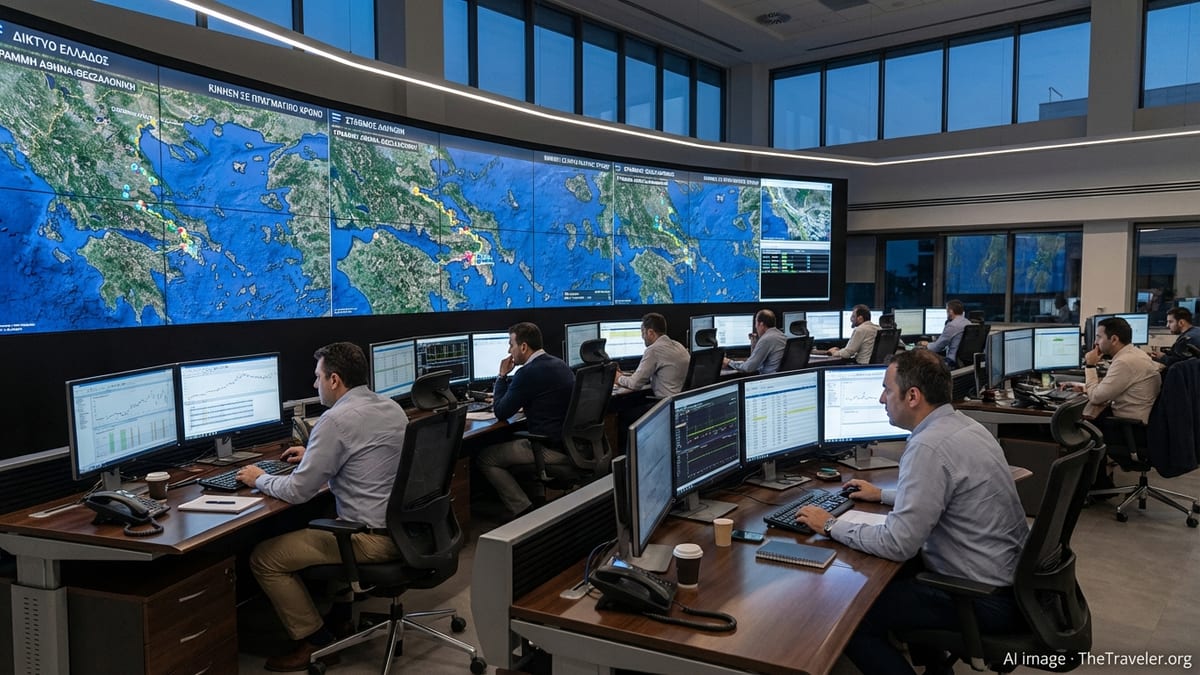
Austria’s railways move toward real-time visibility
Austria’s dense network and growing ridership are pushing its infrastructure manager and operators to adopt more advanced monitoring technologies. Public information shows that recent investments have focused on digital train control, remote condition monitoring and better passenger information on key corridors, including newly built high-speed sections where modern signaling and train-control systems are being deployed as standard. These lines are designed to be managed more dynamically than older routes, with control centers receiving continuous data on train movements and infrastructure status.
Alongside core signaling upgrades, Austrian projects are targeting specific operational bottlenecks with digital monitoring. At major freight hubs, for example, terminal operators have begun deploying automated systems that track temperature-controlled containers and other critical cargo parameters, reducing manual checks and improving transparency for logistics customers. These systems rely on networked sensors and software platforms that can alert staff long before a problem affects a train path or a delivery deadline.
The domestic passenger market is also influencing monitoring priorities. Austria’s long-distance and commuter services have seen sustained growth, helped by climate-focused policies and simplified national ticketing. Research-backed initiatives are now testing how real-time information can be used to guide passengers more effectively around stations and platforms, with the aim of smoothing boarding, reducing dwell times and ultimately supporting more frequent services on busy lines.
Projects funded through national and European research programs are examining how different passenger groups respond to real-time data, from departure boards and mobile apps to on-board displays. The findings are expected to feed back into how monitoring data is filtered and presented, so that operational information already collected by the railway can be turned into clearer, more targeted messages for travelers.
ERTMS and ETCS: a single standard for train control
Across Europe, the most visible sign of change in train monitoring is the gradual deployment of the European Rail Traffic Management System and its core signaling component, the European Train Control System. Developed to replace a patchwork of national systems, ETCS uses a suite of on-board sensors, balises and communication channels to supervise train speed and location, enforcing movement authorities set by centralized control logic. In practice, this means that monitoring is built into the safety system itself, with trains continuously reporting and receiving data rather than relying primarily on lineside signals.
The more advanced levels of ETCS replace many physical signals and trackside detection devices with radio-based communication and digital interlockings. Real-time information flows between trains and radio block centers, allowing control systems to calculate safe separations with greater precision and to respond more quickly to changing conditions. This architecture is central to plans in several member states to increase capacity on existing lines, as digital control can shorten headways and raise average speeds while maintaining safety margins.
European research initiatives have been working to extend ETCS capabilities by improving how trains determine their exact position. One avenue involves integrating satellite navigation, such as the Galileo system, with fail-safe algorithms that can be certified for safety-critical use. These so-called virtual balise concepts would allow more flexible deployment on routes where installing or maintaining extensive lineside equipment is difficult, and could improve monitoring in areas such as long tunnels or remote rural lines.
At the same time, studies are examining cybersecurity and resilience, as the consolidation of monitoring and control into digital platforms creates new dependencies. Recent academic work has analyzed potential vulnerabilities in ERTMS-based architectures and emphasized the need for systematic risk assessment as more operational decisions are driven by software and networked communications rather than discrete, isolated systems.
From static timetables to continent-wide traffic data
Beyond safety systems, Europe is building a parallel layer of traffic monitoring and information tools intended to give infrastructure managers, operators and passengers a shared, real-time view of the network. A central example is the Train Information System operated by a European association of infrastructure managers, which aggregates live train-running data from national systems and presents it in a standardized format. This platform supports cross-border traffic management by showing delays, estimated arrival times and train compositions as services move between countries.
The shift from static timetables to continuous tracking is gradually changing expectations about what information should be available to both professionals and travelers. Traffic management systems now aim to recalculate routings, platform allocations and conflict resolutions on the fly, based on data streams from ETCS, track circuits, axle counters and a growing range of condition-monitoring sensors. According to published technical summaries, these systems are designed to recover more quickly from disruptions by simulating alternative plans and implementing them automatically or with minimal human intervention.
New digital platforms funded under the Europe’s Rail research partnership are attempting to integrate infrastructure asset management with traffic monitoring. The goal is to combine information about the state of tracks, switches, overhead lines and signaling equipment with data on train movements, so that potential failures can be predicted and mitigated before they cause operational problems. This approach relies on wayside monitoring systems and advanced analytics that can flag anomalies, schedule targeted maintenance and feed constraints directly into traffic management tools.
For passengers, these back-end systems are starting to surface in consumer-facing apps and websites that promise real-time train tracking, rolling-stock details and platform information. Some applications are produced by railway companies and public agencies, while independent developers are also experimenting with visualizations that resemble popular flight-tracking services. The quality and coverage of these tools vary by country, but the general trend is toward more open data and more granular insights into how trains are actually running, not just how they are planned to run.
Austria as a testbed for passenger-centric information
Austria’s combination of busy long-distance routes, Alpine terrain and growing commuter flows has turned it into a useful testbed for new passenger-oriented monitoring concepts. Research projects supported by national innovation funding are currently exploring how real-time data can be used to influence passenger behavior before a train even arrives, for example by directing crowds to less busy doors or advising on alternative connections when disruptions occur.
One ongoing initiative is examining which types of information actually change how passengers distribute themselves along a platform. By correlating train occupancy levels, boarding patterns and dwell times with different information layouts, researchers aim to identify what should be prioritized on screens and apps. This type of work links back-end monitoring directly to human factors, recognizing that capacity on a monitored line can still be lost if passengers cluster in a few cars or hesitate at the doors.
Austrian policymakers have also signaled that digital monitoring should support broader climate and mobility objectives. As the number of passengers using nationwide tickets and long-distance night trains rises, planners are looking to real-time demand data to help refine timetables and rolling-stock deployment. The ability to monitor actual usage patterns, not just advance bookings, is seen as key to aligning capacity with peaks in tourism, commuting and seasonal travel.
Experiences from Austrian trials are closely watched elsewhere in Europe, where rail operators face similar questions about how much data to present to passengers, and in what form. While enthusiasts may seek detailed real-time maps, most travelers primarily want accurate departure boards, clear delay explanations and reliable connection guidance. Balancing these needs with operational requirements and privacy considerations is becoming a shared challenge for European railways as monitoring systems become more granular.
Next steps: toward integrated, data-driven rail operations
Looking ahead, the development of train monitoring in Austria and Europe is expected to focus less on individual technologies and more on how they are stitched together. The vision promoted in recent European research roadmaps is of an integrated digital layer that connects ETCS-based train control, traffic management systems, asset monitoring platforms and passenger information services. In this model, a change detected in one part of the system would automatically propagate to the others, ensuring that control centers, maintenance teams and travelers are working from the same, up-to-date picture.
Achieving this level of integration will require common data models, robust communication networks and sustained investment. Technical documents from European programs emphasize the need for a dependable communications backbone, moving over time from legacy GSM-based systems toward more flexible, high-bandwidth solutions capable of carrying safety-critical and non-critical data side by side. Standardized interfaces are also seen as essential, so that national systems can interoperate without costly bespoke integrations.
Europe’s experience highlights that deployment is likely to be uneven, with some countries moving quickly on digital rail initiatives and others progressing more gradually because of funding constraints, legacy infrastructure or differing policy priorities. Austria’s mix of new and upgraded lines illustrates both the opportunities and the complexity involved in rolling out modern monitoring technologies across an existing network.
For travelers, the impact of these developments will be measured less in technical milestones and more in day-to-day reliability and transparency. If the current wave of projects delivers as planned, passengers in Austria and across Europe can expect richer real-time information, smoother cross-border journeys and rail networks that are monitored closely enough to identify problems before they disrupt the timetable.