


More news on this day
As investigators sift through data and damaged infrastructure after the recent train derailment near Amarillo, Texas, attention is shifting from emergency response to a more difficult question for residents and travelers alike: who will ultimately be responsible for repairs, cleanup and long term safety improvements along the busy Panhandle rail corridor?
Get the latest news straight to your inbox!
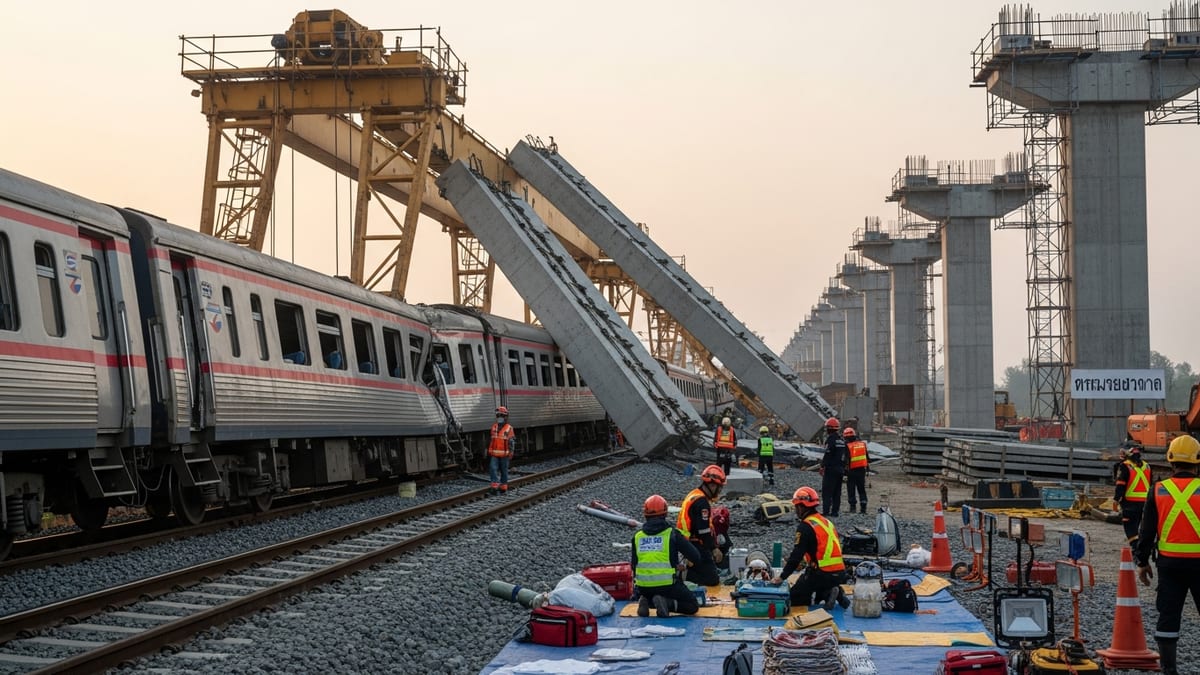
What Is Known So Far About the Amarillo Derailment
Publicly available information indicates that a freight consist derailed on a key line serving the Amarillo area, disrupting rail traffic across the Texas Panhandle and raising concerns about hazardous cargo and critical infrastructure. Early summaries from rail safety databases and local coverage describe freight cars leaving the tracks near a section of line used heavily for long haul trains crossing the central United States.
Initial accounts point to a combination of track and equipment damage, with several cars derailing and at least part of the rail bed requiring reconstruction. While detailed technical findings have not yet been released, the pattern resembles other recent freight derailments in the region, where investigators later focused on issues such as rail defects, ground instability beneath ballast, or problems in train handling.
In line with standard practice, a formal investigation is underway, drawing on event recorder data from locomotives, track inspection records, and maintenance logs. These materials will be central to determining whether the primary cause lies with infrastructure conditions, mechanical failure in the rolling stock, or human and operational factors such as train speed and handling through the affected segment.
Until those findings are finalized, responsibility for the Amarillo derailment remains provisional, but the legal framework that will ultimately assign costs is well established by federal statutes, state law and industry practice.
How Investigators Determine Fault After a Derailment
In serious derailments, federal investigators typically examine several layers of potential contributing factors, beginning with the physical condition of the track, bridges and roadbed. Past reports on freight derailments across the country show repeated emphasis on culvert failures, ballast problems and rail fractures that can develop between scheduled inspections, particularly in regions with extreme temperature swings like the High Plains.
Investigators also scrutinize rail company records to see whether required inspections were completed, whether known defects were properly repaired, and whether previous warnings were documented. If a derailment is ultimately traced to infrastructure that was out of compliance with federal standards or internal company rules, costs tend to fall squarely on the operating railroad and its insurers.
Another key focus is the train itself. Tank cars, covered hoppers, locomotives and braking systems are examined for signs of mechanical failure. Recent federal safety findings in other states have highlighted the role of aging tank car designs and deferred maintenance in making derailments more severe when they do occur. If the Amarillo incident reveals defective cars supplied or maintained by a leasing company or shipper, liability may be shared among multiple commercial parties.
Human factors are a third pillar of modern rail investigations. Event recorders and dispatch logs are used to reconstruct train speed, throttle and brake use, and signal compliance at the moment of derailment. Where excessive speed or improper handling is found to be a primary cause, responsibility can shift toward the operating railroad and, indirectly, its workforce training and oversight systems, even when the track and equipment otherwise meet minimum standards.
Who Pays for Track Repairs and Service Disruptions
For travelers and communities around Amarillo, the most visible consequence of the derailment is the damaged track and the temporary loss of rail capacity. Under federal rail regulations and typical right of way agreements, the railroad that owns or controls the track is generally responsible for restoring it to a safe operating condition, regardless of the specific cause of the incident.
That obligation covers rail replacement, ballast and roadbed repairs, bridge or culvert work, and associated signaling and communications equipment. The costs are initially borne by the railroad and its insurers, but may later be recouped through litigation or settlements if the investigation identifies another party whose actions directly contributed to the derailment, such as a contractor, shipper, or equipment supplier.
Service disruptions add an additional layer of cost, especially on high volume freight routes. When mainline tracks near Amarillo are out of service, railroads must reroute trains, stage equipment, and sometimes rely more heavily on highway carriers to meet delivery commitments. These disruptions can ripple through national supply chains. Rail operators sometimes pursue claims against suppliers or third parties if a clear external fault is established, but in many cases they absorb the commercial losses as part of the inherent risk of operations.
Public agencies generally do not pay for core track reconstruction on private freight lines. However, they may incur costs related to managing detours on nearby highways, emergency response and environmental oversight. Some of these public costs can be recovered later if civil or regulatory actions find that negligence contributed to the derailment.
Environmental Cleanup and Community Impacts
The extent of environmental responsibility after the Amarillo derailment depends heavily on what the derailed cars were carrying and whether any material was released. In other rail incidents involving hazardous substances, cleanup expenses have ranged from limited soil removal to multi year groundwater monitoring and remedial work overseen by federal and state environmental agencies.
Under federal environmental laws, the party that owns or transports a hazardous substance is typically considered responsible for containment and cleanup, in coordination with regulators. In practice, this often means the freight railroad, working with shippers and specialized contractors, pays for soil excavation, air and water testing, and long term monitoring where necessary. Insurance policies for railroads and major shippers are structured with these potential liabilities in mind.
For communities in and around Amarillo, indirect costs can also be significant. Noise and dust from cleanup and reconstruction, temporary road closures at grade crossings, and perceived risks from hazardous materials can affect property values and business activity. While these impacts are harder to quantify, they sometimes lead to civil claims or negotiated community benefit agreements, particularly if residents can demonstrate that a company’s practices increased the risk of a derailment beyond what is considered reasonable for a busy freight corridor.
In recent high profile derailments elsewhere in the United States, public information shows that state and federal officials have pressed railroads to go beyond minimum legal obligations, funding health studies, environmental research and infrastructure upgrades in affected communities. The Amarillo case will likely be evaluated against that evolving national context.
What the Amarillo Case Means for Future Rail Safety
Even before a final cause is published, the Amarillo derailment is fueling discussion about the balance of responsibility between private railroads, federal regulators and local governments. The incident follows a series of freight derailments across the country that have drawn attention to aging infrastructure, high traffic density and the shipment of hazardous materials through fast growing cities.
For travelers and residents, a key question is whether the Amarillo corridor will see accelerated investment in track renewal, bridge work and signaling improvements as a result of the derailment. In several recent cases elsewhere, railroads have agreed to upgrade infrastructure and increase inspection frequency after investigations tied accidents to underlying track or drainage problems.
Regulators may also look at whether national rules on tank cars, braking systems and train length meaningfully address the risks highlighted by incidents like the Amarillo derailment. Published federal recommendations in other investigations have urged faster retirement of older tank car designs and more robust standards for infrastructure in areas prone to temperature extremes and heavy freight traffic.
For now, the Amarillo derailment remains under investigation, and responsibility for the specific failures that led to the crash has yet to be formally assigned. But the legal and regulatory framework is clear: once the causes are known, the companies directly involved in the train’s operation, equipment and cargo will face the primary obligations to repair, compensate and reduce the risk of a similar event along one of the Panhandle’s most important rail lifelines.