


More news on this day
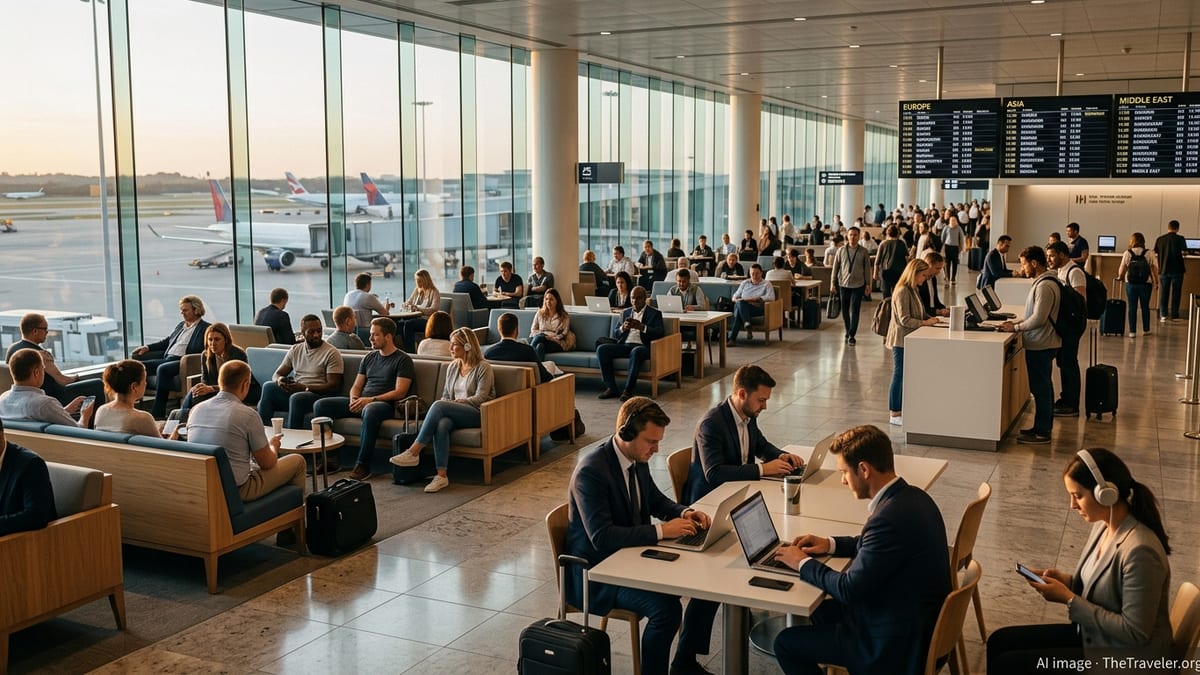
International tourism is still growing in 2026, yet a patchwork of wars, regional tensions and transport disruptions is quietly redrawing the global tourism map as travelers reconsider where they feel safe, connected and welcome.
Get the latest news straight to your inbox!
Global Travel Grows, but Risk Perceptions Shift
International tourism remains in expansion mode this year, even as geopolitical risks feature prominently in industry risk assessments. UN Tourism projects worldwide arrivals to grow by about 3 to 4 percent in 2026 compared with 2025, assuming conflicts do not escalate and economic conditions stay broadly supportive. Surveyed tourism experts identify geopolitical instability, high travel costs and economic uncertainty as the main headwinds that could derail that outlook.
Recent analysis from international organizations shows a similar picture of resilience tempered by regional divergence. An OECD tourism review published in 2026 reports that international arrivals to its member countries already exceeded pre pandemic levels by 2024, with tourism directly contributing about 4 percent of GDP and nearly one fifth of services exports in those economies. Yet the same review highlights that geopolitical instability tops the list of risks for 2026, cited by roughly four out of five public and private sector respondents.
World Bank monitoring of tourism data highlights that global demand remained robust into early 2026, but with marked disparities across regions. While some destinations in Europe, North America and parts of Asia continue to post gains, areas directly exposed to conflict are recording double digit declines in arrivals and spending. These patterns suggest that travelers are not abandoning international trips altogether. Instead they are rebalancing toward destinations perceived as relatively insulated from current flashpoints.
Middle East Conflicts Reshape Regional Flows
Nowhere is the impact of geopolitical instability on tourism more visible than in the Middle East. A World Bank tourism brief for June 2026 notes that international arrivals to the region fell by about 14 percent in the latest data, reversing what had been one of the strongest post pandemic rebounds in the world. The downturn is closely linked to the ongoing conflict centered on Gaza and its spillovers into neighboring economies.
Earlier assessments from international financial institutions warned that countries highly dependent on tourism in the Eastern Mediterranean could face significant losses as potential visitors respond to images of conflict and travel advisories. Public information compiled by these institutions indicates that destinations such as Jordan, Lebanon and Egypt have experienced cancellations and weaker forward bookings since late 2023, affecting hotel occupancy, local transport and small tourism businesses.
At the same time, publicly available coverage from aviation and tourism data providers shows that Gulf hubs have been more resilient. Airports in the United Arab Emirates, Qatar and Saudi Arabia that serve as global transit points continued to handle high passenger volumes into 2024 and 2025, even as some point to point leisure destinations nearby saw demand weaken. Industry commentary suggests that for some long haul travelers, routing through major hubs that maintain broad connectivity can feel less risky than staying in destinations closer to conflict zones.
The wider economic stakes are significant. The World Travel and Tourism Council has estimated that, relative to a pre conflict 2026 forecast, disruptions linked to tensions involving Iran and neighboring states could be costing the region at least hundreds of millions of dollars per day in lost and deferred travel activity. While the exact figure will depend on how the situation evolves, it underlines why regional instability is now central to discussions about the future of tourism in the Middle East.
Red Sea Disruptions and the Cruise and Aviation Sectors
Geopolitical tensions are influencing not only where travelers choose to go, but also how they get there. Attacks on commercial vessels in the Red Sea and Gulf of Aden have led shipping lines to divert a large share of traffic away from the Suez Canal. Publicly available maritime data compiled by researchers indicates that container vessel transits through the canal dropped by around three quarters in 2024 compared with the previous year as operators rerouted ships around Africa’s Cape of Good Hope.
While these detours primarily affect freight, they have knock on effects for certain segments of tourism. Cruise industry trackers and port authorities report that instability in the Red Sea has prompted several cruise lines to cancel or significantly modify itineraries that would normally include Egyptian, Jordanian or Saudi ports on the Red Sea. Some winter and spring voyages have been reprogrammed toward the Mediterranean, Canary Islands or Asian routes, which can alter where passengers spend on hotels, excursions and local services.
Higher fuel costs and longer voyages for rerouted vessels also have the potential to feed into airfares and package tour prices when combined with existing inflation pressures. Although airlines do not typically disclose route level security cost details, industry bodies, including IATA, have noted that geopolitical instability and economic uncertainty are weighing on consumer confidence and keeping travelers more focused on value for money. This environment favors destinations that can offer competitive prices while being perceived as stable and well connected by air.
Winners, Losers and the Rise of “Perceived Safe” Destinations
Against this backdrop, some lesser known destinations are emerging as beneficiaries of travelers’ desire for both novelty and perceived security. The World Bank’s June 2026 tourism monitoring points to strong aviation arrivals growth in parts of the Western Balkans and Eastern Europe that are geographically distant from current conflict zones but still easily accessible from major European markets. North Macedonia, for example, recorded aviation arrivals growth of about 40 percent year on year in the first quarter of 2026, while Bosnia and Herzegovina and Moldova also posted double digit gains.
European tourism bodies have reported that value oriented and so called second tier cities are drawing more attention from international visitors who want culturally rich experiences without crowds or high prices. An analysis published through IATA’s knowledge hub notes that travelers in 2025 were increasingly attracted to value for money destinations and shoulder season trips, a trend that appears to be carrying into 2026. This aligns with survey evidence from card networks and consultancies suggesting that people are prioritizing travel in their budgets but are more deliberate about destination choice.
In North America, data from the U.S. Travel Association and the U.S. government’s National Travel and Tourism Office shows that inbound international travel is expected to resume growth in 2026 after a modest decline in 2025. Forecasts point to low but positive increases in overseas visitor spending, supported in part by marquee events and the country’s reputation as a relatively safe long haul destination for many markets. Analysts caution, however, that currency fluctuations and perceived political polarization could influence which source markets rebound fastest.
At a global level, scenario work published by the World Economic Forum emphasizes that the future geography of tourism will be shaped by how governments and industry manage not only security concerns, but also sustainability and technological change. In scenarios where geopolitical tensions remain high and coordination is limited, travel becomes more regionalized, with visitors opting for nearby destinations they understand well. In more cooperative scenarios, improvements in security protocols and digital travel systems support a wider distribution of international trips, though always subject to sudden shocks.
How Travelers and the Industry Are Adapting in 2026
Travel behavior in 2026 reflects these cross currents. A travel economy report released by Mastercard in May 2026 notes that, despite several years of economic and geopolitical turbulence, consumer appetite for travel has stayed strong. At the same time, card spending data analyzed in that report and others indicates that travelers are booking closer to departure, mixing business and leisure trips and adjusting itineraries quickly when risks rise in specific locations.
Corporate travel policies are also evolving. Industry outlooks compiled by consulting firms such as Deloitte suggest that many organizations are scrutinizing trip approvals more closely when employees would transit near active conflict zones or regions with rapidly changing security assessments. This has implications not only for traditional business hubs in affected regions, but also for international conferences, trade fairs and incentive travel programs that depend on predictable air links and perceptions of safety.
Tourism boards and destination marketing organizations, drawing on guidance from groups such as IATA and the World Travel and Tourism Council, are responding by emphasizing crisis preparedness, transparent communication and diversification of source markets. OECD analysis published in 2026 highlights that countries are increasingly integrating tourism into broader risk management frameworks, aiming to reduce reliance on a small number of origin markets and to spread visitors more evenly across regions and seasons.
For individual travelers planning international trips this year, the net effect is a more complex decision set. Publicly available forecasts indicate that, on aggregate, 2026 is likely to bring another year of modest growth for global tourism. Yet that growth will be uneven, shaped by how conflicts in the Middle East and elsewhere evolve, how transport networks adapt to disruptions and how quickly emerging “safe haven” destinations can scale up infrastructure without creating new frictions. Where people choose to go is no longer determined only by price and scenery; geopolitical stability has become a central filter in the travel choices of 2026.