


More news on this day
Technical failures in key aviation systems on both sides of the Atlantic have triggered thousands of flight delays and cancellations in recent weeks, underscoring how aging infrastructure and fragile software are increasingly shaping the travel experience for passengers.
Get the latest news straight to your inbox!
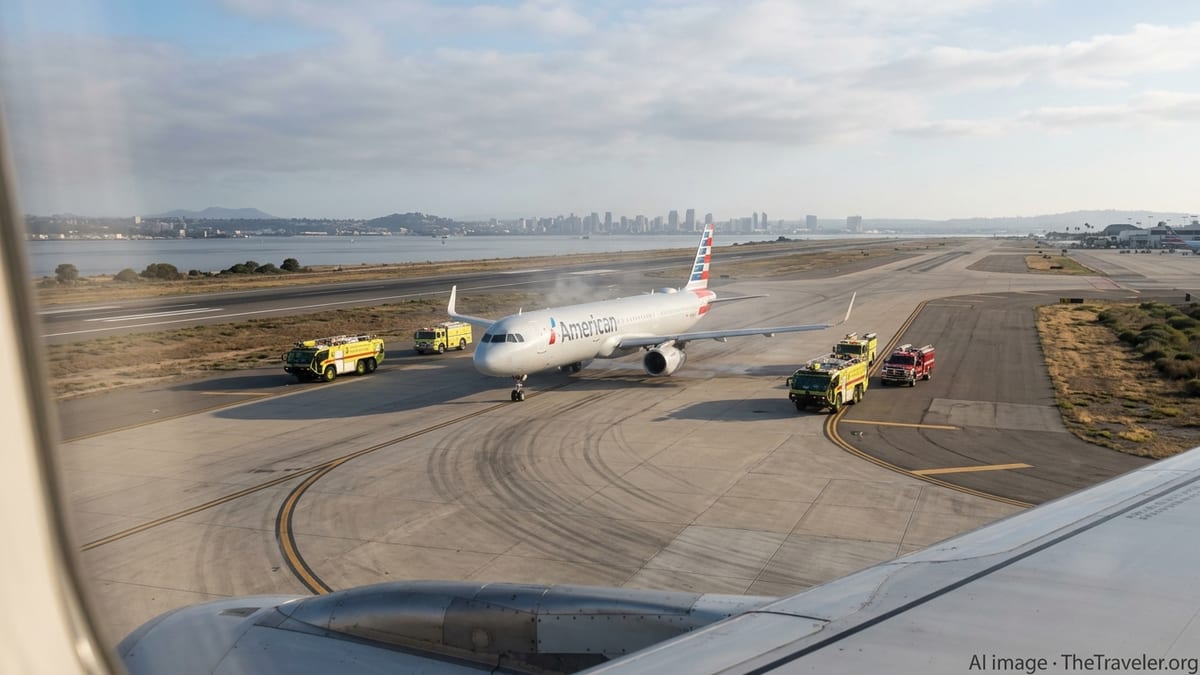
New Northeast Outage Ripples Across a Critical Air Corridor
On September 21, 2026, a telecommunications equipment problem at a Federal Aviation Administration facility serving the busy Northeast corridor disrupted radio links between air traffic controllers and aircraft, leading to ground stops and hours of cascading delays. Publicly available information indicates that flights into Newark Liberty, Philadelphia, and New York area airports were halted or heavily restricted while traffic was rerouted and fallback procedures were activated.
Coverage from multiple outlets described long lines, crowded terminals, and delays of several hours at some airports as operations slowed to a fraction of normal capacity. At Philadelphia International Airport, delay averages reportedly stretched beyond three hours on Monday afternoon as controllers worked through the backlog of aircraft waiting to depart and arrive.
By the following day, flight-tracking data showed operations recovering, but with residual disruptions still affecting schedules at Newark and other hubs. Airlines were forced to reassign aircraft and crews, contributing to additional knock-on delays for travelers who were not directly in the affected airspace when the outage occurred.
The FAA’s own operational summaries list equipment as a distinct cause category alongside weather, volume, and runway capacity, indicating that hardware or communications problems can quickly translate into schedule havoc when they occur at key nodes of the national airspace system.
Midwest Radar and Radio Failure Highlights Regional Vulnerabilities
The recent Northeast disruption followed another major incident in early August 2026, when a telecommunications equipment failure at the Minneapolis Air Route Traffic Control Center temporarily knocked out radar and radio communications across a large swath of Midwestern airspace. Public reports indicated that controllers lost access to their primary systems for roughly two hours, prompting a ground stop at Minneapolis–St. Paul International Airport and affecting flights across nine states.
According to aviation data cited in media coverage, average departure delays at Minneapolis climbed to around 90 minutes as the system was restored and traffic flows were carefully restarted. Because the Minneapolis center manages high-altitude traffic between cities as well as local approaches, the loss of equipment went far beyond a single airport, forcing diversions and extended holding for flights already in the air.
Travelers described diversions to other cities and lengthy waits onboard aircraft while new routings were worked out. Once again, the technical fault itself was measured in hours, but the operational and customer impact stretched well into the following day as airlines repositioned aircraft and rescheduled crews.
These kinds of regional outages illustrate how concentrated some of the critical infrastructure remains. When a single radar or radio hub experiences equipment failure, the resulting delays can quickly affect tens of thousands of passengers across a wide geography.
International Incidents Show Global Scope of Technology Risks
The United States is not alone in struggling with the reliability of aviation equipment. In mid-September 2026, the United Kingdom’s air navigation service reported that a highly specific software defect affecting its National Airspace System had triggered severe restrictions on flights. A preliminary account described a chain of events measured in milliseconds that corrupted flight data and forced controllers to revert to fallback procedures.
The technical issue itself reportedly lasted several hours, but industry analysis suggests that more than 2,000 flights were cancelled or severely delayed over several days as airports worked through the resulting congestion. Earlier UK incidents tied to radar and flight-planning systems have produced similarly widespread knock-on effects, with hundreds of flights cancelled in a single day and disruptions lingering for days.
Global airline operations have also been hit by failures in private-sector technology. In July 2024, a faulty security software update linked to a broader information technology outage disrupted computer systems worldwide, including those used by major carriers. Public summaries from transportation analysts indicate that thousands of flights were cancelled or delayed worldwide, and some airports experienced overnight crowds as passengers waited for systems and schedules to recover.
Together, these international cases emphasize that modern air travel hinges not only on physical infrastructure such as runways and radars but also on complex layers of software. A failure in either domain can rapidly translate into equipment-related delays on a global scale.
Aging Infrastructure and Modernization Pressures
Behind recent headline-grabbing outages, official audits and policy documents point to a longer-running challenge: large portions of the air traffic control system rely on equipment that is decades old. A 2024 radar modernization proposal from the FAA noted that many primary radar systems average more than 30 years in service, with increasing rates of unscheduled outages and longer repair times.
More recently, the U.S. Government Accountability Office has reported that dozens of FAA systems are considered unsustainable, meaning they face growing risks of failure and rising maintenance costs if not replaced. A 2026 review of air traffic control systems modernization warned that delays in upgrading key communications and surveillance platforms could lead to more frequent outages, ground stops, and system-impact delays affecting airlines and passengers.
Budget proposals in Washington outline multibillion-dollar plans to accelerate modernization of radar, radio, and automation systems within the next decade. However, watchdogs have also highlighted schedule slips and cost overruns in several programs intended to replace or augment aging equipment, raising questions about how quickly improvements will reach front-line facilities.
Until those projects are completed, the system will continue to rely on backup circuits, manual workarounds, and contingency procedures such as reduced traffic flows when something fails, each of which can contribute to widespread delays when equipment problems arise at already busy hubs.
What Travelers Can Expect as Systems Evolve
Official statistics from the FAA and the U.S. Department of Transportation attribute the majority of flight delays to weather and congestion, with system-related issues such as equipment failures representing a smaller share of overall disruptions. However, when technology problems do occur, they tend to be concentrated and highly visible, affecting thousands of flights in a matter of hours.
For travelers, that means that while equipment issues are not the most common cause of delays, they can be among the most disruptive. Ground stops linked to radar or communications failures often halt all arrivals and departures at major airports, while ripple effects extend to connecting flights across an airline’s network.
Publicly available guidance from aviation agencies encourages passengers to monitor flight status directly with airlines and through airport information displays, especially during periods of heavy traffic or when news reports highlight technical problems at key air traffic facilities. In recent incidents, some airlines have offered waivers for travelers to change itineraries without additional fees when large-scale equipment or IT disruptions interfered with normal operations.
As modernization efforts progress and new backup systems are introduced, aviation analysts expect that some outages may be contained more effectively, reducing the number of flights directly affected. At the same time, the growing complexity of the systems involved means equipment issues are likely to remain a recurring, if unpredictable, source of delays for air travelers around the world.