


More news on this day
Flights have largely resumed at major airports across the Northeast after a Federal Aviation Administration telecommunications outage halted arrivals and departures on Monday, but schedules remain strained as airlines work through hundreds of delays and cancellations triggered by the disruption.
Get the latest news straight to your inbox!
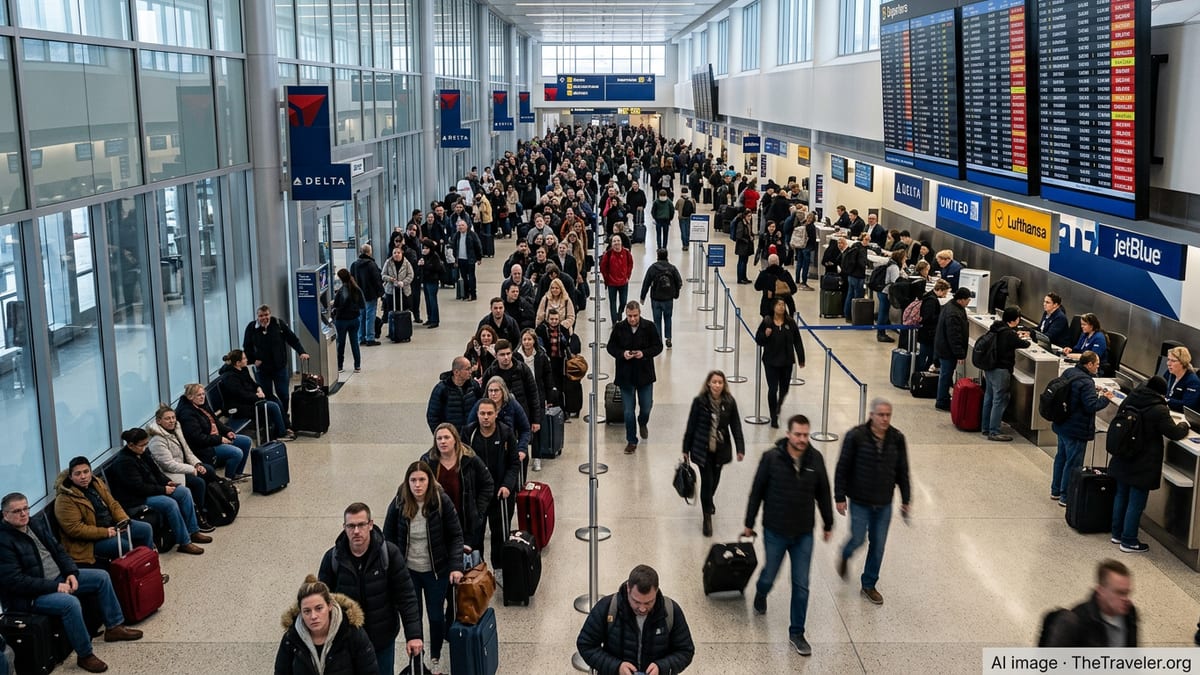
Equipment Failure Behind Widespread Ground Stops
Publicly available information indicates that the disruption began late Monday morning, September 21, when a telecommunications failure affected an FAA air traffic control facility in the Philadelphia area that helps manage some of the busiest airspace in the country. The outage cut radio communications used to handle arrivals and departures for several major hubs, prompting immediate ground stops at Newark Liberty, John F. Kennedy, LaGuardia, Philadelphia International and Teterboro airports.
Reports from aviation outlets and local media describe a cascading effect across the region as flights already en route were forced to divert and scheduled departures were held at gates for hours. Flight tracking data cited in news coverage shows that at Newark Liberty, commercial arrivals were reduced to almost zero for much of the afternoon, with no routine passenger flights landing for roughly eight hours.
Subsequent reporting attributes the failure to a damaged fiber line that formed part of the communications backbone for the air traffic facility. A construction crew working on related rail infrastructure in New Jersey reportedly severed the primary line, while a backup circuit also failed, leaving controllers without the redundancy needed to safely manage normal traffic volumes.
The telecommunications problem did not originate inside any of the affected airports themselves, but the knock-on impact at terminals from New York to Philadelphia and up through Boston Logan was immediate. Airlines began issuing systemwide waivers for itinerary changes on routes touching the Northeast corridor as it became clear the outage would not be resolved quickly.
Operations Resume, But Backlog Ripples Through Tuesday
By late Monday afternoon and early evening, federal transportation updates and airline notifications indicated that the damaged fiber line had been repaired and that ground stops were being lifted in stages. Local television coverage in New York and Philadelphia reported that the FAA cleared airports to resume arrivals and departures once communications were stabilized and safety checks were completed.
Ground stop orders at Newark, JFK, LaGuardia, Philadelphia and Teterboro were lifted by early Monday evening, while a related ground delay program at Philadelphia expired around 5 p.m. Eastern time. At Boston Logan, where many diverted aircraft arrived during the day, delays began to ease overnight into Tuesday as the region’s traffic flow normalized.
Even with the outage resolved, the backlog remained substantial through Tuesday morning. Data from flight-tracking services cited in regional news reports shows that Philadelphia International recorded around 400 delays and 200 cancellations on Monday alone. At Boston Logan, more than 450 flights were delayed and at least 70 were canceled by Monday night after handling diversions from New York area airports on top of its own schedule.
The FAA’s publicly accessible daily air traffic report for Tuesday, September 22, reflects that no new regionwide ground stops were in effect, but notes continued delays tied to volume and residual congestion at major Northeast hubs. Airlines continued to reposition crews and aircraft, a process that can take several rotations to fully resolve after such a significant disruption.
Travelers Face Lingering Delays and Rebooking Challenges
For passengers, the technical description of the outage translated into long lines at check in counters, crowded departure halls and missed connections throughout the Northeast. Social media posts and local interviews captured travelers sleeping on terminal floors in Newark and Philadelphia, while others described being diverted unexpectedly to Boston or smaller regional airports.
Many travelers were forced to rebook for Tuesday or later in the week, particularly on routes that already had limited remaining capacity due to late summer and early fall demand. Domestic itineraries connecting through New York, Philadelphia and Boston experienced rolling delays as aircraft arrived out of sequence and crews reached duty-time limits.
Airlines responded with change-fee waivers for affected passengers on flights to and from the impacted airports, allowing customers to move their trips to alternate dates without standard penalties. However, available public information suggests that same day alternatives were often scarce during peak afternoon and evening periods, especially for long haul services and last flights of the day.
Travel data platforms tracked elevated cancellation and delay levels into Tuesday morning compared with a typical weekday. While on-time performance figures improved as the day progressed, the uneven recovery highlighted how even a several-hour communications problem in a single control facility can ripple across a network that depends on tightly coordinated aircraft and crew rotations.
What Travelers Should Expect in the Coming Days
As of early Wednesday, September 23, FAA status boards show that air traffic in the Northeast is operating without special ground stops related to the telecom outage, although some volume-related programs remain in place during peak periods. Most airlines have restored their published schedules, but isolated delays and equipment swaps continue as carriers reposition aircraft.
Airlines and airports are advising travelers with upcoming trips involving major Northeast hubs to closely monitor their flight status before leaving for the airport. Even when an airport’s overall condition appears normal, individual flights may still be subject to schedule adjustments as crews and planes return to regular rotations.
Public guidance from the FAA emphasizes checking directly with carriers rather than relying solely on airport-level delay summaries. The agency’s own system status tools provide a broad picture of whether ground stops, ground delay programs or other traffic management initiatives are in effect, but they do not show the status of specific flights or rebooking options.
Travelers connecting through multiple hubs in the eastern United States may want to build extra buffer time into tight connections over the next day or two, particularly when routing through New York, Philadelphia or Boston. Those with flexible plans might also consider off peak departures earlier in the day, when traffic is generally lighter and recovery from any new disruption is easier.
Renewed Scrutiny of FAA Infrastructure and Contingency Planning
The outage has reignited debate over the resilience of the nation’s air traffic infrastructure, particularly in high density corridors such as the Northeast. A single damaged fiber line and the failure of a backup connection were enough to freeze arrivals at some of the busiest airports in the United States, echoing concerns raised after previous technology-related disruptions.
Public filings and policy documents from recent years show that the FAA has been working to modernize both staffing and equipment in the New York and Philadelphia control areas, including the shift of certain responsibilities between facilities and the testing of new software tools intended to optimize traffic flow. The latest incident is likely to prompt closer examination of how physical infrastructure such as fiber routes is protected during nearby construction and how redundancy is implemented in practice.
Industry observers note that traffic in the Northeast has been growing ahead of major events and broader recovery in international demand. Existing slot waivers and staffing initiatives were already designed to ease pressure on congested terminals, and an unexpected telecommunications failure adds another layer of complexity to efforts to keep traffic flowing smoothly.
For now, the operational priority for both regulators and airlines is clearing the remaining backlog and stabilizing schedules. As investigations into the outage progress, further details about the cause, safeguards and any planned improvements are expected to shape how future construction projects and telecom upgrades are coordinated in some of the country’s most critical airspace.