


Snowcard has become a go to brand for UK based skiers, climbers and adventure travellers who want cover that goes beyond a standard high street travel policy. But the flexibility that makes Snowcard attractive can also make it confusing. If I were buying a Snowcard policy today, with current 2025 and 2026 wording and prices in mind, I would approach it like a detailed kit list: start from the trip I am actually taking, then deliberately add the protection I cannot afford to get wrong.
Get the latest updates straight to your inbox!
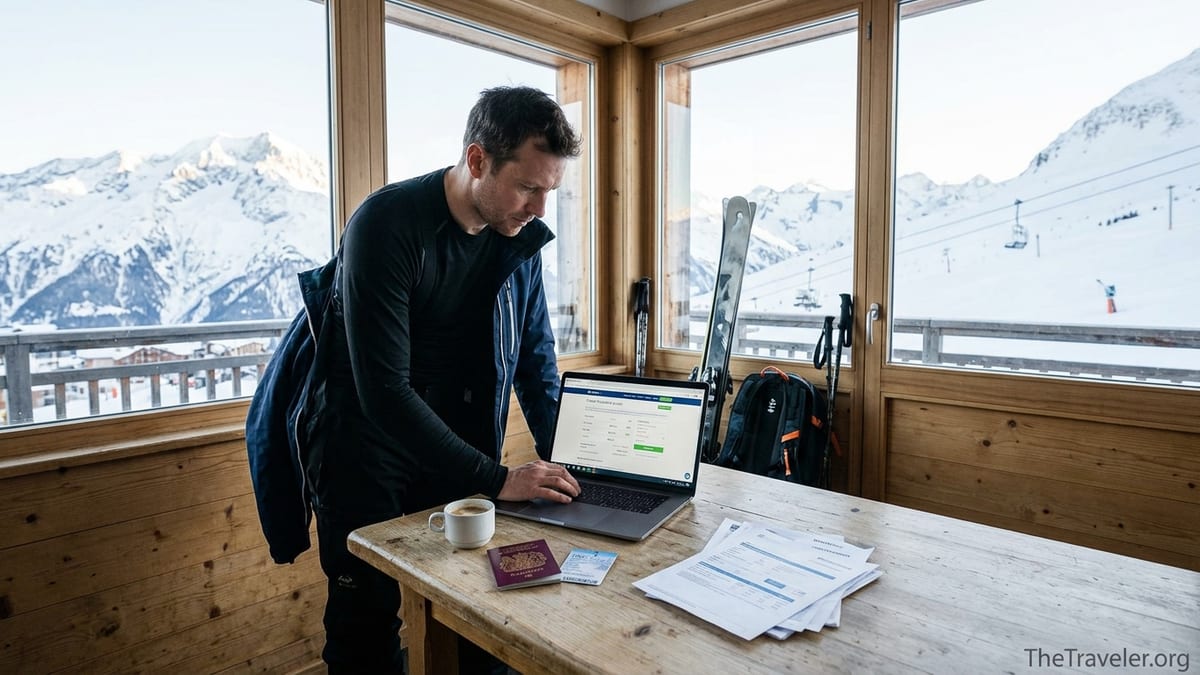
Start With the Trip You Are Actually Taking
The most common way people trip up with travel insurance is buying cover for the holiday they imagine, not the one they have booked. Snowcard is very explicit that your policy must match the sports and activities you will do, and that you must insure the full duration of each trip from when you leave home until you return. Their own guidance stresses that you cannot just "top up" another insurer’s policy for a few high risk days; the whole trip has to sit under Snowcard for the cover to be valid.
So before I touch the quote form, I write down the real itinerary. For example: a 9 day February ski trip to Chamonix with off piste skiing both with and without a guide; a summer week on Gran Canaria that includes two days of sport climbing and a trail half marathon; or a three week trekking and climbing trip in the Dolomites with via ferrata and some low grade alpine routes. Each of these trips pushes into higher risk territory that a standard bank or packaged account policy often excludes or only partially covers.
With that list in front of me, I then use Snowcard’s quote journey. You start on their homepage by choosing between single trip and annual multi trip cover, and then the main destination region. For a one off Chamonix holiday I would choose a single trip policy to Europe and enter the exact dates from leaving my UK home to arriving back. For a year that includes at least two ski weeks and a couple of climbing weekends in Europe, I would almost always lean toward an annual multi trip policy, which Snowcard says can cover unlimited trips up to a set maximum trip length, with winter sports days limited separately.
At this point I am not yet thinking about price. The first goal is simple: make sure the policy framework actually fits the shape of my travel year. Only when I know that can I start to tweak the levers that Snowcard gives you to maximise protection.
Pick the Right Activity Level, Not the Cheapest One
Snowcard’s biggest selling point is its activity based cover levels. The company is a long established specialist in winter sports, mountaineering, trekking, cycling and water sports, and it lets you choose an activity band that defines what is covered. Their marketing materials highlight that they cover on and off piste skiing and snowboarding, ski touring, ski mountaineering, mountaineering, sport and trad climbing, mountain biking, white water kayaking and more, but only if you select a level that includes those sports.
In practice that means if I am planning a week of purely on piste skiing in Courchevel, I might be comfortable choosing a lower winter sports band that includes resort skiing but not, say, heli skiing or serious ski touring. If I know that I want to ski off piste outside marked runs in Chamonix, I would deliberately select a higher band that lists off piste skiing with or without a guide and ski touring. If I am going to do bolted sport climbing up to a modest grade in Kalymnos, I would choose the band that specifically includes single pitch and bolted multi pitch sport climbing, rather than a hiking only level that would leave any rope work excluded.
This is where real world examples matter. On Trustpilot and in climbing forums you can find reviewers explaining that they chose Snowcard precisely because they struggled to find any mainstream insurer willing to cover off piste skiing outside resort boundaries, or alpine mountaineering at all. Those customers generally report being happy when they actually needed helicopter rescue or had gear stolen mid trip, but the common thread is that they read the activity list line by line before buying. When I am configuring a policy, I do the same: I keep the Snowcard sports list open and check that every activity I might realistically do appears at or below the level I select.
Price understandably jumps as you move up the activity bands. For a healthy 35 year old travelling to Europe, a low risk activity level for a week might be in the tens of pounds, whereas a high risk level including technical mountaineering or off piste backcountry could cost several times more. I treat that price difference as a risk decision: if I break my leg while ski touring or take a fall on a via ferrata that is not listed, the entire medical and rescue bill could land on me. In the Alps, rescue alone can run into thousands of euros. Paying more upfront for a level that clearly covers what I plan to do is part of "maximising protection" rather than hunting for the cheapest premium.
Build the Financial Protection: Medical, Rescue, Cancellation and Baggage
Once the activity level is right, Snowcard lets you tailor the financial sums insured. Unlike many off the shelf policies, they emphasise that you can select your own limits for cancellation, baggage, equipment and tech items, and you can adjust the policy excess. This is where I would spend a few extra minutes, because the default numbers may not match the real value at risk on my trip.
Medical and emergency expenses, including search and rescue and helicopter evacuation, come as standard on Snowcard policies and are described as being central to their offer. For European trips I still want at least several million pounds of medical cover because private clinics, extended hospital stays and repatriation can escalate quickly. For a climbing expedition further afield, such as the Andes or Nepal, I would check that the policy wording clearly includes high altitude trekking and any relevant mountaineering, and that the medical limit is comfortably above what local rescue services and air evacuations might cost.
Cancellation cover is optional and can be dialled up or down. Snowcard’s own trip cancellation and travel delay section explains that cover can start from the date you purchase the policy or a policy start date you choose, and that it can protect you if you or a travel companion are placed in quarantine by order of a public authority because they suspect you have been exposed to a contagious disease such as Covid 19, subject to specific testing and timing conditions. If I have prepaid a 2,000 pound ski package with non refundable accommodation and lift passes, I would set the cancellation limit to at least that amount, ideally a little higher to include flights. For a low cost weekend city break with cheap, flexible bookings, I might drop cancellation entirely or keep it minimal.
For baggage and sports equipment, Snowcard allows you to add dedicated cover and a separate "techno pack" for electronics. In the real world this matters. One Snowcard reviewer described having their skis stolen outside a mountain restaurant and being pleased that their policy responded as expected. If I am travelling with 800 pound skis, a 600 pound splitboard, or a 1,500 pound carbon bike, I would check both the single item limit and the total equipment limit and set them high enough to replace the kit with new for old or realistic used values. Likewise for cameras, drones, laptops and phones, which often sit outside standard baggage caps unless you buy the extra tech pack.
Understand Covid, Snow Conditions and Delay Cover
Since the pandemic, one of the most confusing areas has been what is and is not covered when Covid or other contagious diseases disrupt a trip. Snowcard’s current wording for trip cancellation and travel delay says there can be cover if you or a travelling companion are held in quarantine by order of a government or public authority because they specifically suspect that you have been exposed to a contagious disease, including an epidemic or pandemic such as Covid 19, so long as your claim is supported by appropriate test results. It also makes clear there is usually no cover if you already had Covid type symptoms when you bought the insurance or booked the trip.
In practice, if I test positive on an official, certified test shortly before departure and the destination will not let me enter, I might have a valid cancellation claim, but if I simply decide I am uncomfortable travelling due to general Covid levels or new variants, that is typically not covered. When buying a policy, I would read the contagious disease section closely and assume that "disinclination to travel" on its own will not trigger a payout.
For ski holidays, Snowcard also talks about specific additional cover related to poor snow conditions on winter sports trips or on annual multi trip policies that include winter sports. Their wording explains that cover only applies for as long as there are poor snow conditions at your resort. That usually means you might be compensated if lifts do not operate due to lack of snow or if you have to be moved to another resort, not if you simply dislike the snow quality. When maximising protection, I do not treat this as the core reason to buy Snowcard, but as a useful extra in a warm, low snow season that could at least take the sting out of a resort closure.
Travel delay and missed departure cover is bundled with cancellation in Snowcard’s menu. If bad weather at Heathrow delays my flight to Geneva by several hours and I incur extra costs for meals and overnight accommodation, the policy may pay up to a specified amount per person per delay period. If a knock on effect means I miss a non refundable transfer or have to buy a new flight to catch a cruise, that might also be covered within limits. Here again, the cancel and delay sum I choose at purchase time needs to fit the value of my trip and connections rather than just sitting at the default.
Decide Between Single Trip and Annual Multi Trip
Snowcard sells both single trip and annual multi trip policies, and their guidance notes highlight important practical differences. A single trip policy must be purchased before you leave the UK and it has to cover the full duration from departure to return. If you add optional cancellation cover, it usually kicks in from the date you buy the policy and runs until your departure date, protecting you against covered events that stop you travelling.
An annual multi trip policy, by contrast, covers any number of trips within a 12 month period, up to a maximum length per trip, with winter sports days limited separately if you include that option. Snowcard’s website explains that for trips booked during the year that start after the policy end date, cancellation cover can still apply up until the annual policy finishes, even though the trip itself is later. That nuance can be valuable if I am planning, say, a December ski trip and a March climbing trip and I want cancellation cover to run across the bookings even if they straddle renewal.
When I decide between the two, I run some realistic numbers. Suppose I have one 10 day off piste ski trip to the Alps in January and nothing else for the rest of the year. A single trip winter sports policy at the appropriate activity level might be the most economical choice. But if I expect two ski trips, a long summer trek in the Alps, and a couple of long weekends mountain biking in Spain and Portugal, the per trip cost of multiple single trip policies could quickly exceed an annual multi trip policy that covers Europe wide travel with the right sports band.
There are also behavioural advantages. With an annual policy in place, I do not risk forgetting to buy cover for a spontaneous weekend in the Dolomites. The flip side is that an annual policy only works if I still go through the quote journey carefully once at the start, set the activity level high enough, and understand the maximum trip durations and winter sports day caps. Buying a bare bones annual policy and then pushing it into expedition territory later in the year is not a route to maximised protection.
Pre Existing Medical Conditions and Age Limits
No amount of sports cover helps if a claim is rejected due to an undeclared medical condition. Snowcard’s policy wording, updated in 2024, includes a detailed section on medical conditions and when they must be declared. It is clear that there is no cover if you travel against the advice of a medical practitioner or if you ignore specific conditions attached to your cover. To get maximum protection, I approach this honestly, even if it raises the premium.
If I take regular medication for blood pressure or have a history of heart issues, for example, I would expect to answer additional medical screening questions and potentially pay an increased premium or accept special terms. If Snowcard cannot cover a particular condition, they themselves signpost the Money and Pensions Service travel insurance directory for travellers who struggle to obtain cover because of health issues. That is a strong hint not to try to "slip through" with a standard policy that might later decline a claim.
Age also matters. Snowcard is aimed chiefly at active travellers, and like many UK insurers they typically have upper age limits and different pricing bands. A healthy 28 year old trail runner will usually see far lower premiums for the same activity level than a 68 year old skier with previous surgery, even if both are travelling to the same resort. When buying for a group or family, I would run the quote including everyone’s true ages and conditions, then decide whether the whole party sits under Snowcard or whether someone with complex health needs might be better insured through a specialist medical travel insurer while the rest use Snowcard for the sports cover.
One practical habit I have adopted is to keep a short written record of the information I provided at purchase time. If I answered a medical screening by phone or online, I save a screenshot. That way, if there is ever a dispute about whether I declared something, I can show exactly what questions were asked and how I responded. Maximising protection is not just about the policy wording but about documenting that I played my part correctly.
Customer Experience, Claims Reality and When Snowcard May Not Be Right
In mid 2026, outside review aggregators paint a mixed picture of Snowcard’s customer service. Some long term users, including climbers and mountaineers in UK personal finance and adventure travel forums, recommend Snowcard because they have used them for years and had successful claims for stolen gear, broken limbs and helicopter evacuations. Others, including a recent traders focused comparison site drawing on Trustpilot scores, point out that negative reviews now outnumber positive ones and criticise slow responses or disputes over certain claims.
If I am buying today, I do not ignore that feedback. I read a sample of recent reviews to understand patterns. Are the complaints mostly about delays in processing straightforward medical claims, or about claims denied because the activity was not on the policy or the medical information did not match? In several real world examples, frustrated reviewers describe assuming a high risk activity was covered when it was not, or failing to appreciate that certain Covid related cancellations would be excluded as known risks. That reinforces my decision to treat the pre purchase reading as seriously as packing my avalanche kit.
There are also times when Snowcard may simply not be the best fit. If I am an older traveller with multiple complex medical conditions and I only plan gentle walking and sightseeing, a dedicated medical travel insurer or a premium packaged bank account might offer better overall value and a smoother claims track record. If I am a snowboarder spending an entire season in North America with extensive backcountry and park riding, I might want a more niche, specialist policy tailored to seasonaires, even if Snowcard’s upper activity bands technically cover some of what I do.
That said, for a UK based traveller who genuinely plans to ski off piste, climb, trek or ride mountain bikes in Europe or worldwide, Snowcard remains one of the few brands openly marketing cover for those activities, and the ability to set your own sums insured can be a genuine advantage. The key is to treat it like a technical piece of kit: powerful and reliable if used correctly, but potentially unforgiving if you assume it will do things it was not designed to do.
The Takeaway
If I were buying Snowcard travel insurance today with the sole aim of maximising protection, I would follow a simple but disciplined sequence. First, define the trips and activities in plain language: where, when, for how long, and doing what. Second, select the right policy type, region and activity level so that every planned sport is explicitly covered, even if that means paying more.
Third, tune the financial levers: choose cancellation, baggage, equipment and tech sums that correspond to the real money at stake, and pick a medical limit that would comfortably absorb a worst case helicopter rescue and repatriation. Fourth, read and understand the sections on contagious diseases, snow conditions, travel delay and missed departure, and accept that general fear of travel is not insurable. Fifth, be scrupulously honest about pre existing medical conditions and age, and keep a record of what you declared.
Finally, take account of the real world experiences of other travellers without over reacting to any single horror story or glowing testimonial. Used thoughtfully, Snowcard’s flexible, activity focused cover can turn a risky high mountain or adventure trip into something financially manageable if the worst happens. Used casually, as just another checkbox at the end of a booking, it can leave painful gaps. Maximising protection is ultimately about attention: reading, selecting and documenting with the same care that you apply to checking your rope, your bindings or your avalanche transceiver before you set out.
FAQ
Q1. Is Snowcard travel insurance only for skiers and climbers?
Snowcard is best known for winter sports and mountaineering cover, but it also offers policies for trekking, cycling, water sports and more general activity based holidays.
Q2. Can I use Snowcard if I already have free travel insurance with my bank?
You generally cannot "top up" another insurer’s policy for a few high risk days; Snowcard expects you to insure the full trip duration under its own policy for cover to be valid.
Q3. Does Snowcard cover off piste skiing without a guide?
Off piste skiing can be covered, but only if you select an activity level that explicitly includes off piste skiing with or without a guide; lower levels may restrict or exclude it.
Q4. How early should I buy a Snowcard policy before my trip?
For single trip cover, you must buy before leaving the UK. If you add cancellation, applying earlier means you are protected for covered events that happen between purchase and departure.
Q5. Are pre existing medical conditions covered by Snowcard?
Some pre existing conditions can be covered after medical screening, often with higher premiums or special terms. Undeclared or excluded conditions can lead to claims being refused.
Q6. Does Snowcard cover Covid related cancellations?
There may be cover if you or a companion are officially required to quarantine due to suspected exposure and you have appropriate test evidence, but general fear of travelling is not usually covered.
Q7. What is the difference between single trip and annual multi trip Snowcard cover?
Single trip policies cover one journey from leaving to returning home, while annual multi trip policies cover multiple trips in a year, with limits on trip length and winter sports days.
Q8. Can I change my activity level after buying a Snowcard policy?
In many cases you need to choose the correct activity level at purchase. If your plans change, you should contact Snowcard before travelling to see if the policy can be amended.
Q9. Does Snowcard insure expensive sports equipment like skis and bikes?
Yes, Snowcard lets you add specific cover for baggage and sports equipment and adjust the sums insured, but you must set limits high enough to reflect your gear’s real replacement cost.
Q10. Is Snowcard suitable for older travellers with no adventure activities planned?
It can be, but older travellers with complex health needs and only low risk activities may find better value or more tailored medical cover with a specialist medical travel insurer.