


More news on this day
American Airlines is preparing for a major fleet expansion in 2026, with publicly available planning documents and investor materials indicating that the carrier expects to receive roughly 55 new mainline aircraft over the year, more than any other U.S. airline.
Get the latest news straight to your inbox!
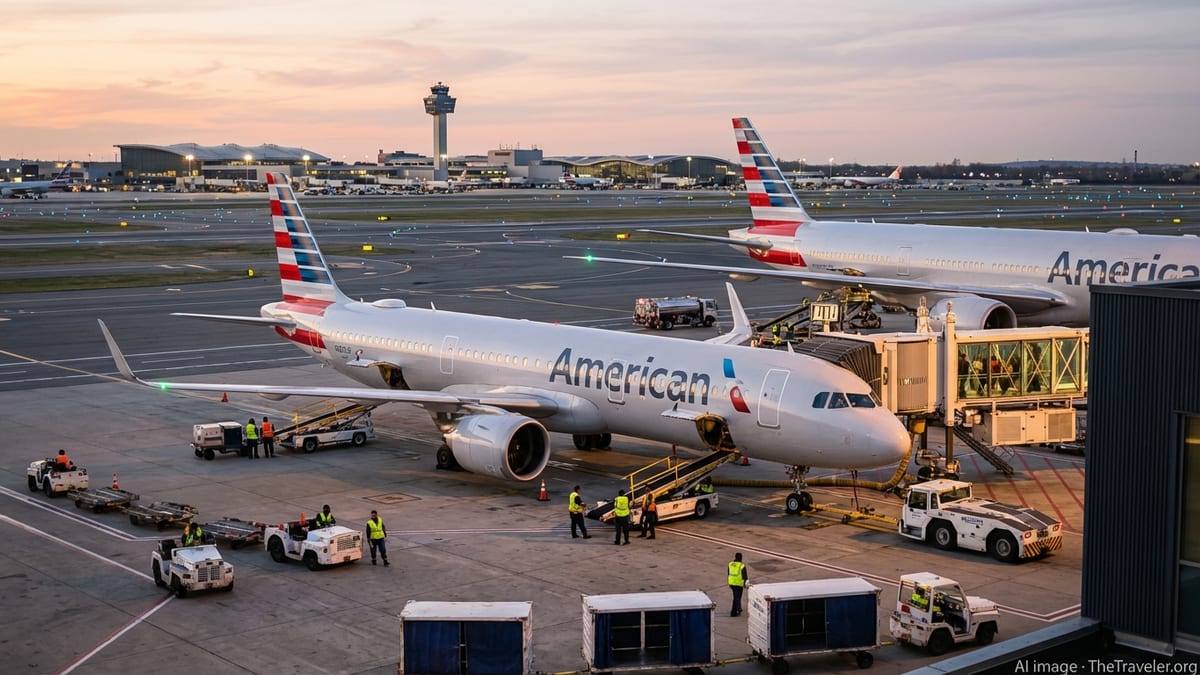
A Big Delivery Year Anchored Around 55 New Aircraft
Recent investor commentary and financial disclosures point to 2026 as a pivotal year for American Airlines’ fleet strategy. Discussion of the company’s fleet plan around its 2025 full year results highlighted a target of about 55 new aircraft deliveries in 2026, a figure described in investor coverage as the highest intake among U.S. airlines for that year.
That delivery total sits on top of a mainline fleet that already tops 1,000 aircraft, according to American’s latest fleet fact sheets and regulatory filings. Even for an airline of that scale, adding more than four dozen jets in a single year represents a meaningful increase in capacity, particularly when much of that growth is concentrated in larger, more premium narrowbody models.
The overall delivery tally reflects a mix of orders directly from manufacturers and aircraft sourced via lessors. The emphasis, however, clearly tilts toward new technology types already in service at the airline, allowing American to grow while still simplifying maintenance and training around a smaller number of families.
Industry analysts note that the final number of aircraft arriving in 2026 could vary as production timelines at Airbus and Boeing are adjusted, but the planning assumption of about 55 deliveries serves as a working benchmark for how aggressively American expects to grow its fleet next year.
Narrowbody Workhorses: 737 MAX 8 and A321neo Family
Most of the expected 2026 deliveries are tied to narrowbody aircraft that form the backbone of American’s domestic and short haul international network. Fleet fact sheets dated in early 2026 show a rapidly growing population of Boeing 737 MAX 8 aircraft, with American having taken its 100th MAX 8 in 2026 and still holding a sizable order book for additional units.
The Boeing 737 MAX 8 has become a central element of American’s fleet renewal program, replacing older narrowbodies with a more fuel efficient and higher gauge aircraft. Planning materials and discussions around the 2025 results point to a meaningful portion of the 55 incoming 2026 aircraft being MAX 8s, with deliveries spread throughout the year as Boeing’s production and delivery slots allow.
On the Airbus side, the A321neo family, including the long range A321XLR variant, also contributes to the 2026 intake. American’s fleet disclosures list dozens of A321neo aircraft already in service, with additional units set to arrive over the next several years. The combination of MAX 8 and A321neo deliveries is intended to support further upgauging across the network, allowing the airline to serve key hubs with fewer frequencies but more seats per flight.
These narrowbody additions are also linked to an ongoing effort to raise the share of premium seating across American’s fleet. New aircraft are delivered with updated cabins that feature increased numbers of business and extra legroom seats, a configuration strategy the airline has said it expects to fuel revenue growth through higher yields.
A321XLR: Small Numbers, Outsized Strategic Impact
While the absolute number of Airbus A321XLR jets arriving in 2026 is expected to be modest compared with the total narrowbody intake, their strategic significance is considerably larger. American’s order for the A321XLR is designed to give the carrier a narrowbody aircraft capable of crossing the Atlantic and operating longer missions that previously required widebody jets.
Fleet data updated in the first half of 2026 show that American already has a small number of A321XLR aircraft in service, with dozens more on order. Commentary in aviation industry coverage and schedule filings indicates that more XLRs are expected to join the fleet through 2026, with estimates from knowledgeable observers suggesting that the airline could have well over ten examples in service by year end if deliveries proceed as anticipated.
American is already scheduling the A321XLR on transatlantic routes, including missions from Philadelphia to European destinations that were previously operated by Boeing 787 aircraft. By substituting the XLR on shorter transatlantic legs, the airline can redeploy scarce widebodies to longer haul or higher demand markets while still maintaining or even growing capacity to secondary European cities.
The XLR’s arrival is also tied to changes in American’s premium product strategy. New A321XLR cabins are configured with a significant number of lie flat business class seats, supporting the airline’s aim to expand its premium footprint from key gateways such as New York, Boston, Miami and Philadelphia.
Widebody Deliveries: Limited Growth but High Stakes
Compared with the narrowbody influx, American’s widebody deliveries in 2026 are expected to be relatively modest. The airline has a remaining order book of Boeing 787-9 aircraft, but earlier deferrals pushed much of that growth into the late 2020s. Aviation community discussions around American’s fleet have pointed out that only a handful of 787-9 deliveries are scheduled across the mid decade period.
That does not mean 2026 will be entirely absent of widebody arrivals. Public fleet tables and industry reporting suggest that American still anticipates at least a small number of 787-9 deliveries as outstanding orders are fulfilled, though the exact year by year split is subject to manufacturer production constraints and any further deferral decisions.
Given American’s acknowledged tightness in widebody capacity, each 787-9 that arrives in 2026 carries outsized importance for the long haul network. New deliveries are expected to feature the carrier’s latest Flagship Suite business class and updated premium economy cabins, which American has highlighted as a core part of its strategy to grow high yielding international traffic over the coming years.
With only around 20 additional 787-9s left on order in total, according to investor discussions, the handful that may arrive in 2026 are viewed less as pure growth aircraft and more as a way to gradually ease the current widebody shortage while supporting cabin modernization.
How 2026 Deliveries Shape American’s Network and Finances
The roughly 55 aircraft American expects to receive in 2026 fit squarely into a broader strategy of controlled capacity growth paired with a tilt toward premium revenue. By taking most of its deliveries in the form of larger narrowbodies, the airline can add seats in its core hubs without dramatically increasing the number of departures, which helps keep unit costs in check.
Analysts following the company note that 2026’s delivery profile should support continued expansion at key connecting hubs including Dallas Fort Worth, Charlotte, Miami and Philadelphia. New aircraft with higher seat counts and premium heavy layouts are likely to be directed toward these markets, where American sees strong demand for both domestic and international connections.
Financially, the influx of new jets brings both higher capital spending and potential cost efficiencies. Newer aircraft typically offer better fuel burn and lower maintenance costs than the older models they replace. Over time, that can help offset interest expense and lease costs associated with the new deliveries, especially if demand remains strong and premium cabins perform as planned.
The 2026 delivery year will also set the baseline for American’s fleet through the rest of the decade. With most of its widebody growth pushed into the late 2020s and early 2030s, the airline is relying on the next wave of MAX 8, A321neo and A321XLR arrivals to sustain network growth and reposition its product. The success of these 2026 additions in driving revenue and operational reliability will likely influence how aggressively American pursues further fleet investments beyond its current order book.