


More news on this day
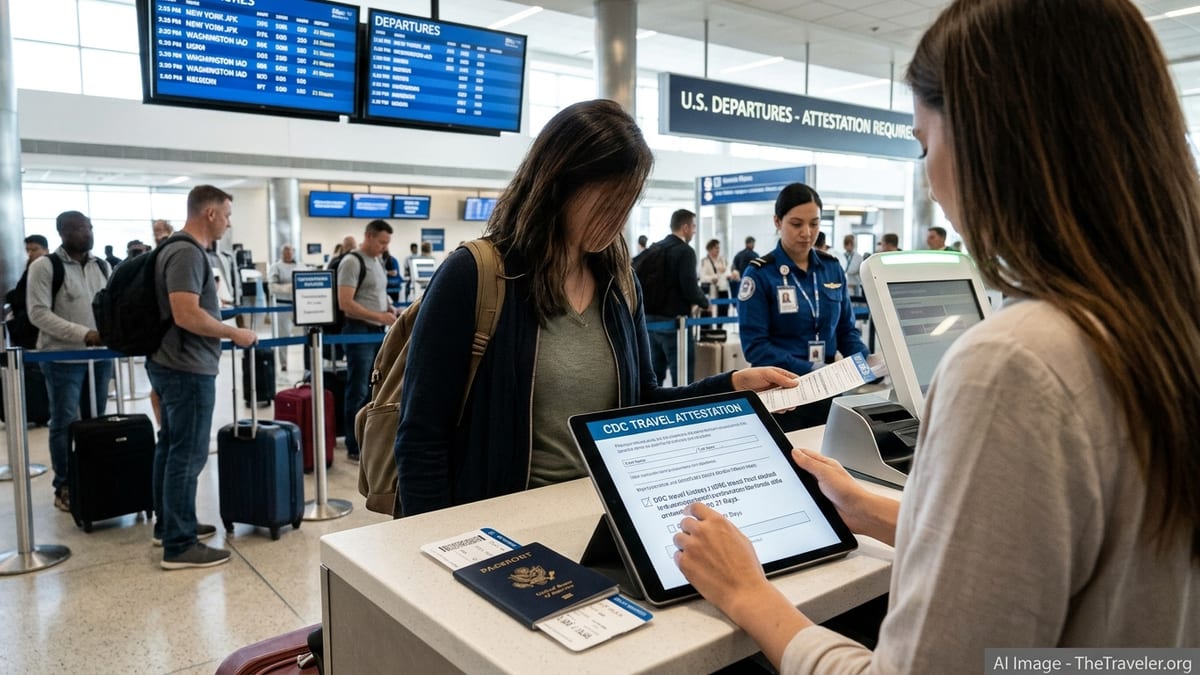
Anyone boarding an international flight bound for the United States must now sign a health attestation confirming they have not been in the Democratic Republic of the Congo (DRC) within the previous 21 days, under a federal rule that took full effect at 11:59 p.m. EST on 3 November 2026 and applies to all passengers and crew on U.S.-bound aircraft.
Get the latest news straight to your inbox!
What the new CDC attestation requires
The Centers for Disease Control and Prevention has ordered airlines and other aircraft operators not to board any person for a flight to the United States from a foreign country unless that person has completed a signed attestation stating they have not been present in the DRC during the 21 days before boarding. The original order was signed on 22 October 2026 and later amended on 28 October, with enforcement tied to departures to the United States from 3 November at 11:59 p.m. EST.
The CDC’s public guidance confirms that the requirement covers all people traveling on aircraft that land in the United States, regardless of nationality, itinerary or where their journey began, as long as the flight’s destination or connection point is a U.S. airport. Overflights that do not land in the country are not covered, and the measure does not on its face extend to land borders or cruise ship arrivals.
The amended order clarifies that the rule applies broadly to everyone on board, including operating flight crew and crew repositioning on "deadhead" status on either passenger or cargo aircraft. Airlines are required to collect each attestation in paper or digital form, retain it for 42 days after departure and make copies available to U.S. authorities on request as a condition of being granted permission to disembark passengers in the United States.
How and when travelers complete the form
Most travelers will encounter the attestation either during online check in, at an airport check in desk or at the boarding gate, depending on how their airline has implemented the CDC order. Some carriers have added a short digital questionnaire into their international check in flows, while others are using paper forms presented by agents at the airport.
The key element is a 21 day look back period: travelers must state whether they have been in the DRC at any point in the 21 days before boarding a flight to the United States. Under related enforcement guidance from the U.S. Department of Transportation, airlines are allowed to deny boarding to any traveler, including U.S. citizens and permanent residents, who cannot or will not provide the required attestation.
CDC materials indicate that limited exemptions may apply, such as for designated air medical transports operating under specific arrangements, and that verbal attestations recorded by airline staff are permitted in some circumstances when a passenger cannot complete the form independently. Travelers who have been in the DRC within the previous 21 days may fall under separate CDC Ebola orders that restrict or suspend entry for certain foreign nationals and channel some U.S. citizens and permanent residents through designated airports for health screening, so anyone in that situation is advised to review the latest CDC and Department of Homeland Security guidance before booking or attempting to travel.
No broad regional ban, but tighter conditions for some
Although the attestation focuses specifically on recent presence in the DRC, it sits alongside other Ebola related federal measures that affect travel for people with recent stays in parts of Central and East Africa. Separate CDC orders currently suspend the entry of certain foreign nationals who have recently been in the DRC, Uganda or South Sudan and route some U.S. citizens and permanent residents arriving from those countries through a limited number of U.S. airports for enhanced health checks.
The attestation requirement itself, however, does not amount to a blanket ban on travel from Africa or from the DRC. Travelers who have not been in the DRC in the previous 21 days can continue to board U.S. bound flights from any foreign country as usual, provided they complete the form truthfully. For those who have been in the DRC, the practical impact depends on nationality and immigration status, as well as how the existing suspension orders and screening rules apply at the time of travel.
Because both the attestation order and the related entry restrictions are subject to periodic review and renewal, travelers with complex itineraries or recent time in affected countries should check the latest CDC, Department of State and airline specific advisories close to their departure date. Airlines are being encouraged by U.S. authorities to highlight the rules during booking and in pre travel communications, but implementation details can vary by carrier.
New and planned long haul links into the U.S.
The tighter health documentation requirements are taking effect at the same time as airlines continue to plan new long haul connections to the United States for the coming years. United Airlines announced on 25 August 2026 what it describes as the largest international network expansion in its history, outlining plans to add 10 new cities and three additional routes for the 2027 summer season, subject to regulatory approvals.
United’s 2027 schedule changes, as published so far, focus on new links between its U.S. hubs and destinations in Europe and Asia. The carrier has highlighted forthcoming transatlantic additions from Denver, Los Angeles and Washington Dulles among the routes it intends to launch, alongside services from Newark to several cities that will be new to its network. The airline has also indicated in investor filings that these routes are planned to operate seasonally and could still be adjusted.
Across the Atlantic, Air Serbia has set 20 May 2027 as the planned start date for a new Belgrade to Miami service, which would operate twice weekly according to schedules published on the airline’s website. The route would become Air Serbia’s second regular U.S. destination after New York JFK, but, like all long haul launches, it remains contingent on final approvals and could see timing, frequency or aircraft changes before tickets are flown.
What travelers should watch next
For now, the Ebola related attestation is a standing federal requirement for every person boarding a flight to the United States from abroad, with no announced end date. Travelers should expect to confirm their DRC travel history each time they start the check in process for a U.S. bound itinerary and should allow extra time at the airport in case of queues around form completion and verification.
Before flying, passengers can reduce the risk of disruption by ensuring their booking details match their travel documents, checking how their chosen airline is handling the attestation and reviewing the latest CDC orders if they have recently been in the DRC, Uganda or South Sudan. Those planning trips on newly announced long haul routes into the United States, such as United’s 2027 additions or Air Serbia’s proposed Belgrade–Miami flights, should remember that these services are still future plans that may change and should confirm schedules and start dates at the time of booking.