


More news on this day
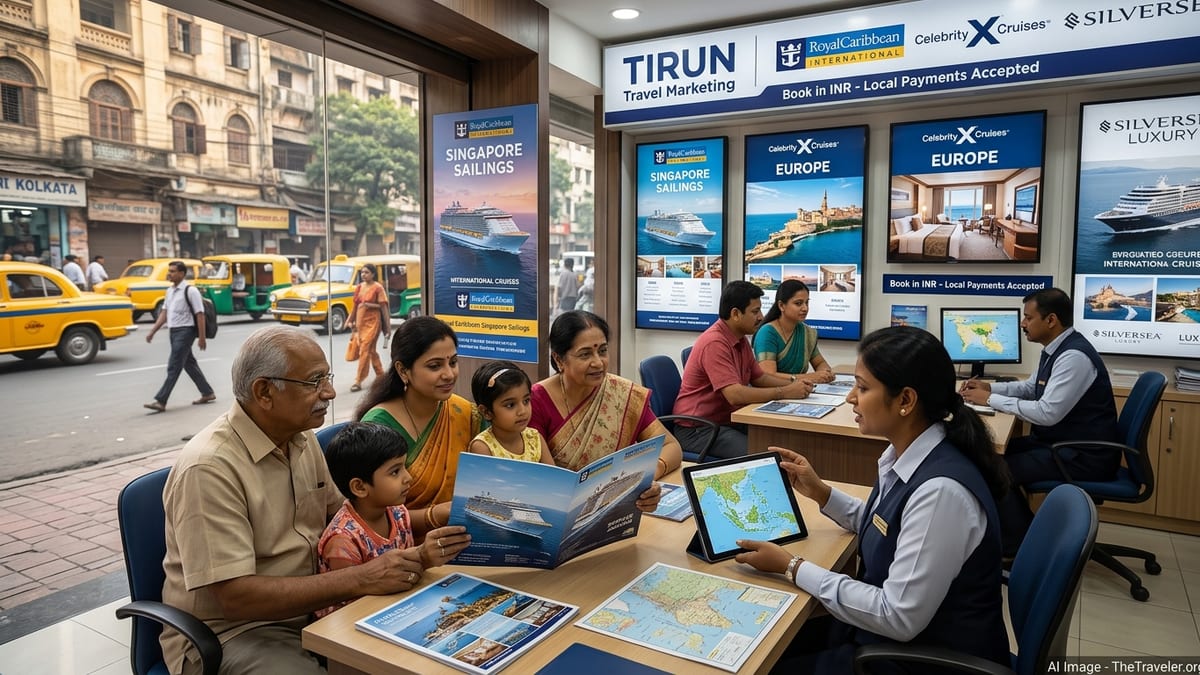
TIRUN Travel Marketing, the exclusive India representative for Royal Caribbean Group’s cruise brands, is stepping up its regional strategy in 2024 by formalising new business development roles beyond India’s metros and pushing Royal Caribbean itineraries, particularly ex-Singapore sailings sold in Indian rupees, more aggressively through travel agents in secondary cities and adjoining markets.
Get the latest news straight to your inbox!
Exclusive India representative with a wider on-ground brief
TIRUN’s own corporate material continues to describe the company as the exclusive India representative of Royal Caribbean Group, covering Royal Caribbean International, Celebrity Cruises and Silversea, and emphasises a 30-plus-year partnership that began in the early 1990s. The firm positions itself as a pan-India cruise specialist headquartered in New Delhi, with sales, operations and finance teams and an established network of trade partners rather than a direct-retail-only model.
A Zoho CRM case study on Tirun Travel Marketing underlines that this network is structured, describing a multi-tier “Inner Circle” of travel agents across India, state and destination targets, and a strong focus on travel-agent productivity and events. That profile shows TIRUN tracking inquiries and bookings by region, within and outside Asia, to decide where to push marketing and where to widen its distribution, reinforcing that geography is a central organising principle rather than an afterthought.
Royal Caribbean Group’s own public statements about India, including recent interviews with its Asia-Pacific leadership, point to India as a fast-growing source market that benefits from having a local, long-standing representative. TIRUN’s growing set of roles in trade operations, inside sales and marketing, as laid out in the Zoho case study, align with that strategy of using a local intermediary to localise content, payments and support rather than managing India solely from overseas.
New regional business development roles for East India and neighbours
What has changed more recently is the visibility of region-specific business development positions. Professional bios and recruitment listings from 2023–25 point to TIRUN carving out defined remits beyond the traditional metro focus. One senior manager profile highlights responsibility for Eastern India, Nepal and Bangladesh, describing coverage of these markets and experience in cruise and hospitality marketing for the region. Another profile lists a senior business development role for Eastern India sales linked to Royal Caribbean, indicating specific attention to trade relationships in that part of the country.
These posts sit alongside roles such as regional managers for South India and business development positions in Hyderabad, Thane, Mumbai and Chandigarh, suggesting that TIRUN is now segmenting India into multiple territories with dedicated heads rather than managing most outstation trade through a small number of metro-based staff. Job descriptions for business development roles emphasise B2B travel sales, cruise sales and working closely with travel professionals, framing the expansion explicitly in terms of travel-agent onboarding and education.
Although TIRUN has promoted itself as pan-India for several years, the clearer articulation of Eastern India, Nepal and Bangladesh coverage in recent bios, and new senior business development roles tagged to specific regions, indicate a more structured attempt to map and service secondary cities and neighbouring markets. For travellers, this means Royal Caribbean, Celebrity and Silversea product knowledge is more likely to be available through locally based or regionally assigned representatives instead of only through Delhi or Mumbai contacts.
Asia sailings marketed in INR via local agents
On the product side, TIRUN’s website highlights Royal Caribbean itineraries from popular Asia hubs such as Singapore, Hong Kong and China, alongside long-haul options in Europe, Alaska and the Caribbean. A current set of deals on TIRUN’s cruise offers page features a “Sail to Singapore with Royal Caribbean” family package, marketed with second-guest discounts and kids-sail-free messaging, promoted to Indian customers as a family getaway with flights and cruising bundled via Indian-based support.
While headline promotional tiles focus on percentage savings rather than specific rupee fares, TIRUN’s booking and contact channels are clearly set up for Indian-origin bookings: the main cruise deals and destination pages route customers through Indian phone numbers and a dedicated request-a-callback form, and payments are positioned around Indian methods such as UPI, EMI and local cards. TIRUN also notes that it sells Royal Caribbean cruises in Indian rupees, with India-based deposit and final payment handling, which removes the need for most Indian travellers to transact directly in foreign currency with an overseas entity.
For would-be cruisers in tier-2 and tier-3 cities, this combination of INR pricing, local payment options and the ability to route trip planning through a nearby agent or TIRUN’s own consultation service makes regional fly-cruise itineraries from Asia hubs more accessible. It does not change Royal Caribbean’s onboard product or deployment, but it lowers friction for booking, documentation and support from markets that previously might have relied on metro-based agencies or global online sellers.
Regional trade events and deeper outreach beyond metros
TIRUN’s trade-facing strategy is also increasingly visible at regional events. The Zoho case study notes that one of the company’s strategy leads uses CRM to manage co-op marketing, net-rate programmes and returns from trade shows and events that TIRUN hosts or attends across the country. Events are tracked in terms of budgets, bookings and agent productivity, highlighting a focus on measurable outcomes from each regional appearance.
Across India’s travel trade circuit, including formats such as TTJ TRAVMART and East India-specific marts in cities like Kolkata and Raipur, cruise lines are routinely listed among the sellers alongside airlines, destination management companies and tourism boards. These events are explicitly designed to connect suppliers with local agents from secondary cities and smaller state capitals. While individual exhibitor lists vary by edition and not every report specifies brands by name, they illustrate the kind of regional platforms that TIRUN targets to widen its database of travel partners in central and eastern India.
This regionalised approach means that agents in places such as Raipur, other cities in Chhattisgarh, and eastern hubs like Kolkata gain direct exposure to international cruise products in their local trade events calendar. For Royal Caribbean and its sister brands, that creates more touchpoints to explain ship options, cabin categories, dining policies and visa or documentation requirements directly to local agents who then serve end travellers in their catchment areas.
What travellers in non-metro cities should know now
For Indian travellers outside Delhi, Mumbai and Bengaluru, the practical impact of TIRUN’s latest moves is increased access rather than new sailings. Royal Caribbean ships are not currently homeporting in India, and core onboard features, itineraries and global promotions are set by Royal Caribbean Group. The difference is that more of the journey from enquiry to embarkation can now be handled through agents and support staff with explicit responsibility for the traveller’s region.
Bookings made via TIRUN-linked channels are processed and supported in India, including deposits, balance payments and customer service. TIRUN’s FAQs and booking guidance stress its role in helping match travellers to the right brand and sailing, and in supporting pre-cruise documentation and web check-in. Updated deposit and cancellation terms for India-booked guests were communicated in March 2024, and travellers should confirm the latest conditions with their agent or directly with TIRUN at the time of booking, as these can vary by sailing and promotion.
Looking ahead, the key unknown is how quickly bookings from regional markets will grow now that more formal regional structures are in place. If TIRUN’s agent-centric expansion in cities such as Kolkata, Hyderabad, Raipur and other secondary hubs translates into sustained passenger volumes, it could strengthen the case for further Royal Caribbean deployments in Asia that are marketed heavily to Indian travellers. For now, the immediate change is that more Indian guests can plan, pay for and support a Royal Caribbean, Celebrity or Silversea cruise without needing to rely solely on a handful of metro agencies or international websites.