


More news on this day
Airbnb is rolling out a new global house rules policy for reservations booked on or after November 20, 2026, which formally restricts the checkout chores and other conditions hosts can require of guests, in an effort to simplify stays and address long-running complaints about onerous task lists.
Get the latest news straight to your inbox!
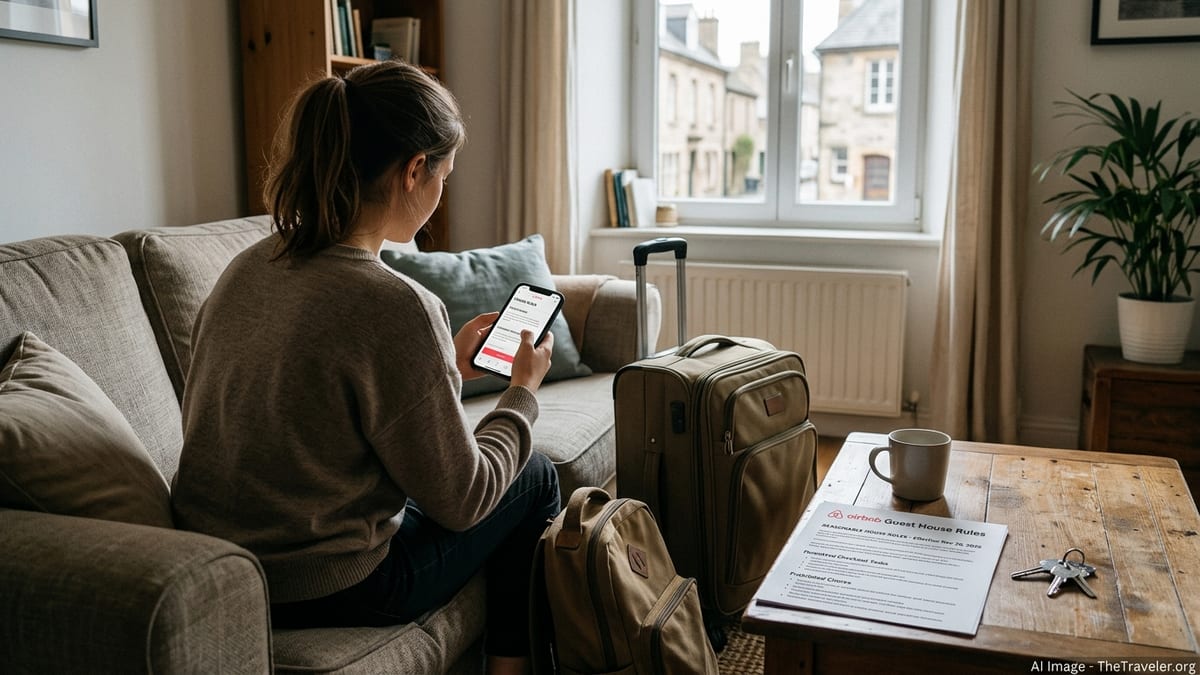
What Exactly Is Changing on November 20
Airbnb’s new “Reasonable house rules” policy, set out in its Help Center and Resource Center, starts applying to reservations booked on or after November 20, 2026. The policy standardizes what hosts may require, stating that rules must be disclosed in the dedicated house rules section at the time of booking and must comply with Airbnb’s terms. Hosts are not allowed to add new rules later by message, signage or in-person instructions, except where a law or similar external requirement applies.
The policy explicitly targets checkout chores that “require significant effort or time” or would typically be done by cleaners. Hosts are told they should not require guests to strip beds, start or run laundry, wash and put away dishes, or take trash off the property to a remote location. These tasks are treated as outside the scope of reasonable rules for new bookings from November 20 onward, regardless of whether a cleaning fee is charged.
Airbnb has also clarified that hosts generally may not impose their own fines or penalties on guests through house rules. Hosts can still warn guests about potential fines from local governments, building associations or similar bodies, but only in the specific section Airbnb provides for this purpose, and the fines themselves must come from those external entities rather than from the host.
What Hosts Can Still Ask Guests To Do
The new framework does not eliminate checkout requests altogether. Airbnb’s examples of acceptable instructions focus on light tidying and basic safety. Hosts can ask guests to place used dishes in the sink rather than washing and storing them, gather used towels in one place, place rubbish in on-site bins, turn off lights and appliances, and lock doors and windows when leaving.
Some location-specific rules remain possible when they are linked to safety, environmental protection or legal compliance. Airbnb’s own guidance notes that it may be considered reasonable, for example, to require guests to secure trash in animal-proof containers in bear country or to limit shower times during periods of drought-related water restrictions. Such rules still need to be clearly disclosed before booking and framed as part of the house rules system rather than as informal extra demands.
Separately, the platform has codified “lock up at checkout” as one of several standard house rules that hosts can toggle on. Guests will see these standard rules prominently in listing pages, trip details and pre-departure reminders, with additional checkout instructions appearing in the same centralised area rather than scattered across multiple messages.
Enforcement, Appeals and Host Backlash
To enforce the policy, Airbnb says it will begin reviewing listings from November 20, 2026, with an initial review period running into March 2027. Listings that contain rules considered unreasonable under the new standard are to be flagged to hosts by email and in-app alerts. Hosts will have at least 20 days to edit or remove the problematic rules or to submit an appeal explaining why a specific requirement is necessary for their property or location.
Airbnb indicates that repeated non-compliance can lead to consequences on the platform, potentially including reduced search visibility for affected listings or guest-facing notices about rule issues. The company also confirms that if a guest signals they will not follow a valid, disclosed house rule, or violates one during a stay, hosts can cancel without standard host penalties and can ask Airbnb for assistance with next steps.
The policy has prompted visible backlash among some hosts, including open letters and extensive discussion in Airbnb’s Community Center, who argue the changes reduce their flexibility and push the platform toward a more hotel-like model. Following this pushback, Airbnb updated and clarified language in its Resource Center articles in November, but coverage from travel and business outlets, as well as the latest policy text, indicates that the core bans on major checkout chores, host-imposed fines and after-booking rule additions remain in place for new reservations.
What Travelers Need To Know Before Booking
For travelers, the most immediate change is in what can be formally required at checkout. For reservations booked on or after November 20, 2026, guests should not encounter mandatory lists of labor-intensive tasks such as stripping beds, running laundry cycles or fully cleaning the kitchen, even if they are paying a separate cleaning fee. Required checkout actions are intended to be limited to light tidying, safe lock-up and any clearly explained safety or compliance steps specific to the property.
The new policy does not guarantee that every stay will be friction-free. Some hosts may take time to update their listings, and enforcement will depend on Airbnb’s review process and how actively guests report non-compliant rules. Travelers who see extensive checkout chore lists within house rules for reservations booked from November 20 onward can reference the updated policy when contacting Airbnb support, but they should also verify the latest rules within their reservation details in the app before arrival.
Looking ahead, Airbnb plans to continue reviewing listings beyond March 2027 and may refine its guidance as it evaluates appeals and local legal requirements. Travelers booking future stays should check the house rules section at the time of reservation, confirm that any checkout instructions align with the limited tasks now described in Airbnb’s policy, and revisit the live policy page shortly before travel in case of further updates or jurisdiction-specific changes.