


More news on this day
Two decades ago, MSC Cruises sailed a modest fleet of older vessels largely focused on traditional Mediterranean routes. Today, after an intensive 25-year investment program, the company operates one of the world’s youngest, largest and most technologically advanced cruise fleets, reshaping how mainstream travelers experience both the Mediterranean and the Caribbean.
Get the latest news straight to your inbox!
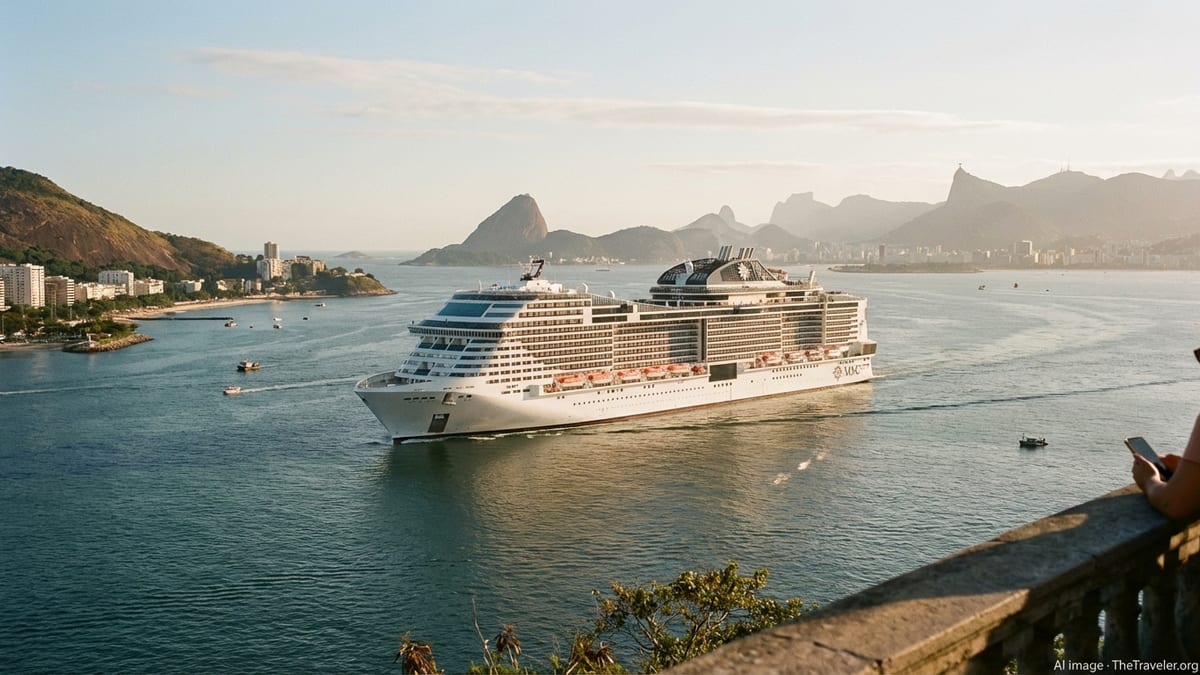
From Legacy Tonnage to a Modern Global Fleet
Publicly available company history shows that MSC’s current cruise business is the result of a long-running investment drive that began in 2003, when the group committed billions of euros to newbuilds and fleet renewal. Early 2000s tonnage such as the Lirica-class ships formed the foundation, but the subsequent construction program steadily shifted the line from refitted tonnage toward purpose-built contemporary megaships designed for warm-weather, resort-style itineraries.
By 2023, reports indicate that MSC Cruises was operating 22 ships with an average age of just over 10 years, making it one of the youngest large fleets in the industry. In parallel, the group’s cruise division has expanded into the luxury segment with Explora Journeys, further broadening its footprint while keeping the core brand focused on high-capacity ships that can sustain dense schedules in the Mediterranean and Caribbean.
Current fleet planning information suggests that MSC is on course to reach around 25 cruise ships by 2027, with additional tonnage already on order through the early 2030s. This sustained growth has not only increased capacity but also enabled the line to match specific ship classes to particular regions, including year-round Caribbean deployments tailored to both North American and European markets.
As a result, the profile of an MSC voyage has changed significantly compared with the early 2000s. Guests are now more likely to sail on new-generation ships offering multi-deck promenades, water parks, expanded family amenities and large dedicated spa and wellness spaces, features that are influencing the competitive landscape across the Mediterranean and Caribbean.
LNG Flagships Bridge the Mediterranean and Caribbean
A pivotal feature of MSC’s fleet transformation is the arrival of its World Class and Meraviglia-Plus-class flagships, including MSC World Europa and MSC Euribia. These large-capacity vessels, introduced in 2022 and 2023 respectively, are among the first in the fleet to be powered by liquefied natural gas, a transition that publicly available sustainability reports describe as central to the company’s emissions-reduction strategy.
In Europe, MSC World Europa has become a high-profile presence on Western Mediterranean itineraries, offering seven-night routes that pair marquee ports in Italy, France, Spain and Malta. The ship’s scale and design, including a distinctive open-air promenade and large entertainment spaces, have allowed MSC to concentrate thousands of berths on core Mediterranean circuits during peak summer seasons.
The same new hardware is now being used to reshape Caribbean deployments. Industry schedules and recent deployment updates indicate that MSC World Europa is moving from primarily European routes toward a growing role in the Caribbean, including winter seasons from French Antilles homeports. That shift reflects a broader strategy to use the newest, lowest-emission ships on long-haul fly-cruise products linking European source markets with Caribbean island chains.
MSC Euribia, also LNG-powered, has followed a similar pattern, initially serving Northern Europe and then being repositioned along routes that can take advantage of her fuel efficiency and large passenger capacity. The flexibility to rotate these ships between Mediterranean summers and Caribbean or Middle East winters is a direct outcome of the 25-year renewal program and is increasingly shaping where and when travelers encounter MSC’s newest onboard concepts.
New Itineraries and a Private Island Network
Fleet renewal has been closely tied to destination investments, particularly in the Caribbean. Publicly available information shows that MSC committed around 200 million US dollars to transform a former industrial site in the Bahamas into Ocean Cay MSC Marine Reserve, which welcomed its first guests in late 2019 as a dedicated private island destination.
The line’s newest and largest ships routinely call at Ocean Cay on Caribbean sailings from Florida, turning the island into a central feature of week-long and short-break itineraries. As more high-capacity ships join the fleet, MSC has also announced additional infrastructure in the region, including a major cruise terminal in Miami and new port developments in the Bahamas, designed to accommodate the latest vessel classes.
On the itinerary side, schedules compiled by industry trackers show MSC concentrating a substantial share of its summer capacity in the Mediterranean, while gradually building up year-round and seasonal deployments in the Caribbean from Miami, Port Canaveral, Galveston and Caribbean homeports that primarily serve European guests. Newer ships are often assigned to routes that combine marquee islands with Ocean Cay, reinforcing a branded resort experience that did not exist when the fleet renewal effort began.
This dual-basin strategy is influencing traveler choices. Mediterranean loyalists can now follow familiar brands and ship classes across the Atlantic during winter seasons, while North American guests are increasingly encountering ships that debuted in Europe. The cross-pollination of hardware and onboard concepts between regions is a defining feature of MSC’s post-renewal deployment strategy.
Environmental Technology Changes the Onboard Experience
Alongside capacity growth, MSC’s 25-year fleet program has placed growing emphasis on environmental performance. Cruise division sustainability reports highlight successive milestones, from installing exhaust gas cleaning systems and advanced wastewater treatment on existing ships to ordering a series of dual-fuel LNG-capable vessels supported by shore power and energy-efficiency technologies.
According to recent disclosures on group fleet development, by the mid-2020s MSC projects that a significant share of its overall shipping and cruise capacity will be transported on dual-fuel vessels, with further ships on order that are prepared to operate on future low- and zero-carbon fuels. For cruise passengers, this transition manifests not only in lower-emission engines but also in visible features such as optimized hull forms, waste management systems and energy-saving hotel technologies.
Onboard, these changes combine with larger public areas to support more diverse dining and entertainment concepts, which are increasingly tailored to both Mediterranean and Caribbean itineraries. For example, fleet documents describing World Class ships emphasize expansive outdoor decks and family areas suitable for hot-weather cruising, while indoor promenades and observation spaces cater to cooler seasons and repositioning voyages.
For travelers comparing cruise options in the two regions, such environmental and design features are becoming part of the value calculation. The presence of LNG-powered ships on Mediterranean and Caribbean routes is now a visible differentiator, particularly for guests interested in lower-emission travel and for ports that are tightening air-quality and electrification requirements.
What It Means for Future Mediterranean–Caribbean Cruising
The cumulative effect of MSC’s 25-year fleet transformation is a more integrated network of itineraries across the Mediterranean and Caribbean. With additional large ships on order and an expanding portfolio of terminals and private destinations, the company is positioned to offer more back-to-back combinations, extended seasons and fly-cruise options that link the two regions.
For Mediterranean travelers, this means greater access to familiar ships on Caribbean routes, often packaged with flights and pre- or post-cruise stays. For North American guests, it brings a wider choice of European-style hardware on departures from Florida, Texas and Caribbean homeports, blending Mediterranean design influences with established Caribbean port calls.
Industry data on passenger volumes underscore the scale of this shift. Reports show MSC carrying more than four million guests in 2023 alone, supported by aggressive capacity additions in the preceding seven years. As new ships continue to enter service and older vessels are redeployed, the balance of capacity between the Mediterranean and Caribbean is expected to remain dynamic, shaped by demand patterns, fuel infrastructure and port development on both sides of the Atlantic.
For now, the transformation that began with a small group of ships in 2003 has resulted in a global fleet that connects two of the world’s most popular cruise regions in new ways, with large, efficient vessels and branded island experiences at the center of the company’s growth strategy.
Sources: MSC Cruises company history and fleet overview; Cruise Industry News coverage of MSC global growth and deployment; Cruise Industry News passenger volume and fleet data; MSC Cruises Sustainability Report 2023