


More news on this day
Operations at Cleveland Hopkins International Airport resumed on Friday morning after an approximately hourlong pause linked to a security matter on the airfield, disrupting early flights but leaving the terminal open and accessible to passengers.
Get the latest news straight to your inbox!
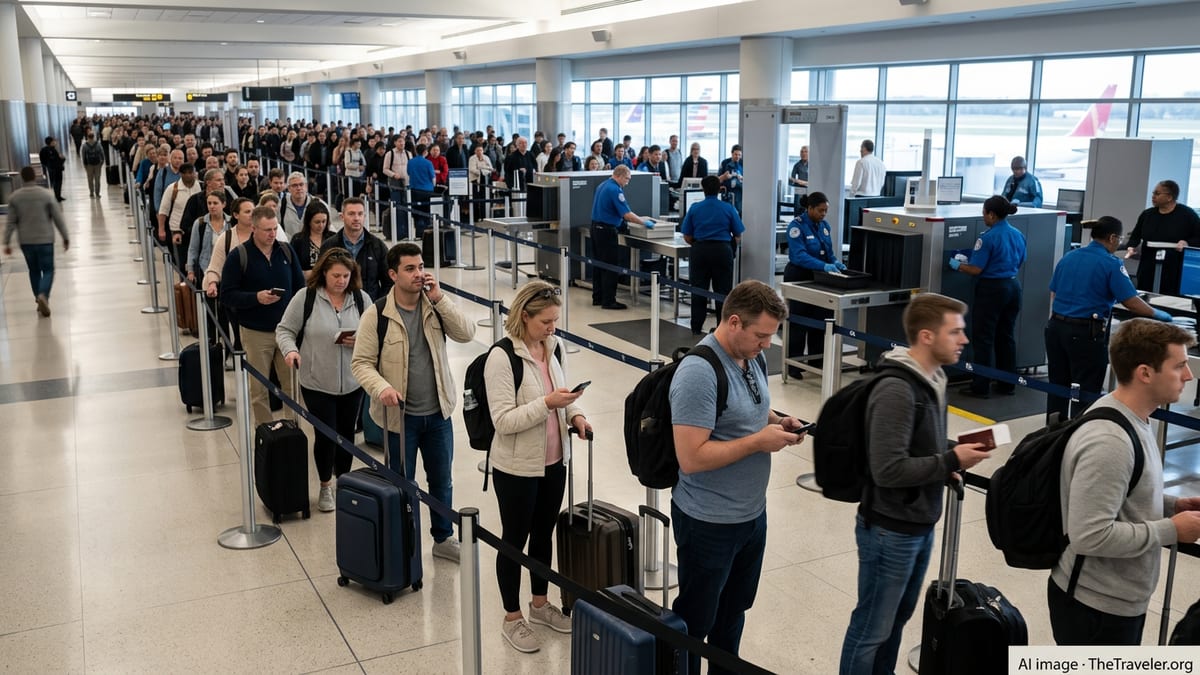
Security matter triggers short shutdown on August 28
Publicly available information indicates that Cleveland Hopkins International Airport briefly halted airfield operations on the morning of August 28, 2026, after a person became separated from an authorized escort in a restricted area. Local and industry coverage describe the situation as a security matter that automatically required a full sweep of sensitive airfield zones before flights could depart or land again.
Reports indicate that the pause began shortly before 6 a.m. local time and lasted for about an hour while safety teams and law enforcement partners verified that the restricted area was secure. During this window, aircraft already at the gates remained in place, and some inbound flights were temporarily diverted to other airports in the region as a precaution.
Coverage compiled by travel and local news outlets notes that the incident involved an airline contractor responsible for escorting an individual through a controlled part of the airfield. Losing visual contact with that person represented a breach of federal security protocols, triggering the shutdown until the escort situation could be fully resolved and the area cleared.
The airport’s public statement, as carried by multiple outlets, characterized the disruption only as a security matter and did not identify the contractor or the individual involved. The matter remains under review at the federal level, and further procedural changes may follow once that process is complete.
Flights and connections resume with lingering delays
Once the restricted area had been swept, normal airfield operations resumed at Cleveland Hopkins at around 7 a.m. on August 28. Flight-tracking services and airline updates showed departures gradually restarting, with a mix of delays and gate changes as carriers worked through the early-morning backlog created by the pause.
Passengers posting on social platforms described aircraft holding on taxiways, boarding processes halted midstream, and in some cases diversions to other Midwest hubs while the security matter was addressed. In a few instances, travelers reported being asked to deplane due to the expected length of the stoppage, only to reboard once information circulated that the closure would be shorter than initially feared.
By later in the morning, schedules appeared to stabilize, though travelers reported residual knock-on delays for several hours as crews and aircraft returned to planned rotations. Publicly accessible airport condition dashboards now show routine operations at Cleveland Hopkins, with no ongoing ground stop connected to the August 28 event.
Airlines have been directing travelers to their apps and websites for the latest rebooking and delay details, and standard contract-of-carriage rules apply. Published coverage notes that no specific passenger compensation program has been announced in relation to the short-lived airfield pause.
What travelers passing through CLE should know now
For travelers with upcoming itineraries through Cleveland, current data from aviation information services lists Cleveland Hopkins as open and operating on a normal schedule. No new security-related notices linked to the August 28 incident appear on general airport status pages, indicating that the event has shifted from an operational disruption to a review and follow-up phase.
Even so, those connecting through CLE in the days immediately following the sweep may still encounter occasional late arrivals or aircraft substitutions as airlines reposition planes and crews. Travel analysts often point out that even a brief early-morning interruption can ripple across a network for several flights, particularly at airports that handle a steady volume of regional and mainline operations.
Standard traveler advice applies: check flight status early and often, enable airline push notifications, and allow extra time for connections, especially on tight itineraries. For travelers starting their trips in Cleveland, arriving at the airport with a buffer before departure remains the best hedge against any lingering schedule variability.
Local planning documents and recent city measures also highlight a broader modernization effort at Cleveland Hopkins, including upgrades to baggage systems and security technology. While unrelated to the specific August 28 incident, these projects aim to support smoother operations and more resilient responses when irregular events occur.
Spotlight on escorted access and airfield security
The incident has drawn attention to how tightly regulated escorted movement is on the secure side of U.S. airports. Under federal rules, anyone without the appropriate permanent clearance must remain under continuous escort while in restricted airfield areas, and that escort must maintain uninterrupted visual contact. A lapse in that escort relationship typically requires an immediate security response.
Public job descriptions and planning documents for Cleveland Hopkins outline a complex security ecosystem built around an Airport Security Operations Center, access-control systems, and extensive camera coverage. These systems are designed to support a rapid shutdown and methodical sweep when a security matter is detected, even if that response disrupts flight activity for a limited period.
Industry observers note that such events, while relatively rare, often lead to close reviews of contractor procedures, training, and badging controls. In this case, reports indicate that a federal review is underway focused on the airline contractor’s escort practices and on whether any additional safeguards are needed to prevent similar situations in the future.
For travelers, the August 28 pause underscores why even minor issues on the secure side of an airport can have outsized effects on flight schedules. Systems are intentionally built to err on the side of caution, temporarily halting operations until the chain of security can be fully reestablished.
Context: A busy airport balancing growth and resilience
Cleveland Hopkins serves as Northeast Ohio’s primary commercial airport, handling a mix of domestic and limited international traffic along with cargo and general aviation operations. Federal airport data and local planning materials show that the facility has been preparing for continued passenger growth through a series of modernization initiatives.
Recent city legislation has authorized design and construction work on upgraded in-line baggage handling systems, reflecting a wider focus on improving behind-the-scenes infrastructure such as security screening and baggage screening technology. Airport newsletters also describe efforts to expand passenger services, from accessibility programs to stress-relief initiatives in the terminal.
Events such as the August 28 security pause are evaluated against this broader backdrop of operational resilience. While the disruption was short, it effectively tested how quickly airport teams, federal partners, and airlines could coordinate to secure restricted areas and restart flights with minimal long-term impact.
As investigations and reviews proceed, travelers and industry watchers will be looking for any publicly announced procedural changes or technology upgrades that emerge from the incident. For now, Cleveland Hopkins continues to function as a routine Midwest gateway, with the security matter registered as a brief but notable interruption in an otherwise normal travel season.
Security lapse briefly shuts down Cleveland Hopkins Airport
Cleveland Hopkins resumes after hourlong security sweep