


The first time I walked into a St. Regis lobby, I expected marble, chandeliers, and monogrammed everything. What I did not expect was that a single, almost invisible detail would unsettle every assumption I had about what makes a hotel feel truly luxurious. It was not a bigger suite, a higher thread count, or a fancier cocktail. It was a quiet, carefully engineered sensory cue that followed me from New York to Singapore and changed how I see high-end hotels altogether.
Get the latest updates straight to your inbox!
The Moment Luxury Stopped Being About Marble
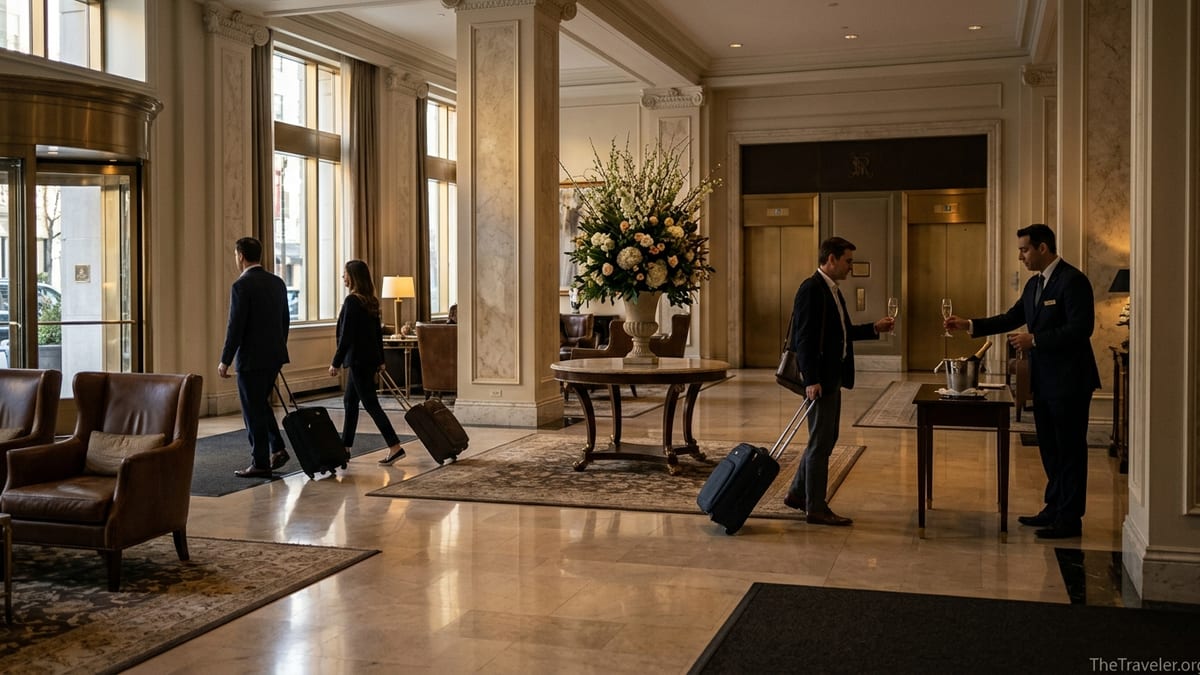
On a gray afternoon in New York, I wheeled my suitcase through the revolving doors of The St. Regis New York, half-distracted by the usual inventory a travel writer takes on arrival: the gleam of the brass, the way the staff glanced up, the condition of the flowers on the console table. What caught me instead was something I could not quite name at first. It was in the air, soft and floral but not sugary, threaded with something woody and crisp that felt expensive in a way I could not immediately place.
I checked in, made a mental note of the rate written in my confirmation, and walked toward the elevators. The scent deepened there, still subtle, but unmistakably intentional. It followed me into the hallway on my floor and lingered again when I opened the door to my room. Only then did I notice a small card by a candle on the desk, explaining that this was Caroline’s Four Hundred, the bespoke St. Regis fragrance inspired by Gilded Age socialite Caroline Astor and her legendary balls in Manhattan.
It was the first time I realized a hotel brand could be stitched together not just through logos, fonts, and marble types, but through a single sensory signature. The scent was not loud; it never shouted for attention the way a lobby bar soundtrack or a towering floral installation might. Instead, it tied together the lobby, the corridors, and the guest rooms into one continuous story. That one detail shifted my focus away from what luxury looks like to what it feels like the second you cross the threshold.
Over the next few years, I would encounter the same fragrance again, in different corners of the world, from beach humidity to tropical evening rain. Each time it instantly told me where I was before I had seen my room or met my butler. It was a masterclass in how one small, carefully designed element can become the backbone of a brand.
The Signature Scent That Follows You Around the World
St. Regis calls that fragrance Caroline’s Four Hundred, created with the niche perfume house Arquiste and originally rolled out across the brand’s hotels as a single unifying scent. In practice, that means you might catch it as a whisper in the lobby at The St. Regis New York or as a more noticeable presence in a room diffuser at a resort in Asia or the Caribbean. Notes of American Beauty rose, lilies, and green stems are meant to evoke the floral arrangements of Caroline Astor’s famous parties, and touches of fruit blossom and wood keep it from feeling dated or powdery.
At some properties, the fragrance shows up as a candle or room spray that guests can buy and take home. On Marriott’s retail shop, a 100 ml bottle of the St. Regis room fragrance typically sits in the zone of a high-end perfume, around the cost of a premium niche candle. You might burn it months later in a small city apartment, only to find yourself unexpectedly back in that lobby in Osaka or that corridor in Singapore. In effect, the hotel has exported a piece of its physical experience into your everyday life, something even the most beautiful lobby cannot do once you have checked out.
I felt the power of that consistency most vividly when I arrived jet-lagged at The St. Regis Singapore. The tropical air outside was heavy and wet, the kind that pastes your shirt to your back. Inside, the moment the doors closed, the climate shifted: cooler, drier, and tinged with the same rose-and-wood whisper I had first met in New York. The architecture was different, the art was local, but the brand’s personality came through instantly. That is when it clicked that the fragrance was not just a nice touch. It was a form of orientation, a way of telling you, without a single word, “You have arrived at St. Regis.”
Other luxury brands have their own sensory signatures. A Park Hyatt might lean on minimalist florals and warm woods; a Four Seasons may emphasize fresh white florals and citrus. But few have pushed a single bespoke scent as far as St. Regis has, across lobbies, spas, and guest room amenities. When you are paying 900 to 2,500 US dollars per night at a flagship property in cities like New York or San Francisco, that invisible continuity becomes part of what you are actually buying.
Why That One Detail Changed How I Judge Luxury
That signature scent rewired my expectations in a way that I now struggle to turn off. Once you have experienced a hotel using a small, consistent detail to anchor the entire stay, inconsistency starts to feel like a design flaw, no matter how glamorous the lobby chandelier might be. I find myself asking very different questions when I walk into a supposedly luxury property now. Does the story I get in the lobby match what I feel in the elevator, the guest corridor, and at turndown? Or does it all fall apart once I leave the Instagrammable arrival moment?
At one five-star city hotel that will remain unnamed, the lobby was a striking mix of dark stone and dramatic, moody lighting. It looked like a James Bond set. But the guest corridors were lit with cold fluorescent bulbs and smelled faintly of cleaning chemicals and stale air. The room had another generic scent entirely, from a mass-market reed diffuser. The effect was jarring, like three different hotels stitched together. The rate was within the same band as a typical St. Regis city flagship, but nothing about it felt like a coherent luxury experience.
By contrast, I remember walking into The St. Regis Osaka just before the evening champagne sabering ritual. The lobby was brighter and more contemporary than New York’s, with modern art and lighter wood. Yet the scent in the air linked it back to the same story, and the sabrage that followed reinforced the sense of brand ritual. A manager in a dark jacket stepped forward, told a short origin story of sabrage, and cleanly took the top off a bottle of champagne with a blade. Guests gathered around were poured glasses at no charge. It lasted only a few minutes, but the combination of sound, scent, and taste made it feel like a scene you could only have at St. Regis.
That is what the best luxury hotels understand: guests are not just buying square meters and amenities, they are buying a narrative that feels consistent from arrival to checkout. After St. Regis, I started to weigh less heavily the sheer opulence of a property and far more the subtle threads that tie the experience together. A signature detail, repeated with care, can be more powerful than another slab of exotic marble.
From Butlers to Bloody Marys: The Web of St. Regis Rituals
Of course, the signature scent is just one piece of the St. Regis identity. The brand also leans heavily on rituals and services that, at first glance, might seem like performance. There is the sabrage at sunset, which many properties stage in the lobby or bar around 6 p.m., often with complimentary pours of champagne for guests who happen to be there. There is afternoon tea, particularly elaborate in venues like Astor Court in New York, where a tea service with sandwiches, scones, and pastries can easily run between roughly 75 and 175 US dollars per person depending on extras like champagne.
Then there is the butler service, which has become almost mythical among frequent guests. At most St. Regis properties, every room category includes some form of butler access. In practice, that can range from a WhatsApp message on arrival offering to unpack your suitcase and press your travel-weary shirts, to daily coffee or tea service delivered within minutes, to concierge-style assistance with restaurant reservations and activities. Regulars often talk about asking butlers to shine shoes before a meeting, steam gowns before a wedding, or arrange last-minute airport transfers.
At resorts such as St. Regis Maldives, butlers routinely drive guests around the island in buggies, coordinate dive trips or spa bookings, and handle packing and unpacking. In urban properties, the service may be more focused on garment care, coffee service, and logistics, but the principle is the same: remove friction and make the guest feel personally looked after. Tipping norms vary, but many repeat guests quietly budget a few dollars per interaction or a larger envelope per stay, especially when they make heavy use of unpacking or special errands.
Taken together, these elements form a network of brand cues: the scent in the air, the sabrage at dusk, the Bloody Mary variation at the bar (a nod to the cocktail’s origin story at the King Cole Bar in New York), the butler greeting you by name. When they all work in concert, they create that elusive feeling travelers describe as “effortless.” When even one is handled without care, the spell is easier to break than you might think.
How This Changed the Way I Use and Evaluate Services
After that first stay where the signature scent registered with me, I realized I had been underusing what truly differentiates high-end hotels. Like many travelers, I would book a St. Regis or similar property, then proceed to handle most things myself, almost out of habit: ironing my own clothes, hunting down my own coffee, mapping my own walking routes. The notion of asking a stranger to unpack my suitcase felt, frankly, awkward.
Now, I look at those services differently, and I encourage readers to do the same. If a brand builds its identity around attentive, personalized service, then not using that service is effectively paying for a feature and choosing not to turn it on. On a recent stay at a St. Regis in North America, I tested the butler offering for the sake of research. I texted before arrival to say I would be coming straight from a long-haul flight and would need a suit pressed and coffee delivered within the first hour. By the time I stepped into my room, the suit hangers were already set aside, and within minutes the butler had collected the outfit for pressing and confirmed an estimated return time of just over an hour. Ten minutes after that, a tray with coffee and a small bowl of nuts arrived, unprompted.
None of these gestures were dramatic. They did not involve a private chef or a car with my name on a card. But they changed the emotional temperature of the stay. Instead of losing an hour to figuring out where the iron was or waiting in the lobby café line, I showered, answered emails at the desk, and walked out the door in a properly pressed suit. If the nightly rate is north of 1,000 US dollars, reclaiming even small pockets of time and stress is part of the value proposition.
I also began paying closer attention to how other brands handle details they claim as signature. A hotel that advertises a “pillow menu” but takes 30 minutes to pick up the phone, or delivers the wrong pillows altogether, is not actually in the same league as one that quietly scents every public space with the same bespoke fragrance and has your coffee preference memorized by the second morning. Luxury, I realized, is less about how things appear in marketing photos and more about how precisely and consistently small promises are kept.
How Travelers Can Spot Thoughtful Luxury Before They Book
Once you know to look for it, you can often spot whether a hotel has this level of intentionality before you ever hand over your credit card. The clues are rarely in the room size or the number of pool cabanas. They tend to lurk in the particulars: does the hotel talk about a specific signature scent, tea, or ritual that appears across multiple properties? Does the property description mention butlers, evening rituals, or heritage references that actually tie back to the brand’s origin story, not just generic words like “timeless” and “bespoke”?
For St. Regis, public information about the Caroline’s Four Hundred scent, the daily or weekly champagne sabering, and the butler service is relatively easy to find for many locations. You will see references to evening rituals on property fact sheets, to the signature fragrance in spa descriptions, and to butlers in room descriptions even for base-level categories. When that level of detail is present, you can reasonably expect that the hotel has thought through more than just the furniture layout.
Compare that with properties that lean on vague superlatives but provide almost no specifics beyond high-thread-count linens and a long list of restaurant names. That does not mean they will deliver a poor stay, but it often does mean the experience will be less tightly choreographed. You might find a stunning lobby paired with corridors that feel like any generic business hotel, or a splashy bar without any distinctive drink program that ties back to the brand’s story.
As a traveler, this shift in perspective can directly influence how you allocate your budget. If you are choosing between a St. Regis and another luxury option at a similar price point in a city like Toronto or Chicago, knowing that one brand has a tested matrix of rituals, scents, and services can be the deciding factor. You are not paying only for the square footage of the room or the view from the window, but for an ecosystem of details that, when executed well, significantly reduce friction and elevate the mood of the entire trip.
The Takeaway
For years, I evaluated luxury hotels by their most visible features: lobby grandeur, suite size, pool design. St. Regis and its now-familiar fragrance taught me to look in the opposite direction, toward the details that most guests barely notice consciously but feel all the same. When a brand takes the trouble to design a single scent, rooted in its own history and deployed consistently from New York to Singapore, it signals a deeper commitment to coherence than any chandelier ever could.
That one signature detail changed how I use luxury hotels, too. I now see butler service less as an indulgence and more as part of the product I am already paying for, whether that means pressing a shirt, running a bath after a red-eye flight, or simply remembering that I take my morning coffee black. I pay more attention to rituals like sabrage and afternoon tea, not as performances for social media but as ways brands try to express a personality night after night.
Most of all, it has shifted my advice to travelers. When you are deciding where to spend serious money on a hotel, ignore, for a moment, the size of the lobby flower arrangements. Instead, ask what one or two details truly define the brand and how often they show up in real stays, not just in brochures. If the answer is clear, specific, and consistent, there is a good chance the rest of the experience will live up to the promise.
And if, as you step through the doors after a long journey, a familiar scent wraps around you and quietly says, “You have arrived,” you will know that your money bought something more lasting than a nice photograph. It bought a feeling you can recognize with your eyes closed.
FAQ
Q1. What exactly is the St. Regis signature detail you mention?
The defining detail is the brand’s bespoke fragrance, Caroline’s Four Hundred, a subtle rose and wood scent used throughout many St. Regis hotels.
Q2. Can regular guests actually notice the St. Regis signature scent?
Yes, although it is intentionally soft. Most guests first notice it in the lobby or corridor and then recognize it again in their room or at another property.
Q3. Is the St. Regis fragrance the same at every property worldwide?
The core Caroline’s Four Hundred scent is shared, but strength and placement can vary. Some hotels use it more prominently in lobbies, others in rooms or spas.
Q4. Can travelers buy the St. Regis scent to use at home?
In many cases, yes. The brand sells room sprays and candles in the same fragrance through its retail channels and selected hotel boutiques.
Q5. How expensive is a typical night at a flagship St. Regis?
Rates vary widely by city and season, but major urban flagships in North America often start in the high hundreds of dollars and can exceed 1,000 dollars per night.
Q6. Is butler service really included for all St. Regis guests?
Most St. Regis properties advertise butler access for all room types, though the scope of service and how proactive it feels can differ between hotels.
Q7. What are some practical ways to use a St. Regis butler?
Common requests include unpacking and packing luggage, garment pressing, morning coffee or tea delivery, shoe shining, and help with restaurant or transport arrangements.
Q8. What is the champagne sabering ritual at St. Regis hotels?
Many St. Regis properties mark evening with a short ceremony where a staff member opens a champagne bottle with a blade and offers guests a complimentary toast.
Q9. How does St. Regis compare with other luxury hotel brands?
While competitors may match or exceed it in hardware, St. Regis stands out for combining butler service, rituals, and a unifying scent into a consistent brand story.
Q10. How can I tell if a luxury hotel truly cares about details like this?
Look for specific, repeated elements in its descriptions, such as a signature scent, ritual, or service, and check traveler reviews to see if those details appear in real experiences.