

Saudi Arabia is transforming how people move around its vast landscape, combining ambitious new public transport projects with traditional reliance on cars, taxis and domestic flights. For visitors, the choice of transport can shape everything from budget and timing to the kind of experience you have on the ground. Whether you plan to explore only Riyadh and Jeddah or venture into the desert, the Red Sea coast and the holy cities, understanding how to get around will help you travel more confidently and efficiently.
Understanding Distances and When to Fly, Drive or Ride
Saudi Arabia is enormous, and this is the first thing to keep in mind when planning how to move around. The distance from Jeddah on the Red Sea to Dammam on the Gulf is roughly comparable to driving across several European countries, and long overland journeys can take a full day or more. For many domestic routes, especially those over 400 to 500 kilometers, domestic flights are usually the most time-efficient choice. Major carriers operate frequent services between big cities such as Riyadh, Jeddah, Dammam, Madinah and Abha, and competition keeps fares relatively reasonable on popular routes.
Driving comes into its own for regional itineraries and areas with limited public transport. Road infrastructure across the country is generally modern, with multilane highways linking major urban centers and paved roads reaching most secondary cities. For independent travelers, a car allows you to connect smaller destinations such as Taif, AlUla, the Asir mountains or smaller Red Sea resorts at your own pace. However, traffic in big cities can be intense, and long-distance driving requires careful planning around rest stops, fuel and potential sand or dust storms.
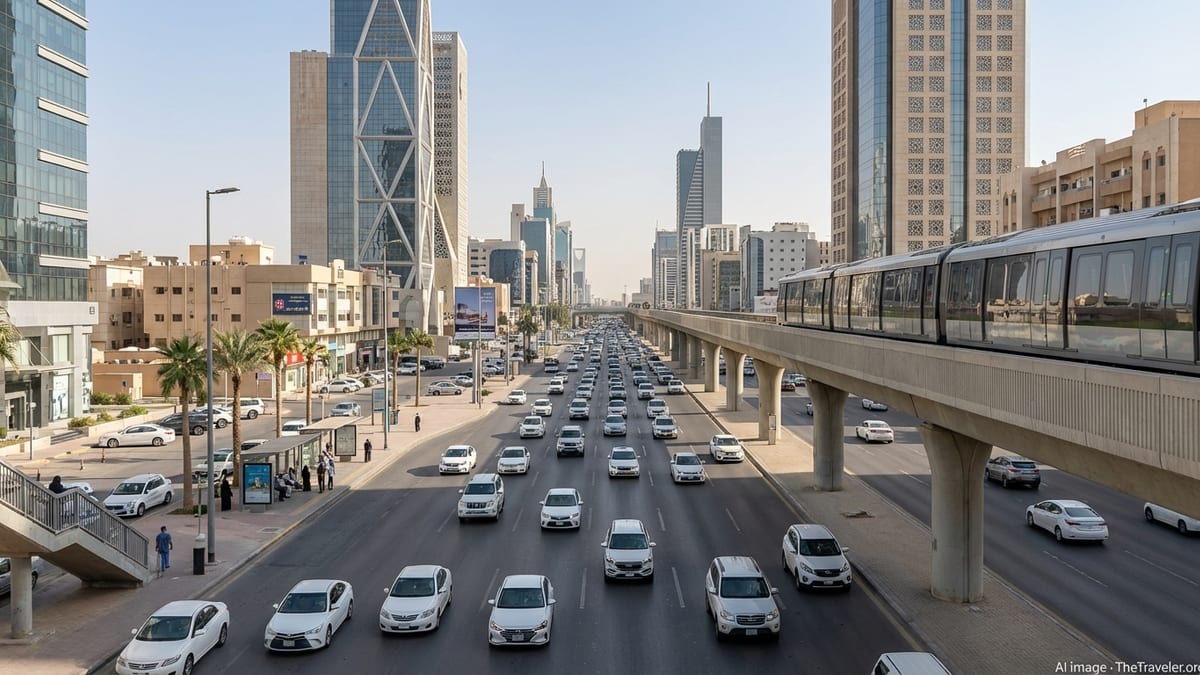
Within cities, the balance between public transport and cars is shifting rapidly. Riyadh now has a fully operational driverless metro network with six lines and dozens of stations, supported by an expanding bus system designed to feed into the rail lines. In other cities, buses and taxis remain the dominant urban transport, although new projects are slowly adding more structured networks. For many visitors, the most realistic approach is a mix: domestic flights for long hops, ride-hailing and metro or bus in the capital, and possibly a rental car or private driver for specific regions.
When planning, think in terms of travel time rather than pure distance. A one-hour flight might replace a nine-hour drive between cities, but you should still factor in airport transfers and security checks. Inside the cities, rush-hour traffic can double journey times by car, while metro or bus corridors can be more predictable. Building some flexibility into your schedule will help you cope with delays, weather and congestion without unnecessary stress.
Domestic Flights and Airports Across the Kingdom
Given the size of the country, domestic flights are a cornerstone of getting around Saudi Arabia. The main gateways are King Khalid International Airport in Riyadh, King Abdulaziz International Airport in Jeddah and King Fahd International Airport in Dammam, all of which serve both international and domestic routes. A network of regional airports connects these hubs to cities such as Madinah, Abha, Jazan, Tabuk, AlUla and Najran, and to more remote areas that would otherwise involve lengthy drives. Schedules are generally frequent on busy routes, and services are often timed to connect smoothly with onward international flights.
Competition among airlines has expanded in recent years, improving service and giving travelers more options. Larger carriers typically offer several classes of service and loyalty programs, while low-cost airlines focus on point-to-point routes with no-frills fares. Booking ahead usually secures the best prices, especially around busy periods such as Ramadan, Hajj and school holidays, when demand across the network can spike. It is wise to allow extra buffer time for airport procedures during those peak seasons.
Airports in major cities continue to upgrade facilities, from lounges and family areas to more efficient security and immigration processing. Domestic terminals typically include food courts, prayer rooms and business services, and staff are accustomed to handling both Saudi nationals and visitors. Most airports are some distance from city centers, so factor transfer times into your itinerary. In Riyadh and Jeddah, taxis and ride-hailing apps are available at dedicated pick-up zones, while in smaller cities you may find a mix of official taxis, hotel shuttles and, at times, informal drivers.
To make the most of domestic flights, keep an eye on luggage rules, which can vary even within the same airline between international and domestic services. Hand baggage limits are often enforced, and low-cost carriers may charge extra for checked bags and seat selection. Having a digital copy of your ticket and identification readily accessible on your phone generally speeds up check-in and security, and arriving earlier than you might for a short-haul flight in Europe or North America is a safe habit in the Saudi context.
Riyadh Metro, Buses and Urban Public Transport
Riyadh is at the heart of Saudi Arabia’s public transport revolution. The city’s new metro system, which entered full operation in early 2025, runs six color-coded driverless lines over about 176 kilometers and connects 85 stations across the capital. The network links key business districts, residential neighborhoods, universities, hospitals, shopping areas and major hubs such as King Khalid International Airport and the King Abdullah Financial District. For visitors, this means that many of the city’s major landmarks can now be reached without relying solely on taxis or private cars.
The metro is designed to be user-friendly, with clear signage in Arabic and English, air-conditioned stations and carriages, and step-free access in most locations. Ticketing is integrated with the city’s bus system and can usually be managed through a stored-value smart card, ticket machines in stations or contactless payment with bank cards and enabled phones. Single journeys are typically priced in a way that makes public transport attractive compared with taxis, and there are passes that cover multiple days or weeks for anyone staying longer. Operating hours are generous, extending from early morning until late at night, which suits both business and leisure travelers.
Alongside the metro, Riyadh has rolled out a comprehensive bus network intended to cover areas beyond the immediate metro corridors and to feed passengers into key stations. Hundreds of modern, air-conditioned buses run on structured routes with designated stops, and the system has seen rapid growth in ridership as residents adapt to using public transport instead of private cars. For tourists, buses can be useful on routes where the metro is less direct, but they require a bit more planning. Using journey-planning apps, many of which include live information provided by the local transport authority, helps you map routes and check departure times.
Other cities are gradually expanding their public transport offering as well. Jeddah has long relied on a mix of informal minibuses and newer structured routes, and further development is expected as urbanization accelerates. In the holy cities of Makkah and Madinah, specialized bus services and shuttle routes intensify during peak pilgrimage seasons to move large numbers of worshippers between key sites, hotels and prayer areas. While these systems are primarily designed for pilgrims, independent visitors during non-peak periods can sometimes take advantage of the infrastructure to move around efficiently.
Taxis, Ride-Hailing Apps and Private Drivers
Taxis and ride-hailing services remain a core part of everyday movement in Saudi cities, especially for visitors who are not driving. In major centers such as Riyadh, Jeddah, Dammam and Al Khobar, app-based services are widely used and often preferred to street taxis due to transparent pricing and the ability to choose pickup and drop-off points in English. Cars on these platforms range from compact sedans to larger vehicles suitable for families or small groups, and waiting times are often short in central neighborhoods and around shopping malls, business districts and transport hubs.
Traditional taxis still operate in many places, particularly near airports, bus stations and older commercial areas. Official vehicles are usually metered, but it remains sensible to confirm that the meter is in use or to agree a fare in advance when meters are not available. As with other countries, it is wise to avoid unmarked vehicles offering rides informally. Payment options are evolving, with many drivers now able to accept card or mobile payments, although having some local currency on hand is still useful, especially outside the largest cities.
For travelers who value predictability or who want to cover multiple stops in a day, hiring a car with a driver can be a comfortable alternative. Hotels and reputable agencies often arrange half-day or full-day hires, which can work well for business meetings spread across a city or for visiting sites on the outskirts that are not well served by public transport. Prices vary depending on distance, vehicle type and waiting time, and it is important to clarify all details before the journey. In pilgrimage areas, organized shuttle services and private transfers are common, especially between airports, hotels and religious sites.
As a visitor, you should also be aware of local customs around seating and interaction. In many taxis and ride-hailing vehicles, solo passengers sit in the back seat by default. Female travelers generally find ride-hailing services straightforward to use, and it is increasingly common to see women both driving and using taxis independently, particularly in the bigger cities. As with any urban transport, choosing well-lit pickup points and sharing trip details with a trusted person adds an extra layer of reassurance.
Driving, Car Rental and Road Culture
Renting a car opens up parts of Saudi Arabia that are difficult to reach otherwise, from quiet stretches of the Red Sea coast to mountain roads in the southwest and desert plateaus in the interior. Major international and local rental companies operate at airports and in city centers, usually offering a range of vehicles from compact cars to SUVs. To rent, you typically need a valid driving license from your home country or an international driving permit, a passport and a credit card in the driver’s name. Regulations evolve, so checking the latest rules on how long a foreign or international license is valid after entry is essential before you travel.
Road quality is generally high on main routes, with wide, multi-lane highways and clear signage in Arabic and English along major corridors. Fuel stations are frequent on busy roads, often including small supermarkets, prayer rooms and rest areas. However, spacing can be wider in remote areas, so topping up fuel regularly and carrying water and snacks is good practice. Driving at night outside cities requires extra caution due to potential unlit stretches, livestock on roads and drivers who may use high beams inconsistently.
In cities, the main challenge is traffic behavior rather than infrastructure. Drivers can be assertive, and lane discipline or use of indicators is sometimes inconsistent. Speeding and sudden lane changes are not uncommon, especially on ring roads and expressways. Defensive driving is essential: keep safe distances, anticipate others’ moves, and avoid engaging with aggressive drivers. Many junctions are controlled by traffic lights and cameras, and enforcement of speeding and red-light violations has been stepping up, but conditions can still feel intense compared with many Western cities.
For visitors who are new to the country’s driving culture, starting with shorter city trips or day excursions can help build confidence before tackling longer distances. Using reputable navigation apps with live traffic helps avoid congestion and roadworks, and these tools are widely used by residents. Always carry your license, passport or residency card, rental contract and proof of insurance in the vehicle. In the event of a minor accident, remaining calm, documenting the scene with photos and contacting the rental company or relevant local hotline are the usual first steps.
Trains, Intercity Buses and Pilgrimage Routes
Rail travel in Saudi Arabia has developed significantly in recent years and can be a comfortable alternative to driving or flying on some key routes. High-speed services operate between cities such as Makkah, Madinah, Jeddah and King Abdullah Economic City, particularly supporting pilgrimage and religious tourism. Trains on these routes typically offer modern carriages, reserved seating, air conditioning and onboard services, with journey times that are competitive with driving and less stressful for those unfamiliar with local road conditions. Booking in advance, particularly around major religious dates, is strongly recommended.
Beyond high-speed lines, conventional rail services link a number of inland cities with coastal areas and industrial hubs, primarily for freight but increasingly for passengers. Timetables and routes can be subject to change as new infrastructure projects come online, so it is sensible to check current options shortly before your trip. For visitors willing to plan around fixed departure times, rail travel offers a window onto rural landscapes and a chance to travel alongside local families and residents.
Intercity buses form another important layer in the national transport system, connecting dozens of cities and towns that may not have airports or rail stations. Several companies run scheduled services with fixed routes and prices that are typically lower than domestic flights. Buses usually have air conditioning, reclining seats and allocated seating, though levels of comfort and punctuality can vary between operators. Travel times are longer than by car because of scheduled stops, but for budget-conscious travelers, long-distance buses offer a practical way to cover ground without driving.
During Hajj and Ramadan, special bus and rail operations move huge numbers of pilgrims along designated corridors, supported by temporary traffic arrangements and security measures. Even if you are visiting for non-religious tourism, you may feel the indirect effects of these flows in the form of busier airports, crowded hotels and heavier traffic on key roads. Checking the timing of major religious events and allowing more time for all transport during these periods will make your journeys smoother.
Local Etiquette, Safety and Practical Tips
Getting around in Saudi Arabia is not just about choosing the right mode of transport; it is also about understanding local etiquette and staying safe. Dress codes are more relaxed for foreign visitors than in the past, but modest clothing is still expected in public transport, including metro carriages and buses. This typically means shoulders and knees covered for both men and women. Some metro and rail services offer family sections or carriages where women, children and families can sit together, and signage will usually indicate these areas clearly.
Security measures are a visible part of the transport environment, particularly in airports, major metro stations and around key religious sites. Bag scans, metal detectors and occasional ID checks are normal. Officials and security staff are generally courteous and accustomed to tourists, but you should always follow instructions promptly and avoid photographing security installations, checkpoints or restricted areas. Keeping digital copies of important documents and having a backup plan for contacting your embassy or consulate adds peace of mind for longer trips.
In terms of health and comfort, the country’s climate shapes how you move around. Summer temperatures can be extreme in many regions, especially in the interior, and walking long distances outdoors during the hottest hours is rarely comfortable. Planning activities around early morning and late afternoon, using air-conditioned transport and carrying water are all important. Public transport hubs often include prayer rooms and family areas that can give you a cool, quiet place to rest between journeys.
Language is less of a barrier than many first-time visitors expect. In big cities and transport hubs, staff often speak at least basic English, and signage on major systems such as the Riyadh Metro, airports and intercity bus terminals is bilingual. Nevertheless, having the names of destinations written in Arabic on your phone or a card can be extremely helpful for taxi drivers or when asking for directions. Simple phrases such as “please,” “thank you” and “how much” in Arabic are appreciated and can smooth everyday interactions.
The Takeaway
Saudi Arabia’s transport landscape is changing quickly, blending ambitious public projects with a long-standing car culture and a dense network of domestic flights. For visitors, this means a wider range of choices than ever before, from gliding across Riyadh on a driverless metro to flying between coasts in under two hours or driving to a remote desert plateau before sunset. The key is to match your mode of travel to your route, budget and comfort level, and to remain flexible as you move between urban centers, pilgrimage hubs and quieter corners of the country.
By taking time to understand how domestic flights, trains, buses, taxis and car rentals fit together, you can build an itinerary that is both efficient and rewarding. Allow for the realities of traffic, climate and local customs, and use technology, from navigation apps to digital tickets, to simplify your days on the road. With thoughtful planning and a willingness to adapt, getting around Saudi Arabia becomes not just a logistical exercise but a memorable part of the journey itself, offering insights into how the kingdom is evolving and how its people live, work and travel today.
FAQ
Q1. Is it safe to drive in Saudi Arabia as a visitor?
Driving is feasible for visitors who are confident and experienced, especially on highways. However, city traffic can be intense, and driving styles may feel aggressive. Defensive driving, careful planning and adherence to speed limits are essential.
Q2. Do I need an international driving permit to rent a car?
Many rental companies accept a valid foreign license, but some may also request an international driving permit. Because rules can change, it is wise to carry both if possible and to confirm requirements with your rental company before arrival.
Q3. Are women allowed to drive and use public transport independently?
Women are legally allowed to drive, rent cars and use public transport independently throughout the country. In practice, this is widely visible in major cities, where women commonly use ride-hailing apps, metro and buses on their own.
Q4. How reliable is the Riyadh Metro for tourists?
The Riyadh Metro is modern, air-conditioned and designed to international standards, with bilingual signage and integrated ticketing. It is generally reliable, frequent and a convenient way for tourists to move between key districts and attractions in the capital.
Q5. Are domestic flights in Saudi Arabia expensive?
Prices vary by route, season and how far in advance you book. On popular routes between major cities, competition keeps fares relatively moderate, but costs can rise around religious holidays and peak travel periods.
Q6. Can I rely on ride-hailing apps in smaller cities?
Ride-hailing services are well established in major cities and many mid-sized ones, but coverage and waiting times can be less predictable in smaller towns. It is sensible to have a backup option such as a local taxi or hotel transfer.
Q7. Is public transport easy to use if I do not speak Arabic?
In large cities and on major networks like the Riyadh Metro, signage and announcements are usually in Arabic and English, making public transport relatively straightforward for non-Arabic speakers. Having destinations written in Arabic helps in taxis and on some bus routes.
Q8. What is the best way to get between Riyadh and Jeddah?
For most travelers, a direct domestic flight is the fastest and most convenient option. Driving is possible via highways but takes significantly longer, and at present rail options are more limited for this specific corridor.
Q9. Are there special transport arrangements during Hajj and Ramadan?
Yes. During Hajj and Ramadan, additional buses, trains and traffic controls are deployed around Makkah, Madinah and other key areas to manage large numbers of pilgrims. Even non-pilgrims may experience heavier traffic and busier airports during these periods.
Q10. How far in advance should I book trains and long-distance buses?
On popular routes, particularly those serving pilgrimage destinations or operating on weekends and holidays, booking several days or weeks in advance is recommended. For quieter routes, seats are often available closer to departure, but advance purchase still offers peace of mind.