


For many frequent flyers, airport lounges are no longer a luxury but a key part of how they travel. United Club is often the first lounge brand US travelers encounter, especially if they fly through big United hubs like Newark, Denver or Houston. Yet United competes with substantial rivals, including Delta Sky Club, American’s Admirals Club and global networks like Priority Pass. Understanding how United Club fits into this landscape can help you decide where to focus your loyalty, which credit cards to carry and when a paid membership really makes sense.
Get the latest updates straight to your inbox!
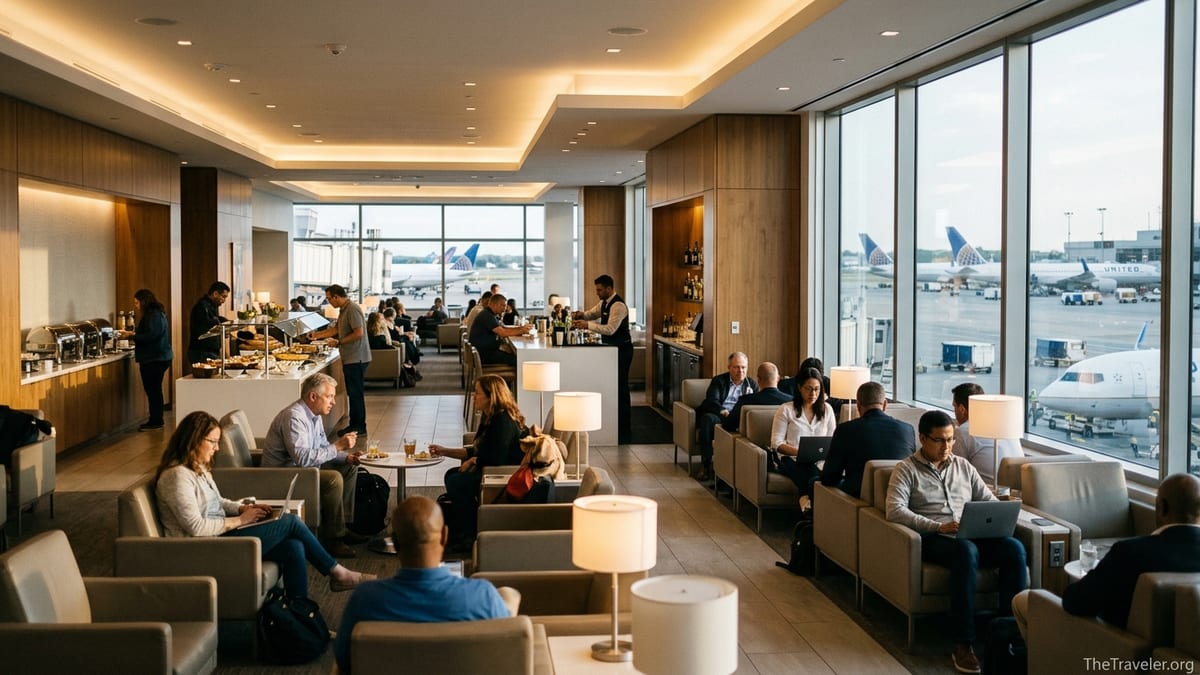
Where You Will Actually Find United Clubs
United Club locations are concentrated in the airline’s domestic and international hubs, which shapes how valuable membership is in practice. If you regularly connect through Newark, Chicago O’Hare, Denver, Houston Intercontinental, San Francisco, Los Angeles or Washington Dulles, you will see United Clubs in multiple concourses and often have a choice of locations. For example, a regular United traveler based in Denver can use United Clubs in all three concourses (A, B and C), which turns a membership or a United Club credit card into something they might use ten or more times a month.
Outside United hubs, coverage is patchier. At a mid‑size station like Austin, there is a single United Club near the main United gates, while at smaller spoke airports such as Omaha or Tulsa there may be no United lounge at all. That means a traveler who mostly flies short, point‑to‑point routes without connecting through a hub may find limited real‑world value, even if the published list of locations looks long.
Compare this with Delta Sky Club, which has built an especially dense presence in Atlanta, Minneapolis, Detroit and Salt Lake City, or Admirals Club, which is strong at Dallas–Fort Worth, Charlotte and Miami. Travelers who live near those hubs will often see a Delta or American lounge even on short regional trips. Priority Pass, by contrast, spreads its more than 1,800 partner locations worldwide across many carriers and third‑party operators rather than centering on a single airline.
For an international comparison, consider London Heathrow. A United Club member flying United from Terminal 2 will use the United Club there, which is part of the Star Alliance hub. The same traveler flying Delta would instead use the Delta Sky Club in Terminal 3, while an American customer might head to an Admirals Club or a joint lounge with British Airways. If you regularly fly Star Alliance partners like Lufthansa or Swiss, United Club membership can unlock Star Alliance‑branded lounges on international itineraries, while Delta and American align with SkyTeam and oneworld respectively.
Membership Costs and Credit Card Shortcuts
From a purely financial perspective, United Club is positioned similarly to its two US legacy competitors. United’s standalone United Club membership is typically priced in the mid‑hundreds of dollars per year, with final cost varying by MileagePlus status and whether you renew or buy new. That price point puts it roughly in line with Delta Sky Club’s individual membership, which currently costs about 695 dollars per year for eligible Delta Medallion members, and American’s Admirals Club individual membership, which begins around 850 dollars annually for a basic AAdvantage member and decreases slightly for higher status tiers.
For many travelers, however, buying standalone membership is less attractive than accessing lounges through a premium co‑branded card. United follows this model closely. A frequent traveler might carry the United Club Infinite Card, which has an annual fee in the mid‑hundreds but includes full United Club membership as a core benefit. In real terms, a road warrior who would have bought membership anyway is effectively swapping a straight membership fee for a card annual fee and gaining card perks such as free checked bags and bonus mileage earning.
American takes a similar approach with the Citi AAdvantage Executive World Elite Mastercard, where a fee of roughly 595 dollars includes Admirals Club membership that would otherwise cost up to 850 dollars when purchased directly. Delta offers Sky Club access via premium cards like the Delta SkyMiles Reserve American Express. While program rules have tightened and new caps on the number of annual visits have been introduced in recent years, heavy Delta flyers still often find it more efficient to use a Reserve or top‑tier Amex Platinum product than to buy a standalone Sky Club membership.
By contrast, Priority Pass works mainly through credit cards rather than direct memberships for US consumers. A mid‑market premium card might include ten or so lounge visits per year, while top‑tier travel cards often offer unlimited Priority Pass lounge access for the cardholder and sometimes for guests. The overall membership sticker price for Priority Pass, while comparable to or higher than airline clubs, is rarely what a US traveler actually pays because card issuers absorb it as part of the card value proposition.
Access Rules, Guests and The Fine Print
One of the most important ways United Club differs from its peers is in who can actually walk through the door on a given day and under what conditions. United Club access is available to several groups: paid members, United Club cardholders, Star Alliance Gold members traveling internationally, and premium‑cabin passengers on qualifying United and Star Alliance flights. Day passes are sometimes sold, either as electronic passes within the United app or bundled with certain United credit cards as a limited perk. A traveler flying economy from Newark to Los Angeles on United could use a single‑use pass purchased for about 59 dollars to access the United Club before the flight, subject to crowding controls.
Guest rules have real‑world implications. United Club membership generally allows a modest number of guests, such as one adult or immediate family members, depending on the type of membership or credit card. During a family trip from Houston to Orlando, a parent with a United Club Infinite Card might bring a spouse and children into the lounge at no extra charge, but a friend traveling on the same flight may not be eligible unless they have their own access method or the lounge permits an additional guest.
Delta Sky Club has become noticeably stricter. Its paid memberships usually allow the member in whenever they fly Delta, but guests often incur an additional fee of around 50 dollars per person per visit unless the member holds a more expensive executive‑level membership that includes up to two guests. In practice, a Delta road warrior out of Atlanta might think twice before inviting two colleagues into the Sky Club on a layover, as that could add 100 dollars to the cost of the trip. American’s Admirals Club falls somewhere in between, with standard memberships allowing a member, immediate family or up to two guests, while single‑visit passes purchased at the door are subject to capacity limits and may not be sold during peak times.
Priority Pass rules vary significantly by card issuer. A traveler with a top‑tier premium travel card may be able to bring two guests into a third‑party lounge at no charge, while another card with a lower annual fee might require a roughly 35 to 45 dollar fee per guest per visit. In some popular US airports, Priority Pass has also shifted toward restaurant credits rather than lounge access, where the cardholder receives a fixed amount toward food and drinks at a partner restaurant instead of a traditional lounge experience. This is a scenario you will rarely encounter with United Club, which remains a traditional, airline‑operated lounge concept.
Food, Drinks and Amenities: What You Actually Get
On paper, United Club, Delta Sky Club and Admirals Club all promise similar basics: snacks or light meals, a selection of alcoholic and non‑alcoholic drinks, Wi‑Fi, workspaces and customer service desks. The real‑world experience, though, varies by airport and renovation cycle. Many newer or refreshed United Clubs, such as the large locations at Newark Terminal C and Denver’s B concourse, offer a buffet with hot items like scrambled eggs and breakfast potatoes in the morning, soup and pasta or grain dishes at lunch, and simple hot entrees or hearty snacks in the evening. There are typically vegetables, salads and bread, plus a standard bar with complimentary beer and wine and paid options for premium spirits and cocktails.
Delta Sky Club has pushed hardest on culinary upgrades in the last few years. In a flagship location like the Delta Sky Club at New York–JFK Terminal 4, travelers can expect more substantial hot dishes, often with regional touches, along with a wider selection of fresh salads and desserts. Cocktail programs have also become a selling point at several Sky Clubs, with Instagram‑worthy bars and seasonal drink menus. This means that a traveler who prizes food variety and design may perceive Delta lounges as more modern and generous than many United Clubs, especially at airports where United has not yet completed its latest round of renovations.
American’s Admirals Clubs have improved their food offerings but still tend to emphasize a “light meal plus paid upgrades” model. At an Admirals Club in Charlotte or Dallas–Fort Worth, you may find self‑serve soup, hummus, snack mixes and a few hot items that rotate through the day. More substantial dishes, such as made‑to‑order sandwiches or premium cocktails, are usually available but carry an extra charge. United follows a similar pattern at many locations, although some newer clubs are experimenting with heartier complimentary selections to compete more directly with Delta.
Priority Pass lounges run the gamut from basic to boutique. In a small regional airport, a Priority Pass location might simply provide comfortable seating, packaged snacks and a few drink options. In contrast, at a major international hub like Singapore, a Priority Pass‑accessible third‑party lounge could rival or surpass an airline‑branded club, with showers, buffet dining and even nap areas. United Club is more consistent than Priority Pass in the United States but cannot always match the best international third‑party lounges in terms of spa‑like amenities or full‑service dining.
Crowding, Access Caps and The Peak‑Hour Problem
Crowding has become a major pain point across all US airline lounges, and United Club is no exception. At morning and late‑afternoon peaks in hubs like Newark and Denver, you may see lines forming outside United Clubs and staff temporarily pausing new entries until space frees up. This is especially common in smaller or older lounges that have not been expanded to handle today’s heavier lounge‑eligible passenger volumes. A typical scenario: an early‑morning transcontinental passenger arriving at Newark finds a queue at the club nearest the security checkpoint but can bypass the wait by walking a few minutes to a newer or less busy location deeper in the concourse.
Delta Sky Club arguably faces the most intense crowding pressures. As access via premium cards became more common, Delta introduced several measures, including limits on the number of annual visits for some cardholders, higher guest fees and stricter definitions of qualifying tickets. Travelers in Atlanta and New York have grown accustomed to being turned away temporarily or finding the Sky Clubs at capacity, especially on Monday mornings and Thursday afternoons when business travel peaks. These policies make the real value of a membership or card benefit feel less predictable in day‑to‑day use.
American and United have relied more on day‑to‑day capacity management than on sweeping access caps. Admirals Clubs may limit the sale of one‑day passes during busy periods and occasionally restrict entry even for members if a lounge is genuinely full. United has used similar tools, with app notifications and signage explaining that a given United Club is temporarily unavailable. For a traveler deciding between lounge programs, the takeaway is that none are immune to crowding, but Delta has taken the most visible structural steps to reduce numbers, while United and American manage more at the individual lounge level.
Priority Pass faces its own version of the crowding problem. Because so many premium credit cards now include some form of Priority Pass access, popular third‑party lounges at hubs like London Gatwick or Miami can be packed during bank times for transatlantic flights. Some lounges have responded by blocking Priority Pass cardholders for parts of the day. In practice, this means a traveler who values certainty may prefer an airline‑operated lounge like United Club at their home hub, even if a Priority Pass membership technically offers access to more locations overall.
Which Travelers Benefit Most From United Club
The value of United Club compared with other lounge options depends heavily on your home airport, typical routing and how you pay for access. A MileagePlus Premier Platinum member based in Denver who flies United or Star Alliance partners twice a month will likely extract far more practical value from United Club than from Priority Pass. They will see a United Club on most trips, can rely on reasonably consistent food and Wi‑Fi and may appreciate lounge agents who can rebook or reticket them in irregular operations without needing to stand in a crowded gate line.
On the other hand, a leisure traveler from a secondary market like Kansas City who flies United once or twice a year and otherwise chooses whatever airline is cheapest might be better off with a travel credit card that includes Priority Pass. That membership could be used on a family vacation via Cancun, a once‑a‑year trip to Europe through a major foreign hub and the occasional domestic connection where a third‑party lounge participates. In this scenario, paying several hundred dollars specifically for United Club access would be difficult to justify.
Business travelers tied to corporate contracts also often do best by aligning with the dominant airline at their main hub. A consultant in New Jersey whose firm books most travel on United will naturally gravitate to United Club, while a counterpart in Atlanta will be steeped in Delta Sky Club culture. The real‑world comparison, then, is less about which lounge program is objectively superior and more about which one matches the airline you already fly, the airports you actually use and the way you prefer to pay for perks.
Finally, some travelers straddle ecosystems. A Los Angeles‑based entrepreneur might carry both a United Club card for frequent domestic trips via San Francisco and a premium general travel card that includes Priority Pass for international journeys that take them on non‑Star Alliance carriers. In such cases, United Club becomes one element of a wider lounge strategy instead of an all‑or‑nothing choice.
The Takeaway
United Club sits in the middle of a rapidly evolving lounge landscape. It shares similar pricing and broad benefits with Delta Sky Club and American’s Admirals Club while leaning on United’s strong hub network and Star Alliance partnerships to deliver value for loyal United flyers. Food and drink offerings have improved in newer United Clubs but generally still feel more utilitarian than the most ambitious Delta Sky Clubs, and crowding is an ongoing reality in peak periods.
For travelers who live near a United hub, regularly fly United or other Star Alliance carriers and prefer predictable, airline‑run lounges over a patchwork of third‑party options, United Club membership or a United Club credit card can be a solid investment. Those based at Delta or American strongholds may find that Sky Club or Admirals Club access lines up more naturally with their real itineraries. Meanwhile, occasional flyers or those who split loyalty across many airlines might benefit more from a flexible Priority Pass membership delivered through a general travel credit card.
The smartest approach is to map your last year of flying before committing. List the airports you actually used, the airlines you flew and how many layovers exceeded an hour. If United appears again and again, United Club is likely to compare favorably with other lounge programs for your specific pattern of travel. If your map looks more eclectic, a mix of airline‑specific access on key routes plus a broad, card‑based program like Priority Pass may deliver a better return than any single club brand.
FAQ
Q1. Is United Club cheaper than Delta Sky Club or Admirals Club?
United Club pricing is broadly similar to Delta Sky Club and American Admirals Club, with annual costs in the mid‑hundreds of dollars depending on status and membership type.
Q2. Does a United Club membership get me into Star Alliance partner lounges?
In many cases yes, especially when you are flying internationally on United or another Star Alliance carrier, but specific access can vary by airport and local rules.
Q3. Is it better to buy United Club membership or get a United Club credit card?
For frequent United flyers, a premium United Club credit card often represents better value because it includes lounge access plus extra perks like free bags and bonus miles.
Q4. How does United Club food compare with Delta Sky Club?
United Club usually offers solid but simple hot and cold options, while Delta Sky Club at major hubs often emphasizes more varied buffets and upgraded bar programs.
Q5. Can I use United Club when flying another airline?
Generally you must be flying United or a Star Alliance partner the same day, though some exceptions may apply at specific locations or for certain elite members.
Q6. Are Priority Pass lounges better than United Club?
Some Priority Pass lounges, especially abroad, can be more elaborate, but overall quality is inconsistent, while United Clubs tend to be more standardized within the United network.
Q7. How many guests can I bring into a United Club?
Typical United Club access allows a limited number of guests, often one adult or immediate family, but exact rules depend on whether you have membership, a credit card or a day pass.
Q8. Do United Clubs have showers?
Some larger or internationally focused United Clubs include shower suites, especially at hubs with long‑haul traffic, though many smaller domestic clubs do not.
Q9. Will a one‑time United Club pass be honored if the lounge is crowded?
Entry with a one‑time pass is always subject to capacity controls, so at very busy times you may be temporarily turned away or asked to wait until space opens.
Q10. If I mostly fly once or twice a year, is United Club worth it?
Occasional travelers usually get better value from a general travel card that includes limited lounge access, rather than paying full price for a dedicated United Club membership.