


Airport lounges look like an easy win: pay a fee, escape the chaos, pour a drink and enjoy some quiet. For many United flyers, that means eyeing a United Club membership or tapping those “limited-time” offers for a one-time pass. But United’s lounge network in 2026 is more complicated and more crowded than the glossy photos suggest. Before you spend hundreds of dollars on a membership or chase day passes, it pays to understand what regulars know and marketing never quite says out loud.
Get the latest updates straight to your inbox!
United Club Is Not the Same as Polaris
One of the biggest surprises for new United Club members is discovering that membership does not get you into United Polaris Lounges. These are two completely different products. United Clubs are the airline’s standard lounges, sprinkled across more than 40 airports, with self-serve snacks, a full bar, workspaces and Wi-Fi. The Polaris Lounges, by contrast, are premium international business-class spaces at a handful of hubs like Chicago O’Hare, Newark and San Francisco, with restaurant-style dining, quiet suites and spa-style showers that feel closer to a boutique hotel than a gate-area waiting room.
If you buy a United Club membership expecting access to that flagship Polaris dining room at Newark or the daybeds at San Francisco, you will be disappointed. Even top-tier United Club members cannot buy their way into Polaris. Access there is reserved for qualifying long-haul international business-class tickets and select Star Alliance premium cabins, not for club members or one-time pass holders. You can walk right past a gleaming Polaris entrance and still be limited to the nearby standard United Club.
In practical terms, that means a frequent domestic flier based in Houston or Denver might get a lot from United Club membership, while a traveler splurging on a single big international trip out of Chicago is usually better off simply buying a true Polaris ticket. The key is understanding that “United Club” and “Polaris Lounge” are different tiers of experience and different doors at the airport.
This distinction also matters when you read credit card perks and marketing language. Some premium cards emphasize United Club access as a headline benefit, but none of them unlock Polaris. If your goal is a pre-flight steak dinner and craft cocktails before a transatlantic flight, your ticket type matters far more than any lounge membership you hold.
Crowds, Capacity Controls and the One-Time Pass Reality
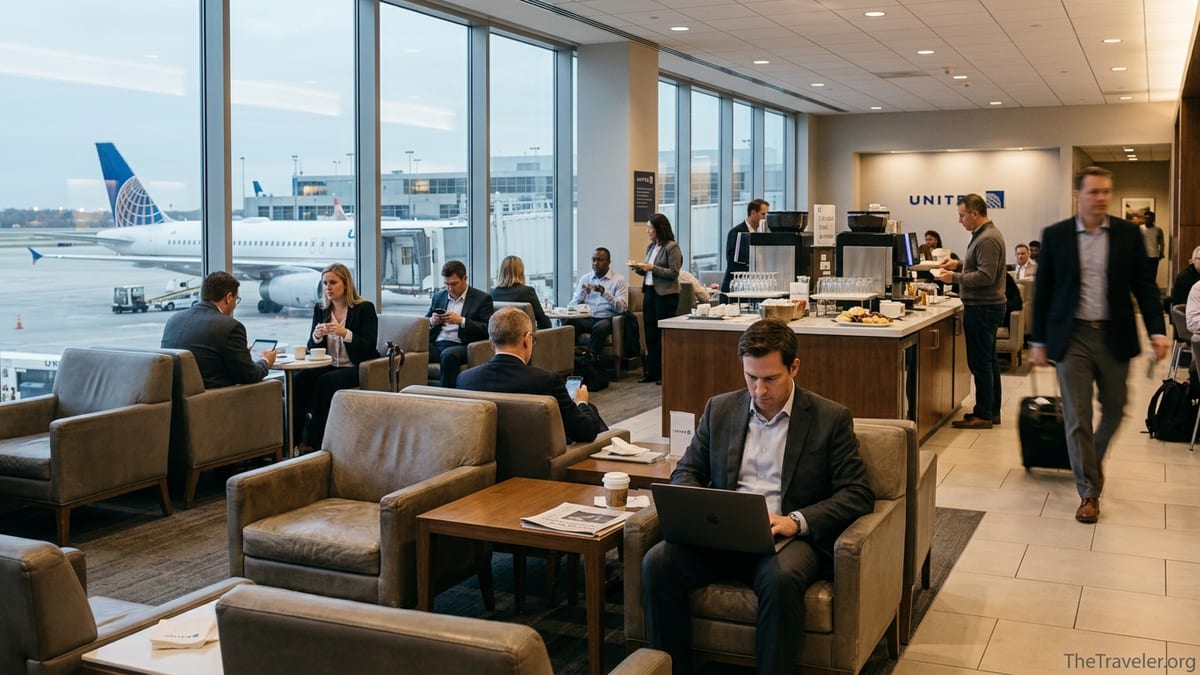
Another thing nobody tells you before you commit: United Clubs can be crowded, sometimes uncomfortably so, especially at big hubs in the morning and late afternoon. On a typical weekday at Newark or Chicago, you can find people circling for seats, conference calls spilling into walkways and bar lines that feel more like a busy hotel lobby than an oasis of calm. United knows this, and in recent years has quietly tightened how and when it accepts one-time lounge passes.
Many travelers first encounter United Club through the two annual passes that come with a popular United credit card or through a pop-up offer in the app during check-in. The catch is that one-time passes are accepted only “as capacity allows.” At peak times, it is common to see signboards at the check-in desk reading that day passes are not being accepted, even while members and premium cabin passengers are still being welcomed. Flyers on long layovers at San Francisco or Denver sometimes discover that multiple clubs in a terminal are closed to one-time passes for hours at a time.
This can be particularly frustrating if you bought access in advance expecting a guaranteed refuge during a tight or stressful connection. In practice, a traveler landing in Chicago with a three-hour layover around the 5 p.m. rush may find that the main United Club in the C concourse is temporarily closed to passes while a smaller club in another concourse remains available, requiring extra walking or a train ride. Regulars often check the United app’s lounge indicators on arrival and have a backup plan, such as a nearby Priority Pass lounge or simply a quieter gate area, because they know access is not absolute.
If you are debating whether to upgrade a ticket with a bundle that includes United Club access on that specific trip, pay close attention to the wording. Trip-specific access attached to your reservation is often treated differently from general one-time passes stored in your MileagePlus account. That subtle distinction can be the difference between being waved in and being turned away behind a sign during busy periods.
What You Actually Get Inside: Food, Drinks and Workspaces
The standard expectation for an airline club used to be simple: a free drink, some snacks and a place to sit. United Clubs in 2026 still deliver on that, but the details vary more than new members expect. At a large hub like Houston Intercontinental or Newark, you might find a hot soup, a couple of hot dishes like pasta or rice with chicken, a salad bar, sandwiches, packaged hummus and cookies. At a smaller outstation lounge, the spread might be closer to continental breakfast in a mid-range hotel: bagels, cheese cubes, veggies and a single hot option during mealtimes.
Alcohol is where expectations often misalign. Most United Clubs offer complimentary domestic beer, house wine and simple mixed drinks, but anything premium is typically chargeable. A glass of better wine or a top-shelf spirit may add a modest fee, similar to what you would pay in an airport bar. New members sometimes walk in assuming “open bar” means every bottle behind the counter is included, only to be surprised when the bartender explains that the nicer bourbon or champagne costs extra. If you care about what is in your glass, the value of membership can feel very different from someone happy with a basic lager and house red.
Workspace quality also depends heavily on location and time of day. Many recently renovated clubs, such as the newer spaces at Newark or the expanded club at Denver, include long tables with built-in power outlets, phone rooms for calls and semi-private pods. Legacy clubs in older terminals may still have more traditional lounge chairs and fewer true workstations, making it harder to take video meetings or spread out with a laptop and documents. On a Monday morning at a major hub, every seat with a power outlet can be spoken for, so veteran members often carry small extension cords or battery packs to stay flexible.
The Price Tag and Cheaper Ways to Gain Access
Joining United Club directly is not cheap. Annual membership prices in 2026 run into the hundreds of dollars depending on whether you choose an individual or shared plan and your MileagePlus status. For many casual travelers, that price can feel steep compared with alternatives like day passes or premium credit cards that include lounge access as part of a broader package of benefits.
One of the underappreciated angles is how co-branded credit cards compare to standalone membership. Several high-end cards aimed at frequent United flyers include full United Club membership as part of their annual fee, which is often similar to or lower than what you would pay to join the Club outright. For a regular business traveler flying United at least a couple of times a month, holding one of those cards can effectively bundle lounge access with other perks such as free checked bags and priority boarding, improving the overall value equation.
For occasional travelers, one-time passes sold through the app or bundled with certain discounted fares can look appealing at first glance. A family flying from Orlando to Seattle with a long layover in Denver might be tempted by an offer to add same-day club access for a per-person fee instead of investing in a full membership. The hidden risk, as noted earlier, is that crowding can make those passes difficult to use at the exact moments you want them most, like during school holidays or Monday morning business rushes.
A more strategic approach is to count how many trips you realistically take through United hubs each year and what your typical wait times look like. If you fly out of a smaller city like Boise or Richmond where there is no United Club, but frequently connect in Denver, Chicago or Houston with two or three-hour layovers, then a membership or premium card could make sense. If your travel is mostly short-haul, point-to-point routes from airports without clubs, the high annual fee is likely to feel wasted after the novelty wears off.
Network Gaps, Renovations and Inconsistent Experiences
From a distance, “45 plus United Clubs worldwide” sounds like a comprehensive network. On the ground, the coverage is patchier. Some major airports with significant United operations, such as certain growing focus cities, still lack a club entirely or have a single lounge that can be overwhelmed during peak times. Conversely, older hubs might have multiple small clubs spread across terminals, forcing you to choose between convenience to your departure gate and better amenities in a different concourse.
Renovations add another layer of unpredictability. United has been steadily refreshing older lounges and opening larger flagship clubs at key hubs, including plans for expanded spaces in San Francisco and other airports. During these projects, a lounge may close temporarily or operate from a smaller footprint, which can significantly change the experience for months at a time. A traveler who joined after seeing photos of a bright, airy club at Houston might arrive to find a more modest temporary setup while the main space is being upgraded.
Internationally, expectations can shift again. A United Club in Tokyo or London may offer slightly different food, drink and design, reflecting local partners and airport rules. Some overseas airports feature shared Star Alliance lounges instead of a dedicated United-branded club, which can deliver a very different atmosphere from what you see in United’s marketing. If your membership goal is consistent comfort across a global route map, it is worth checking in advance which type of lounge you will actually see at each destination.
Even within the United States, two clubs in the same airport can feel like different products. At San Francisco, for example, the club near one set of gates might be relatively quiet with better natural light, while another closer to the busiest departure area can feel more cramped and crowded. Experienced members sometimes deliberately leave the immediate vicinity of their gate to use a calmer club elsewhere in the terminal, walking back closer to boarding time.
Guest Rules, Families and Fine Print
Guest privileges are a major selling point of United Club membership, yet the details are easy to get wrong. A typical membership allows you to bring either one adult guest or your immediate family, defined as a spouse or domestic partner and dependent children, when they are traveling with you on the same day. That sounds straightforward, but edge cases abound. Grandparents traveling with you, teenage friends of your kids or business colleagues who are not on the same reservation can all fall into gray areas where front-desk staff must interpret the rules.
Families in particular should understand that space is finite and not every club is set up with children in mind. At some hubs, you will find family rooms or semi-enclosed play spaces, but many clubs are essentially open seating areas lined with chairs and tables. A parent connecting through Chicago with two young children might find it challenging to keep kids entertained in a quiet lounge for several hours, especially during early-morning business-heavy periods when most people are working. Membership does not turn a United Club into a playroom, and staff may gently remind parents to manage noise levels.
Another common point of confusion is access on arrival. United generally positions the Club as a pre-departure or connection amenity, but many new members assume they can duck into the lounge after they land to shower, make calls or wait for traffic to ease before leaving the airport. In practice, access rules can limit this, especially at international arrival points where immigration and customs change your ability to re-enter the secure area. If you are counting on a post-red-eye shower in a United Club after landing in the United States, it is worth confirming whether the club is located airside in your arrival terminal and whether you will still be able to enter once you exit the secure zone.
Finally, rules around dress and behavior, though rarely enforced to the letter, do exist. While you will see everything from suits to hoodies, visibly inappropriate or disruptive behavior can get you turned away even as a paid member. For most travelers, this is not an issue, but it is a reminder that United Club is still a shared public space with its own code of conduct, not a private living room you have rented for the day.
How United Club Compares to Airline and Card Lounges
United is not the only player in the lounge game, and new members often only realize the differences after sampling competitors. Delta’s Sky Clubs and American’s Admirals Clubs occupy a similar tier, with some locations shining and others feeling dated. Independent operators tied to credit card programs, such as the lounges run by major bank issuers in cities like Phoenix or Las Vegas, have raised expectations with better food and bar offerings than what used to be typical in airline-branded clubs.
For example, a traveler with a premium card that unlocks access to a network of non-airline lounges may compare the buffet-style dining and comfortable seating there to what they see in a busy United Club at Newark. In some cities, the independent option can feel more spacious and less crowded, with fresher food and more modern design. In others, United still leads with better views, more plentiful workspaces or quieter corners for calls, especially in newly renovated locations.
One subtle advantage of United Club is location. Because these lounges sit inside terminals where United dominates, they are often close to the gates you are most likely to use. An independent card lounge might require a train ride to a different concourse, which can eat into your relaxation time on tight connections. The trade-off is that airline clubs like United’s are most crowded exactly when and where their customers most want to use them, while a rival lounge in a less convenient corner may stay calmer.
Ultimately, whether United Club offers better value than a competing lounge network depends on your home airport, your airline loyalty and what you care about most. Travelers focused on reliable Wi-Fi, functional workspaces and a guaranteed place to sit before a flight may be perfectly happy. Food-focused travelers or those who prize a sense of calm above all else might find more satisfaction in a smaller, less trafficked lounge tied to a bank card, especially outside United’s main hubs.
The Takeaway
United Club can absolutely make travel more pleasant, but it is not a magic solution to every airport headache. Nobody tells you, when you first see the elegant photos and grand promises, that crowds can be heavy, that one-time passes may be turned away at the door, and that the premium-looking Polaris Lounge is off limits no matter how much you spend on membership or credit card fees. The reality on a busy Monday morning at Denver or a holiday weekend at Newark is messier than the marketing.
If you fly United frequently through hubs where clubs are large, modern and convenient to your gates, membership or a premium card with lounge privileges can still be a strong investment. You will know where to find seats with power, which club in a given airport is quieter and how early you need to arrive to make good use of the space. For the occasional traveler, though, it may be smarter to treat United Club as a nice-to-have, not a must-have: a tool you use selectively via trip-specific access or passes, rather than a fixed annual cost.
Before you join, look closely at your typical itineraries, how often you really experience long layovers and which airports you use most. Check whether other lounges at those airports might be included with cards you already hold. And manage your expectations: think of United Club as a better waiting room with drinks and Wi-Fi rather than a guaranteed haven of quiet luxury. With clear eyes and realistic goals, you can decide whether joining United Club fits your travel style or whether your money is better spent on seat upgrades, hotel comforts at your destination or that occasional true Polaris ticket instead.
FAQ
Q1. Does a United Club membership get me into United Polaris Lounges?
In almost all cases, no. United Club membership does not grant access to Polaris Lounges, which are reserved for qualifying long-haul international business-class and select Star Alliance premium cabin passengers.
Q2. Are United Clubs always less crowded than the main terminal?
Not always. At major hubs and peak times, United Clubs can be very busy, sometimes nearly as crowded as the gate areas, especially during morning and late-afternoon banks.
Q3. Are food and drinks completely free inside United Clubs?
Basic snacks, soft drinks, domestic beer, house wine and simple mixed drinks are typically complimentary, but premium alcohol and certain upgraded items may come with an extra charge.
Q4. Can I use a one-time United Club pass whenever I want?
One-time passes are accepted only when capacity allows. At busy periods, some clubs post signs or app notices stating that they are not accepting day passes even though members may still enter.
Q5. Is it cheaper to buy a United Club membership or get access through a credit card?
For frequent United flyers, a premium co-branded credit card that includes United Club access can be similar in price to a standalone membership while also adding other travel perks.
Q6. Will my family be allowed into the United Club with my membership?
Typically, a member can bring either one adult guest or immediate family traveling with them, such as a spouse or partner and dependent children, subject to the specific rules in place at the time of travel.
Q7. Can I visit a United Club after my flight when I land?
Access is mainly designed for pre-departure and connecting passengers. Using the club after arrival may be limited by security layout and local rules, so it is not something to count on without checking in advance.
Q8. Are all United Clubs the same quality?
No. Newer or recently renovated clubs, especially at major hubs, often have better design, food and workspaces than older locations, and some smaller outstation lounges are more basic.
Q9. How do United Clubs compare to independent credit card lounges?
United Clubs often win on location near United gates, while some independent bank or Priority Pass lounges can offer better food or a calmer atmosphere in certain airports.
Q10. Is a United Club membership worth it if I only travel a few times a year?
For occasional travelers, the high annual cost can be hard to justify. Trip-specific access, one-time passes or lounges tied to a general travel credit card may offer better value.