


Airport lounges used to feel like a rarefied perk. In 2026, as more travelers hold premium cards and elite status, United Clubs are often busy, occasionally crowded, and very different from the hushed rooms many people imagine. That makes a fair question for anyone flying United this year: is paying for United Club access actually worth it?
Get the latest updates straight to your inbox!
What United Club Really Is in 2026
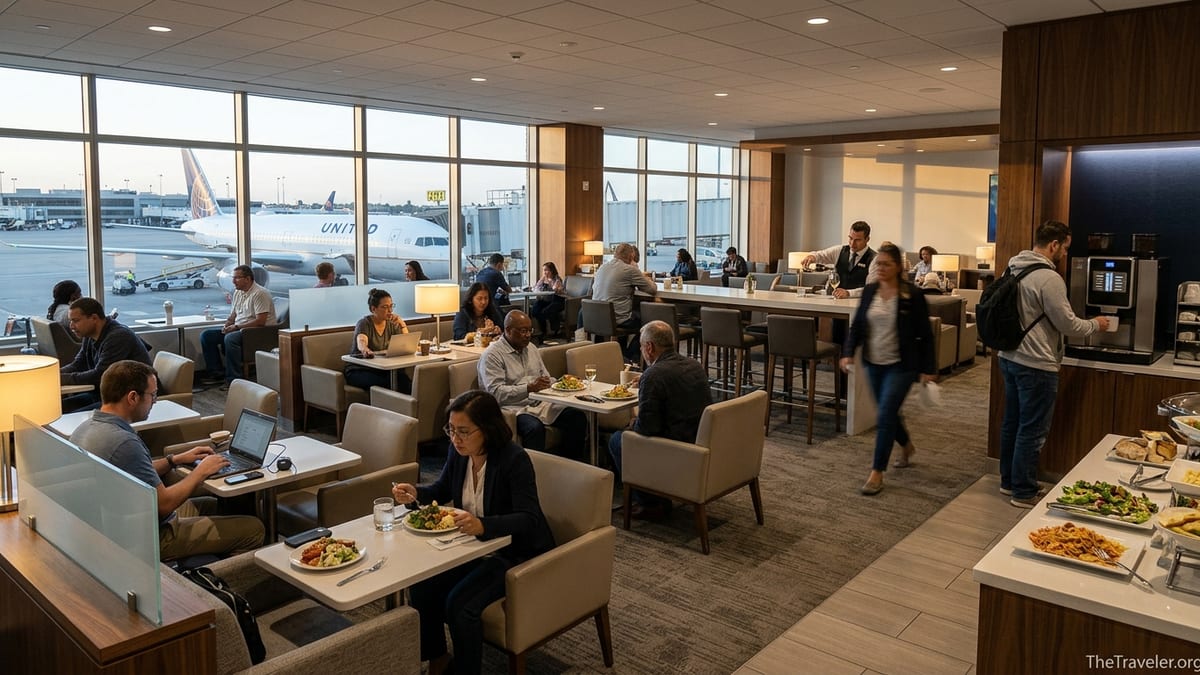
United Club is United Airlines’ primary network of airport lounges, with more than 45 locations across major hubs such as Newark, Chicago O’Hare, Denver, Houston Intercontinental, San Francisco and Washington Dulles. In most clubs you will find the same core amenities: a quieter space than the main terminal, complimentary Wi Fi, work tables and power outlets, a self service buffet with light food, and a bar with complimentary house beer and wine plus paid premium drinks.
In 2025 and 2026 United has been investing heavily in new and renovated lounges. Denver International gained a massive two level United Club of roughly 33,000 to 35,000 square feet in the B concourse, designed with Rocky Mountain inspired décor, floor to ceiling windows and around 400 seats. Houston and San Francisco are both getting new or expanded clubs, and a new club at San Francisco is set to feature an outdoor terrace overlooking the airfield, a rarity for a domestic US lounge.
At the same time, not all clubs feel new. Travelers passing through Washington Dulles, for example, still report that the primary United Clubs near gates C7 and C17 can feel dated and crowded at busy times, even though they do provide the expected basics: Wi Fi, snacks, and somewhere to sit. The result is a network where your experience can swing from fresh and stylish at one hub to just functional at another.
It is also important to understand what United Club is not. It is not the same as a United Polaris Lounge, which is reserved for long haul international business class passengers and offers restaurant style dining and higher end amenities. United Club is the more everyday lounge product: a step up from the concourse, but not a luxury hotel lobby.
How Much United Club Costs in 2026
United Club access in 2026 is not cheap. As of March 2026, a one time United Club pass sold by United costs about 59 dollars per person. That is roughly the price of a decent sit down meal with a cocktail at many US airports, or a couple of premium coffees and a takeaway salad in a high cost hub like Newark or San Francisco. For a solo traveler on a short layover, that price forces a comparison between lounge comforts and what you might buy in the terminal.
For frequent flyers, full membership is usually more relevant than day passes. Published membership pricing varies depending on your MileagePlus status level, but sits roughly in the mid hundreds of dollars per year. Many travelers effectively buy their membership via the United Club credit card, which carries an annual fee in the low to mid 600 dollar range and includes a full membership plus other United benefits. Some card marketing materials explicitly point out that lounge membership alone has a similar sticker price, which is how they frame the value.
There are also indirect costs to consider. One time passes earned from credit cards or promotions are less reliable than they used to be because United has tightened capacity controls. In busier hubs like Newark or Chicago O’Hare, travelers report that clubs sometimes show “no day pass access” in the app during peak hours. That means you could pay for a pass or rely on a promo certificate and still be turned away at the door if the lounge is deemed too full.
When you spread membership costs across your trips, the math changes. A 650 dollar annual outlay divided over 25 trips a year works out to about 26 dollars per visit. If you only fly United three or four times a year, the same membership could effectively cost you more than 150 dollars per lounge visit. Understanding your own travel pattern is crucial before you decide whether the price is reasonable.
What You Actually Get Inside: Food, Drinks and Space
On a practical level, the value of United Club hinges on three things: how much the quieter environment matters to you, how much you will use the food and drinks, and how consistently you can find a seat. In a typical club at a busy United hub, the food offerings in 2026 are more substantial than the bare pretzels and carrots of a decade ago, but still short of a full restaurant. You can usually expect a rotating selection of soups, salads, a couple of hot items such as pasta or rice based dishes, sandwiches, and snacks like hummus, chips and cookies.
For example, a late morning visit to a renovated club at Denver or Chicago often means a hot breakfast like scrambled eggs or a frittata, oatmeal with toppings, yogurt, fruit, and pastries. In the late afternoon, you might find a hot pasta, roasted vegetables, and a chilled salad bar. A traveler who arrives hungry can plausibly turn the buffet into a full meal, which might replace a 20 to 30 dollar spend in the terminal.
At the bar, house beer and wine are complimentary, and most clubs offer a selection of basic spirits at no charge. Premium cocktails and top shelf brands are available for purchase. In practice, if you would normally buy a glass of wine for 10 to 15 dollars in the concourse, two free glasses in the lounge start to offset the cost of admission, especially on a longer layover.
Where United Club sometimes struggles is crowding. At peak times, like Monday mornings at Newark or Sunday evenings at Houston, travelers report that clubs can feel almost as busy as the terminal, with people circling for open seats and working from bar stools. United has added features like automated e gate entry at some new clubs to speed up check in, but those do not solve the core issue of too many people wanting in at the same time. If your main goal is a guaranteed quiet corner, you may find that smaller or older clubs deliver less than you hoped.
Access Options: Membership, Credit Cards and Tickets
There are several ways to get into a United Club in 2026, and the best one for you depends heavily on how you fly. The most straightforward is holding a United Club membership, either paid directly or included with a United Club branded credit card. Members can enter United Clubs whenever they are traveling on a same day United or Star Alliance flight, usually with up to two guests or immediate family, although guest rules can shift, so it is wise to confirm current policy before traveling.
Another route is flying in a premium cabin on eligible routes. If you are traveling in United Polaris business class on a long haul international itinerary, your boarding pass typically grants you United Club access at your departure and connecting airports, though you would normally also have access to the superior Polaris Lounge where available. Certain international business or first class tickets on Star Alliance partner airlines also unlock United Club access, particularly when departing on the long haul segment from a United hub.
Casual travelers most often encounter United Club via one time passes. These can be purchased in the United app or at the lounge for around 59 dollars, or obtained as a perk on some United co branded credit cards, which offer a pair of passes annually. In 2026, however, one time passes are best treated as opportunistic rather than guaranteed. Capacity controls mean that some clubs, particularly during the morning rush, show in the app that they are not accepting day passes even if members and premium cabin passengers are still allowed in.
There are also edge cases that can be valuable. Star Alliance Gold members of foreign programs, such as Lufthansa Senator or Air Canada Aeroplan 50K, often enjoy access to United Clubs when flying on any Star Alliance ticket, even domestic United flights. Meanwhile, some United hub airports house partner lounges, like the Turkish Airlines or Avianca lounges, which may be preferable for food but follow their own access rules. Understanding these nuances lets you pick the best space available to you instead of defaulting automatically to United Club.
Real World Value: When United Club Is Worth It
The central question for 2026 is not whether United Club is pleasant, but whether it is worth the money, time and effort for your specific trips. For a frequent business traveler based in a United hub like Newark or Houston who flies twice a month, often with tight connections and laptop in hand, a membership bundled with the United Club credit card can pay for itself. Each visit might replace a 20 dollar meal, a 6 dollar coffee and 15 dollars in drinks, while also giving access to staff who can help rebook flights more quickly during irregular operations.
For example, imagine a consultant who flies Newark to Chicago on Monday mornings and back on Thursdays for most of the year. With around 80 legs annually, they may pass through a United Club 40 or 50 times. Spread across those visits, a 650 dollar effective membership cost works out to roughly 13 to 16 dollars per visit, easily justified if they regularly eat in the lounge and appreciate the workspace and power outlets away from the gate.
On the other hand, consider a family of four flying Orlando to Denver once a year for vacation, with a three hour layover at Houston. Buying four one time passes could approach 240 dollars. Even if each person eats a meal, that spend may not feel like good value, especially if the lounge is packed and seats together are hard to find. In that case, a sit down restaurant in the terminal, a kids play area and a walk through the shops might feel more relaxed and cost less.
United Club also tends to be more valuable on disruption prone travel days. During severe weather at Chicago O’Hare, for instance, clubs can become de facto waiting rooms for delayed and rebooked passengers. In that scenario, the combination of a quieter seat, Wi Fi, outlets, and the ability to grab snacks and drinks over several hours can make a stressful day far more tolerable. Some travelers see the membership fee as insurance against exactly those bad days, rather than as a luxury.
United Club vs Other Lounge Options
When deciding if United Club is worth it, it helps to compare it with alternatives available at the same airports. In several hubs, you might have access to American Express Centurion Lounges, Chase Sapphire Lounges or Priority Pass partner lounges through a premium credit card. These spaces often emphasize higher quality food and bar programs but may have their own crowding issues and different access limits, such as time caps before departure.
In a place like Denver, a traveler with both a United Club membership and an American Express Platinum card could choose between the large new United Club in Concourse B and the Centurion Lounge nearby. The Centurion might win on made to order cocktails or a la carte dishes, while United Club may offer more seating and a layout better tailored to United’s departure gates. Your gate location, how much time you have, and whether you prefer bar style dining or a buffet all feed into which lounge feels more valuable.
Internationally, Star Alliance partner lounges can sometimes outshine United Club, especially in cities like London, Tokyo or Mexico City where local carriers operate their own spaces. A MileagePlus elite connecting through these hubs may prefer the partner lounge for better hot food or quieter design while still using United Club regularly back in the United States. If you already have global lounge access through a card or elite status, buying an additional United Club membership may be duplicative.
Finally, many airports now feature “pay per use” lounges that sell access regardless of airline, sometimes for a similar price to a United Club day pass. These can be a good backup option if the United Club is not accepting one time passes or is simply too busy. Checking what else is in your terminal before automatically buying United Club access is a smart way to stretch your budget.
The Takeaway
In 2026, United Club sits in a middle ground between necessity and indulgence. For heavy United flyers, especially those based at hubs where new or expanded clubs are opening, membership bundled with a credit card can offer solid value. The ability to work, eat and recharge in a relatively calm environment before most of your flights quickly offsets the cost, especially if you travel during peak business hours and rely on lounge agents during disruptions.
For occasional travelers and families, the calculation is more nuanced. A single 59 dollar day pass can be worth it on a long layover where you plan to eat, drink and work for several hours, but buying access for multiple people on a short connection rarely makes sense. Crowding at popular times further erodes the value for casual users, which is why many people find that premium credit card lounges or even a good airport restaurant are better uses of their money.
United’s current strategy of building larger, more modern clubs while tightening capacity controls means the product delivers strong value when everything lines up in your favor, and frustrating value when it does not. Before you pay for access in 2026, look carefully at your travel frequency, home airport, typical layover lengths and the alternatives available on your route. United Club can absolutely be worth it, but only if you are the kind of traveler it is really designed for.
FAQ
Q1. How much does a United Club one time pass cost in 2026?
As of early 2026, a United Club one time pass sold by United typically costs about 59 dollars per person, though prices can be adjusted over time.
Q2. Is a full United Club membership worth it for an occasional traveler?
For someone who flies United only a few times a year, a full membership is rarely worth the cost. It usually makes more sense to buy a day pass on the few trips where you have a long layover, or simply dine in the terminal instead.
Q3. Does the United Club credit card automatically give me lounge access?
Yes. The primary holder of a United Club branded credit card normally receives a full United Club membership as part of the benefits, which grants access when flying United or another Star Alliance airline the same day, subject to guest and capacity rules.
Q4. Are United Clubs still crowded in 2026?
Many travelers report that United Clubs at major hubs like Newark, Chicago, Denver and Houston can be quite crowded during peak hours, especially weekday mornings and Sunday evenings, although newer and larger clubs have improved the situation somewhat.
Q5. What kind of food can I expect inside a United Club?
Most clubs offer a self service buffet with light hot and cold items such as eggs and oatmeal at breakfast, salads, soup, pasta or rice dishes later in the day, plus snacks like fruit, hummus and cookies.
Q6. Are drinks free in United Clubs?
Yes, basic house beer, wine and standard spirits are typically complimentary, while premium liquors and specialty cocktails are available for an additional charge.
Q7. Can I use a one time pass if the lounge is full?
Not always. United uses capacity controls, and some clubs display that they are not accepting day passes during busy periods, even though members and premium cabin passengers may still be admitted.
Q8. Do United Clubs have showers?
Only some locations have showers, generally those that handle more international traffic. Many domestic focused clubs do not, so you should check the amenities for your specific airport before relying on shower access.
Q9. How does United Club compare to a Polaris Lounge?
United Club is a standard business lounge with snacks and drinks, while a Polaris Lounge is reserved for long haul business class passengers and offers restaurant style dining, more space and upgraded amenities.
Q10. How many times a year should I fly for United Club membership to make sense?
There is no single cutoff, but as a rough guide, travelers who use a lounge 20 to 30 times per year often find that a membership or United Club credit card pays for itself, while those with fewer than 10 visits a year may struggle to justify the cost.