


More news on this day
Early-summer air travel was thrown into fresh turmoil on June 9 as at least 66 flights were cancelled and around 564 delayed across networks in Europe and Mexico, stranding hundreds of passengers booked on KLM, Volaris, easyJet, British Airways, Air France, Norwegian Air Sweden and Austrian Airlines.
Get the latest news straight to your inbox!
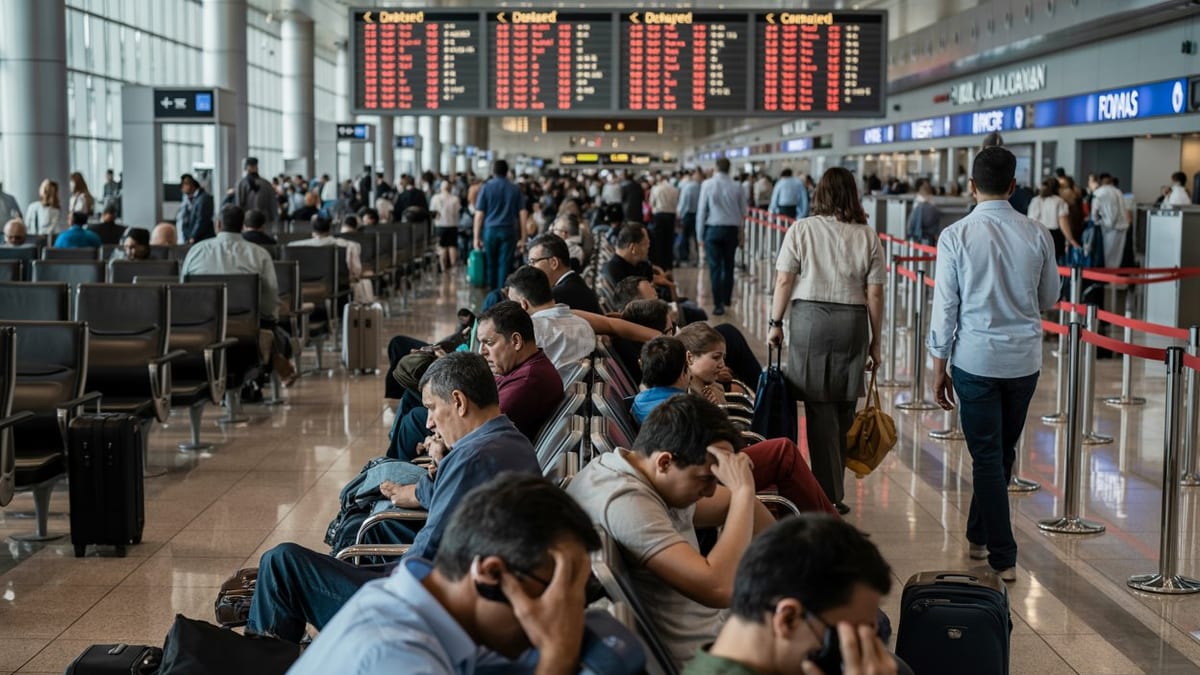
Disruptions Stretch From Amsterdam to Mexico City
Operational data and airport monitoring for June 9 indicate that the latest wave of disruption has hit a swath of destinations including the Netherlands, Mexico, the United Kingdom, France and Austria. The pattern mirrors earlier clusters of flight problems seen in Europe this spring, when carriers such as KLM, Air France, easyJet and British Airways were frequently among the airlines reporting elevated cancellation and delay totals.
At Amsterdam Schiphol in the Netherlands, publicly available tracking figures from recent days show dozens of cancellations and more than 200 delays in a single 24 hour period, with KLM particularly exposed as the airport’s largest operator. These congestion effects have tended to ripple into onward connections, leaving passengers bound for North America, the Middle East and Asia facing missed links or unexpected overnight stays.
In Mexico, low cost carrier Volaris has been contending with crowding on popular domestic and cross border routes at the start of the summer travel period. When disruption strikes, even a handful of cancelled or heavily delayed services can quickly scatter passengers across already busy terminals in Mexico City and other hubs, complicating rebooking and baggage handling as aircraft and crews fall out of position.
According to published coverage drawing on live tracking feeds, the cumulative impact across affected airports on June 9 amounted to at least 66 cancelled flights and more than 560 delayed departures and arrivals, with KLM, Volaris, easyJet, British Airways, Air France, Norwegian Air Sweden and Austrian Airlines among the carriers registering multiple affected services.
European Hubs Face Renewed Operational Strain
The latest disruptions arrive against a backdrop of sustained pressure on Europe’s aviation network in 2026. Industry analyses of the spring schedule highlight repeated spikes in cancellations and delays across major hubs in France, the Netherlands, Belgium and the United Kingdom, as growing traffic meets limited spare capacity in airspace and at airports.
Reports on recent days at Rome’s Leonardo da Vinci airport in Italy, for example, describe more than 260 delayed flights and several cancellations affecting airlines such as KLM, ITA Airways, easyJet, Wizz Air, British Airways and Air France. Those figures underscore how quickly knock on delays can build when a busy Mediterranean gateway runs into weather constraints, staffing limitations or aircraft rotation challenges at the height of tourist season.
In northern Europe, Scandinavian and central European routes have also shown signs of stress. Schedules from Stockholm’s Arlanda airport on June 9 list a dense sequence of departures on carriers including Norwegian Air Sweden, KLM and various European low cost operators. When earlier legs into these hubs are delayed, reactionary disruption often cascades through subsequent rotations, which helps explain the elevated delay count now emerging across Austria and surrounding markets.
Across the continent, the result for passengers is a patchwork of missed connections, tight turnaround times at transfer points and last minute gate changes. Even airports that escape the brunt of cancellations are dealing with longer queues at security and border control as delayed flights bunch into narrower operating windows.
Passenger Impact: Long Queues, Missed Connections and Hotel Scrambles
The human impact of 66 cancellations and hundreds of delays can be substantial once the numbers are translated into individual journeys. Each grounded narrow body aircraft typically carries between 150 and 200 passengers, meaning that a cancellation cluster of the size reported on June 9 can easily leave many hundreds of people seeking new options at short notice.
For travelers at hub airports in the Netherlands, France and the United Kingdom, disruptions are especially painful when they involve missed long haul connections. A short delay on a regional feeder flight into Amsterdam, Paris or London can cause passengers to miss transatlantic or intercontinental departures that operate only once per day, resulting in forced overnight stays and lost days of vacation or business itineraries.
Published guidance from passenger rights organizations notes that delays often translate into extended waits at customer service desks as staff work through backlogs of rebooking requests. With summer load factors already high on many routes, same day alternatives can be scarce, particularly for groups or families who need to travel together. That can leave stranded passengers scattered across multiple replacement flights or rerouted through unfamiliar airports.
In Mexico and Europe alike, the scramble for last minute hotel rooms and ground transport tends to intensify during major disruption events. Travelers who secure rebooking on very early or late connections often rush to adjust existing accommodation bookings, while those without confirmed new flight times face the prospect of staying near the airport indefinitely until an acceptable option appears.
Airlines Respond With Rebooking and Compensation Options
According to publicly available information on airline and airport websites, carriers such as KLM, Air France, British Airways and easyJet are continuing to direct disrupted passengers to digital self service tools where possible. These platforms allow travelers whose flights have been cancelled or heavily delayed to request refunds, select alternative departure dates or choose rerouting options without waiting in line at airport counters.
Within Europe, passenger rights rules mean that customers on affected flights may, in some circumstances, be entitled to compensation if delays exceed a specified threshold or if cancellations were not caused by extraordinary circumstances. Consumer advocacy groups emphasize, however, that eligibility depends on the precise cause of disruption and the timing of any notification, and that documentation such as boarding passes and written confirmation of delay durations remains important when submitting claims.
Low cost operators including Volaris and easyJet typically steer travelers toward app based rebooking flows, which can be particularly useful for those already in transit or moving between terminals. Traditional network carriers, among them KLM, British Airways, Air France and Austrian Airlines, often combine self service tools with staffed counters for complex itineraries or multi segment tickets.
Given the scale of current disruption and the recent history of congested operations at European hubs, analysts note that airlines are likely to keep flexible policies in place for key markets through the peak of the summer season. Passengers are being encouraged in public guidance to check flight status frequently on the day of travel and to allow additional time at airports in case security lines and departure boards change rapidly.
Ongoing Pressure Raises Questions for Peak Summer Travel
Broader traffic data for 2026 show that European air travel has largely recovered to or surpassed pre pandemic levels, with average daily flights continuing to rise compared with last year. At the same time, air traffic flow management reports point to increasing minutes of delay per flight, linked to capacity constraints in certain airspace sectors, weather related restrictions and reactionary problems triggered when aircraft and crews are knocked off schedule.
The new cluster of cancellations and delays involving KLM, Volaris, easyJet, British Airways, Air France, Norwegian Air Sweden and Austrian Airlines suggests that the system remains finely balanced at the start of the main holiday season. Even modest operational shocks in one country can propagate rapidly across airline networks that thread together the Netherlands, the United Kingdom, France, Austria, Mexico and beyond.
For travelers planning trips in the coming weeks, the latest figures serve as a reminder that flexibility and contingency plans remain important, despite the apparent recovery of global aviation. Open ticket options, travel insurance that specifically addresses delays and cancellations, and itineraries with longer connection margins may offer a buffer against the kind of widespread disruption recorded on June 9.
With demand showing little sign of easing and airports preparing for peak summer volumes, further days featuring elevated numbers of cancellations and delays cannot be ruled out. Industry observers will be watching closely to see whether airlines and air navigation providers can adapt schedules, staffing and airspace management quickly enough to keep similar disruption from escalating as the season progresses.