


More news on this day
Hundreds of passengers who bought into an around-the-world “cruise for life” concept on the residential ship Villa Vie Odyssey have been left unexpectedly stranded in Cambodia, after the operator halted its global voyage citing surging fuel costs and financial pressures.
Get the latest news straight to your inbox!
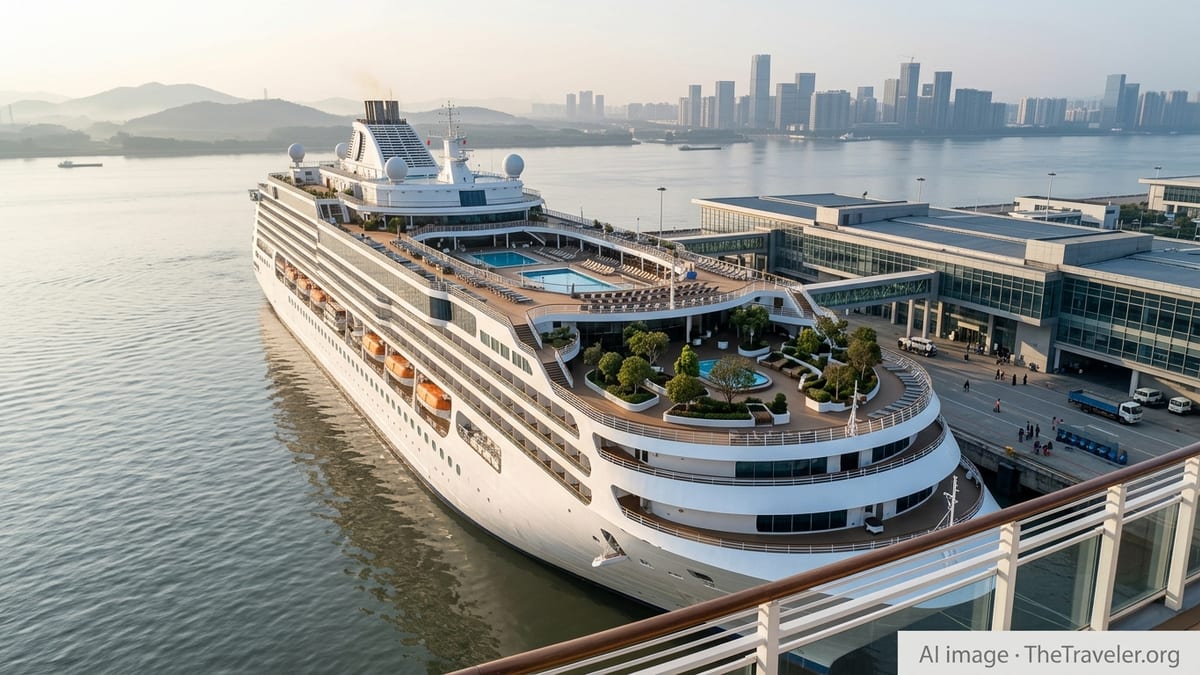
Residential cruise dream abruptly unravels in Sihanoukville
The Bahamas-flagged Villa Vie Odyssey arrived in Sihanoukville on October 23, 2026, sailing in from Thailand with 203 long-term guests and 156 crew members on board, according to publicly available local statements and regional media coverage. The ship had been scheduled to continue on to Vietnam as part of a multi-year, continuous itinerary marketed to residents who sold or rented out their homes on land to live at sea.
Instead of setting off for the next port, passengers report that they were told within days that the voyage was suspended and that they must disembark with their belongings. Coverage from international outlets indicates that travelers were transported into central Sihanoukville and left to arrange their own onward journeys, bringing an abrupt stop to a lifestyle marketed as an alternative to conventional retirement or long-term expat living.
The voyage was promoted as a chance to live indefinitely on board at a fixed upfront price for basic accommodation, with media reports citing packages starting around 120,000 US dollars for long-term or “for life” stays. Many residents had planned to remain on the ship for years, treating the Villa Vie Odyssey as a floating condominium that would slowly circle the globe.
The sudden halt has left those plans in limbo, with guests attempting to secure flights, temporary housing and refunds while still processing the end of what had been sold as a once-in-a-lifetime relocation to sea.
Fuel costs, finances and a suspended business model
Publicly available company communications and reporting from financial and regional news outlets state that Villa Vie Residences, the operator behind the Odyssey, blamed “extraordinary increases” in fuel prices for its decision to suspend operations on October 27. Coverage indicates that the firm said it could no longer secure the fuel necessary to continue sailing, and that it was exploring restructuring and recapitalisation options over a 60-day period.
Reports suggest that the Odyssey, which has capacity for roughly 650 passengers, had already faced financial strain before the Cambodia call. Cruise-industry coverage and passenger blogs describe a series of added fees, including new fuel surcharges, and attempts to raise additional funds from residents in the months leading up to the suspension. Some long-term guests have described this pattern as a “cascade of problems” culminating in the disembarkation order.
Residential cruising is built on a complex financial model that combines high upfront cabin purchases, monthly fees and operating costs that can fluctuate sharply with global energy markets. With fuel often among the largest recurring expenses for any long-distance cruise ship, a sustained spike in oil prices can quickly erode margins, particularly for smaller operators without deep reserves or larger corporate backing.
Published coverage of the Villa Vie case highlights the vulnerability of niche “liveaboard” cruise concepts to rapid changes in fuel and insurance costs, as well as currency movements. The Odyssey’s grounding in Cambodia is already being cited by travel analysts as a stress test for whether similar residential cruise ventures can maintain multi-year itineraries without more conservative financial buffers.
Stranded in Cambodia: what happens to passengers next
Regional media reports from Cambodia indicate that provincial officials in Preah Sihanouk granted the Villa Vie Odyssey a temporary docking window so passengers and crew could disembark and handle immigration formalities. Publicly available information shows that the vessel remains in Sihanoukville, a coastal city that has seen its own rapid transformation in recent years with casino development and shifting tourism patterns.
According to international news coverage, the company has offered to cover short-term hotel accommodation and local transport for former residents, but it has not committed to funding international flights out of Cambodia. That has left many travelers paying out of pocket to reach Phnom Penh or other regional hubs with more frequent long-haul connections, while they negotiate refunds or insurance claims.
The situation is logistically challenging for some passengers, particularly older residents who had expected to live almost entirely on board and may not have recent experience arranging complex independent travel. Reports from cruise-focused blogs and social media groups describe ad hoc mutual support networks forming among the stranded guests, as they share information on reputable local hotels, airport transfers and options for one-way tickets back to Europe, North America and Australia.
Travel industry observers note that Cambodia, while well connected regionally through hubs in Phnom Penh and nearby Bangkok and Ho Chi Minh City, is a more complicated jumping-off point for emergency repatriation than major ports such as Singapore or Dubai. The ad hoc disembarkation in Sihanoukville has therefore added extra cost and stress for travelers already dealing with an unexpected end to their voyage.
Implications for the growing residential cruise niche
The Villa Vie Odyssey had been one of the most visible examples of a new residential cruising segment that has gained attention over the past several years. These projects invite residents to purchase or lease cabins as semi-permanent homes, with marketing materials promising a steady rotation of destinations and the convenience of an all-inclusive floating community.
Analysts tracking the sector say the Cambodia incident highlights the importance of examining the financial underpinnings of such offers, not only the itinerary and onboard amenities. Prospective residents are being reminded by consumer advocates and travel media to review corporate filings where available, understand refund policies if a voyage is curtailed, and confirm what protections exist if an operator becomes insolvent or suspends sailing.
Unlike traditional cruises of fixed duration, multi-year residential voyages magnify questions about financial security, ship maintenance and regulatory oversight. The Villa Vie case is likely to prompt closer scrutiny of how operators ring-fence funds for fuel, port fees and crew salaries, and whether residents’ advance payments are protected in segregated accounts or exposed to wider business risks.
Some commentators have drawn parallels with early years of the mainstream cruise industry, when regulatory frameworks lagged behind rapid expansion and a handful of high-profile failures led to calls for stronger consumer protections. For residential cruises, the stakes can be higher because residents may have sold property or significantly reshaped their retirement planning around the expectation of long-term life at sea.
What travelers can learn from the Villa Vie Odyssey collapse
For would-be residents and long-duration cruisers, the events in Cambodia offer a cautionary case study. Travel law specialists and consumer publications are already emphasizing the value of purchasing flexible one-way air tickets at the start and end of long voyages, maintaining an accessible cash or savings buffer, and checking that travel insurance explicitly covers operator default or trip interruption for financial reasons.
Publicly available expert commentary also encourages travelers to consider the flag state and home ports of residential ships, as different jurisdictions have varying requirements for proof of financial responsibility and passenger protections. In the case of Villa Vie Odyssey, the ship’s Bahamas registration, European management connections and global itinerary created a patchwork of regulatory touchpoints that may complicate any eventual claims process.
For Sihanoukville and Cambodia, the incident brings an unexpected influx of long-stay foreign visitors who are suddenly in need of hotels, restaurants and transportation services. Local tourism businesses stand to benefit in the short term, even as the broader episode raises questions about how ports and national authorities can better prepare for cruise-related emergencies that leave travelers in need of rapid assistance on land.
As former residents of the Villa Vie Odyssey work through the practicalities of leaving Cambodia and rebuilding plans that once revolved around endless days at sea, the residential cruise sector is confronting difficult questions about how to deliver on the promise of “life at sea” without leaving travelers stranded when business models run aground.