


More news on this day
Hundreds of travelers endured long lines, missed connections and overnight airport stays after Dallas–Fort Worth International Airport recorded 714 flight delays and 65 cancellations in a single day, disrupting American, Delta, United, Frontier, Air Canada, Turkish Airlines and other carriers on routes across North America, the Caribbean and key international hubs.
Get the latest news straight to your inbox!
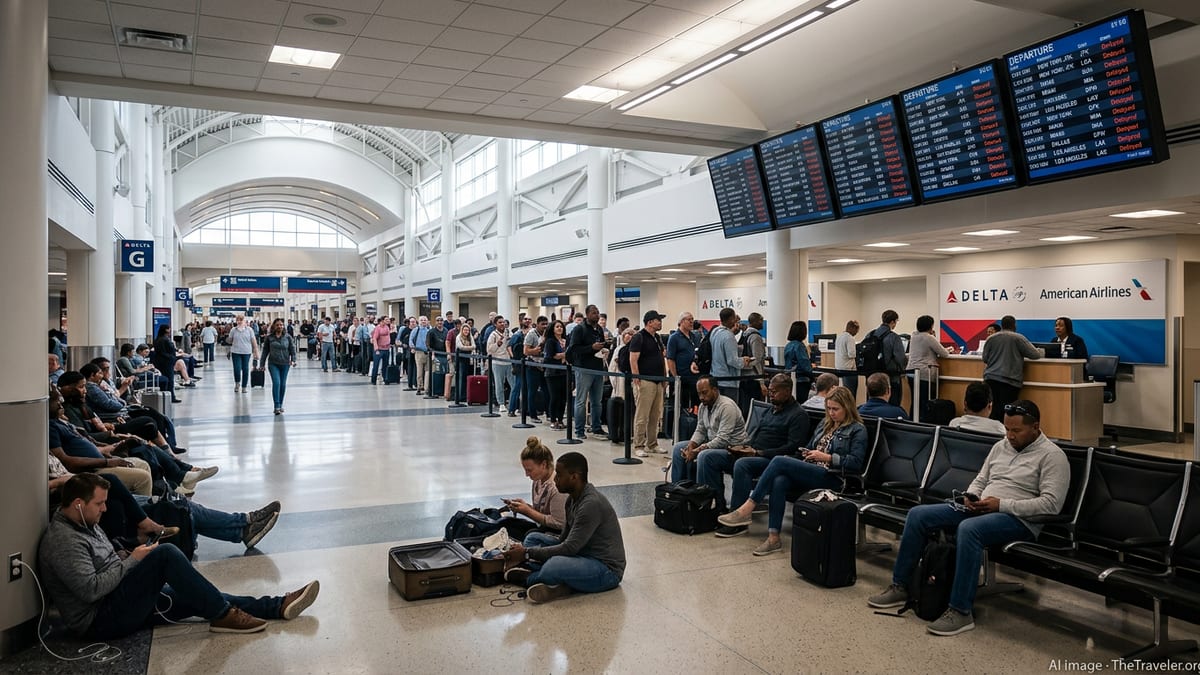
Major Hub Hit by Wave of Disruptions
The latest disruption at Dallas–Fort Worth International Airport, one of the world’s busiest hubs, rippled through domestic and international networks as aircraft and crews fell out of position. Publicly available tracking data showed delays affecting departures and arrivals across all five terminals, with particularly heavy impacts on peak bank periods used to feed connecting traffic.
American Airlines, which operates its largest hub at Dallas–Fort Worth, saw a significant share of the schedule affected as aircraft rotations backed up throughout the day. Delta Air Lines, United Airlines, Frontier Airlines, Air Canada, Turkish Airlines and other carriers that operate smaller but strategically important schedules at the airport also faced knock-on disruptions as inbound aircraft arrived late and outbound departures were held.
Dallas–Fort Worth’s role as a connecting gateway meant that the 714 delays and 65 cancellations extended far beyond North Texas. Passengers traveling between smaller U.S. cities, as well as those bound for Mexico, Canada, Caribbean resort destinations and long haul international routes, encountered cascading itinerary changes that stretched into the evening and overnight hours.
Domestic Connections Across the United States Snarled
The high volume of delayed flights at Dallas–Fort Worth severely affected domestic travel patterns across the United States. Connections between major business centers and smaller regional airports were particularly vulnerable, as many of these routes depend on tightly timed banks of flights flowing through the Texas hub.
Travelers reported missed onward flights to cities across the Midwest, Southeast and West Coast as late-arriving aircraft pushed departure times back by an hour or more. With aircraft and crews assigned to complex daily rotations, even a relatively short delay on one leg frequently translated into extended disruptions on subsequent segments.
Publicly available operations data and previous performance reports indicate that such large disruption events are often driven by a mix of factors, including adverse weather in key airspace corridors, air traffic control congestion and operational challenges such as crew scheduling and aircraft maintenance. Once delays reach the scale recorded at Dallas–Fort Worth, recovery typically requires airlines to reroute aircraft, reposition crews and in some cases trim the schedule to stabilize operations.
Mexico, Canada and Caribbean Routes Feel the Shockwaves
The impact was strongly felt on international short and medium haul routes linking Dallas–Fort Worth with Mexico, Canada and the Caribbean. The airport is a major U.S. gateway to leisure destinations such as Cancun, Los Cabos and Caribbean island resorts, as well as to business centers in Mexico and Canada served by American Airlines and partners including Air Canada and other foreign carriers.
Delays and cancellations at the hub left many vacationers facing unexpected extra nights in transit hotels or at the airport while they waited for open seats on later flights. For business travelers, missed meetings and rescheduled itineraries added to the financial and logistical cost of the disruption. Reduced seat availability on high demand leisure routes further complicated rebooking as airlines worked through backlogs of displaced passengers.
Disruptions on cross-border routes also interacted with different passenger rights regimes. Travelers holding tickets that included Canadian segments on carriers such as Air Canada, or itineraries governed by Canadian or European regulations, could be covered by more specific standards for compensation and care in some circumstances, depending on the nature of the delay and which airline actually operated the affected flight.
Long Haul and Overseas Flights Suffer Knock-On Effects
Long haul international services to and from Dallas–Fort Worth also encountered operational challenges as delays accumulated. Airlines such as Turkish Airlines and other foreign carriers link the airport with transatlantic and transpacific hubs, often on once daily services that depend on precise timing for onward connections at both ends of the route.
When large numbers of short and medium haul flights are delayed, some passengers miss their long haul departures from Dallas–Fort Worth entirely, forcing airlines to rebook customers days later in extreme cases where services do not operate daily. Conversely, late arriving intercontinental flights can cause missed domestic connections for inbound travelers trying to reach final destinations across the United States, Canada, Mexico and the Caribbean.
Recovery on long haul routes is often slower than on domestic flights, since airlines have fewer spare widebody aircraft and crews available. Once rotations between continents are disrupted, it can take several days of schedule adjustments and selective cancellations for carriers to restore regular patterns of service.
Understanding Passenger Options and Protections
In the wake of a mass disruption event, passenger rights and options vary significantly based on the airline, the origin and destination of travel and whether the delay is deemed within a carrier’s control. Publicly available regulatory guidance in the United States notes that domestic carriers are generally required to provide refunds when flights are canceled or significantly changed and the customer chooses not to travel, while other forms of compensation or accommodations may depend on company policy.
On itineraries touching Canada or governed by Canadian regulations, minimum standards of treatment, communication and compensation may apply in cases where delays and cancellations are within the operating carrier’s control. Similar structured rules apply on some international routes under foreign regulations, especially where European carriers or airports are involved. These frameworks can influence how airlines respond with meal vouchers, hotel accommodations or monetary compensation in qualifying cases.
Travel experts often recommend that passengers caught in large scale disruption events monitor airline apps and departure boards closely, proactively request rebooking options and, where feasible, consider alternative routings through other hubs. Travel insurance policies and premium credit card protections can also offer additional safeguards, although coverage terms vary widely and may exclude some common causes of delay such as severe weather.