


More news on this day
Travelers at Los Angeles International Airport on June 23 faced mounting disruptions as a cluster of grounded flights and rolling delays on Alaska Airlines, JetBlue, Southwest and Qantas services rippled across key routes in the United States, Canada, Denmark, Mexico, Japan and Australia.
Get the latest news straight to your inbox!
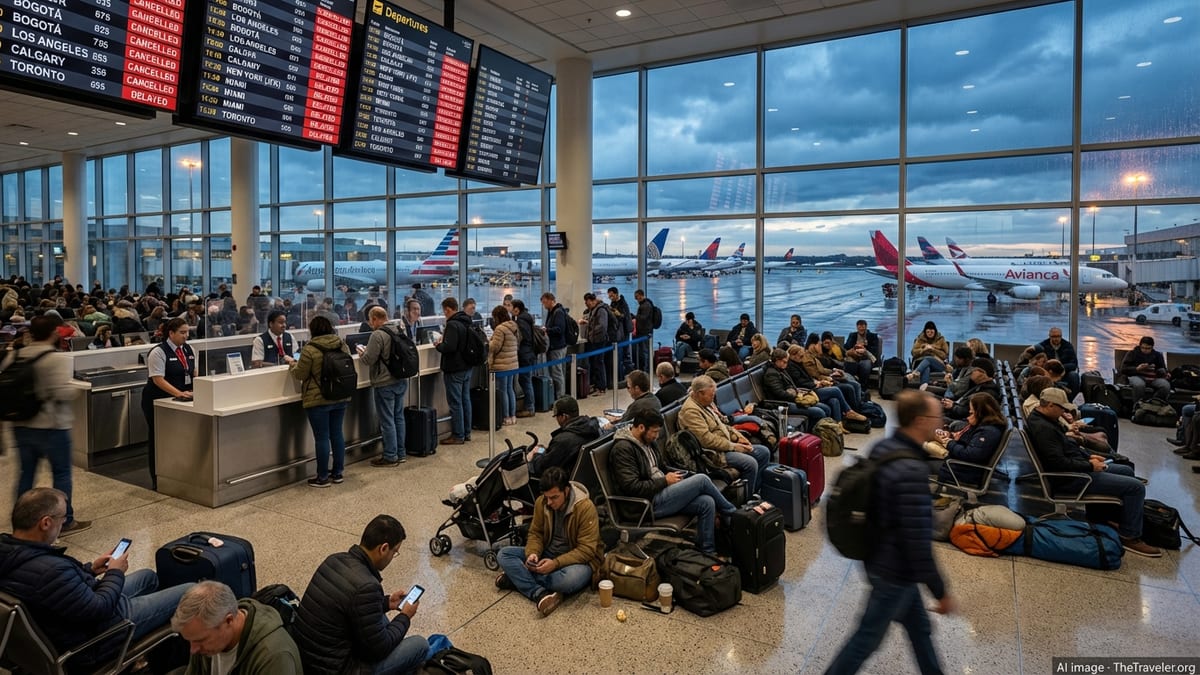
Grounded departures tighten pressure on a busy LAX schedule
Los Angeles International Airport is one of the busiest hubs in the world, handling hundreds of departures and arrivals daily across nine terminals and the Tom Bradley International Terminal. Publicly available schedule data for June 23 indicates more than 700 departures and a similar number of arrivals, leaving little slack when multiple carriers encounter problems at the same time.
Against that backdrop, seven grounded flights involving Alaska Airlines, JetBlue, Southwest and Qantas placed outsize strain on operations. Flight-tracking boards for Tuesday showed a mix of cancellations and aircraft that never left the gate, affecting departures to key domestic and international destinations. While each carrier cited its own operational reasons, the immediate result for passengers was the same: unexpected time in terminals and the need to rebook or reroute.
Reports indicate that the grounded services were concentrated in peak daytime and evening banks, when gate space and runway capacity at LAX are already heavily utilized. Even a small cluster of cancellations in those periods can require rapid reshuffling of aircraft and crews, feeding delays into later rotations as aircraft that were due to connect onward never arrive on time.
Data from independent trackers and airport information platforms showed that, as the day progressed, the problems were no longer limited to the initial seven flights. Knock-on effects contributed to more than 100 delays across the affected airlines and their codeshare partners, pushing some departures well beyond their scheduled times.
North American and transborder routes bear the brunt
The most immediate impact for many travelers was felt on short and medium-haul services that connect LAX with major cities across the United States and Canada. Alaska Airlines and JetBlue both operate significant domestic and transcontinental networks from Los Angeles, while Southwest maintains a large schedule from Terminal 1, linking Southern California to destinations throughout the West and to longer-haul points such as Chicago and the East Coast.
According to published coverage and live-status boards, cancellations and extended delays were recorded on routes linking Los Angeles with Seattle, the San Francisco Bay Area, Denver, New York area airports and several Canadian gateways. In some cases, grounded aircraft at LAX meant that return flights from those cities were also delayed or cancelled, creating congestion on both ends of the route.
Transborder services into Canada experienced particular strain where carriers operate only one or two daily flights on certain routes. When one of those departures is grounded or heavily delayed, same-day alternatives can be limited, especially for passengers traveling onward to smaller regional communities that depend on connections through major Canadian hubs.
Low visibility of how long aircraft would remain on the ground also complicated travel planning. Travelers attempting to switch to other departures sometimes found that backup flights were already heavily booked following a week of weather- and staffing-related disruptions across parts of the North American network.
International links to Europe, Mexico and Asia-Pacific disrupted
LAX is a critical gateway for long-haul travel to Europe, Latin America and the Asia-Pacific region, and the latest disruptions did not spare those corridors. Public flight-status feeds showed delayed or cancelled services related to codeshares and direct flights linking Los Angeles to Copenhagen and other European cities, creating uncertainties for passengers bound for Denmark and neighboring countries.
Operations to Mexico, which rely heavily on point-to-point leisure demand and connecting traffic, were also affected. Alaska Airlines and Southwest both serve popular Mexican destinations from the U.S. West Coast, and recent schedule adjustments on some Mexico routes have left fewer daily options from Los Angeles. When one of those flights is grounded, travelers can face long waits for the next available seat, particularly during the early-summer peak.
Across the Pacific, Qantas services between Los Angeles and Australia and onward connections into Japan and wider Asia-Pacific networks came under pressure. Real-time data showed delays around departures aligned with major trunk routes between LAX, Sydney and other regional hubs, with late departures shortening connection windows for passengers heading on to Tokyo and other Asian cities.
Because long-haul aircraft typically operate on tight rotations with little idle time on the ground, a delay leaving Los Angeles can cascade into schedule changes for flights onward from Australia and Asia. That dynamic raised concerns that Tuesday’s turmoil could continue to affect some itineraries into Wednesday and beyond, even after operations at LAX begin to stabilize.
Terminal congestion and passenger experience at LAX
The disruptions played out across several of LAX’s busiest terminals. Southwest and JetBlue flights are concentrated in Terminal 1, which also serves as a base for other domestic carriers. Alaska Airlines operates primarily from Terminal 6, while Qantas international services use the Tom Bradley International Terminal, with some codeshare activity overlapping in Terminal 6 as well.
Publicly available airport and transport authority documents highlight that these terminals already handle dense peak-hour banks, amplified this year by ongoing construction and modernization work around the airport campus. When grounded aircraft remain at gate positions longer than planned, gate changes and remote stand operations become more common, often requiring bus transfers and last-minute boarding adjustments.
On Tuesday, passengers reported crowded hold rooms, long queues at check-in and customer service counters, and increased pressure on food, beverage and seating areas. Families traveling at the start of school holidays and business travelers trying to make meetings or conferences faced similar challenges as they sought alternative flights or overnight accommodation.
Luggage handling also became more complex. When flights are cancelled at short notice, bags that were already checked in must be located and returned, or re-tagged for new routings. For travelers connecting from international to domestic flights, delays in reclaiming baggage or re-clearing security can mean missed onward connections even when replacement flights are available.
Airlines weigh resilience as peak summer approaches
The wave of disruptions at LAX comes just as airlines are moving into what is traditionally one of the busiest travel periods of the year. Recent weeks have already seen elevated levels of delays and cancellations across United States carriers, driven by a combination of storms, air-traffic constraints and tight staffing in some operational roles.
Industry analyses note that carriers such as Southwest, Alaska and JetBlue have relatively dense schedules at Los Angeles but limited spare aircraft and crew during peak days. When several issues occur at once, such as mechanical checks on specific aircraft types or late arriving in-bound flights, there is less flexibility to swap equipment or crews without affecting later departures.
Regulatory filings and consumer-advocacy resources underscore that airlines operating from LAX are required to maintain contingency plans for extended tarmac delays and large-scale irregular operations. However, those plans typically focus on essential services, such as access to food, water and restrooms on board and at the terminal, rather than guaranteeing rapid rebooking on alternative flights during widespread disruption.
As the immediate backlog from Tuesday’s problems gradually clears, attention is likely to turn to how airlines serving Los Angeles can build additional resilience into their schedules for routes spanning the U.S., Canada, Europe, Mexico, Japan and Australia. For travelers, the day’s events serve as another reminder of the importance of monitoring flight status closely, allowing extra connection time at major hubs and understanding their rights when flights are grounded or heavily delayed.