


More news on this day
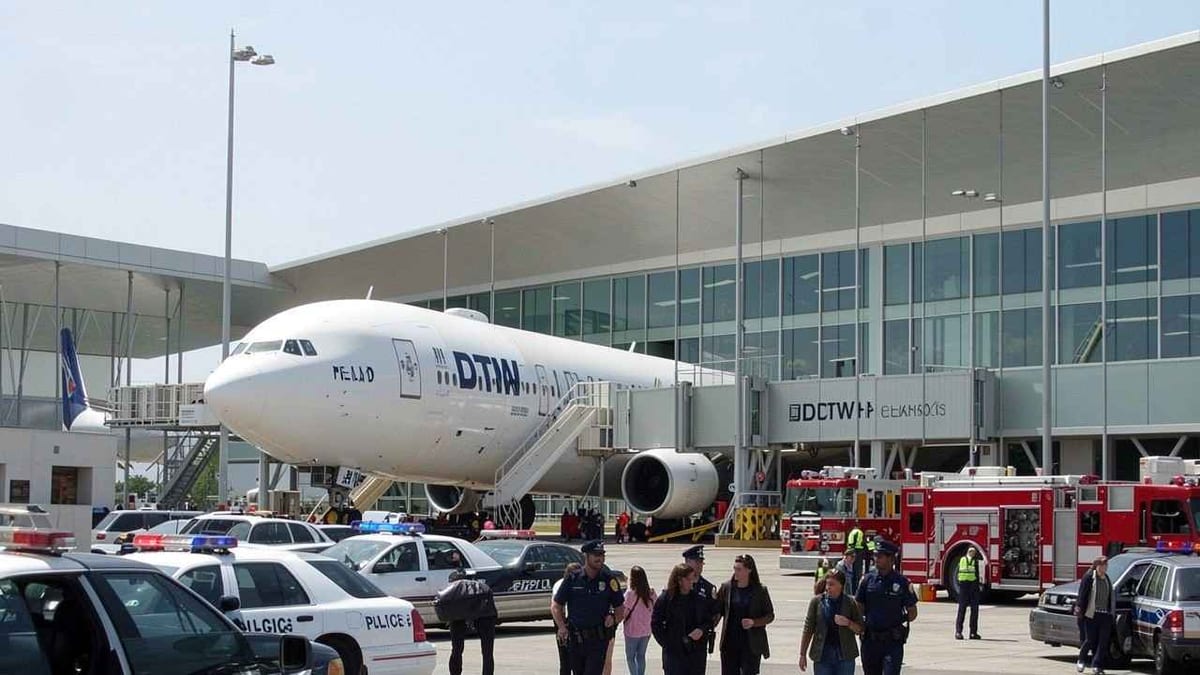
A regularly scheduled Delta Air Lines flight from Cincinnati to Salt Lake City, operating as DL2876 on a Boeing 737-832, diverted back to Cincinnati shortly after departure, turning an otherwise routine domestic hop into an unexpected return that has raised fresh questions about how and why airlines decide to abandon a route midflight.
Get the latest news straight to your inbox!
Routine Morning Departure Turns Back Toward Cincinnati
Publicly available schedule data for June 2026 shows Delta Air Lines operating flight DL2876 as a daily Boeing 737 service from Cincinnati/Northern Kentucky International Airport to Salt Lake City, with an early morning departure slot. The route forms part of a broader network that links the Midwest to Delta’s western hub in Utah, and it is typically flown by a 737-800 series aircraft configured for domestic service.
Tracking information for the flight indicates that shortly after takeoff the aircraft leveled off and then initiated a turn back toward Cincinnati instead of continuing west to Utah. The flight subsequently landed at its origin airport, ending the sector early and disrupting travel plans for passengers slated to connect onward through Salt Lake City.
The diversion unfolded on a route that has become a key nonstop option between Cincinnati and Salt Lake City, one of several daily Delta-operated frequencies connecting the two cities. In Delta’s June domestic schedule documentation, DL2876 appears alongside other Cincinnati to Salt Lake City flight numbers, underscoring the carrier’s commitment to maintaining multiple options on the corridor even as individual flights occasionally face operational disruptions.
While the turnaround itself appears to have been handled without further incident, the abrupt change in flight path has drawn attention from frequent flyers and aviation watchers who closely monitor diversions and irregular operations across major U.S. carriers.
Possible Factors Behind the Diversion
As of the latest available information, no single publicly confirmed cause has been cited for DL2876’s decision to return to Cincinnati. In similar domestic diversion cases, published coverage and aviation discussion forums commonly point to a limited number of underlying factors: technical issues with the aircraft, indications in cockpit systems that require precautionary inspection, medical situations among passengers or crew, or crew duty-time limitations that intersect with delays.
Industry analysis often notes that when an aircraft is still relatively close to its departure airport, returning to that airport can simplify logistics. Cincinnati offers maintenance resources, spare aircraft options, and crew support that can help an airline recover its schedule more quickly than if a diversion occurred to a smaller or less familiar field along the route. For Delta, Cincinnati also remains a strategically important station within its domestic network, even after the airline shifted much of its connecting traffic to other hubs.
Operational experts writing in trade publications and forums frequently highlight that many diversions conclude without dramatic findings: a warning light that later proves benign, a suspected mechanical irregularity that cannot be reproduced on the ground, or a medical condition that is stabilized after landing. Yet each decision to divert is typically framed as a precaution in favor of safety and regulatory compliance, even at the cost of delays, missed connections, and equipment repositioning.
In the case of DL2876, the decision to return instead of pressing on toward Salt Lake City aligns with a broader pattern seen across the industry, where carriers tend to favor a diversion to a base or major station when a potential technical or operational concern emerges early in a flight.
Impact on Passengers and Downline Operations
The immediate effect of DL2876’s diversion was a cascade of schedule disruptions for travelers bound not only for Salt Lake City but also for onward destinations throughout the western United States. Many passengers on the Cincinnati to Salt Lake City leg are typically connecting to other Delta flights, including services to smaller regional airports and popular leisure destinations across the Mountain West.
When a flight returns to its departure point, airlines must often rebook passengers on later departures, switch aircraft, or, in some cases, re-time subsequent flights using the same crew or equipment. According to general airline operations guidance, this can involve shifting customers onto alternate Cincinnati to Salt Lake City frequencies listed in the same day’s timetable, or rerouting them through other hubs such as Atlanta, Detroit, or Minneapolis to reach Utah with additional stops.
Travelers affected by diversions commonly report longer overall journey times, missed same-day connections, and, in peak periods, difficulty finding open seats on later flights. However, because Delta’s June schedule shows multiple daily Cincinnati to Salt Lake City departures, some passengers from DL2876 may have been able to continue their trips the same day on another flight number, while others likely faced overnight delays or rerouting through different hubs.
For the airline, a return-to-origin diversion can also cause ripple effects across the network. Aircraft rotations that depend on DL2876 arriving in Salt Lake City on time may need to be revised, which can lead to further delays on subsequent flights if spare aircraft or crews are not immediately available.
Spotlight on Delta’s Cincinnati–Salt Lake City Corridor
The diversion has renewed attention on Delta’s Cincinnati to Salt Lake City service at a time when the airline’s network strategy in both cities is closely watched by analysts and local stakeholders. Once a large hub for the carrier, Cincinnati now functions more as a focus city within Delta’s system, but the presence of several daily nonstops to Salt Lake City underscores the ongoing importance of the route for both business and leisure traffic.
June 2026 domestic schedule documents list multiple daily Cincinnati to Salt Lake City flights operated by Delta with Boeing 737 aircraft, including DL2876 as a morning departure. This pattern fits into Delta’s broader approach of using Salt Lake City as a key connecting hub for destinations across the Intermountain West and Pacific Northwest, while Cincinnati feeds traffic from the Ohio Valley and surrounding regions.
Data from public flight-mapping and schedule-tracking platforms show that Delta has positioned the CVG–SLC corridor as a reliable nonstop option in recent seasons, complementing connections through other hubs. The decision to maintain several daily frequencies illustrates how the airline is attempting to balance point-to-point demand with the need to provide robust connectivity for smaller markets beyond both Cincinnati and Salt Lake City.
Against this backdrop, an unscheduled diversion such as the one involving DL2876 stands out precisely because the route is otherwise routine. When a familiar flight suddenly appears to trace a looping path back to its origin on tracking maps, it tends to attract attention from both regular passengers and aviation enthusiasts who monitor deviations from the usual pattern.
Broader Questions About Diversions and Transparency
DL2876’s midair return feeds into a recurring conversation among travelers about how diversions are communicated and documented. Passengers often learn of a change in course only when cabin crew make an onboard announcement or when they check real-time tracking applications that show the aircraft veering from its planned route.
Publicly accessible flight-tracking and scheduling services provide detailed information on route changes, timing, and aircraft types, but they rarely offer definitive explanations for why a diversion occurred. Instead, observers rely on a combination of airline statements, regulatory filings when applicable, and anecdotal accounts to piece together the factors behind each irregular operation.
The DL2876 diversion highlights how a single operational decision can generate outsized interest when it affects a well-traveled domestic route and a widely used aircraft type such as the Boeing 737-800 series. With diversions from other carriers and routes regularly surfacing in aviation forums, travelers are increasingly accustomed to seeing these events in real time, yet they still grapple with limited clarity on the root causes.
For now, DL2876’s unexpected return to Cincinnati stands as another reminder that even familiar, short-haul segments can be disrupted by operational considerations that remain largely invisible to those on board, reinforcing the central role of precautionary decision-making in modern airline operations.