


More news on this day
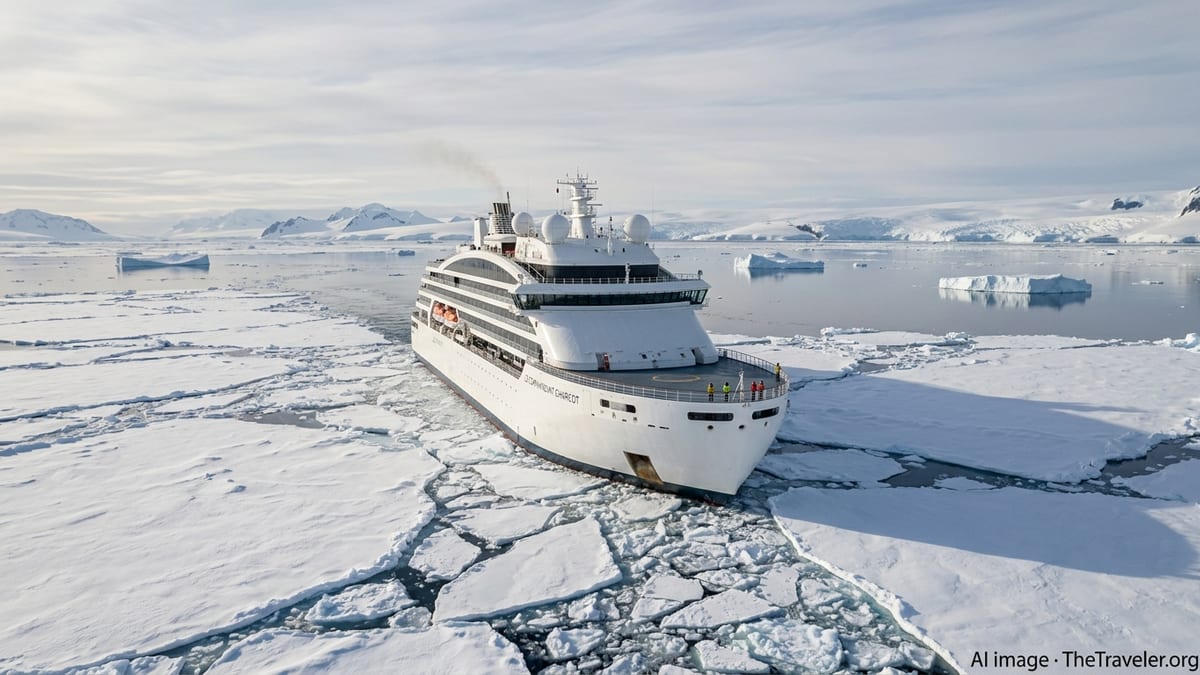
Polar destinations from Antarctica to Alaska and Greenland are seeing renewed momentum as HX Expeditions’ 130th‑anniversary promotions spotlight bucket‑list itineraries across some of the world’s most remote seas.
Get the latest news straight to your inbox!
Anniversary Offers Put Polar Itineraries in the Spotlight
HX Expeditions, the standalone brand that evolved from Hurtigruten’s expedition arm, is using its 130th anniversary to push a broad slate of polar sailings, with particular emphasis on Antarctica, Alaska, Greenland and Arctic Canada. Publicly available information on the company’s campaign indicates that “anniversary offers” are being applied to a mix of 2025 and 2026 departures, positioned as limited‑time savings on all‑inclusive expedition voyages.
Details compiled from HX’s consumer offers and cruise‑retail partners indicate that promotion levels differ by destination, with higher percentage discounts typically tied to voyages along the coasts of Norway, Alaska and Arctic Canada, and smaller but still significant reductions on Greenland and Antarctica itineraries. Some travel sellers are advertising savings of up to around one‑third on selected Arctic sailings, and up to roughly one‑quarter on certain Antarctic departures, alongside additional incentives such as onboard credit in specific markets.
The same materials show that HX is also using the anniversary year to promote itineraries that knit together Greenland and Arctic Canada, including voyages that circumnavigate Baffin Bay or explore the Canadian High Arctic. These long‑range routes are being framed as cornerstone products in the brand’s polar portfolio, reinforcing its historic positioning in expedition cruising.
Booking windows for the anniversary promotions generally run through the northern spring of 2026, creating a sense of deadline‑driven urgency for travelers considering big‑ticket polar trips. Industry observers suggest that this timing is designed to lock in demand for the next two main polar seasons while HX continues its transition under the refreshed brand.
Antarctica Visitor Numbers Reach New Highs
The HX push comes as overall interest in Antarctica continues to climb. Recent visitor statistics published by the International Association of Antarctica Tour Operators for the 2023–2024 and 2024–2025 seasons show that annual tourist numbers have exceeded 118,000 people, up sharply from pre‑pandemic levels. The association notes that tourism growth is part of a wider global trend and that Antarctica is now firmly established as a mainstream aspirational destination rather than a niche pursuit.
Complementary research from international environmental and tourism bodies indicates that ship‑based exploration remains the dominant form of travel to the White Continent, with expedition‑style voyages offering shore landings, kayaking and wildlife viewing as headline experiences. The United States consistently ranks as the single largest source market, accounting for more than 40 percent of visitors in the most recent season, followed by China, Australia, the United Kingdom and Canada.
As demand grows, discussions around environmental impact are intensifying. Academic and policy reports released in 2025 highlight concerns about disturbance to wildlife, biosecurity risks and cumulative pressures on landing sites, even though strict operating standards, caps on ship size at landing locations and mandatory briefings remain in place for tour operators affiliated with recognized industry bodies. Prospective visitors weighing anniversary‑driven discounts are being urged by advocacy groups to pay attention to operator credentials, ship capacity and stated sustainability practices before booking.
Analysts note that the kind of extended, small‑ship itineraries promoted by HX and its competitors are often marketed as lower‑impact alternatives to traditional large‑ship cruising. However, watchdog organizations stress that any increase in total visitor numbers carries environmental implications, underscoring the tension between strong demand and fragile ecosystems.
Arctic Canada and Greenland Benefit from Growing Cruise Interest
In the Northern Hemisphere, Arctic Canada and Greenland are among the destinations benefiting most from a broad resurgence in expedition cruising. Recent itineraries published by HX and rival specialist operators show a proliferation of voyages through the Canadian Arctic archipelago, Baffin Bay and the coasts of western and southern Greenland, sometimes linked to transits of all or part of the Northwest Passage.
Academic work on cruise tourism in Nunavut and the wider Canadian Arctic points to a marked expansion since the mid‑2000s, with a growing number of vessels registered with national reporting systems and more communities receiving ship calls during the short summer season. Similar patterns are visible in Greenland, where small‑ship operators have layered cultural, culinary and scientific programming on top of traditional iceberg and wildlife viewing, seeking to differentiate their products as “immersive” rather than purely scenic.
HX’s recently announced collection of Greenland experiences for the 2026–2027 seasons adds further capacity to this trend, offering itineraries that combine remote fjords with visits to coastal settlements and opportunities to engage with local food traditions. Public material describing these voyages emphasizes partnerships with regional experts and a focus on understanding how climate and economic change are reshaping life in the Arctic, a positioning that mirrors a wider shift across the expedition sector.
Infrastructure in Arctic Canada and Greenland remains limited, which naturally constrains visitor volumes. Nevertheless, regional economic studies suggest that cruise calls can provide important seasonal income for small communities through guiding, handicrafts and local services, provided that operations are carefully managed and planned in consultation with residents.
Alaska Sees Competition in the Small‑Ship Segment
Alaska, long dominated by large mainstream cruise brands, is emerging as a key battleground for small‑ship expedition lines during the current booking cycle. Schedules and promotional pages for HX show multiple Alaska itineraries along the Inside Passage, promising landings in smaller ports, visits to Indigenous communities and longer days devoted to hiking, kayaking and wildlife observation compared with standard large‑ship routes.
Travel‑trade data and booking platforms in North America indicate that Alaska remains one of the strongest performers for the wider cruise industry, with high demand from both first‑time travelers and repeat cruisers looking for more in‑depth experiences. Expedition‑style voyages are being marketed as a way to access less crowded anchorages and to spend more time in national parks, tidewater glacier areas and narrow fjords that are either unavailable or less frequently visited by larger ships.
For HX, incorporating Alaska into a global anniversary campaign allows the company to leverage an established, high‑awareness destination to introduce more travelers to the expedition format. Promotional copy emphasizes contrasts with conventional cruising, including smaller passenger counts, flexible daily programs and an educational approach aboard purpose‑built vessels.
Competing lines operating in the region, including several long‑standing expedition specialists, are responding with their own offers for the 2025 and 2026 seasons. This competitive environment is delivering a wave of price‑led marketing to consumers, even as operators highlight rising operating costs in remote areas.
What Travelers Should Know Before Booking Polar Deals
For travelers considering taking advantage of HX’s anniversary offers, experts recommend looking beyond headline discounts to assess the full picture of polar tourism. Recent reports on Antarctica and the Arctic underline that travel seasons are short and conditions can be unpredictable, which can impact itineraries, shore landings and wildlife sightings. Flexible expectations and a willingness to adapt to weather and ice conditions remain essential.
Prospective guests are also being encouraged by consumer advocates to scrutinize what “all inclusive” means in practice. Publicly available fare breakdowns show that some expedition fares bundle charter flights, transfers, excursions and certain activities, while others treat elements such as camping, kayaking or photographic workshops as optional extras. Careful comparison of inclusions, cabin categories and insurance requirements is advised before committing to a specific sailing.
Environmental considerations are another key factor. Independent guidance suggests favoring operators that participate in recognized regional associations, publish transparent sustainability commitments, and operate modern vessels with advanced emissions and waste‑management systems. Travelers with flexibility might also look at shoulder‑season departures, which can reduce pressure on popular landing sites while offering different light and wildlife conditions.
Finally, sources across the travel trade note that demand for Antarctica, Greenland and Arctic Canada has outpaced pre‑pandemic levels, even as capacity has increased. That means the most sought‑after itineraries and cabins can still sell out many months in advance, despite the current wave of promotions. For those hoping to secure a discounted polar adventure with HX Expeditions during its anniversary year, timely decision‑making and detailed research remain as important as the deals themselves.