


More news on this day
Indian Railways is expanding capacity on select long-distance trains to help hundreds of passengers returning from flood-affected regions of Nepal, following days of flash floods and disrupted road links along the India–Nepal corridor.
Get the latest news straight to your inbox!
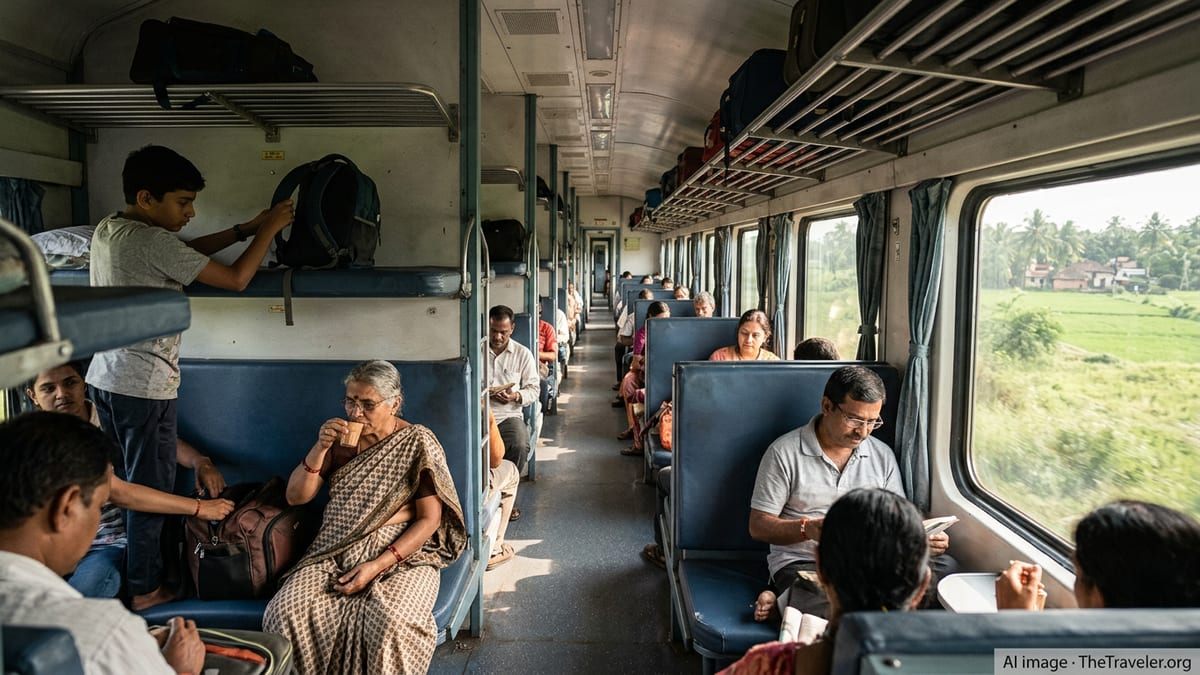
Extra Coaches Attached to Patna–Purna Express for Stranded Pilgrims
Published coverage indicates that the most visible step has come on the Patna–Purna Express, where additional air-conditioned coaches were attached to accommodate more than 100 pilgrims from Maharashtra who had been stranded in Nepal after flash floods severed key road routes. Reports from Patna highlight that the group, which had been visiting religious sites, was brought by bus to the India–Nepal border and then onward to Patna Junction, where the rail sector took over arrangements for the onward journey to central India.
Accounts from regional media describe coordination between the Bihar state administration and the Railway Board in New Delhi to secure extra accommodation on the 17609 Patna–Purna Express. Two 3AC coaches were attached to ensure that all travelers could remain together, reducing the risk of families being split across different trains and stations at a moment when onward connections are in high demand.
According to these reports, railway staff at Patna Junction focused on reallocating berths and managing the boarding process so that the pilgrims could travel on confirmed tickets rather than facing long waiting lists. The move offered a rail-based evacuation route as flights and buses remained constrained by weather and damaged road infrastructure in the border districts.
Coverage from multiple outlets notes that the initiative has been framed as an emergency, one-off measure tailored to the sudden influx of passengers from Nepal, but also as part of a broader pattern of using coach augmentation to quickly increase capacity in times of disruption.
Flash Floods in Nepal Disrupt Cross-Border Travel Flows
The extra-coach arrangements are unfolding against the backdrop of severe flash floods and landslides in Nepal’s highland regions. International and regional reporting over the past week has documented a rapid-onset disaster linked to a glacial collapse along the Nepal–China frontier, triggering torrents of water and debris that swept away bridges, roads, and settlements. The death toll has climbed steadily as search teams reach more remote valleys and as information flows improve.
Downstream, these conditions have had a direct impact on mobility for both local residents and foreign visitors. Road transportation on important approaches to the Delhi–Kathmandu route, as well as internal highways leading from pilgrimage and trekking hubs toward the Indian border, has been repeatedly interrupted. According to published coverage, hundreds of travelers remained stuck for days in areas where bus services were suspended or running on heavily delayed schedules.
As buses and private vehicles faced washed-out segments and damaged river crossings, many travelers redirected their journeys toward railheads on the Indian side, particularly in Bihar. Junctions such as Raxaul, Jaynagar, and routes into Patna and other major cities have seen increased footfall from people returning from Nepal and seeking rapid options to reach home states including Maharashtra and Delhi.
This sudden redirection of passenger flows has reinforced the strategic role of Indian Railways in offering a stable long-distance backbone when other transport modes falter. The decision to add coaches is one visible example of how capacity can be flexed quickly on existing trains that already connect border regions with the wider Indian network.
Railway Board Signals Wider Coach Augmentation to Ease Pressure
Even as immediate measures focus on flood-affected travelers from Nepal, separate reporting from the domestic rail beat shows that the Railway Board has also moved to expand coach capacity more broadly on mail and express services. A recent directive reported from Prayagraj outlines plans to permanently raise the number of coaches in multiple long-distance trains across zonal railways, including the North Central Railway, in an effort to reduce chronic overcrowding and long waiting lists.
Under this framework, trains running with 20 coaches are slated to be upgraded to 24, while services that already operate with longer rakes may also receive additional coaches where infrastructure allows. The augmentation program is being coordinated with the mechanical departments of the zones and is expected to proceed in phases, prioritizing routes with persistent demand-supply gaps.
For passengers returning from Nepal, this broader policy backdrop is significant. While the emergency extra coaches attached to the Patna–Purna Express are described as a targeted response, they sit within a system where technical and operational planning for higher-capacity formations is already underway. That planning can make it easier to respond quickly when sudden surges in demand arise from natural disasters or cross-border disruptions.
Publicly available information also shows that key trains serving Bihar and adjoining regions, including those linking Patna, Raxaul, and other gateways used by Nepal-bound travelers, feature in parliamentary discussions and policy indexes on capacity enhancement. These references underline how disaster-related crowding at stations such as Patna Junction intersects with longer-term debates over how many trains and coaches should serve the state’s busy corridors.
Cross-Border Rail Links Frame India–Nepal Connectivity
The latest coach additions coincide with ongoing efforts by India and Nepal to deepen cross-border railway connectivity. According to information published by the Embassy of India in Kathmandu and other official summaries, recent joint working group and project steering committee meetings in June 2026 reviewed progress on several grant-assisted links, including the Jaynagar–Bijalpura–Bardibas and Jogbani–Biratnagar broad-gauge lines.
These projects are part of a wider India–Nepal Railway Connectivity initiative that also envisions the proposed Raxaul–Kathmandu broad-gauge railway, as well as links from New Jalpaiguri to Kakarbhitta and other points along the frontier. Many of these corridors are intended to provide more resilient and reliable options for both freight and passenger movement between the two countries, supplementing heavily used highways that remain vulnerable to monsoon flooding and landslides.
In the short term, however, cross-border rail access for most passengers affected by the current floods is still indirect. Travelers have generally needed to reach Indian junctions by road from locations such as Janakpur or other towns in Nepal before boarding trains onward to Patna, Delhi, Nagpur, or other destinations. The experience of rerouting stranded pilgrims via Patna Junction illustrates how, in the absence of fully operational passenger rail links deep into Nepal, Indian Railways remains a crucial second leg of multi-modal itineraries rather than a complete end-to-end solution.
Analysts following connectivity projects note that as new lines open or expand into Nepalese territory, future disruptions could see a greater proportion of affected people able to move by rail earlier in their journeys. Until then, ad hoc measures such as attaching extra coaches on Indian routes will remain an important tool in managing humanitarian and travel pressures when events in Nepal spill across the open border.
Humanitarian Travel Support and Future Preparedness
Beyond the immediate logistics of coach augmentation, the response to stranded travelers from Nepal highlights a broader trend in disaster-linked mobility management in South Asia. State governments, central agencies, and the rail network are increasingly coordinating to move affected groups in a structured way, rather than leaving individuals and tour operators to secure seats independently at congested stations.
Coverage of the current evacuations describes how local administrations have compiled passenger manifests, arranged buses to suitable junctions, and then worked with railway headquarters to secure block bookings and extra coaches. This approach helps to reduce crowding at ticket counters and platforms, while also providing some predictability for people who have already experienced days of uncertainty amid flooding and blocked roads.
For Indian Railways, the episode underscores the importance of flexible rolling stock deployment and the ability to adjust coach composition at short notice. While permanent capacity additions will take time and investment, the use of spare rakes and selective augmentation on key trains gives the network a way to respond to sudden spikes in demand tied to natural hazards in neighboring countries.
As the flood situation in Nepal evolves and more travelers seek to leave affected regions, further changes to train formations and reservations could follow. Publicly available statements from rail representatives suggest that the number of extra coaches and the trains selected for augmentation will continue to be guided by real-time assessments of passenger requirements on routes linking Bihar, central India, and other parts of the country.
Indian Express: Nepal floods and Indian Railways arrangements
Times of India: Maharashtra pilgrims return via Patna with extra coaches
Times of India: Railway Board plan to increase coaches