


More news on this day
Japan’s famed Shinkansen network is entering a new chapter, as operators expand luxury classes and unveil high-end tourism trains that recast high-speed rail journeys as part of the destination rather than just a way to get there.
Get the latest news straight to your inbox!
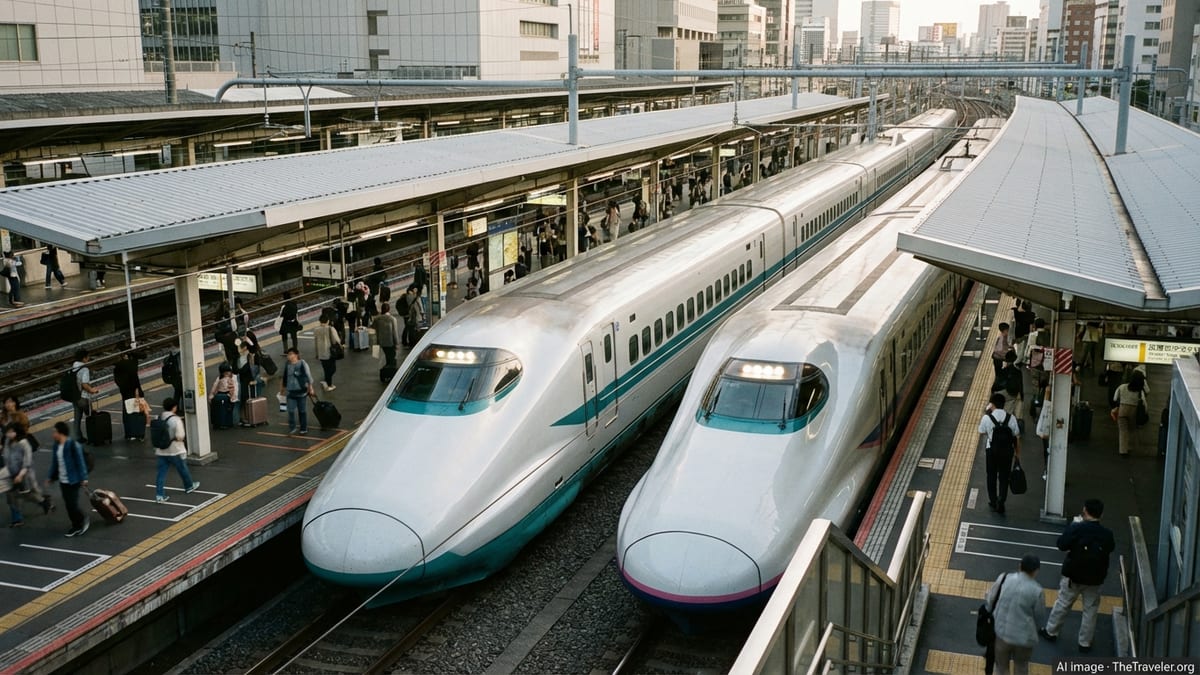
Luxury Classes Evolve Beyond the Classic Green Car
Japan’s bullet trains have long offered tiers of comfort, from standard class to the spacious Green Car first class. In recent years, operators have moved further upmarket with Gran Class, an ultra-premium cabin that reduces capacity to around 18 leather seats on select Tohoku and Hokuriku Shinkansen services, designed to feel closer to a business-class airline cabin than a commuter train. Publicly available operator data and traveler reports highlight generous legroom, wide recline, and a quieter environment compared with standard cars.
According to information compiled by the Japan National Tourism Organization (JNTO) and official route guides, Gran Class is currently available on specific East Japan Railway (JR East) and West Japan Railway (JR West) sets, including E7 and W7 series trains on the Hokuriku Shinkansen linking Tokyo with Nagano, Kanazawa, and the 2024 extension to Tsuruga. These trains combine three service levels in one consist, positioning Gran Class as the flagship product for travelers seeking a more exclusive journey on major intercity corridors.
At the same time, developments now in the pipeline indicate that the future of luxury on Japan’s rails will be more diverse than a single premium tier. JR East has outlined plans for its next-generation E10 series trains, which will retire Gran Class on certain routes in favor of specialized “Train Desk” cars aimed at business travelers, signaling a shift toward dedicated work zones and new layouts rather than simply adding more traditional first-class style seats.
This evolution underscores how high-speed rail in Japan is adapting to a wider range of passenger expectations. Rather than one definition of first class, operators are experimenting with ultra-luxury cabins, business-focused spaces, and upgraded Green Car offerings that together broaden the premium rail ecosystem.
Tourism Trains Turn Journeys into Curated Experiences
Alongside new Shinkansen products, regional operators are investing in limited express and sightseeing trains that place design and storytelling at the center of the journey. JR West’s latest tourism train, Hana Akari, launched on routes in Hokuriku, is promoted as a moving showcase of local craftsmanship, with interiors featuring traditional materials, curated lighting, and bespoke furnishings that have received design awards and rail industry recognition.
Corporate reports from JR West describe Hana Akari and its sister services, such as the WEST EXPRESS Ginga, as part of a broader strategy to create demand for rail-based tourism by linking scenic regions to high-quality on-board experiences. These trains generally retain standard seating layouts but layer on regionally inspired cuisine, decor, and curated itineraries that encourage travelers to spend more time and money in the destinations along the line.
The expansion of the Hokuriku Shinkansen to Tsuruga in March 2024 further strengthened this approach, bringing high-speed access to coastal areas of Fukui Prefecture and connecting seamlessly with regional trains marketed for sightseeing. Tourism campaigns coordinated with local governments aim to funnel visitors arriving by Shinkansen onto these design-forward services, extending the feeling of a premium journey from the mainline bullet train into the surrounding countryside.
This blending of high-speed connectivity and slow-travel aesthetics reflects a broader trend in Japanese rail travel: the journey itself is being packaged as a key part of the holiday, with rail companies positioning distinctive rolling stock as a draw on par with the destinations they serve.
Inbound Tourism Boom Fuels Premium Rail Demand
Japan’s move upmarket on rails is rooted in a strong rebound in international tourism. JNTO statistics show that inbound visitor numbers surpassed pre-pandemic highs in 2024, with around 36 to 37 million overseas travelers recorded for the year and spending boosted by a weak yen. This surge has sustained demand across the country’s main transport corridors and created space for more segmented products catering to a global audience.
JNTO’s business overviews emphasize that inbound tourism is now regarded as a pillar of regional revitalization, with particular attention on dispersing visitors beyond classic urban hubs. High-speed lines such as the Tokaido, Sanyo, and Hokuriku Shinkansen are central to these efforts, linking Tokyo not only to Osaka and Kyoto but also to secondary cities that are keen to attract longer-stay visitors.
Rail operators have responded by tailoring offers specifically for foreign travelers, including area passes that bundle Shinkansen and limited express services, and by enhancing comfort and accessibility. Upgraded Wi-Fi availability on the Hokuriku Shinkansen and multilingual travel guides highlight how premium and practical improvements are being rolled out together, with luxury classes positioned as aspirational upgrades within a broader ecosystem that still relies heavily on standard tickets.
With major events such as Expo 2025 Osaka Kansai set to draw additional international visitors, operators are expected to continue fine-tuning premium rail products. Specially wrapped Shinkansen units promoting the expo on multiple lines illustrate how high-speed trains are used not only as transportation, but as highly visible moving showcases for national tourism campaigns.
What High-End Shinkansen Travel Will Look Like by 2030
Current plans and rolling stock orders suggest that by the end of this decade, travelers in Japan will encounter a more varied and personalized set of premium rail options than ever before. For some routes, small-capacity luxury cabins akin to Gran Class will likely remain a signature feature, appealing to visitors seeking maximum space, privacy, and a sense of occasion on journeys to regions such as Tohoku and Hokuriku.
On other corridors, operators are prioritizing flexible layouts that can accommodate laptops and meetings, with work-oriented cars effectively becoming a new kind of first class for business travelers. As new trains enter service and older sets are refurbished, Green Car cabins are also expected to benefit from incremental upgrades in seating, lighting, and connectivity, narrowing the gap with today’s top-tier products while keeping fares within reach of a broader market.
At the same time, tourism-dedicated trains like Hana Akari point toward a future where the boundaries between luxury and local culture are increasingly blurred. Interior design elements, on-board storytelling, and collaborations with regional artisans can be scaled up or down across different price points, allowing operators to offer a taste of luxury even on shorter or more affordable journeys.
For international visitors planning trips in the late 2020s and beyond, this means the Shinkansen will offer more than a single “best” seat. Instead, Japan is moving toward a tiered landscape of premium rail experiences, ranging from quiet workspaces to immersive sightseeing lounges, each reinforcing the country’s reputation for turning everyday travel into something memorable.
How Travelers Can Tap Into Japan’s New Rail Luxury
For now, the most widely accessible step up in comfort is still the Green Car, available on almost all long-distance Shinkansen routes and bookable through standard ticketing channels. Travel guidance from JNTO and official tourism sites stresses that foreign visitors can often combine Green Car reservations with regional or nationwide rail passes, making it a practical option for travelers looking for more space during busy seasons.
Gran Class and newer ultra-premium offerings generally require advance reservation and are concentrated on specific trains and time slots. Seat maps published by JR East and JR West, along with route-specific booking pages, allow travelers to identify which departures carry the highest classes and to compare fares before committing.
Tourism-focused trains typically operate on limited schedules and require separate tickets from standard Shinkansen services. Operators encourage travelers to view these as part of a wider itinerary, building rail journeys that combine a fast Shinkansen leg with a slower, more scenic segment on a design-led limited express. As more of these products come online, itineraries that once treated rail travel as purely functional are steadily being replaced by routes that reserve significant time for the on-board experience itself.
For Japan, this layered approach to high-speed and luxury rail travel is emerging as a strategic asset. By pairing dense, efficient networks with new premium and experiential classes, the country is using its bullet trains to capture more tourism value per trip and to deliver the kind of distinctive journeys that keep visitors returning.
Japan National Tourism Organization: Shinkansen overview
JNTO inbound visitor statistics