


More news on this day
Indian Railways is accelerating a sweeping technology overhaul of its catering ecosystem, pairing artificial intelligence monitoring with digitally traceable meal packets and new electric cooking systems in an effort to transform how millions of passengers receive food onboard trains each day.
Get the latest news straight to your inbox!
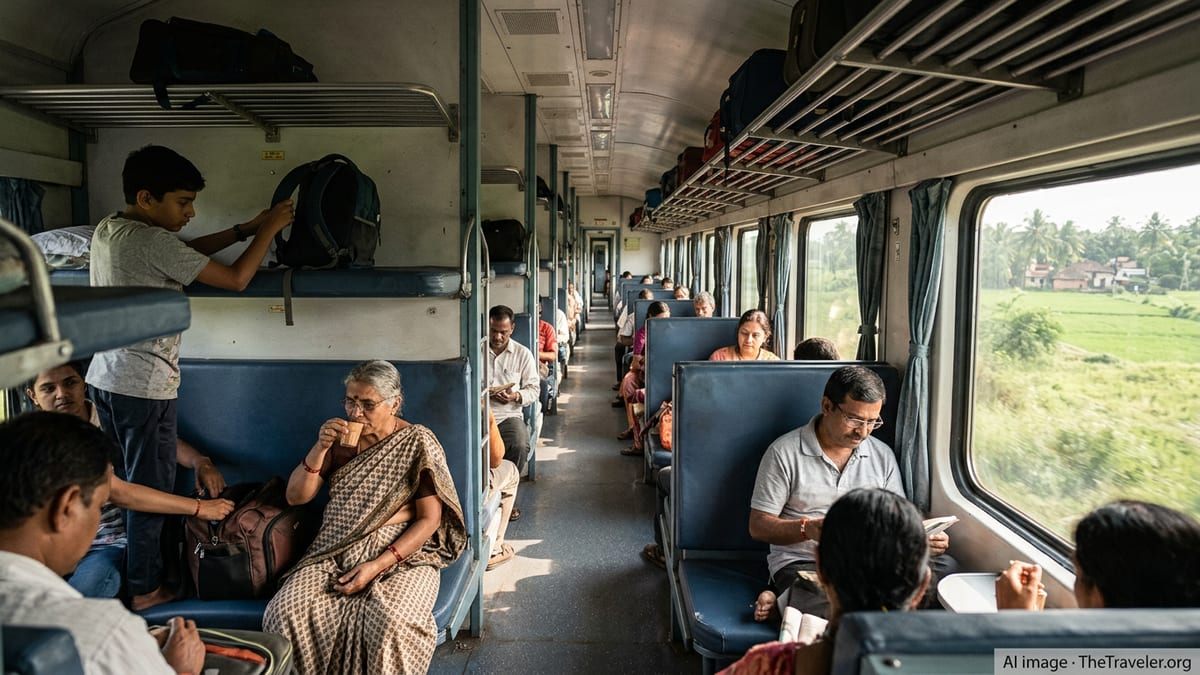
AI cameras watch over 800 railway kitchens
Publicly available information shows that the Indian Railway Catering and Tourism Corporation has deployed thousands of AI-enabled cameras across more than 800 base and cell kitchens that supply food to trains across the network. The systems are designed to keep a constant watch on key food preparation zones, capturing activity at workstations, storage racks and serving lines.
According to recent business and industry coverage, around 2,300 to 2,400 cameras are now connected to a central control facility in Delhi, where automated software flags potential hygiene lapses. These can include signs of pests, foreign objects, improper handling of cooked or raw ingredients and staff bypassing basic protocols such as handwashing or use of headgear.
The monitoring platform is being positioned as a response to long standing passenger complaints about the cleanliness and consistency of train food. Reports indicate that the system has already begun generating real time alerts, which are passed on to kitchen managers and catering contractors for corrective action, with repeated lapses expected to influence contract performance assessments.
Railway documents suggest that the AI rollout builds on an earlier wave of closed circuit cameras that were primarily used for passive recording. The new generation of analytics is intended to shift that model from post-incident review to proactive prevention, with the goal of tightening food safety standards before meals are sealed and dispatched to trains.
Digitally traceable meals and QR coded staff IDs
Alongside AI in the kitchens, Indian Railways is introducing a layer of digital traceability to the food packets that reach passengers’ seats. A recent government briefing described plans for unique QR codes printed on each meal, allowing passengers and inspectors to scan and see details such as the name and location of the kitchen, the date and time of preparation and the category of the meal.
The same information indicates that catering staff working onboard will carry QR code enabled identity cards, which can be verified against centrally maintained records. The combination is intended to curb unauthorised vending on trains, a long running challenge where unregistered sellers board coaches and offer unregulated food to travellers.
For passengers, the technology promises greater transparency about what they are eating and where it came from. For operators, the digital trail creates a clear chain of responsibility in case of complaints or investigations into quality lapses, as each packet can be traced back to a specific kitchen batch and handling staff.
These measures complement earlier instructions that base kitchens obtain food safety certification and deploy designated supervisors. Together, the changes signal a move towards a more standards driven catering model, more closely aligned with regulated quick service chains than with traditional station vendors.
Electric cooking reshapes onboard meal preparation
In parallel with upgrades on the ground, Indian Railways is revisiting how food is cooked inside pantry cars. Recent coverage from financial and general news outlets highlights that a shortage of commercial liquefied petroleum gas has pushed the catering arm to adopt induction based cooking for many trains, after earlier efforts to shift most meal preparation to land based kitchens.
The new approach relies on electric induction stoves and other plug in equipment rather than gas cylinders, reducing some of the fire and safety risks associated with cooking in confined, moving spaces. Reports suggest that railway planners ultimately want a majority of kitchen operations, both static and onboard, to transition to electricity where feasible.
For premium trains and long distance services, the shift opens the door to more flexible menus, with a portion of the food prepared in base kitchens and the rest finished or assembled onboard. It may also allow for more consistent heating and portioning, as induction technology provides better control over temperature than many legacy setups.
However, the move requires significant investment in electrical capacity in pantry cars and station infrastructure, as well as retraining kitchen staff accustomed to gas burners. Industry analysts point out that the long term success of electric cooking will depend on reliable power supply along routes and careful integration with existing catering contracts.
New booking tools and evolving passenger expectations
The technology push inside kitchens is being matched by changes in how passengers order meals. Recent travel and railway coverage notes the expansion of an e-pantry service on mail and express trains, allowing travellers to pre-book breakfast, lunch, dinner and packaged water when they purchase tickets online.
Through these tools, passengers can select from standardised menus, specify delivery stations and align meal timing with their journey plans. This pre-order data also feeds back into kitchen operations, helping caterers plan production volumes more accurately and reduce food waste, while supporting just in time dispatches to designated trains.
Passenger expectations are rising as app based food delivery and low cost airline catering set benchmarks for convenience and variety. Indian Railways’ combination of AI surveillance, digital traceability and online booking is being framed as an attempt to narrow the gap between traditional railway meals and contemporary urban dining standards, within the constraints of large scale public transport.
At the same time, publicly available feedback indicates that issues such as inconsistent portion sizes, menu variations and service on lesser known routes continue to surface. Observers suggest that technology will need to be accompanied by stricter enforcement of contracts and ongoing training if the perceived quality of onboard meals is to improve in line with the new kitchen systems.
What this could mean for millions of rail travellers
With Indian Railways serving tens of millions of passengers daily and its catering arm reporting billions of meals over recent years, even incremental gains in hygiene and transparency can affect a vast number of journeys. The AI cameras, QR codes and electric cooking initiatives collectively represent one of the most extensive technology deployments in a public sector food supply chain anywhere in the world.
For frequent travellers, the most visible changes are likely to be smarter packaging, clearly printed digital codes and a greater emphasis on standardised meal offerings that match published menus. On busy premium and long distance trains, onboard staff may rely more heavily on pre-booked orders and electronic manifests, rather than ad hoc sales in the aisle.
Travel analysts note that if complaints about contaminated or poorly handled meals decline over time, the new systems could strengthen confidence in eating onboard rather than relying on packed food from home or impromptu purchases at platforms. That in turn would support revenue for the catering business, which is a significant contributor to the broader rail ecosystem.
For now, the transformation of Indian Railways’ kitchens remains a work in progress, with further expansion of AI coverage, rollout of traceable meal packets and scaling up of electric cooking expected over the next phases. How well these technologies integrate with day-to-day operations will determine whether the promise of better, safer meals is realised for passengers criss-crossing India’s vast rail network.