


Portugal and Italy are both attractive Southern European destinations for families seeking a more relaxed lifestyle and strong family culture. For relocation decisions, however, the critical question is which country provides more favorable conditions to raise children in terms of safety, early years support, schooling outcomes, and everyday child well-being. This briefing compares Portugal and Italy on these child-focused dimensions, drawing on recent international data and policy analysis to support decision-making for globally mobile families.
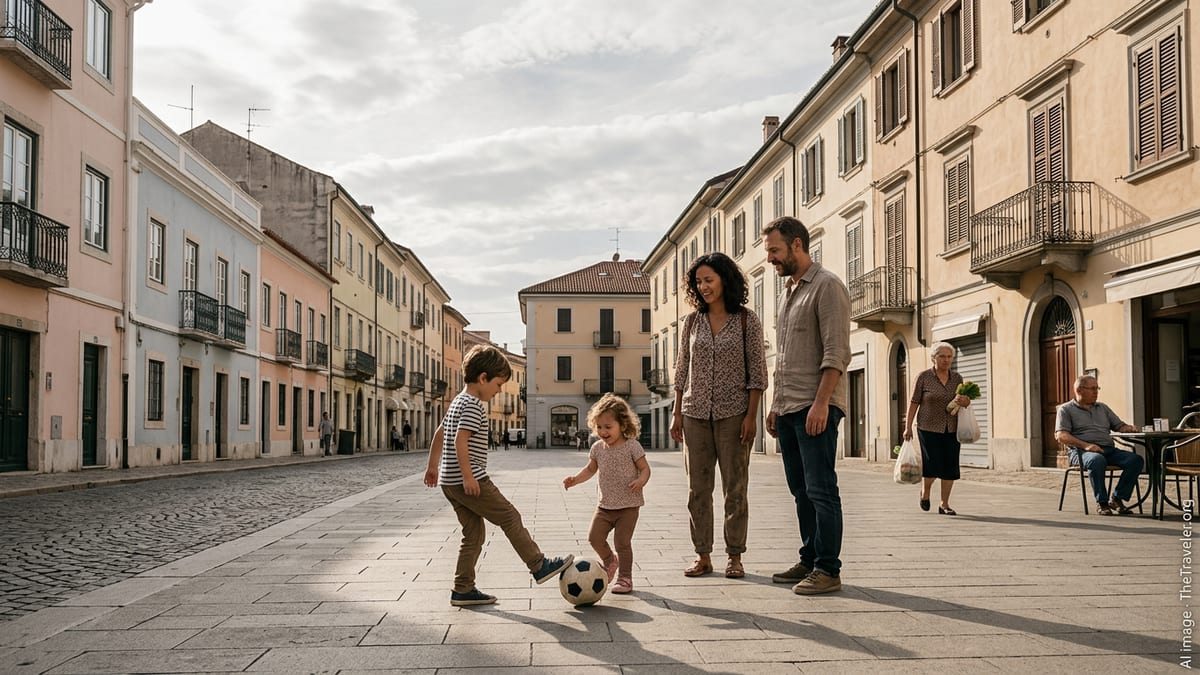
Overall Child Well-Being: International Benchmarks
International child well-being indexes provide a useful starting point for comparing Portugal and Italy as places to raise children. Recent UNICEF Innocenti Report Cards and OECD child well-being data rank both countries in the middle-to-upper tier of high-income nations, but Portugal typically performs slightly better overall in combined well-being indicators such as mental health, life satisfaction, and skills. In one recent UNICEF league table of child outcomes across 40-plus OECD and EU countries, both Portugal and Italy were assessed as having improved child well-being trends between 2018 and 2022, with Portugal usually placing marginally higher in composite scores than Italy.
These rankings do not indicate a dramatic gap, but they suggest that, on balance, Portugal offers a somewhat more favorable overall environment for children when looking at aggregated indicators. Both countries face challenges common to Southern Europe, including lower public spending on families compared with Nordic states, but children in Portugal report relatively high levels of life satisfaction and family time, while Italian children often benefit from stronger academic skills indicators but somewhat lower scores on subjective well-being.
For relocating families, the implication is that both countries are broadly suitable for raising children, but Portugal may have a modest edge in terms of everyday child happiness and overall balance, whereas Italy may be slightly stronger in academic skills measures. The differences are not extreme, yet they can matter for families prioritizing either holistic well-being or academic performance.
It is also relevant that both countries are ageing societies with shrinking youth populations, which increases policy attention on supporting families and children. This demographic context has led Portugal and Italy to gradually expand child-related benefits and early years services, although the scale and implementation differ.
Safety, Environment, and Everyday Childhood Experience
Personal safety and the physical environment are core considerations when evaluating where to raise children. Both Portugal and Italy are comparatively safe by global standards, with low rates of violent crime directed at children and strong community norms around protecting minors. Portugal is commonly perceived, including by expatriate families, as one of the safer countries in Europe, with relatively low overall crime rates and a particularly calm social environment in smaller cities and towns.
Italy’s safety profile varies more by region and urban context. Large metropolitan areas such as Rome, Milan, or Naples have higher petty crime and traffic congestion, which can affect parental perceptions of safety for unsupervised outdoor play or independent mobility for older children. However, smaller Italian cities and many suburban or rural areas offer safe, community-oriented environments where children are well integrated into neighborhood life. Overall, both countries provide generally safe conditions, but Portugal tends to feel more uniformly low-risk across regions.
Environmental quality is another factor. OECD child well-being data show that children in both Portugal and Italy can be affected by environmental issues such as air pollution and noise in urban areas, but Italy has somewhat higher proportions of children living in areas with environmental problems, particularly in parts of the industrial north and some dense metropolitan zones. In contrast, Portugal’s smaller urban scale and lower industrial concentration generally translate into cleaner air and less intense urban stressors, especially outside the Lisbon metropolitan area.
In terms of the everyday childhood experience, both societies are strongly family-centric, with cultural norms that prioritize children’s presence in public spaces and intergenerational support. Parents commonly report that children are welcomed in restaurants, shops, and community events in both countries. Anecdotal evidence from expatriate communities suggests that in Portugal, infrastructure such as priority queues for families, child-friendly public transport measures, and adapted facilities (for example, child-sized toilets in some public venues) are increasingly common, reflecting a policy emphasis on family-friendly design. Italy also has child-friendly practices, but implementation can be more uneven by city and region.
Family Policies, Child Benefits, and Parental Leave
Family policy determines how much formal support parents receive in balancing work and caregiving. Both Portugal and Italy provide child benefits and parental leave, but there are notable differences in design and generosity, especially relative to local wage levels and cost structures.
Portugal operates a family allowance (abono de família) that supports over one million children and is one of the country’s largest social benefits after pensions. Recent administrative reforms have automated access so that eligible families are enrolled without needing complex applications, which improves take-up and timeliness for new parents. Child benefit is income-tested and increases for lower-income households, with payments continuing at least through age 18 and longer if the child remains in education or has disabilities. This design offers a relatively predictable supplement to family budgets and is considered an important component of child support policy.
Italy has consolidated its previous patchwork of tax deductions and multiple bonuses into a single universal child allowance (Assegno Unico Universale) that covers dependent children for resident families. While this reform simplified access and broadened eligibility, overall spending on family and child benefits in Italy historically has been lower as a share of total social expenditure than the European Union average. The new allowance is more generous for lower-income households and families with more children, but in comparative perspective it still positions Italy as a moderate rather than high spender on families.
Regarding parental leave, Portugal has developed a relatively structured system combining maternity, paternity, and shared parental leave with income replacement linked to previous earnings. There is dedicated paternity leave and options that encourage shared take-up between parents. Italy also offers maternity leave with earnings-related benefits and a shorter dedicated paternity leave, along with parental leave that can be taken by either parent, although take-up among fathers remains more limited. For relocating dual-career couples concerned with work-family balance, Portugal’s policy framework is generally cited as slightly more progressive in encouraging fathers’ involvement and flexible usage, while Italy’s system is more traditional but has been gradually improving.
Early Childhood Education and Childcare Availability
Access to early childhood education and care is critical for both children’s development and parents’ ability to work. In Portugal, childcare provision for children under three has expanded, and national programs aim to guarantee a free creche place for all children in that age group, although local implementation can involve waiting lists in high-demand areas. Public or subsidized daycare options are supplemented by private providers, with fees that are moderate relative to Western European standards but can still be significant for lower and middle-income households.
Italian early childhood education and care is characterized by strong provision from age three onwards in the form of scuola dell’infanzia (preschool), which has high enrolment rates and is widely recognized for educational quality. For children under three, however, access to formal childcare is more uneven. Availability of nursery places (asili nido) varies substantially by region and municipality; some cities such as Bologna have invested heavily and provide relatively generous coverage, while other areas, particularly in the south, have limited capacity and long waiting lists. This regional disparity can significantly affect the daily reality for families with infants and toddlers.
Both Portugal and Italy offer means-tested fee reductions or subsidies for low- and middle-income families using public or accredited childcare services. Portugal’s recent reforms trend toward universalizing access, while Italy’s policy focus has more strongly emphasized preschool and school-age education, leaving the under-three segment more dependent on local government resources. For internationally mobile professionals likely to settle in larger metropolitan regions, Portugal currently offers a more consistent likelihood of finding a subsidized childcare place, although demand in Lisbon and Porto can still exceed supply at specific age levels.
For families arriving with very young children, this difference in under-three childcare coverage may be decisive. In Italy, some expatriate families supplement limited public nursery options with private childcare or rely on informal arrangements. In Portugal, although shortages exist, especially in rapidly growing urban areas, national policy is explicitly oriented toward closing these gaps and increasing guaranteed access.
School Systems and Educational Outcomes
School quality and student achievement are central to many relocation decisions. Both Portugal and Italy participate in international assessments such as PISA, where their results are broadly comparable and sit close to the OECD average. Italy often posts slightly higher scores in mathematics and science, while Portugal performs relatively consistently across reading, math, and science, with a trajectory of gradual improvement over the last two decades.
Portugal’s education system has undergone significant reforms, focusing on reducing early school leaving, expanding inclusive education, and modernizing curricula. The country previously struggled with high dropout rates and lower completion levels, but recent data indicate steady progress, with more students completing upper secondary education and improved average performance. Class sizes in public schools are typically moderate, and there is a strong emphasis on inclusion for students with special educational needs, though access to specialized services can vary by municipality.
Italy’s school system is well established and academically rigorous, particularly at the upper secondary level, where students choose among general academic, technical, and vocational pathways. Italian students often score reasonably well in core subjects but face issues such as regional disparities between the more affluent north and less resourced south, and concerns about outdated infrastructure in some schools. Italy also has a reputation for heavy homework loads and more traditional teaching methods, which some expatriate families find demanding but academically solid.
For relocating families considering international or bilingual schooling, both Portugal and Italy offer a growing number of private and international schools in major cities. Portugal’s international school sector has expanded rapidly, particularly in Lisbon, Cascais, and Porto, while Italy has long-established international schools in Rome, Milan, and other metropolitan areas. Fees for private education can be significant in both countries and should be factored into long-term planning. On balance, Italy may appeal more to families prioritizing traditional academic rigor, while Portugal may be more attractive for those seeking a balanced, reform-oriented system with an emphasis on inclusion and student well-being.
Work–Family Balance and Daily Rhythm for Parents and Children
Beyond formal policies, the daily rhythm of work, school, and family time affects how children experience life in a new country. In Portugal, average working hours are moderate and labor market regulations support standard working weeks, although overtime is common in some sectors. School days typically run into the mid-afternoon, with after-school programs available in many areas. The cultural norm of family meals and evening time together remains strong, allowing children regular contact with parents even in dual-earner households.
Italy also has a strong culture of family cohesion, but working hours and commuting patterns in major cities can be longer or more variable. In some sectors, especially in the north, parents may experience longer workdays and less predictable schedules. Nevertheless, extended family networks remain a key support mechanism, with grandparents often providing childcare and after-school supervision. For expatriate families without local extended family, this informal support base may be less accessible, making formal childcare and after-school options more important.
In both countries, the school calendar includes a long summer break and multiple shorter holidays, requiring parents to coordinate camps, childcare, or flexible work arrangements. Portugal has gradually expanded access to school-based extracurricular programs and holiday activities, particularly in urban areas, providing structured environments for children when parents are working. Italy has a rich landscape of sports clubs and associations, but access and cost vary widely by city and region.
From the perspective of work–family balance for relocated professionals, Portugal is often perceived as slightly more conducive to combining professional obligations with active parenting, thanks to shorter commuting distances in most cities and growing attention to family-friendly workplace practices. Italy, especially in its larger metropolitan regions, can demand more careful planning to align work schedules, school hours, and childcare arrangements, although many families manage this effectively through local networks and well-established routines.
The Takeaway
Portugal and Italy both offer broadly solid conditions for raising children, grounded in strong family-oriented cultures and acceptable levels of safety and schooling. For relocating families choosing between the two, the decision often comes down to nuanced trade-offs between overall child well-being, academic orientation, childcare availability, and the predictability of support systems.
Portugal stands out for slightly stronger performance in composite child well-being indicators, a relatively coherent national approach to family benefits and childcare expansion, and a perceived environment of safety and calm that extends across most regions. Administrative simplifications such as automatic enrollment in family allowances and policy efforts to guarantee childcare places for young children are favorable to parents seeking reliability and ease of access to services.
Italy offers a robust and academically respected school system, particularly at upper secondary level, and deep-rooted family support norms. However, regional disparities in early childhood services and environmental conditions are more pronounced, and public spending on families, while improving, tends to lag some European peers. Families who prioritize rigorous academic pathways and are prepared to navigate local variations may find Italy attractive, especially in cities with stronger educational infrastructures.
For most globally mobile families, Portugal will be the more straightforward choice when the primary objective is to optimize everyday quality of life and holistic well-being for children, while Italy may appeal to those who value traditional academic structures and are comfortable managing greater regional complexity. In either case, detailed local research on specific cities, school options, and childcare availability is essential before making a final relocation decision.
FAQ
Q1. Which country generally ranks higher for overall child well-being, Portugal or Italy?
Recent international child well-being comparisons usually place Portugal slightly ahead of Italy in composite indicators, although both are in the mid-to-upper range among high-income countries.
Q2. Is Portugal or Italy safer for children in everyday life?
Both are relatively safe by global standards, but Portugal typically has lower crime levels and a more uniformly calm environment across regions, while safety in Italy can vary more by city.
Q3. Where is it easier to access public childcare for children under three?
Portugal currently offers a more consistent national push toward universal creche access, whereas Italy’s nursery availability under age three is highly dependent on the municipality.
Q4. Which country has stronger academic performance in schools?
International assessments show broadly similar results, with Italy often slightly ahead in mathematics and science and Portugal performing consistently across subjects with a strong improvement trend.
Q5. Are family and child benefits more generous in Portugal or Italy?
Both provide child allowances, but Portugal’s family benefit is a major pillar of its welfare system and is strongly targeted to families with children, while Italy’s unified child allowance remains moderate in generosity.
Q6. How do parental leave policies compare between the two countries?
Portugal offers structured maternity, paternity, and shared parental leave with mechanisms encouraging fathers’ involvement, while Italy’s system is somewhat more traditional with shorter dedicated paternity leave.
Q7. Which country provides a better work–family balance for dual-career parents?
Portugal is often seen as more favorable for work–family balance due to moderate working hours, shorter commutes in most cities, and expanding after-school and childcare options.
Q8. Are there significant regional differences within each country that affect children?
Regional disparities are more pronounced in Italy, especially in early childhood services and school quality, while Portugal shows variations but a more uniform national baseline.
Q9. Where are international and bilingual schools easier to find?
Both countries have well-developed international school sectors in major cities; options are especially dense around Lisbon and Cascais in Portugal and Rome and Milan in Italy.
Q10. Overall, which country is better for raising children for most relocating families?
For many families prioritizing holistic child well-being and predictable support systems, Portugal will be the simpler and often preferable choice, while Italy suits those emphasizing traditional academic rigor and willing to manage regional variation.