


More news on this day
Travelers using Cairo as a regional hub are facing fresh uncertainty as a series of EgyptAir and partner flight cancellations disrupt links to Zurich, Kuwait City, Amman, Shanghai, and other key routes, adding strain to an already challenging spring for Middle East air travel.
Get the latest news straight to your inbox!
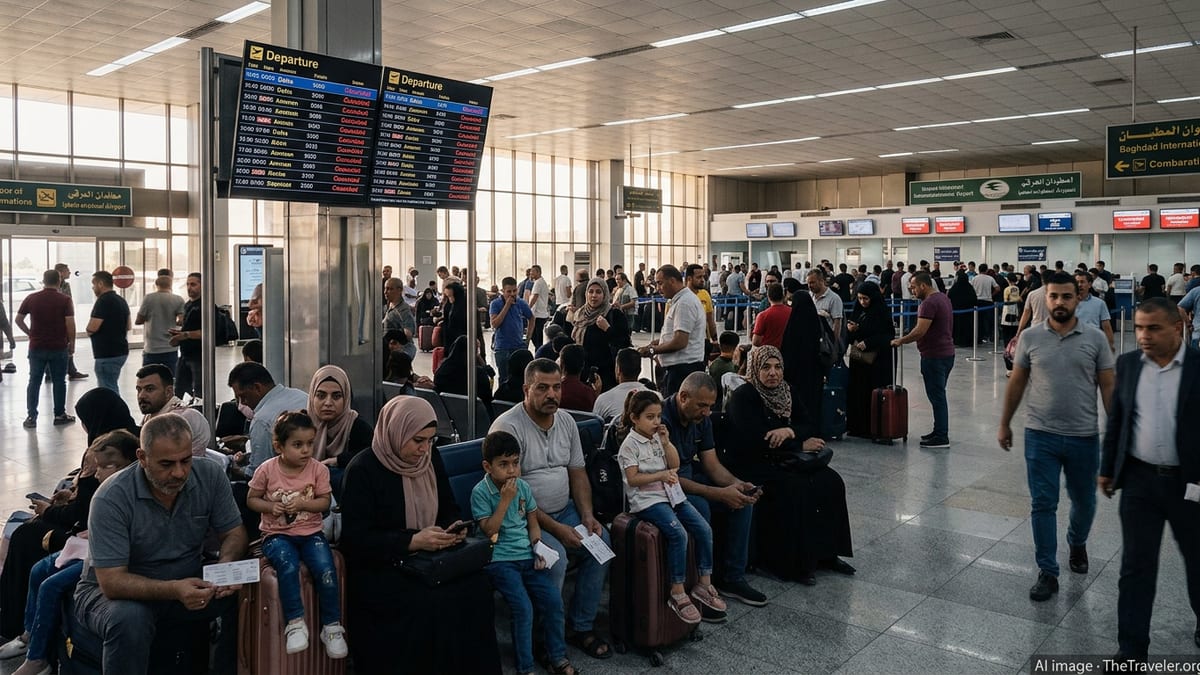
Five Cairo Flights Scrapped as Pressure Builds on Network
Publicly available flight-status data for the second weekend of May 2026 show at least five EgyptAir-operated services linked to Cairo listed as cancelled over a short window, including routes connecting to Kuwait City and Shanghai. One of the most visible disruptions is EgyptAir flight MS614 from Cairo to Kuwait City, which is currently flagged as cancelled, removing a core option between the Egyptian and Kuwaiti capitals for affected departure dates.
Another notable cancellation involves EgyptAir MS952 between Shanghai Pudong and Cairo, a long-haul service that typically feeds both onward African and Middle Eastern connections. Flight-tracking records for early May indicate the Shanghai rotation as cancelled, complicating itineraries for passengers relying on Cairo as a transfer point toward destinations in the Gulf and the Levant.
These cancellations come as Cairo International Airport continues to manage heavy transfer traffic alongside seasonal travel spikes, particularly ahead of the busy summer and pilgrimage periods. While some EgyptAir operations remain stable, the selective cancellation of multiple long- and medium-haul flights is increasing pressure on remaining services and leaving many passengers to reorganize journeys at short notice.
The pattern of disruption is not confined to a single city pair. Schedules and booking engines show tightening availability on other EgyptAir and codeshare services touching Cairo, including itineraries involving Zurich and Amman, as airlines juggle aircraft rotations, crew positioning, and demand fluctuations across the region.
Impact on Zurich, Kuwait City, Amman and Other Key Hubs
The immediate effects of the latest Cairo-linked cancellations are most visible on routes where EgyptAir and its partners serve as primary or high-frequency operators. Kuwait City is among the most affected, with the suspended MS614 service temporarily reducing direct connectivity between Cairo and Kuwait at a time when regional corporate and family travel demand remains significant.
Amman, historically well connected to Cairo through both EgyptAir and Royal Jordanian, is also exposed to knock-on effects. Recent schedule data show ongoing adjustments on Jordan-linked routes as airlines across the region respond to capacity constraints and shifting demand. Royal Jordanian remains a key player on the Amman–Cairo axis, but any reduction or rescheduling of Egypt-originating flights narrows options for travelers who rely on tight connections in Cairo.
Zurich, an important European gateway for travelers heading to and from Egypt and the broader Middle East, has seen its own share of schedule changes in recent weeks on various carriers. While Swiss maintains service between Zurich and select Middle East destinations, recent operational updates from European and Gulf airlines show a more cautious approach to capacity deployment, which can amplify the impact when Cairo-centered disruptions occur.
Beyond these headline hubs, airports in the Gulf and wider region, including Riyadh, Doha, and Jeddah, remain sensitive to any instability in Cairo’s wave of departures and arrivals. With many itineraries stitched together via Cairo as the central hub of EgyptAir’s network, passengers on multi-leg journeys can experience missed connections or unplanned overnight stays even when only one sector is formally cancelled.
Royal Jordanian Adjusts Amid Wider Regional Volatility
Royal Jordanian, which operates from Amman’s Queen Alia International Airport, is confronting its own operational challenges against a backdrop of wider regional volatility. Publicly circulated industry and tourism bulletins in recent weeks describe the carrier as continuing most services while trimming or suspending flights to certain destinations such as Kuwait and select Gulf cities during periods of heightened constraint.
Despite these targeted suspensions, Royal Jordanian remains one of the more consistently operating airlines on core Middle East routes, including many services linking Amman with Cairo and other key regional capitals. Recent traveler reports and schedule snapshots suggest that when Royal Jordanian does cancel, it often consolidates passengers onto nearby departures or next-day services, a strategy intended to keep the network functioning while preserving flexibility.
However, as Cairo-linked disruptions ripple outward, even relatively stable operators can feel the strain. Codeshare arrangements and interline tickets that combine EgyptAir and Royal Jordanian legs may become harder to re-protect when multiple flights in a chain are cancelled or heavily delayed. This can create pockets of localized congestion at Amman and Cairo as passengers queue for rebooking assistance.
The carrier’s performance in previous quarters, characterized by comparatively high punctuality across its network, shows that Royal Jordanian has the operational tools to recover from short bursts of disruption. The challenge now lies in maintaining that resilience if Cairo’s irregular operations become more prolonged or frequent during the remainder of the peak travel season.
Swiss Operations Reflect Broader Capacity Constraints
Swiss, which connects Zurich with a range of global destinations, has also been responding to capacity and slot pressures across its network this spring. Recent statements and coverage related to Swiss point to extended suspensions and reconfigurations on routes where airport constraints or regional disruptions limit the number of permitted aircraft movements.
In practical terms, such adjustments mean that passengers relying on Cairo–Zurich itineraries, whether on Swiss metal or via codeshares, may face reduced frequency, rerouting through other European hubs, or longer connection times. When paired with EgyptAir’s targeted cancellations, these measures can significantly narrow the window of viable options on certain travel dates.
The interplay between Swiss scheduling decisions and Cairo’s operational volatility is particularly relevant for travelers originating in Asia or Africa who traditionally connect through Cairo and then continue to Zurich. Any cancellation on the EgyptAir side can quickly undermine a carefully timed long-haul connection onto Swiss, leaving passengers dependent on alternative routings through hubs such as Frankfurt, Vienna, or Istanbul.
As with other European carriers serving the Middle East, Swiss appears to be prioritizing reliability on a slightly reduced schedule rather than pushing capacity to the limit. For travelers, this can translate into fewer flights but a higher likelihood that remaining services operate close to plan, provided conditions at key transfer points like Cairo stabilize.
What Passengers Can Expect in the Coming Days
Based on the latest round of cancellations and schedule adjustments, travelers booked on EgyptAir, Swiss, Royal Jordanian, or partner airlines through Cairo in mid-May should be prepared for possible last-minute changes. Flight-status tools and booking platforms already show certain EgyptAir departures from Cairo, including to Kuwait City and Shanghai, outright cancelled for select dates, while others remain scheduled but may operate with altered timings.
Passengers holding itineraries that involve tight connections in Cairo, Zurich, Kuwait City, or Amman are particularly exposed. Even a short delay or aircraft swap can jeopardize onward flights when network buffers are thin. Travel forums and recent passenger accounts indicate that some travelers are proactively seeking longer layovers or alternative routings through secondary hubs to reduce the risk of misconnection.
For those yet to travel, flexible tickets, careful monitoring of real-time flight information, and allowing additional time between sectors are likely to be key in navigating the current environment. While airlines continue to adjust schedules in response to operational and regional constraints, the situation around Cairo shows that even a handful of cancellations can have outsized effects on some of the Middle East’s most important air corridors.