


More news on this day
Indianapolis International Airport experienced a sharp operational meltdown on June 15, 2026, with seven flight cancellations and 33 severe delays on Southwest and Delta services that rippled across the Midwest network.
Get the latest news straight to your inbox!
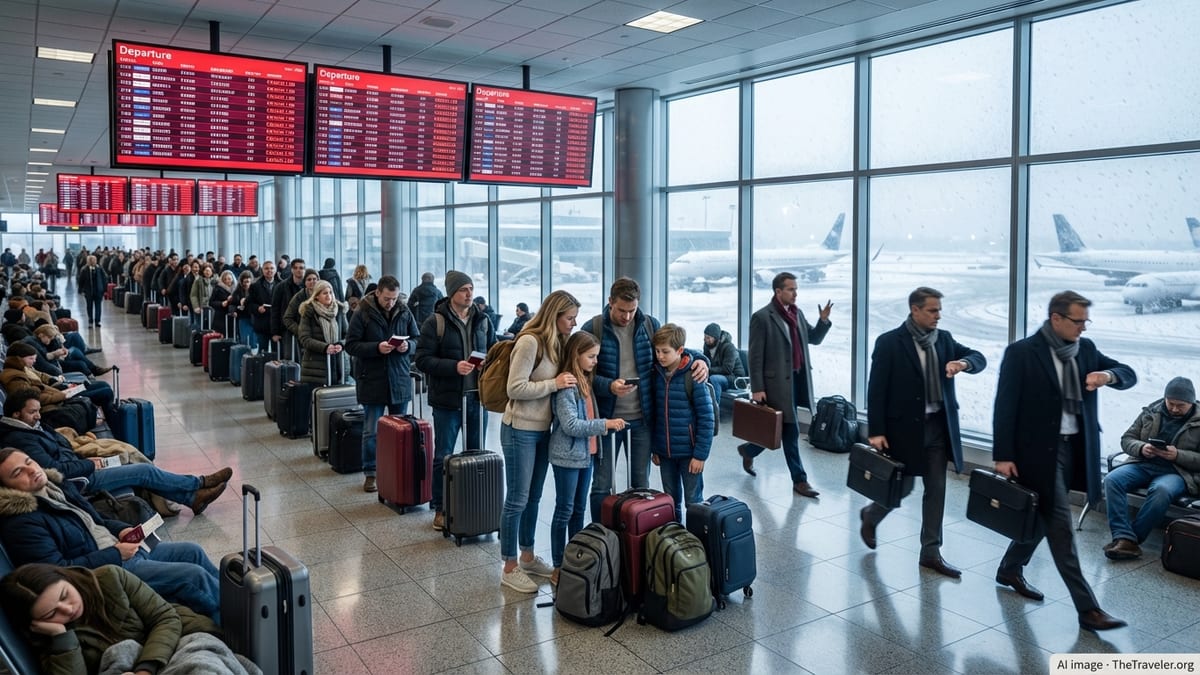
Disruption Hits Key Midwest Gateway
Publicly available tracking data and regional aviation reports indicate that Indianapolis International Airport, a critical connector for Midwest travelers, saw an abrupt spike in cancellations and long delays on June 15. Southwest and Delta, historically among the busiest operators at the airport, were particularly affected as schedules unraveled through the afternoon and evening.
In total, seven departures and arrivals linked to the two carriers were canceled outright, while 33 were classified as severely delayed, with extended ground holds and late turns that pushed some flights back by several hours. The pattern resembled a rolling operational failure in which initial delays quickly cascaded across closely timed rotations and onward connections.
The strain at Indianapolis came at the height of an already busy early summer travel period, with load factors elevated and limited spare capacity available to absorb schedule shocks. As a result, even relatively small disruptions at the field translated into missed connections and forced overnight stays across several Midwest cities.
Airline operations dashboards and passenger accounts pointed to a mix of factors, including regional weather constraints and air traffic management programs, compounding what was expected to be a routine high-volume weekend.
Southwest and Delta Bear the Brunt
Southwest and Delta, which together handle a substantial share of Indianapolis departures, carried the visible weight of the disruption. Reports compiled from flight-status platforms show that Southwest’s point-to-point structure through Indianapolis left several turnarounds out of sequence, complicating crew and aircraft availability as the day progressed.
Delta’s network, heavily reliant on regional affiliates feeding major hubs, also came under pressure as delayed Indianapolis departures misaligned with banked connections in Atlanta, Minneapolis and Detroit. When certain Indianapolis flights could no longer reach their hub banks within workable connection windows, cancellations became more likely, contributing to the final tally of seven scrubbed services.
For both carriers, the imbalance between scheduled flying and the real-time operational picture at Indianapolis created what analysts describe as a classic bottleneck. Ground operations, crew duty-time limitations and tightly timed turnarounds left little room to recover, especially once long delays moved into the peak evening hours.
Early indications from schedule and waiver data suggest that both airlines attempted to absorb some of the impact through rolling delays rather than immediate cancellations, but ultimately faced mounting pressure to reset aircraft and crew positions for the following day.
Ripple Effects Across the Midwest Network
The Indianapolis disruption did not remain a local issue. According to published coverage of wider U.S. travel conditions on June 15, storms and traffic management initiatives were already creating elevated delays at several major hubs. That backdrop meant that late departures and arrivals in Indianapolis had fewer options for recovery across the broader system.
Airports in Chicago, Minneapolis, Detroit and other Midwest and Great Lakes markets saw downstream consequences as aircraft originating or turning in Indianapolis arrived late or were removed from the schedule entirely. Passengers reported missed connections on transcontinental and transborder itineraries, as well as last-minute rerouting through secondary hubs located hundreds of miles from their intended paths.
Regional carriers operating under the Delta brand appeared particularly exposed, as single delayed segments from Indianapolis could disrupt multiple onward legs tied to fixed hub departure banks. Southwest customers, meanwhile, encountered rolling delays that affected not only point-to-point travelers from Indianapolis but also those using the city as a connecting point on longer domestic itineraries.
Industry observers note that while Indianapolis is not among the largest U.S. hubs, its position in the Midwest network means that even a limited number of cancellations and severe delays can generate noticeable knock-on effects, particularly during peak summer weekends when aircraft utilization is at its highest.
Passengers Scramble for Alternatives
With seats across the region already tight, the sudden loss of multiple Indianapolis flights left stranded travelers relying on same-day rebooking, overnight hotel stays, and ground transport to neighboring airports. Publicly posted first-hand accounts described long lines at service counters, as well as extended waits in call-center and chat queues for both carriers.
Some travelers turned to nearby fields in Chicago, Cincinnati, Louisville and Dayton in search of open seats, while others secured rental cars for overnight drives to reach time-sensitive events. The relatively short distances between many Midwest cities provided an escape valve for those willing or able to transition their disrupted flights into last-minute road trips.
Consumer advocates point out that during events where delays escalate into cancellations, travelers often see diverging options depending on ticket type, elite status and whether their itinerary involves interline partners. On June 15, many Southwest and Delta customers at Indianapolis reportedly relied heavily on mobile apps and third-party flight trackers to identify rebooking options before availability disappeared.
Travel guidance documents released in recent months emphasize that during high-impact disruption events, acting quickly to secure alternate routings is one of the few levers passengers can control, particularly when irregular operations affect multiple carriers at once.
What the Meltdown Reveals About Summer Air Travel
Aviation analysts reviewing the Indianapolis episode describe it as a vivid example of the fragility of summer schedules across the United States. High aircraft utilization, lean staffing and increasingly frequent convective weather patterns leave little buffer for airports such as Indianapolis when multiple variables shift at once.
Recent government air travel reports and airline operational updates have highlighted a trend in which moderate disruptions at secondary hubs can trigger disproportionate network consequences. The seven cancellations and 33 severe delays recorded at Indianapolis fit that pattern, showing how quickly punctuality metrics can deteriorate when key nodes experience capacity constraints or ground programs.
For Southwest and Delta, the meltdown underscores an ongoing challenge in balancing ambitious summer flying plans with the realities of aircraft availability and airspace congestion. While both airlines have promoted schedule adjustments and technology investments aimed at improving resilience, events like June 15 illustrate that passengers may still face significant volatility, particularly on weather-sensitive days.
For Midwest travelers, the Indianapolis disruption serves as a reminder to build additional time into itineraries, monitor conditions before leaving for the airport, and understand airline policies around delays and cancellations. As the peak 2026 summer season continues, operational data suggests that periods of smooth performance can still be punctuated by sudden, localized meltdowns with far-reaching effects.