


More news on this day
Travelers at Frederick Douglass Greater Rochester International Airport in New York faced mounting disruption on June 15 as at least eight flights operated by Delta Air Lines and its regional partners Endeavor Air and PSA Airlines were canceled or heavily delayed, affecting connections to major hubs across the United States, including routes touching Washington, D.C. and other East Coast and Midwestern cities.
Get the latest news straight to your inbox!
Storm System Across U.S. Network Drives Disruptions
Reports from national aviation trackers and airline operations indicate that a broad storm system sweeping across multiple regions of the United States on June 15 led to hundreds of cancellations and delays at major hubs, including significant impacts for Delta Air Lines and its regional affiliates. The knock-on effect from these hubs spilled into secondary airports such as Frederick Douglass Greater Rochester International Airport, where schedules quickly became unstable.
Industry coverage shows that Delta and regional carrier Endeavor Air entered Monday with elevated cancellation counts systemwide, reflecting the strain of convective storms, air traffic control programs and ground stops at key connection points. As aircraft and crews failed to reach their next scheduled legs, flights serving smaller markets such as Rochester were among the first to be trimmed from the schedule.
By midday, publicly available tracking data for Rochester showed a pattern of scrubbed and late-running departures and arrivals involving Delta-branded services, including regional jets typically operated under the Endeavor and PSA Airlines banners. Several flights that normally link Rochester to major hubs experienced cancellation or extended delays, contributing to what passengers described in social media posts as “rolling” disruption through the afternoon and evening.
While precise counts can vary between tracking platforms, available data indicate that a cluster of at least eight cancellations tied to the Delta, Endeavor and PSA network affected the Rochester schedule in a relatively short window, with additional flights departing significantly behind schedule.
Impact on Key Routes Including Washington, D.C. and Other Hubs
The disruption was felt most acutely on key connecting routes that Rochester travelers rely on to reach the broader U.S. network. According to live departure and arrival boards aggregated by flight-status services, multiple flights to and from major hubs such as New York, Atlanta and Midwest connection points showed either prolonged delays or cancellation notices as the day progressed.
Travel itineraries involving Washington, D.C. were notably exposed. Services linking Rochester with the capital region often require connections via Delta and partner operations through hubs including New York or other East Coast airports. When those hubs experienced storm-related congestion and air traffic control programs, Rochester-originating and inbound flights lost their reserved slots and, in some cases, were removed from the schedule entirely.
One Delta mainline flight between Atlanta and Rochester, listed in airline tracking records for June 15, was shown as canceled rather than delayed, underscoring how severe or prolonged disruptions at a hub can quickly erase an entire round-trip from a smaller airport’s schedule. Other feeder flights, including regional operations typically flown by Endeavor Air, showed significant timing changes that complicated onward connections.
Passengers attempting to connect from Rochester to destinations across the Midwest, Southeast and Mid-Atlantic reported via public forums that missed connections in cities such as Detroit and New York were common, forcing same-day rebookings or overnight stays. For travelers bound for Washington, D.C. and nearby airports, the combination of hub congestion and limited alternative routings translated into long end-to-end journey times.
Ripple Effects for Passengers at Frederick Douglass Greater Rochester International
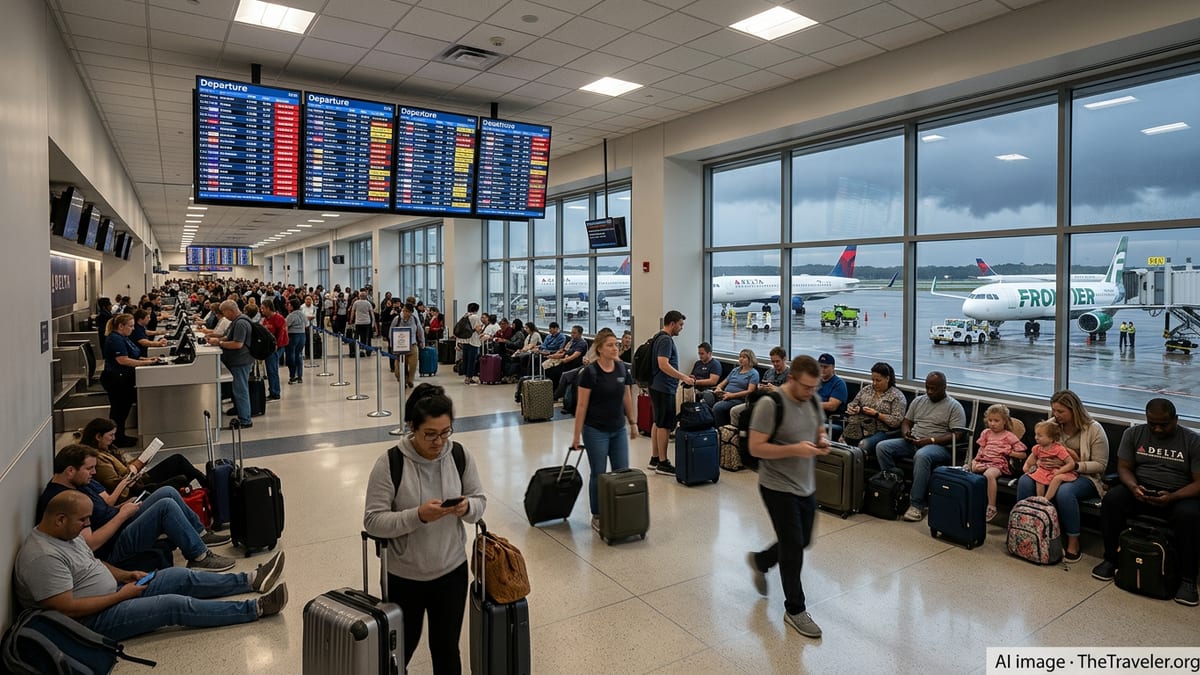
Within the terminal at Frederick Douglass Greater Rochester International Airport, the ripple effects manifested as crowded rebooking counters, lengthier waiting times at gates and shifting departure estimates on information screens. Publicly available photographs and descriptions posted online suggested that while security processing at Rochester remained relatively efficient, the main bottleneck was the uncertainty surrounding departure times and replacement flights.
Travelers who rely heavily on regional connections, such as business passengers commuting weekly between Rochester and larger hubs, were especially vulnerable. Many of these itineraries involve tight layovers that leave little room for extended taxi or holding delays upstream. On a day marked by widespread thunderstorms and air traffic constraints, this meant that a delay at a large hub often translated into a full cancellation on a smaller spoke route.
Aviation data platforms also displayed knock-on arrivals into Rochester arriving later than scheduled or being scrubbed entirely, further limiting the aircraft and crew available to operate outbound flights. As a result, some passengers at Rochester encountered scenarios in which an inbound aircraft never arrived, leaving the corresponding outbound leg with no equipment to operate.
Consumer-rights services monitoring U.S. flight operations indicated that affected travelers at Rochester might be eligible in some cases for rebooking assistance, meal vouchers or hotel accommodation, depending on airline policies and whether the disruption was classified as controllable or weather-related. However, classification can be complex on days when storms interact with air traffic control programs and operational constraints across multiple regions.
Operational Challenges for Delta, Endeavor and PSA Airlines
Delta Air Lines and its regional partners Endeavor Air and PSA Airlines operate a tightly integrated schedule that depends on aircraft and crew cycling through multiple hubs and spokes each day. When a storm system or airspace constraint interrupts that cycle at one or more busy hubs, the impact can cascade quickly into smaller markets such as Rochester.
Operational bulletins and exception-policy notices from recent months illustrate how carriers sometimes respond to forecast disruption by issuing travel waivers across broad regions, allowing customers to adjust plans without change fees. On June 15, similar strategies were in play across several U.S. hubs, though the practical effect for Rochester travelers was that previously routine evening flights suddenly disappeared from boards or shifted to much later times.
Regional affiliates like Endeavor and PSA face particular strain because a large share of their fleets are dedicated to high-frequency, short-haul routes that are more easily canceled or consolidated when airlines need to preserve long-haul operations. Publicly available data and prior operational patterns show that, on challenging weather days, airlines often prioritize mainline long-haul and international departures, while trimming regional legs that connect smaller cities.
Industry analysts note that this approach can leave communities such as Rochester, which rely heavily on regional connections, disproportionately affected during systemwide disruptions. Although Frederick Douglass Greater Rochester International Airport itself may not experience severe local weather, its flights can still be grounded or delayed by conditions and congestion hundreds of miles away.
What Travelers Can Expect in the Coming Days
Looking beyond June 15, aviation forecasters and airline scheduling data suggest that minor residual disruption may continue as carriers work to reposition aircraft and crews and restore normal patterns. On past occasions with similar storm-driven events, schedules at regional airports have taken a day or more to fully stabilize, even after weather has improved.
Publicly accessible guidance from government aviation agencies continues to urge passengers across the country to monitor flight status closely on days with active storm systems. For Rochester travelers, that means checking departure and arrival information regularly, arriving at the airport early and being prepared for last-minute gate or timing changes.
Consumer advocates also recommend that passengers review their airline’s published customer commitments and travel waiver pages prior to departure. These resources outline options for free rebooking, same-day changes or refunds when flights are canceled, as well as the circumstances under which accommodation and meal support may be available.
For Frederick Douglass Greater Rochester International Airport and its core carriers, the events of June 15 highlight how even a relatively small airport can face outsized disruption when severe weather and operational bottlenecks converge across the national airspace system, particularly on busy summer travel days when aircraft and crew resources are already stretched.