


More news on this day
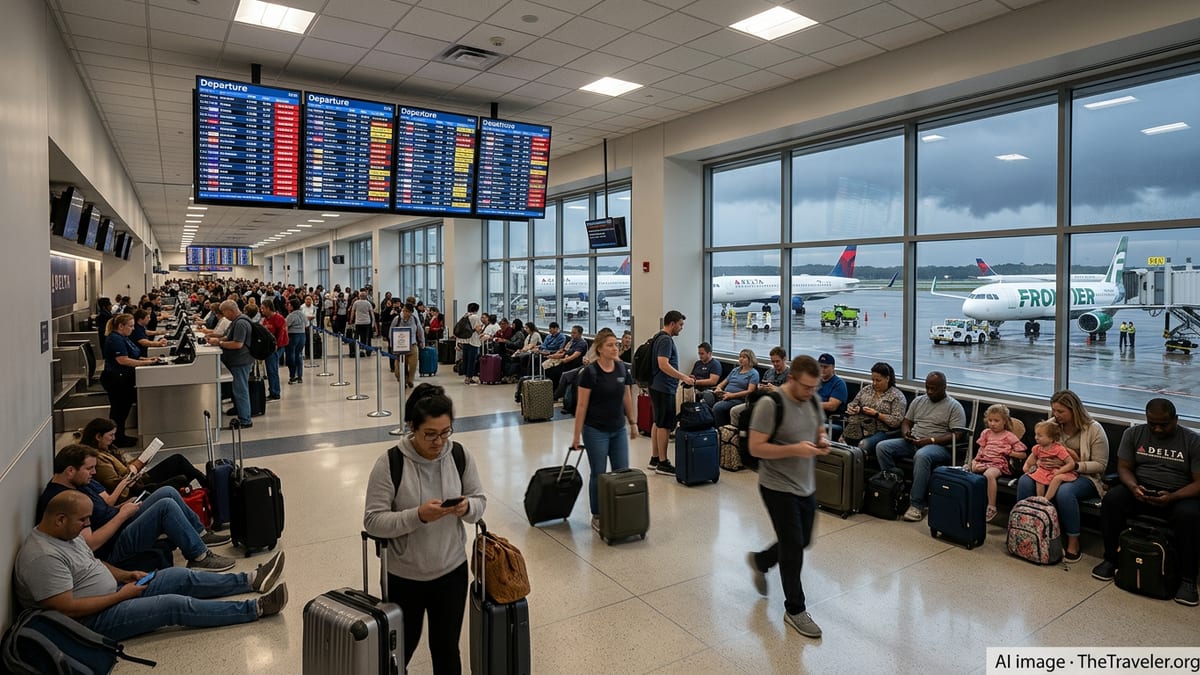
Passengers at Savannah/Hilton Head International Airport faced mounting frustration on June 15 as eight flight cancellations and 26 delays rippled through schedules operated by regional affiliates PSA Airlines, Republic Airways, Endeavor Air and JetBlue, disrupting links to major hubs including New York, Washington, Boston, Philadelphia and Houston.
Get the latest news straight to your inbox!
Stormy Weather Across East Coast Networks Hits Savannah
Publicly available tracking data and industry coverage indicate that a broad band of storms moving across the eastern United States on June 15 drove a new wave of operational problems for U.S. carriers. The weather system, which affected airspace from Texas through the Northeast, triggered ground-delay programs and slowdowns at several major hub airports.
Reports show that major hubs experiencing elevated disruption included airports serving New York City, Washington, Boston and Philadelphia, with ripple effects radiating out to smaller markets such as Savannah. Airlines rely on these hubs to funnel passengers and aircraft through their networks, so slowdowns at large airports can quickly cascade into missed connections, equipment shortages and crew displacements elsewhere.
Data compiled from flight-status platforms on Monday showed regional carriers PSA Airlines, Republic Airways and Endeavor Air, along with JetBlue, among the operators most affected by the storm-related disruption. These carriers all serve Savannah through code-share agreements with large U.S. airlines or as branded mainline service, meaning schedule problems at upstream hubs can translate into cancellations and rolling delays for Savannah departures and arrivals.
At Savannah/Hilton Head International, the operational impact by late morning included eight cancellations and 26 delayed flights tied to services operated by those four carriers, constraining options for travelers headed to or from key business and leisure destinations along the East Coast and to Texas.
Key Routes to New York, Washington, Boston and Philadelphia Affected
The day’s disruption was especially visible on routes linking Savannah to major northeastern and mid-Atlantic cities. According to same-day schedule information, Savannah’s network relies heavily on connecting traffic to New York, Washington, Boston and Philadelphia, with regional affiliates operating flights under the flags of the largest U.S. carriers.
PSA Airlines and Republic Airways, which fly primarily as American-branded regional operators, handle a significant share of traffic between Savannah and hubs such as Washington National and Philadelphia. When those hubs are subject to weather constraints, regional branches like PSA and Republic are often forced to trim frequencies or accept extended delays as they work within air traffic control programs and limited gate availability.
Endeavor Air, the Delta Connection regional affiliate, provides key connectivity between Savannah and Delta’s network centers, including flights that feed traffic onward to New York and Boston. JetBlue, operating its own branded service, links Savannah directly to Boston and other northeastern cities. On June 15, publicly available departure boards showed altered timings and cancellations on several of these routes as the storm system persisted.
For passengers, the practical result was a patchwork of schedule changes: morning departures pushed into the afternoon, afternoon services still listed as “scheduled” but flagged as “at risk,” and pockets of outright cancellations as operators adjusted aircraft and crews. Travelers connecting onward to international services via New York, Washington or Boston faced heightened uncertainty about making downline flights.
Houston Connections Strained as National Disruptions Spread
While the most acute weather activity centered on the eastern seaboard, published aviation updates also pointed to potential slowdowns in Texas, including at both major Houston airports. United, the primary carrier on nonstop routes between Savannah and Houston, faced the dual challenge of managing weather-sensitive hub operations in Texas while also dealing with constraints on connecting flows from the East Coast.
Schedules show that Savannah typically has a limited number of daily departures to Houston compared with its frequencies to East Coast hubs. That makes each cancellation or lengthy delay on the Savannah–Houston corridor particularly disruptive, as travelers often have few alternative nonstop options and must instead be rebooked through more congested hubs such as Atlanta, Charlotte or Dallas.
On June 15, the combination of weather concerns in Texas and ongoing congestion at northeastern hubs added further strain to these routes. Passengers aiming to reach Houston from Savannah faced scenarios where their initial legs to connection points were delayed or canceled, raising the risk of missed onward flights even when those departures remained on the schedule.
This layering of disruptions in multiple geographic regions illustrates how modern airline networks can quickly become stressed, turning a regional storm system into a nationwide challenge for carriers and airports.
Regional Carriers Under Pressure as Performance Scrutinized
The difficulties encountered by PSA, Republic, Endeavor Air and JetBlue on June 15 came amid ongoing scrutiny of operational performance across the regional airline sector. Government statistics and historical on-time reports show that regional affiliates often operate with thinner margins for disruption than their mainline counterparts, in part because they run tight aircraft rotations and serve weather-sensitive hubs.
Federal transportation data has historically highlighted moderate cancellation rates and varying on-time performance across carriers such as PSA, Republic, Endeavor and JetBlue. While these metrics can fluctuate month to month, they frame passenger expectations when fresh waves of delays and cancellations arise around holiday peaks, summer storms or air traffic control constraints.
At Savannah, airport planning documents list PSA, Republic and Endeavor among the contracted regional operators providing service on behalf of the largest U.S. airlines, alongside JetBlue’s own branded flights. As a result, any network-wide disruption affecting those partners can have an outsized impact on Savannah’s relatively compact schedule, as seen in Monday’s tally of eight cancellations and 26 delays linked to those operators.
For affected travelers, the experience often translates into longer dwell times in the terminal, rebooking lines at service counters and increased demand for limited seats on later departures. With many flights operating close to capacity in the peak summer period, same-day recovery options can be scarce, particularly on routes served just once or twice daily.
What Travelers Can Do When Disruptions Hit
Aviation consumer resources emphasize several practical steps for passengers caught in similar disruption patterns at regional airports. When weather is a factor, airlines generally have broader flexibility to adjust schedules without owing compensation, but travelers can still seek fee waivers, no-cost rebookings or changes to alternative airports within the same metropolitan region when such options are published.
Industry guidance recommends that passengers monitor both their departure and arrival airports for signs of broader congestion, especially when traveling through major hubs such as New York, Washington, Boston, Philadelphia and Houston. Checking real-time flight-status tools and airport departure boards can provide early warning that a flight is likely to be delayed or canceled even before formal notifications are pushed.
Travelers departing from Savannah also benefit from keeping close track of inbound aircraft. When an inbound segment operated by PSA, Republic, Endeavor or JetBlue is already significantly late or canceled, the probability of a knock-on effect to the outbound leg increases. In such cases, contacting the airline promptly and requesting alternative routings can improve the odds of reaching a destination the same day.
As summer storm season continues, Monday’s disruptions at Savannah/Hilton Head International Airport serve as a reminder that travelers connecting through regional airports remain highly exposed to weather and airspace constraints at faraway hubs, particularly along the busy East Coast and Gulf corridors.