


More news on this day
UAE passengers booked to Bahrain and Kuwait are facing fresh disruption after Etihad Airways and Air Arabia suspended a series of flights, as regional tensions and operational constraints continue to unsettle Gulf air travel at the end of June 2026.
Get the latest news straight to your inbox!
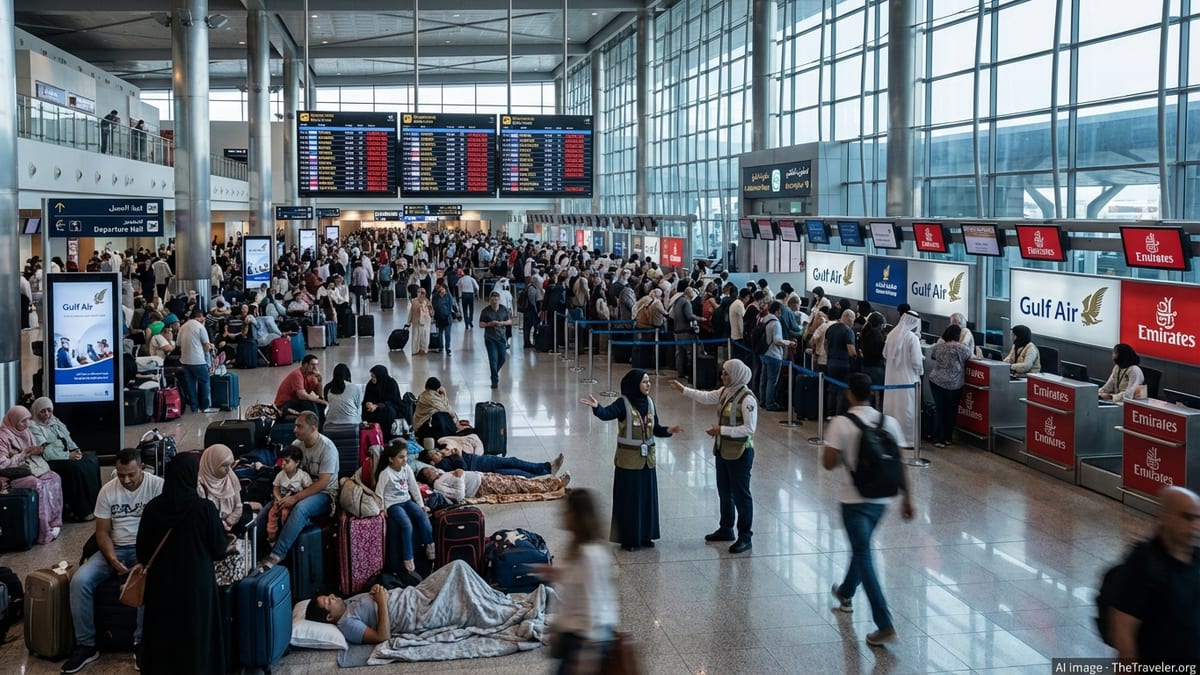
Targeted cancellations hit Bahrain and Kuwait routes
Published coverage from UAE aviation outlets in late June and July 2026 indicates that services between Abu Dhabi and Kuwait, as well as Abu Dhabi and Bahrain, have been among the most affected in the latest round of schedule changes. Etihad Airways has repeatedly removed Kuwait flights EY653 and EY654 from its schedule for operational reasons, while Bahrain rotations EY647 and EY648 have also seen cancellations around key dates in July.
Industry reports note that Air Arabia has likewise cancelled several Kuwait flights operating between UAE airports and Kuwait International Airport, alongside isolated disruptions to Bahrain services. These adjustments follow a period in which carriers had only recently rebuilt their schedules into Kuwait and Bahrain after earlier security incidents and airspace restrictions, making the renewed suspensions particularly disruptive for travelers who booked in anticipation of a more stable summer schedule.
Although airspace over Bahrain and Kuwait remains technically open, aviation briefings describe conditions as variable and subject to short-notice restrictions. That environment has allowed airlines to maintain a baseline of operations while still cancelling or consolidating specific rotations on days when risk assessments or capacity constraints change, leading to a patchwork of flight statuses that can shift within hours.
Beyond Etihad and Air Arabia, other UAE carriers including Emirates and flydubai have also adjusted Kuwait and Bahrain operations at various points in June and July. However, Etihad and Air Arabia passengers have faced some of the most concentrated impacts on UAE-originating point-to-point services to Kuwait City and Manama.
Security backdrop and regional airspace pressures
The renewed disruption comes against the backdrop of ongoing regional tensions linked to the 2026 Iran conflict and related strikes that have periodically targeted infrastructure across the Gulf. Earlier in June, Kuwait International Airport experienced drone attacks that damaged facilities and triggered temporary airspace closures, prompting diversions to Saudi airports and phased reopening measures in the weeks that followed.
Analytical reports on the conflict’s aviation impact describe Bahrain, Kuwait and neighboring states as operating in an elevated-risk environment, with airspace remaining open but subject to rapid restrictions and routing constraints. Carriers have responded by adjusting flight paths, adding holding time and at times cancelling rotations outright when operational thresholds are not met.
For Bahrain, the presence of critical military facilities and shipping lanes in the surrounding Gulf has added further complexity to risk calculations. While Bahrain International Airport has remained largely operational, periodic security alerts and shifting regional dynamics have influenced airline decisions on whether to operate, delay or cancel particular services on a given day.
These pressures are layered onto existing congestion at major UAE hubs, where rerouted regional traffic and altered flight paths have increased air traffic control workload. The combined effect is an operating environment in which carriers must regularly revisit schedules for certain high-sensitivity routes, especially short Gulf sectors like Abu Dhabi to Kuwait and Bahrain.
How Etihad and Air Arabia are handling affected bookings
Publicly available information from airline trackers and travel advisories shows that Etihad has been updating flight status tools in near real-time, marking Kuwait and Bahrain services as cancelled and prompting rebooking options through its customer service channels and online platforms. Passengers on affected flights are typically offered alternative dates, rerouting via other Gulf gateways where available, or refunds in line with fare rules.
Air Arabia has pursued a similar approach, reflecting cancellations on its booking engine and advising travelers to review updated itineraries before departure. In some cases, passengers have reported being moved to later departures once operations resume or being routed through different regional airports to reach their final destinations, depending on seat availability.
Industry guidance suggests that both airlines are prioritizing safety and regulatory compliance when determining which flights to cancel or operate. Decisions take into account airspace notices, airport capacity, security assessments and crew scheduling limits, rather than simple demand trends. This means that even well-booked flights may be removed from the schedule at short notice if operating conditions do not meet internal thresholds.
Travel-sector updates also highlight that flexible ticket policies introduced earlier in the 2026 crisis remain in place for many itineraries touching affected airports. These measures can include fee waivers for date changes, credit vouchers for future travel and, in some cases, extended validity periods for unused tickets.
What passengers flying from the UAE should do now
Travel advisories consistently emphasize that passengers booked on Etihad or Air Arabia services to Bahrain and Kuwait should monitor flight status closely in the 24 to 48 hours before departure. Airline websites and mobile apps are generally the fastest channels to reflect schedule changes, followed by email and SMS notifications for customers who have updated contact details in their bookings.
Experts recommend that travelers departing from Abu Dhabi, Dubai or Sharjah build extra margin into their plans, especially when connecting onward from Kuwait or Bahrain to long-haul flights on separate tickets. Given the possibility of last-minute cancellations or delays, allowing several additional hours between sectors, or ideally booking through-tickets on a single reservation, can reduce the risk of missed onward connections.
Passengers who find their flights cancelled are typically encouraged to avoid making separate, nonrefundable arrangements until they have confirmed new options with the airline. In many cases, carriers will offer the choice of rebooking on the next available flight, rerouting via an alternative regional hub such as Riyadh or Doha, or requesting a refund or travel credit. Keeping documentation of any additional costs, such as overnight accommodation or surface transport, can be useful when discussing compensation or travel insurance claims.
Travel insurance providers are also monitoring the situation, with some policies offering cover for trip interruption or cancellation linked to security incidents and airspace closures. Passengers are advised to review policy wording carefully, as coverage can vary significantly, particularly when government travel advisories or known events are involved.
Planning upcoming trips to Bahrain and Kuwait
For UAE residents planning new trips to Bahrain or Kuwait in the coming weeks, aviation analysts suggest taking a cautious but pragmatic approach. While schedules remain in flux, flights are still operating on many days, and both destinations continue to receive traffic from a range of regional carriers. The key risk is not that travel is impossible, but that itineraries may change with limited warning.
One practical strategy is to favor flights earlier in the day, which tend to have more rebooking options if something goes wrong. Choosing carriers with multiple daily frequencies on the same route can also increase flexibility, as airlines can more easily shift passengers to later departures without pushing travel to a different date.
Travel planners further note that travelers with essential journeys, such as business commitments or family emergencies, may want to consider built-in contingency plans. These can include identifying alternative routing options through nearby hubs and ensuring that passports and visas allow for re-routing via Saudi Arabia or Qatar if required.
As regional conditions evolve, publicly available briefings and airline notices suggest that carriers will continue to calibrate their schedules on a rolling basis. For now, anyone flying between the UAE, Bahrain and Kuwait at the end of June and into July 2026 should remain attentive to updates and be prepared to adjust plans quickly if Etihad, Air Arabia or other Gulf airlines announce further cancellations or operational changes.