


More news on this day
Arriving in India in 2026 now means navigating a refreshed set of baggage and duty free rules, with higher allowances but closer scrutiny of what counts as dutiable goods.
Get the latest news straight to your inbox!
Higher Duty Free Allowance and Who It Covers
Publicly available customs documents and recent coverage indicate that India’s baggage framework was updated in early 2026, replacing earlier rules and increasing the core duty free allowance for many arriving passengers. For Indian residents and persons of Indian origin arriving by air or sea from most countries, the general allowance for items carried as accompanied baggage has been reported as raised from 50,000 rupees to 75,000 rupees in value. This allowance typically applies to personal purchases, gifts and consumer items that are not otherwise restricted or excluded.
The higher allowance is designed primarily for Indian residents, foreigners residing in India and tourists of Indian origin. Tourists of foreign origin generally receive a smaller value allowance, reflecting long standing distinctions in India’s baggage rules. Travellers arriving directly from neighbouring countries such as Nepal, Bhutan and Myanmar may be subject to lower value limits, and those entering by land often face tighter thresholds or nil allowance for many categories.
Customs summaries also continue to highlight that infants receive no monetary duty free allowance beyond used personal effects. In practice, this means parents cannot pool an infant’s limit with their own to increase their overall exemption. Officials also treat the duty free value limit as applying per passenger, per trip, rather than per bag, and pooling of allowances between adults is not encouraged in official guidance.
Any goods above the permitted value, or that fall outside the scope of standard allowances, are generally assessed to a flat baggage duty rate, which recent customs leaflets list at around 38.5 percent on the assessable value. That rate is made up of basic customs duty and applicable surcharges, and it is charged only on the portion that exceeds the free allowance, not on the entire baggage value.
Alcohol, Tobacco and the Two Channel Clearance System
India’s rules on alcohol and tobacco imports in baggage remain strict, with clear numeric caps that sit alongside the value based allowance. Current customs guides for travellers specify that adults may bring in up to 2 litres of alcoholic liquor, wine or beer as part of their overall duty free entitlement. This quantity limit applies per passenger and includes any combination of bottles carried in checked baggage or bought at duty free shops before arrival.
Tobacco products are treated similarly, with the standard ceiling set at 100 cigarettes or 25 cigars or 125 grams of loose tobacco for each arriving passenger. These limits cannot be multiplied by pooling multiple passengers’ quotas, and quantities above these thresholds are normally dutiable at higher specific rates. Even within the allowance, some airports carry out targeted checks to ensure that arrivals respect both quantity and age restrictions.
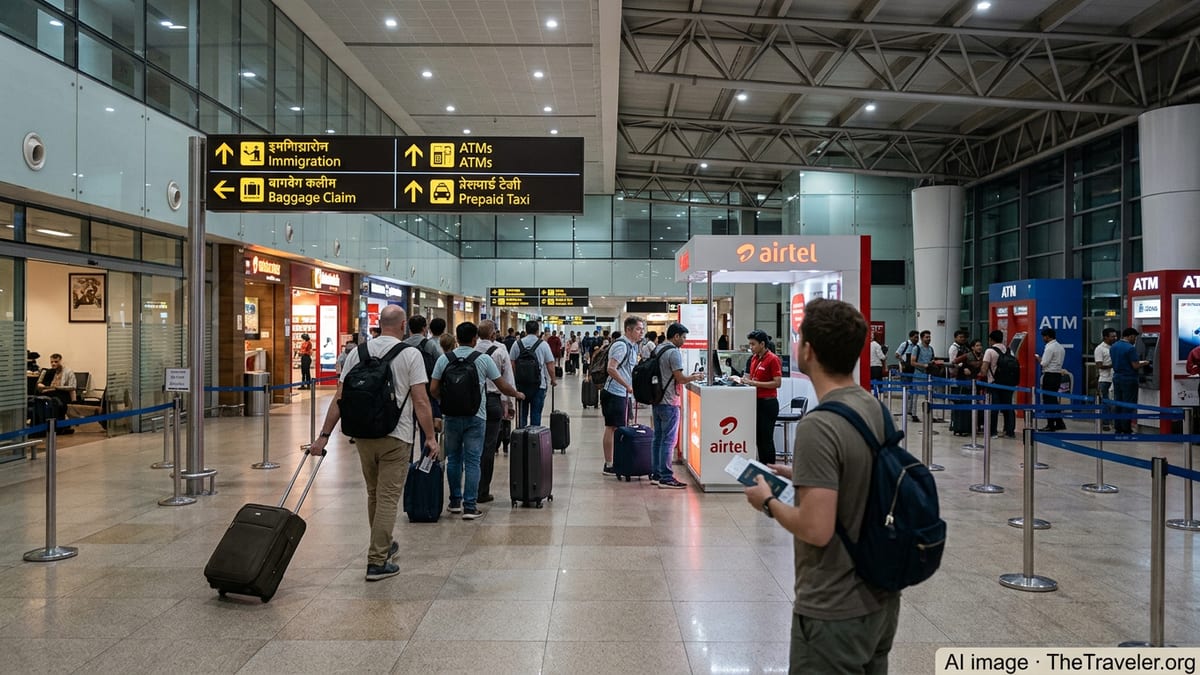
At the terminal, India continues to use a two channel customs system. Passengers who are not carrying dutiable or restricted goods are expected to walk through the green channel, while those with items to declare or goods above allowances should choose the red channel. Travellers who attempt to pass through the green channel while carrying undeclared high value items, commercial quantities or restricted goods risk confiscation, fines and assessment of back duties.
Reports from frequent flyers suggest that screening practices vary between airports, but most international terminals now routinely scan some or all baggage flowing through the green channel. That means travellers should not assume that avoiding the red channel will bypass inspection. Declaring goods voluntarily remains the safer route when carrying items anywhere near or above the stated thresholds.
Electronics, Laptops and High Value Gadgets
For many passengers, the most sensitive area is consumer electronics. India’s customs summaries continue to mention that each passenger aged 18 or over may bring in one laptop computer duty free, in addition to the general baggage allowance. This concession is intended to cover a personal device used for work or travel rather than multiple new laptops for gifting or resale.
Other electronics such as smartphones, tablets, cameras, gaming consoles and smartwatches typically fall under the value based allowance. Used personal devices carried on the body or clearly in regular use are often treated as personal effects, but sealed new gadgets, multiple identical items or devices carried with purchase invoices may attract closer scrutiny. If the combined value of new electronics and other goods exceeds a passenger’s allowance, duty is likely to be charged on the excess.
Publicly available guidance also notes that some high value consumer goods, including large televisions, are not eligible for duty free treatment at all and can attract full customs duty regardless of the allowance. Travellers planning major electronics purchases abroad are advised in official brochures to check current rate notifications before travel, since import duty on certain categories can significantly exceed the flat baggage rate.
Recent traveller accounts from busy hubs such as Delhi, Mumbai, Bengaluru and Kochi describe customs officers paying particular attention to multiple smartphones, premium laptops, high end cameras and sealed electronics boxes. In many cases, passengers carrying more than one new device have been asked to provide invoices and, where applicable, pay duty on the second unit or on the portion exceeding the allowance.
Gold, Jewellery and Long Stays Abroad
Gold and jewellery rules remain a distinctive and often misunderstood part of India’s customs landscape. Current customs pamphlets and FAQs state that passengers who have been residing abroad for more than one year may bring in limited quantities of gold jewellery as part of their baggage, free of duty, subject to both weight and value caps. The indicative thresholds continue at about 20 grams of jewellery with a value ceiling of 50,000 rupees for male passengers, and 40 grams with a value ceiling of 100,000 rupees for female passengers.
These concessions are strictly for jewellery worn on the person or carried as bona fide personal effects, not for gold bars, coins or bullion. Such investment grade gold is normally treated under separate import provisions and can attract substantial customs duty, regardless of length of stay abroad. New rules introduced in 2026 have not removed these distinctions, and public explanations emphasise that jewellery for personal adornment remains separate from gold in other forms.
For returning residents who have lived overseas continuously for longer periods, general baggage regulations also set out higher duty free thresholds for household goods under certain conditions. These benefits are tied to the duration of stay abroad and may require that the items are for personal use and will remain in India. However, gold jewellery allowances sit on top of, and do not replace, the standard value based baggage allowance.
Frequent travel commentary suggests that customs officers at major airports often focus on visible gold and jewellery during screening, especially on routes from the Gulf and other regions with high jewellery purchases. Wearing modest quantities that fall clearly within the quoted limits, carrying purchase documentation where available and being prepared to answer questions about long term residence abroad can help reduce delays at the customs channel.
Avoiding Pitfalls: Declarations, Receipts and Packing
Despite higher allowances in 2026, confusion at Indian airports often stems from uncertainty over what must be declared and how value is calculated. Public customs guidance stresses that passengers should declare dutiable or restricted goods on arrival, rather than wait to be questioned. Value assessments are usually based on the transaction price converted into rupees, taking into account invoices where available. When receipts are missing, officers rely on prevailing retail values for comparable items.
Experienced travellers recommend keeping purchase invoices for high value goods in an easily accessible folder, rather than packed deep inside checked baggage. Having documentation ready can speed up valuation and reduce disputes over declared prices. Those carrying older electronics or previously exported jewellery sometimes travel with export declaration slips or photographs to show that items originated in India or were carried out legally on an earlier trip.
Packing strategies also matter. Glass bottles of alcohol are safer in well padded checked baggage, provided that total quantities remain within the 2 litre limit and airline policies on carriage of alcohol are respected. Cigarettes and cigars are best kept sealed in original packaging, with quantities counted before travel to avoid unintentionally crossing allowance thresholds. Separating new, boxed items from clearly used personal effects can make inspections more straightforward.
Finally, travellers should remember that customs rules are subject to change through notifications and circulars. While the 2026 revisions have brought a more generous core allowance, they have also renewed attention at arrival halls on undeclared luxury items, multiple gadgets and significant quantities of gold. Checking the latest baggage guidance from Indian customs shortly before travel and erring on the side of honest declaration remain the most reliable ways to avoid costly surprises at the green and red channels.