


More news on this day
The United States government has issued a fresh worldwide security alert that urges Americans to reconsider nonessential travel to and through the broader Middle East region, citing a complex and rapidly evolving security environment tied to rising tensions and the risk of sudden disruption to air travel.
Get the latest news straight to your inbox!
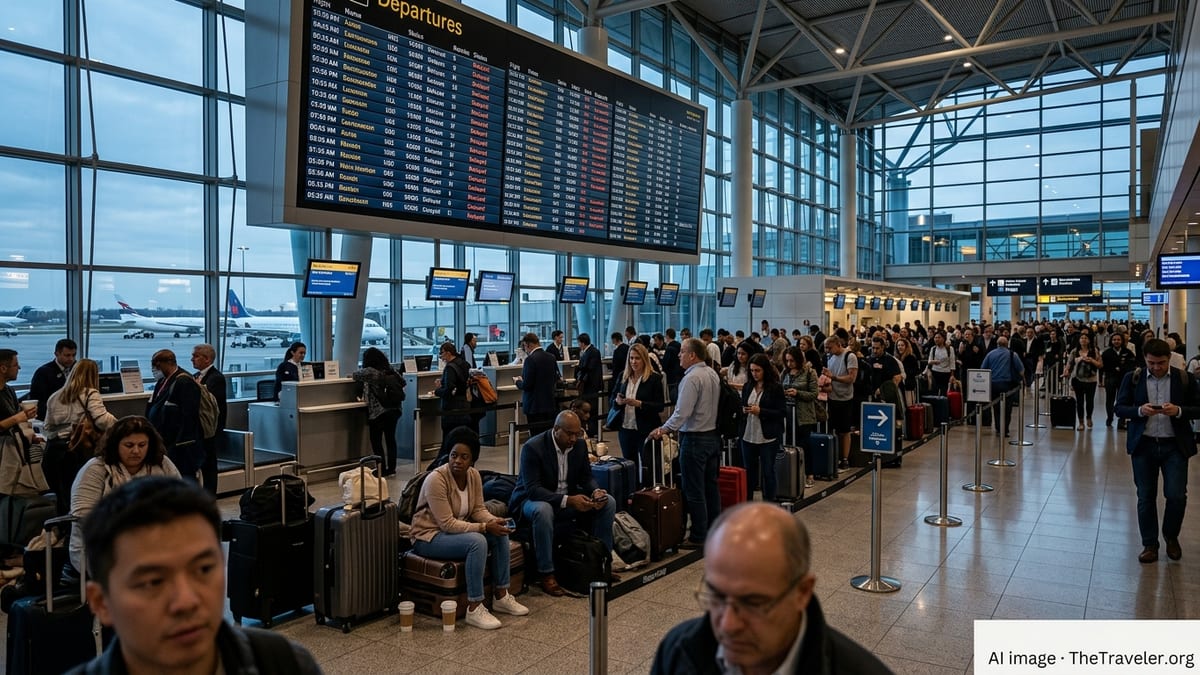
Security alert widens guidance to an entire region
The latest security alert, updated on July 22, 2026, expands earlier guidance into a broad regional warning covering the Middle East as a whole. Publicly available information from the U.S. Department of State’s Worldwide Caution notice describes a deteriorating security picture linked to ongoing friction involving Iran and groups aligned with it, as well as the possibility of escalation affecting multiple countries simultaneously.
The alert advises that Americans already in the Middle East exercise heightened vigilance and be prepared for flight cancellations, periodic airspace closures, and other travel disruptions. It also states that Americans outside the region should carefully reconsider travel to or through Middle Eastern hubs, language that effectively raises the bar for what is considered essential travel for the foreseeable future.
Separate country pages on the State Department’s advisory site show that many key destinations in the region, including Saudi Arabia, Israel, Jordan, Bahrain, Kuwait, Qatar, Oman and the United Arab Emirates, are currently rated Level 3, the category labeled “Reconsider travel.” While advisory levels differ slightly from country to country, the combined effect is a de facto regional warning that all but essential trips face elevated security risks.
The Worldwide Caution also notes that U.S. diplomatic facilities and locations associated with American interests have been targeted in recent incidents, and that Iran and groups supportive of Iran could seek to attack U.S.-linked sites or crowds frequented by foreigners. This broader threat picture is a key factor behind the recommendation that travelers rethink discretionary visits to the region at this time.
What a Level 3 “reconsider travel” advisory means
The U.S. government uses a four-tier system for its travel advisories, with Level 1 signaling “exercise normal precautions” and Level 4 reserved for “do not travel,” the highest warning category. Level 3, “reconsider travel,” is the second most severe rating and is defined in State Department materials as a recommendation to avoid travel due to serious risks to safety and security.
According to official advisory guidance, Level 3 assessments typically reflect a combination of threats such as terrorism, armed conflict, civil unrest, widespread violent crime, kidnapping, or significant limitations on local emergency and consular support. In practical terms, a Level 3 designation signals that conditions are unstable enough that U.S. citizens may face greater difficulty obtaining help in a crisis and may have less margin to adapt if a situation deteriorates quickly.
In the current Middle East context, advisory summaries for several countries reference concerns about missile or drone attacks targeting American interests, border-area clashes, and the possibility of rapid military escalation that could affect airspace and commercial aviation. For travelers, this raises the risk of being caught by sudden route changes, airport closures, or government-imposed movement restrictions with limited notice.
Universities, major corporations, and study abroad programs often use Level 3 advisories as a trigger for tighter internal review before approving travel, and some institutions require special waivers or risk assessments for any travel to destinations under Level 3 or Level 4 warnings. The widened Middle East guidance is therefore likely to have ripple effects on business, academic, and non-governmental travel plans through the remainder of 2026.
Impact on air travel, transit hubs, and tour itineraries
One key concern highlighted in public advisories is the vulnerability of air links that pass through the region. The July security alert notes that some airlines have already adjusted schedules, delaying the restoration of previous frequencies or canceling selected routes. Travelers are being urged to monitor airline and airport updates closely and to plan for the possibility of last-minute schedule changes.
For many U.S. travelers, the Middle East functions not only as a destination but also as a major transit corridor, connecting North America to South Asia, East Africa, and parts of Southeast Asia via large hub airports. The guidance to reconsider travel “to and through” the region therefore affects passengers whose only planned stop in the Middle East might be a few hours in transit. While no blanket ban on transiting has been announced, the advisory underscores that even short connecting stops can be disrupted if airspace restrictions or security incidents occur.
Published coverage from regional and international outlets indicates that tour operators offering multi-country itineraries that include Gulf capitals, Jerusalem, Petra, or Red Sea resort areas are reassessing late 2026 departures. Some are reportedly offering fee-free date changes or rerouting options, while others have suspended new sales pending clearer signals on the trajectory of tensions. Individual policies vary widely, and travelers are being advised to review cancellation and rebooking rules before committing to new bookings.
Travel insurance providers are also tracking the situation closely. Standard policies often exclude known or foreseeable events, and some plans differentiate between terrorism-related incidents and conventional armed conflict. Travelers considering itineraries that involve Middle Eastern stops are being encouraged by consumer advocacy groups to read policy language carefully, particularly clauses related to war, civil unrest, and government-imposed travel restrictions.
How travelers are being advised to respond
Public guidance from U.S. government sources emphasizes that the Level 3 and associated security alerts are recommendations rather than legal prohibitions for private citizens. Americans are free to continue traveling to most destinations in the region, but are urged to weigh the heightened risks and take extra steps to prepare for contingencies.
Travel advisory materials recommend that those who decide to go maintain flexible itineraries, carry backup plans for rerouting, and have access to funds for unexpected hotel stays or rebooked flights. Travelers are also advised to monitor local and international news closely, pay attention to airport and airline notices, and be ready to adjust plans rapidly if security conditions change in or near their destination.
Special attention is being drawn to the importance of registering trips with the Smart Traveler Enrollment Program, known as STEP, which allows U.S. embassies and consulates to send security updates by email or text to enrolled travelers in specific countries. Registration is voluntary but is often highlighted as a useful tool for receiving real-time alerts during fast-moving regional crises.
Experts who follow travel risk management note that, aside from headline security threats, travelers should also factor in more routine challenges that can be magnified during periods of instability. These include potential strain on local medical facilities, disruptions to ground transportation, and reduced availability of evacuation or emergency assistance services if multiple countries in a region are affected at once.
Regional context and outlook for the coming months
The broadened “reconsider travel” message comes after several years of fluctuating advisories for individual Middle Eastern countries, influenced by conflicts in Syria and Yemen, political tensions in the Gulf, and periodic flare-ups of violence involving Israel and Palestinian territories. The current guidance is notable for the way it links risk assessments across multiple destinations into a single regional caution.
Analysts point out that travel advisories are reviewed and updated as conditions evolve, and that some countries in the region have seen their levels move up or down in recent years as security trends changed. The present Level 3 posture for many Middle Eastern states may therefore be adjusted again if tensions ease or if specific risks are mitigated, but there is no public timetable for such changes.
In the meantime, airlines, tour companies, cruise operators, and large travel agencies are expected to keep contingency plans in place for itineraries touching the region. This can include pre-planned rerouting options, paused operations to certain airports, or alternate embarkation ports for cruises that had intended to use Eastern Mediterranean or Red Sea ports as turnaround points.
For travelers looking ahead to fall and winter 2026, the key message emerging from official advisories and industry response is caution and flexibility. The U.S. government’s latest alert stops short of telling citizens not to travel to the Middle East at all, but the strengthened language urging Americans worldwide to reconsider trips to and through the region signals that nonessential travel carries a higher level of risk than in previous years.