


More news on this day
Rail users across southern England are continuing to experience disruption after a rare “do not travel” warning, issued in response to a major gas leak near Didcot Parkway, led to widespread cancellations, altered ticket acceptance and renewed scrutiny of how such alerts affect passenger rights.
Get the latest news straight to your inbox!
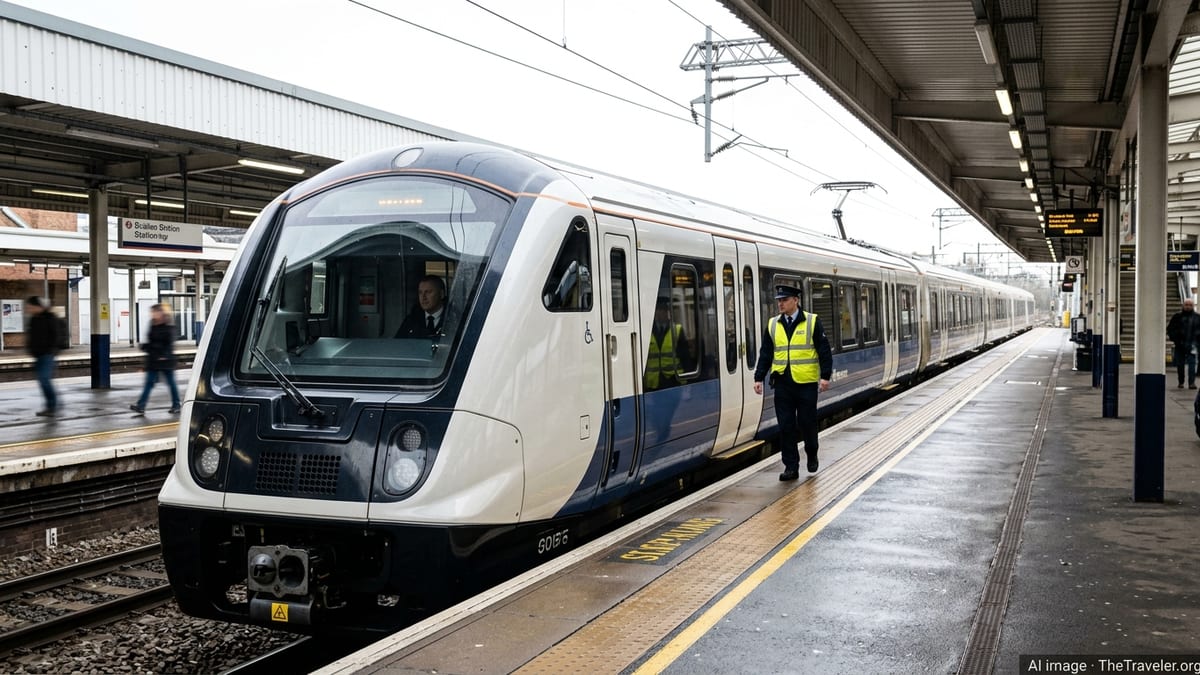
Gas leak near Didcot triggers severe disruption
According to publicly available information from Network Rail, the latest disruption began on Wednesday 23 September 2026 after a significant gas leak was identified close to railway land in the Didcot area. A safety exclusion zone put in place by gas engineers required the suspension of services on key Great Western Railway routes, limiting access for trains between Reading, Didcot Parkway and Swindon.
Service updates from Great Western Railway indicate that lines through Didcot were closed for much of the day, with only limited diversionary options available. Long-distance services between London Paddington, South Wales and the West Country were curtailed or rerouted, with journey times extended and some trains starting or terminating short of their usual destinations.
Regional media reports describe passengers being advised early on 23 September not to travel on the affected corridor unless their journey was essential, with replacement road transport constrained by the same exclusion zone that limited rail movements. The advice applied in particular to peak‑time commuters and long‑distance travellers planning to cross the Reading–Didcot–Swindon section.
Operational updates published throughout the day show that engineers were only able to reopen sections of the route gradually once gas monitoring confirmed that it was safe to move trains through the affected area. Even as some lines reopened, signalling constraints and the need to re‑position trains and crew meant a heavily reduced timetable and extended knock‑on delays.
What the ‘do not travel’ message means for rail users
Industry documents and historic policies indicate that a formal “do not travel” alert is reserved for periods of exceptional disruption, when operators believe they cannot offer a reliable or safe service on a particular route. Previous examples have included severe weather events, infrastructure damage such as overhead line failures and major incidents at key junctions.
Guidance referenced in local delivery plans explains that in these circumstances operators are encouraged to issue clear, unambiguous language warning customers that attempting to travel may result in extended delays, stranded trains or an inability to complete journeys the same day. The aim is to reduce the number of people entering the network while capacity and resilience are severely limited.
Recent commentary from passenger watchdogs and the independent Rail Ombudsman shows that the timing and wording of “do not travel” notices can be significant. Case studies made public by the Ombudsman highlight situations in which passengers who began journeys after such warnings were issued later struggled to access customary emergency taxi or hotel arrangements because operators argued that they had advised against travel.
Discussion within the rail industry has also focused on how these alerts are communicated. Research commissioned by Network Rail into passenger responses during extreme conditions suggests that travellers are more likely to heed advice when messages clearly describe likely consequences of travelling, such as overcrowded replacement buses or the prospect of remaining on a stranded train for several hours.
Current service status on Great Western Railway routes
By the morning after the initial incident, publicly available journey planners were showing a partial restoration of services on the Great Western main line, but with reduced frequencies and short‑notice changes still affecting trains through Didcot. Some long‑distance services between London, Bristol, Cardiff and beyond remained subject to diversion or cancellation while inspection work continued around the gas exclusion zone.
Information from Network Rail’s live disruption pages indicates that passengers should continue to expect residual delays on routes linking Paddington with south‑west England and South Wales. Trains that do run may be busier than usual because earlier cancellations have compressed demand into fewer services, and stopping patterns may be altered at short notice to manage crowding or train positioning.
Great Western Railway’s own updates advise customers to check individual trains on journey planners shortly before departure rather than relying on printed timetables. In some cases, operators have indicated that tickets dated for the days most affected by the “do not travel” advice can be used on alternative days, subject to certain conditions, to give passengers flexibility to postpone trips.
There are no indications in the latest public information that a blanket “do not travel” message still applies across the wider Great Western network. However, the situation around Didcot remains sensitive to ongoing safety checks and any further instructions from gas engineers working close to the railway, so timetables may continue to change at relatively short notice.
Passenger rights on refunds, rerouting and compensation
The updated National Rail Conditions of Travel, which came into effect on 1 April 2026, state that passengers who do not travel or do not complete their journey because their train is delayed, cancelled or rescheduled can claim a refund from the retailer that sold the ticket. This applies regardless of whether the disruption arises from infrastructure issues, weather events or external incidents such as a gas leak.
National Rail guidance on refunds explains that customers with advance tickets whose booked services are cancelled are normally permitted to travel on the next available train operated by the same company, or to seek a refund if they choose not to travel. For flexible tickets, such as off‑peak or anytime fares, passengers can usually claim a full refund if they abandon travel because of severe disruption linked to incidents like the Didcot gas leak.
Separate delay compensation schemes, often branded as Delay Repay, continue to apply where trains run but arrive significantly late. However, industry summaries note that when a formal “do not travel” message has been issued and widely publicised ahead of time, operators may argue that customers who choose to travel despite the warning have accepted the risk of serious delay and may not be entitled to the same level of support if stranded.
Passenger advocates encourage affected travellers to keep copies of tickets, screenshots of journey planner warnings and any receipts for replacement road transport or accommodation. These documents can be useful if there is later disagreement over whether the timing and scope of “do not travel” alerts were sufficiently clear for customers to make informed decisions about starting their journeys.
What rail passengers should do now
For travellers planning to use the Great Western main line over the coming days, publicly available journey planners and operator service updates remain the most important sources of detail on individual trains. Passengers are advised in official guidance to check both their outward and return legs on the day of travel, especially if their route passes through Reading, Didcot Parkway or Swindon.
Those who can be flexible may wish to consider rebooking to a later date or time while the network recovers, particularly for discretionary trips such as leisure journeys. Industry commentary following previous disruption events suggests that crowding and short‑notice cancellations tend to be most acute in the first 24 to 48 hours after a major incident, before revised timetables stabilise.
Travellers who must travel despite recent disruption can reduce risk by allowing additional time for connections, carrying water and basic supplies in case of extended delays, and familiarising themselves with alternative routes by rail or coach. Advice published by rail operators during recent extreme weather events emphasises the value of planning for contingencies, including the possibility of being held on a train while safety checks are carried out.
Ongoing debate within the rail sector about the use of “do not travel” alerts suggests that such warnings are likely to remain a feature during future episodes of severe disruption. For now, passengers affected by the Didcot gas‑related incident are being urged through publicly available information to stay informed, make use of refund and rerouting options where appropriate, and treat any renewed “do not travel” messages as a clear signal that conditions on the network have become exceptionally challenging.