


More news on this day
The United Arab Emirates has suspended all flights operated by Iranian airlines to and from its airports from September 24, 2026, a move linked to new United States aviation sanctions on Tehran and mounting warnings from Iran about regional airspace that are reshaping risk calculations for airlines and travelers across the Middle East.
Get the latest news straight to your inbox!
Regulatory Move Tied to Expanding US Sanctions
According to publicly available notices and local media coverage, the UAE’s General Civil Aviation Authority (GCAA) has ordered all flights operated by Iranian carriers to and from the country to stop from Thursday, September 24, until further notice. The measure is framed as a response to a US ban that targets Iranian airlines’ access to airports around the world, with the UAE aligning its own regulations with the expanded sanctions regime.
Reports from regional outlets indicate that the suspension is carrier-specific rather than a blanket shutdown of UAE–Iran air corridors. The decision applies to flights operated by Iranian airlines such as Iran Air, Mahan Air and other Iran-based carriers, and does not on its own state that services by non-Iranian airlines on UAE–Iran routes are automatically halted. However, the practical impact will depend on how foreign airlines interpret the risk of secondary US sanctions and the evolving security picture.
The US Treasury has recently announced sanctions on dozens of Iranian aviation entities and warned that airports, fuel providers and ticketing platforms worldwide could face penalties if they continue servicing Iranian carriers. Regional aviation coverage notes that flights between Iran and several neighboring states, including Iraq and Oman, have already been curtailed or rerouted as the sanctions took effect earlier in the week.
In its public messaging, the GCAA has emphasized that it will continue to update relevant bodies and the traveling public as conditions change, and has urged passengers to rely on official channels when checking the status of bookings involving Iranian airlines.
Tehran’s Warnings Heighten Perceived Airspace Risk
The policy shift in Abu Dhabi comes against a backdrop of sharper rhetoric from Tehran over the use of regional airports in the US pressure campaign. Analysis published by international broadcasters describes how Iranian officials have warned neighboring countries not to facilitate the new sanctions, raising the possibility of retaliation if states are seen as actively participating in efforts to ground Iran’s civilian fleet.
Those warnings follow months of conflict and tit-for-tat strikes involving Iran, the United States and Israel that have already disrupted air routes across the Gulf and Levant. Earlier in the year, several Middle Eastern states temporarily closed parts of their airspace as missile and drone launches intensified, leading to widespread diversions and cancellations for flights that would normally cross Iranian, Iraqi or Gulf flight information regions.
Risk assessments from aviation safety bodies in Europe and North America had already highlighted the Tehran flight information region as an area of heightened caution because of the combination of military activity and dense civilian traffic. The latest escalation in political and regulatory tensions is now adding a sanctions and compliance layer to the existing security concerns, complicating route planning for carriers that serve hubs such as Dubai, Doha, Abu Dhabi and Istanbul.
Aviation analysts quoted in international coverage suggest that direct physical attacks on regional airports remain unlikely, but the risk of miscalculation or cyber interference, as well as the economic impact of sustained sanctions, is increasingly being factored into airline risk models and insurance decisions.
Disruption for Passengers and Carriers on UAE–Iran Routes
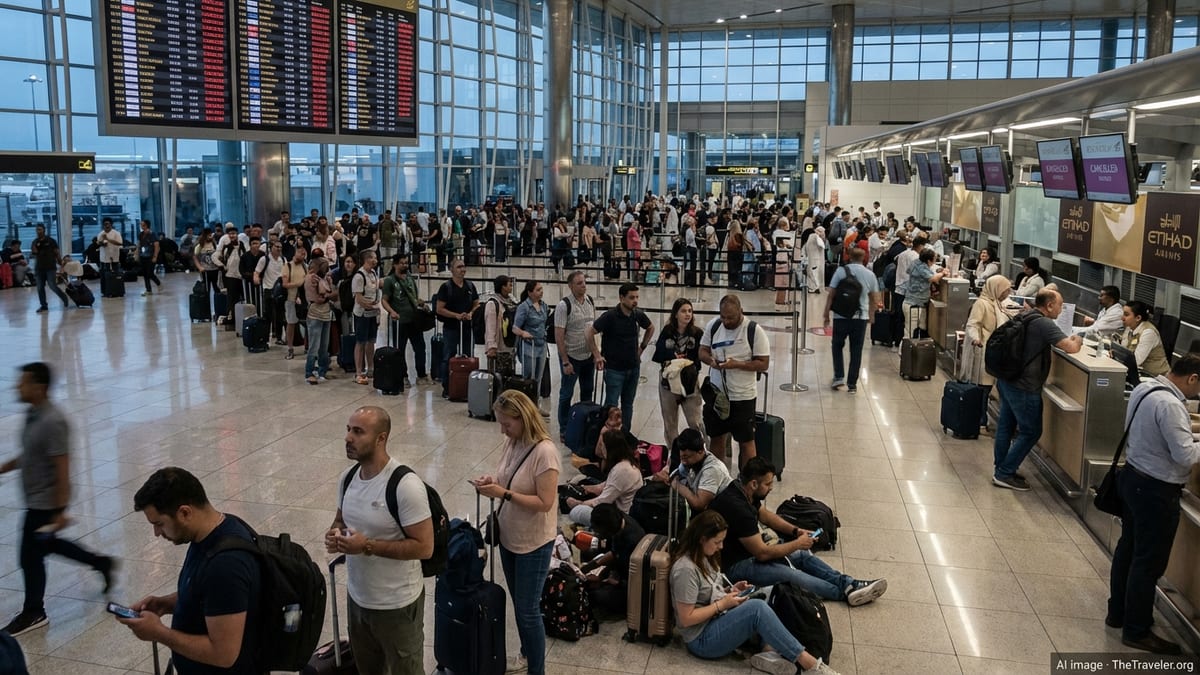
For travelers, the immediate effect of the UAE decision is concentrated on itineraries that involve Iranian carriers departing from or arriving in Dubai, Abu Dhabi, Sharjah and other UAE airports. Flight tracking data and local reporting indicate that services such as Tehran–Dubai, Shiraz–Dubai and Mashhad–Sharjah that were previously operated by Iranian airlines have been removed from schedules or marked as canceled from the start of the suspension period.
Consumer-facing travel advisories stress that passengers ticketed on Iranian airlines for travel between the UAE and Iran should check directly with their carrier or booking agent before heading to the airport. Some Iranian domestic media reports have already mentioned rerouting certain passengers via alternative airports in countries that remain open to Iranian carriers, although the options are narrowing as more states respond to the US sanctions framework.
Major UAE-based airlines, including Emirates, Etihad, flydubai and Air Arabia, had already modified or suspended some services to Iranian destinations earlier in the month as regional tensions intensified. Previous updates from local aviation desks describe several waves of delays and cancellations on routes connecting the UAE to Tehran and other cities, alongside disruptions on flights to Oman and parts of Iraq. The new GCAA decision formalizes and extends this pattern where Iranian-operated flights are concerned.
Airports in Dubai and Abu Dhabi remain operational as regional hubs, but passenger flows are being reshaped as networks adjust. Travelers connecting between Asia, Europe and Africa via the Gulf may see altered routings that avoid Iranian airspace, longer flight times on some corridors and a reduction in last-minute availability on certain dates while airlines rebalance capacity.
Broader Impact on Middle East Aviation and Tourism
The suspension comes at a time when Middle Eastern aviation is already under financial and operational strain. Industry forecasts cited by international media estimate that airlines in the region are on track to post multi-billion-dollar losses in 2026, reflecting war-related disruptions, higher insurance costs and route inefficiencies. Passenger traffic at key hubs such as Dubai International has fallen compared with last year as some travelers delay trips over safety concerns and uncertainty about connectivity.
Tourism boards in Gulf states have not published detailed breakdowns by source market since the latest round of tensions began, but anecdotal evidence from hotel operators and travel agents reported in regional business press points to weaker bookings from some European markets and from within the wider Middle East. Travelers who might previously have paired trips to the UAE with onward visits to Iran, Iraq or Lebanon are now facing a patchwork of restrictions and travel advisories that limit multi-country itineraries.
The UAE remains one of the most visited destinations in the region, with Dubai continuing to attract visitors for major events, shopping festivals and winter holidays. However, flight suspensions affecting Iranian carriers, warnings over regional airspace and periodic disruptions at Gulf hubs are likely to weigh on perceptions of reliability, particularly among first-time visitors or those planning complex long-haul connections.
Tour operators focused on cultural tours, pilgrimage routes and business travel that historically included both Iran and the UAE are assessing whether they can sustain such products while sanctions are in force and direct air links are curtailed. Some have pivoted toward itineraries that combine the UAE with alternative destinations on the Arabian Peninsula or North Africa, where air links remain more stable.
What Travelers Should Watch in the Coming Weeks
For now, the timeline for any resumption of flights operated by Iranian airlines to and from the UAE is undefined. Official statements reference an “until further notice” period, indicating that any change will depend on future developments in the US sanctions regime, Iran’s posture toward neighboring states and broader security conditions in regional airspace.
Travel industry commentary suggests that passengers planning journeys that traverse the Gulf and Iranian airspace should closely monitor airline advisories, especially for departures in the coming weeks. Carriers have been adjusting schedules at short notice in response to changes in overflight permissions, military activity and regulatory guidance, leading to same-day rerouting or cancellations on some routes.
Insurance providers and corporate travel managers are also reassessing policies. Some companies with staff transiting through the Middle East have introduced additional approvals for itineraries that would normally overfly Iran or connect via hubs closest to the conflict zones, while others are steering travelers toward routes that remain comfortably clear of contested airspace, even when that entails longer flight times and higher fares.
Observers of regional aviation note that the current suspension is part of a wider pattern in which geopolitical tensions are increasingly shaping the map of global air travel. For tourists and business travelers alike, the UAE’s decision to halt Iranian-operated flights underscores the importance of checking the latest official information not only about destination countries, but also about the airspace and airlines involved in getting there.