


More news on this day
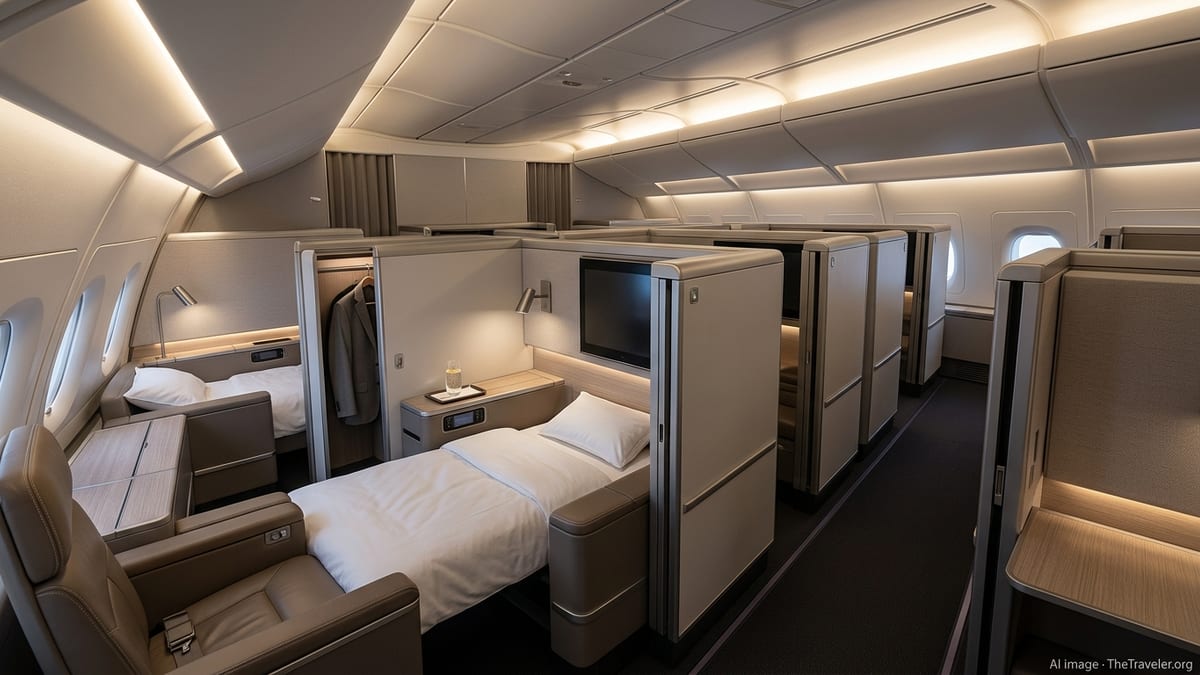
IndiGo is preparing a step change in its product strategy as work progresses on a full lie flat business class for its future Airbus A350 widebody fleet, a move that positions India’s largest airline to challenge established full service rivals on long haul routes while promising sharper value for price sensitive Indian travellers.
Get the latest news straight to your inbox!
From Single Class Workhorse to Long Haul Contender
IndiGo’s decision to equip its forthcoming Airbus A350 900s with a true business class marks a notable break from its long standing single class, no frills model. Publicly available fleet information shows that the carrier has a total of 60 A350 900s on order, following an initial commitment for 30 aircraft and a subsequent top up order that doubled the planned widebody fleet. The first deliveries are scheduled to begin around 2027, giving the airline time to finalise a premium long haul product that fits its cost focused DNA.
The strategic shift builds on IndiGo’s recent introduction of a business style cabin on select A321neo aircraft under the IndiGo Stretch branding. That narrowbody product, which offers enhanced pitch and upgraded seating on key domestic and regional routes, is widely viewed as a test bed for how the airline can sell a higher yield cabin without abandoning its reputation for efficiency. Industry coverage indicates that lessons from Stretch, along with competitive pressure from Air India’s new A350 cabins, are feeding directly into the specification of the A350 business class now under development.
Order data and delivery timelines suggest that the A350s are being acquired primarily to open non stop services from major Indian metros to Europe, North America and East Asia. For such missions, analysts generally view a credible lie flat business product as essential to attract corporate contracts and higher yielding leisure travellers. IndiGo’s evolving approach indicates that the airline now accepts that reality and is willing to invest in premium seats as long as the overall aircraft economics remain firmly under low cost control.
Cabin Layout Points to Premium but Dense Configuration
While IndiGo has not yet published a final A350 seat map, available commentary from aviation forums, aircraft order filings and comparative industry data provides strong clues about the direction of the design. The A350 900 typically carries between 300 and 350 passengers in a three class configuration at full service airlines. Estimates circulating among fleet trackers and enthusiast communities suggest that IndiGo is planning a slightly higher density overall, but still dedicating meaningful real estate to a 30 to 40 seat business class cabin at the front of the aircraft.
A configuration in this range would keep the A350 competitive on unit costs while carving out a sizeable premium cabin able to support long haul demand from India’s fast growing corporate and affluent leisure segments. The rest of the aircraft is expected to be divided between a large standard economy section and, potentially, a higher pitch economy plus zone branded in line with IndiGo’s existing Stretch product. Such a layout would allow the airline to price step ups more granularly, from basic economy through to full lie flat business, without the complexity of a traditional four class flagship.
Comparisons with other A350 operators underline how IndiGo might balance comfort and density. Carriers such as Air France, Iberia and Air India have opted for around 280 to 320 seats on the A350 900, typically with 28 to 36 business class suites and a mix of premium economy and standard economy. If IndiGo chooses to raise total capacity modestly above this range while still retaining a similar number of business seats, the result would be a cabin pitched clearly toward value but with a front section that can match many global competitors on hard product quality.
Lie Flat Suites and Seat Makers Shape the Experience
IndiGo’s choice of seat supplier and layout is expected to be central to how its A350 business class is perceived. Aviation design coverage highlights the rise of lightweight, staggered or herringbone suites for the A350 platform, with seat makers like Safran and Recaro supplying lie flat products to European and Asian airlines. IndiGo already works with Recaro for its business style seats on the A321neo, a relationship that industry observers see as a likely foundation for the widebody programme, even if the final A350 seat model has not been officially named.
Across the industry, the latest A350 business cabins emphasise direct aisle access for every passenger, full length lie flat beds, and higher privacy through sliding doors or extended shells. Qantas, Japan Airlines and several European carriers have all unveiled premium heavy A350 interiors built around these concepts, signalling a clear benchmark for any newcomer hoping to compete for long haul traffic. IndiGo’s developmental work on its A350s appears to be aligned with this direction, with expectations of a modern all aisle access configuration rather than the angled or recliner products once common in value focused business cabins.
Weight and maintenance considerations remain particularly important for a low cost carrier. New generation business seats on the A350 have been engineered to be lighter than previous designs, which helps preserve fuel efficiency. By adopting a relatively simple but proven suite with integrated inflight entertainment screens, wireless charging and personal storage rather than highly customised furnishings, IndiGo can contain acquisition and upkeep costs while still offering a compelling hard product for Indian travellers.
Value Driven Luxury Targeted at India’s Global Flyers
For passengers, the real story behind IndiGo’s A350 business class lies in how the airline intends to price and position the product. Public commentary from the carrier over recent years has consistently stressed a focus on affordability and reliability. As a result, industry analysts expect IndiGo to use its cost base to undercut many legacy rivals on comparable India Europe and India North America routes, even after factoring in the higher cost of lie flat seats and long haul service.
Instead of mirroring the fully inclusive model of traditional full service airlines, IndiGo is likely to build on its unbundled approach, offering the core A350 business seat and basic premium service at a sharp fare, with optional add ons such as lounge access, chauffeur transfers or flexible ticketing. For Indian travellers accustomed to mixing and matching services when they fly short haul with low cost carriers, this structure could make long haul business class more accessible, especially for small businesses and self funded leisure trips.
The upgrade path from economy to business may also become more dynamic. With a substantial A350 fleet planned, the airline will have flexibility to run targeted upgrade offers, loyalty based auctions and last minute buy ups, leveraging strong domestic feed into its planned long haul hubs. Observers note that IndiGo’s vast network within India, combined with a credible premium product on the A350, could redirect a portion of traffic that currently flows over Gulf and Southeast Asian hubs toward nonstop or single stop itineraries on an Indian carrier.
A New Competitive Phase for India’s Long Haul Market
IndiGo’s developing A350 business class arrives at a time when India’s long haul market is undergoing rapid transformation. Air India is in the midst of a large scale fleet renewal that includes its own A350 900s and 1000s with upgraded premium cabins. Foreign carriers from the Gulf, Europe and East Asia are simultaneously refreshing business products to retain their share of Indian traffic. Within this context, IndiGo’s decision to embrace lie flat business seating on the A350 signals that price alone will no longer define its proposition on international routes.
Analysts view the airline’s twin track strategy of maintaining a lean cost base while incrementally adding premium products as a pragmatic response to rising expectations among Indian travellers. As incomes grow and more passengers fly long haul for work and leisure, demand for comfortable overnight travel and direct connections from Indian cities is increasing. IndiGo’s upcoming A350 business class appears tailored to this demand, promising modern comfort without the highest tier price tags traditionally associated with long haul luxury.
With cabin design work progressing and the first deliveries still several years away, detailed reveals of IndiGo’s A350 interiors are expected closer to entry into service. For now, available information points to a clear direction. The carrier that built its success on single class Airbus narrowbodies is preparing to enter a new league, using the A350 platform to blend global standard business class comfort with the value centric ethos that has defined its rise in the Indian market.