


More news on this day
Overnight sleeper trains, once seen as a fading relic of European travel, are surging back across the continent as governments, rail operators and new entrants position night services at the heart of long-distance low-carbon mobility.
Get the latest news straight to your inbox!
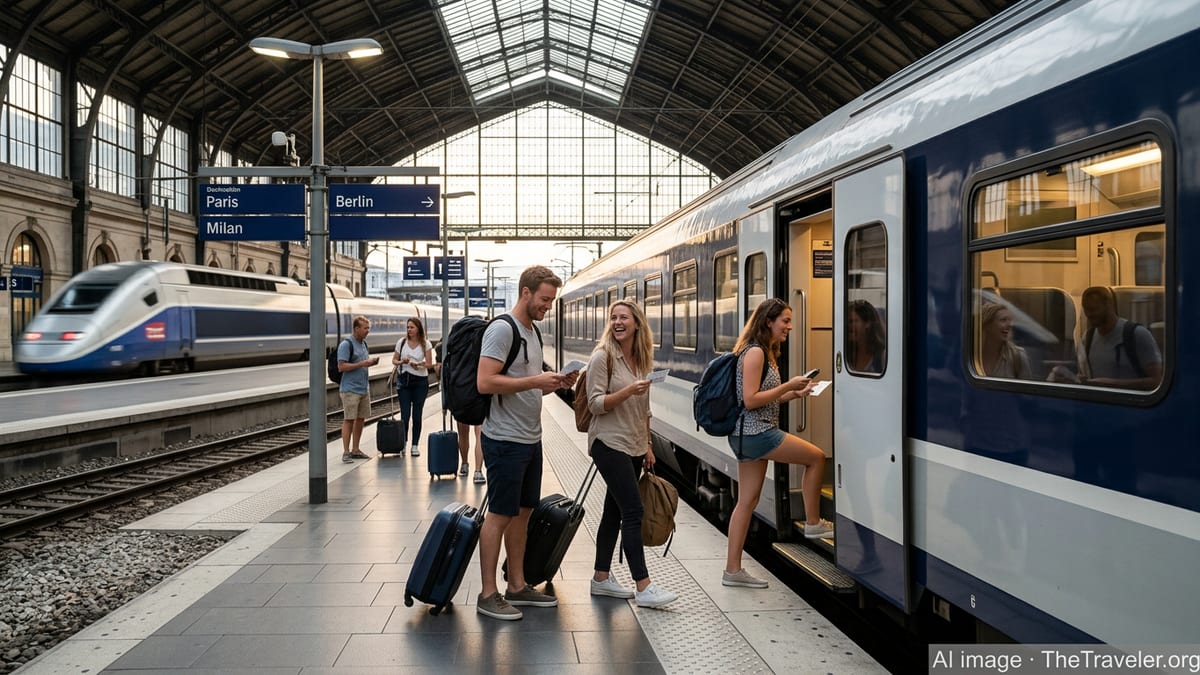
Austria’s Nightjet Network Sets the Pace
Austria has emerged as one of the strongest backers of Europe’s night train renaissance, expanding its Nightjet network into a continent-spanning web of overnight links. Publicly available information on recent rail investment reports indicates that Nightjet’s new-generation trains and additional routes are central to a strategy that treats night services as a practical alternative to short-haul flights.
Recent European policy documents on rail decarbonisation show that cross-border services from Austria now connect major cities in Germany, Italy, Switzerland and Central Europe, with further Alpine and Central European links highlighted as priority corridors. These routes are designed to dovetail with daytime high-speed lines, allowing travelers to cover long distances overnight and continue by regional or high-speed rail the following morning.
Industry progress reports on international rail corridors suggest that Nightjet is also a testing ground for upgraded rolling stock such as capsule-style mini cabins and improved accessibility features. The focus on comfort, privacy and digital booking aims to move night trains beyond their nostalgic image and position them as a modern product that can appeal to business travelers, families and younger leisure passengers.
Analysts observing the Austrian market note that the Nightjet model is increasingly influential, with other operators and policymakers citing it as evidence that overnight services can be commercially viable when combined with targeted public funding and coordinated timetable planning.
New Entrants Redraw the Overnight Map
The revival is not limited to state railways. New operators are entering the night-train market with cooperative and start-up structures, targeting gaps left by earlier withdrawals. One of the most visible is European Sleeper, which runs services linking Paris, Brussels, Berlin and Prague and is gradually extending towards Italy and the Alps, according to its latest press material and booking information.
European Sleeper’s public announcements outline a phased expansion: a night link from Brussels to Milan has been introduced, with additional stops in Dutch cities scheduled from late 2026, and further seasonal services towards Alpine destinations planned in 2025 and beyond. The cooperative positions its network as a mesh connecting several national systems, rather than a single point-to-point line, reflecting a broader shift in how overnight routes are planned.
Other privately driven initiatives, including French-based projects designed to rebuild a portfolio of overnight links from Paris to Spain, Italy and Central Europe, are attempting to revive routes that disappeared during the past two decades. While timelines have shifted for some of these ventures, their continued fundraising efforts and rolling-stock orders suggest that the entrepreneurial interest in night trains remains strong.
Observers of the European rail market note that this wave of new entrants is pushing incumbents to refresh their own overnight offerings. Competition is emerging not only on price but also on comfort, digital services and through-ticketing, factors that travelers increasingly weigh against the experience of short-haul air travel.
EU Climate Policy Channels Money to the Rails
The resurgence of night trains is closely tied to European climate and transport policy. The European Green Deal commits the bloc to climate neutrality by 2050, and official EU publications describe rail as a cornerstone of that objective, particularly for long-distance trips where it can displace short-haul flights.
Recent funding rounds under the Connecting Europe Facility have directed a large majority of transport investment to rail infrastructure, with European Commission announcements indicating that around three quarters of new transport funding is earmarked for rail upgrades across the core Trans-European Transport Network. These investments target key cross-border bottlenecks and modern signaling, both of which are essential for running frequent overnight passenger services.
European action plans on passenger rail and high-speed connections emphasize that improving high-speed corridors will also free capacity on conventional lines for regional and night services. Policy papers published in the past year outline plans to simplify cross-border driver certification and to improve reservation and ticketing systems, which are seen as major barriers to planning overnight multi-country journeys.
Environmental groups and passenger associations often highlight night trains as a visible symbol of the shift from aviation to rail for journeys of 600 to 1,500 kilometers. They argue that sustained EU-level funding, combined with national support for rolling stock and station upgrades, will be essential if new services are to reach the scale required to noticeably reduce emissions from intra-European travel.
Flagship Routes Showcase the New Era
Across Europe, several marquee routes are helping to define the image of the new night train era. Travel coverage from specialist rail publications points to the restored Paris–Berlin and Paris–Vienna services as important links between major capitals, giving passengers a direct overnight alternative to air routes that are under growing environmental scrutiny.
European Sleeper’s Paris–Brussels–Berlin line has joined this group of flagship connections, providing a regular cross-border service that is promoted as both a practical means of transport and an experience in its own right. According to the operator’s publicly available route information, onward connections towards Central Europe from Berlin and Prague create a de facto web of overnight options spanning several countries.
Analyses of upcoming timetables show that additional routes through the Alps, such as night services connecting Amsterdam or Brussels to northern Italy and Swiss destinations, are expected to strengthen the role of night trains for ski tourism and year-round leisure travel. These services are being marketed as a lower-emission alternative to weekend flights, particularly for travelers originating in northwestern Europe.
Rail observers also point to planned links towards Mediterranean hubs, including Barcelona, as a sign that operators see long-term demand for comfortable overnight journeys on routes that once relied heavily on historic sleeper brands. While some of these plans have been delayed or revised, they remain a central part of the narrative around a continent-wide network of modern night trains.
Challenges Ahead for a Fully Connected Night Network
Despite the momentum, the revival of European night trains faces structural hurdles. EU-commissioned studies on long-distance passenger rail underline that cross-border services still represent only a small fraction of total rail travel, with infrastructure capacity, differing national rules and complex access charges limiting expansion.
Night train operations are particularly sensitive to track access pricing and engineering works, since services run at hours when infrastructure managers traditionally schedule maintenance. Temporary suspensions on some overnight routes in recent years, notably during major construction works in Germany and France, have highlighted how vulnerable these services can be to disruptions.
Ticketing remains another obstacle. Current reports on the European rail market describe fragmented booking systems that make it difficult to combine multiple operators on a single overnight journey, especially when using a mix of state railways and new entrants. Ongoing EU initiatives to improve cross-border ticketing and passenger rights aim to address these issues, but progress is gradual.
Even with these challenges, recent funding decisions, announced route launches and published policy plans suggest that night trains are moving from niche status toward the mainstream of European transport planning. For travelers looking to cut the carbon footprint of trips across the continent, the expanding lattice of overnight routes from Austria and its partners signals that the future of sustainable long-distance travel in Europe is increasingly being built on rails that never sleep.