


More news on this day
Indonesia is moving to align its transport, tourism, and visa policies with regional neighbors as Southeast Asia accelerates plans for high-speed rail corridors, luxury destination projects, and more flexible entry rules that could remake how visitors move across the region.
Get the latest news straight to your inbox!
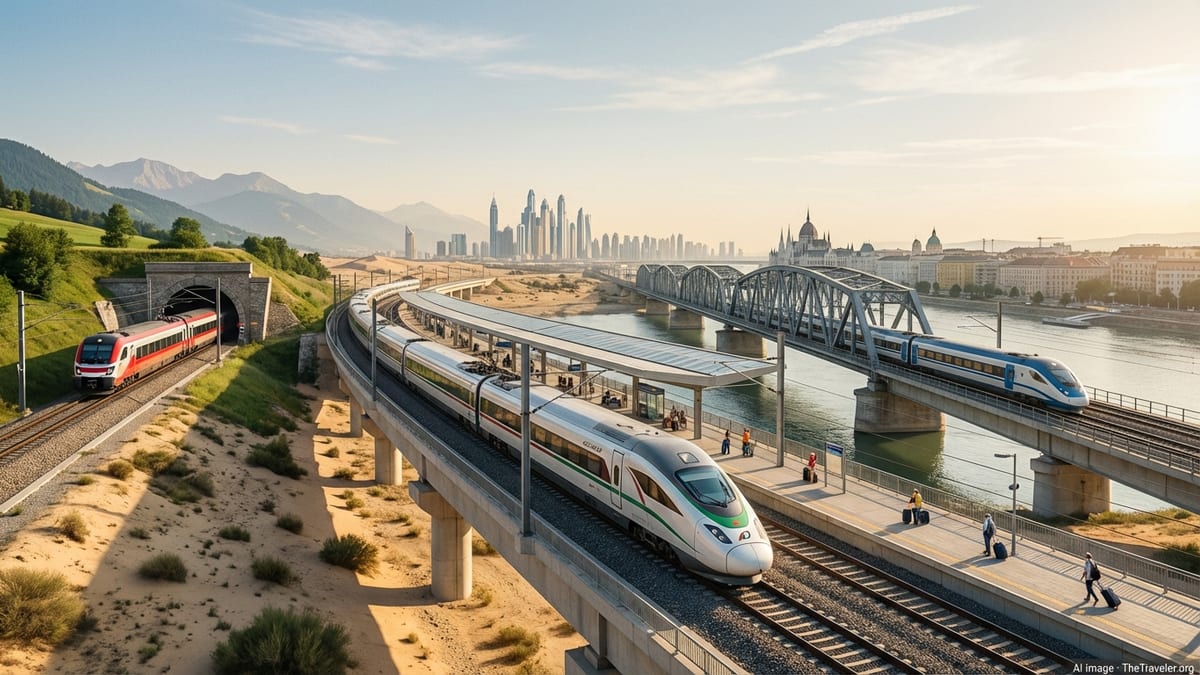
High-Speed Rail Becomes the New Tourism Backbone
Publicly available information shows that Indonesia’s Whoosh service between Jakarta and Bandung, which opened in 2023, remains the flagship example of high-speed rail in Southeast Asia, carrying millions of passengers and sharply reducing journey times on one of the country’s busiest routes. Regional analysts increasingly view the line as a proof of concept for longer Indonesian corridors that could one day connect with international routes.
Across the Malacca Strait, Malaysia is working to revive a high-speed rail link between Kuala Lumpur and Singapore, after earlier plans were shelved amid cost concerns. Recent coverage of the project indicates that the latest proposals lean more heavily on private funding, with the line still marketed as a tourism and business game changer that could cut overland travel between the two cities to under two hours.
Farther north, Thailand’s Bangkok–Nong Khai high-speed railway is under construction and expected to form a crucial missing link between China and mainland Southeast Asia via the operational China–Laos railway. Reports on the project highlight a target opening around the end of this decade, positioning Thailand, Laos, and eventually Malaysia and Singapore along a continuous high-speed axis designed to carry both tourists and freight.
In Vietnam, a National Assembly decision in late 2024 to advance a north–south high-speed line from Hanoi to Ho Chi Minh City has been framed in domestic coverage as a long-term bet on tourism and competitiveness. If completed as planned in the 2030s, the project would shrink domestic travel times and strengthen Vietnam’s position alongside Thailand, Malaysia, and Indonesia in a club of countries banking on fast rail to power visitor growth.
Indonesia Steps Onto the Regional Rail Map
Indonesia’s decision to proceed with Southeast Asia’s first operational high-speed service has given the country a new role in discussions about a future Pan-Asian rail network. Commentaries in infrastructure and tourism reports note that the Jakarta–Bandung line provides a template for premium services catering to both domestic leisure travelers and foreign visitors flying into the capital.
Government planning documents and public statements have regularly referenced options to extend the line toward Surabaya along Java’s northern corridor. Industry observers argue that such an extension, paired with upgraded conventional lines and new stations integrated with airports, would create a spine for multi-stop itineraries linking Jakarta, heritage-rich Central Java, and beach destinations in East Java and Bali.
Regional think-tank analyses suggest that over the longer term, Indonesia could connect indirectly with mainland Southeast Asia through port and ferry links feeding into Malaysian and Singaporean hubs. In that scenario, high-speed and upgraded rail corridors in Java would act as feeders, funneling international tourists who arrive via Kuala Lumpur, Singapore, or Bangkok deeper into the Indonesian archipelago.
Jakarta’s rapidly expanding urban rail network also reinforces this shift. Recent transport data compiled by regional media show that the Indonesian capital now operates one of Southeast Asia’s longest urban rail systems, improving access from airports and high-speed stations to hotels, convention centers, and entertainment districts. That connectivity is central to efforts to position Indonesia alongside Singapore, Bangkok, and Kuala Lumpur as a top-tier city-break destination.
Luxury Corridors and New Destination Clusters
As rail plans advance, Southeast Asian governments are pairing transport investments with high-end tourism projects designed to capture more spending per visitor. Indonesia’s “super-priority” destinations such as Labuan Bajo and Lake Toba, supported by upgraded airports, roads, and marinas, are framed in national planning as alternatives to Bali, with luxury resorts and cruise facilities aiming to attract affluent travelers.
Malaysia is promoting waterfront and integrated resort developments in Johor and along the west coast as potential winners from a future Kuala Lumpur–Singapore high-speed rail line. Analysts argue that faster overland travel from Singapore’s aviation and financial hub could unlock premium weekend tourism in Malaysian secondary cities and coastal areas, especially if rail stations are linked directly to mixed-use lifestyle districts.
Thailand’s Eastern Economic Corridor, anchored by the planned high-speed link connecting Don Mueang, Suvarnabhumi, and U-Tapao airports, is being positioned in official strategy papers as a gateway for both industry and high-end tourism to Pattaya and the broader eastern seaboard. When paired with upgrades to ports and yacht marinas, the corridor is projected to support luxury beach, cruise, and meetings segments.
Cambodia and Laos, while smaller in scale, are moving to leverage their position along emerging overland routes. The China–Laos railway has already begun to shift backpacker flows and tour patterns, and new investment proposals around stations in Luang Prabang and Vang Vieng feature higher-end hotels and riverfront developments. In Cambodia, future connections from Thailand and Vietnam are seen in tourism studies as catalysts for cross-border heritage and beach circuits that link Angkor, coastal resorts, and Mekong towns.
Visa Reforms Aim for Seamless Multi-Country Trips
In parallel with infrastructure projects, several Southeast Asian states are updating visa policies in an attempt to compete more directly with Europe’s Schengen Area. Recent coverage of tourism diplomacy reports that Thailand, Cambodia, Malaysia, Laos, Vietnam, and Myanmar have been coordinating on a shared visa initiative that would allow travelers to visit multiple countries with a single entry document.
Thailand has already experimented with expanded visa exemptions and visa-on-arrival schemes targeting key markets in East Asia, the Middle East, and Europe. Travel industry commentary suggests that these policies, if stabilized and better harmonized with neighbors, could encourage longer itineraries that combine Bangkok with heritage and beach destinations in Cambodia, Laos, and Vietnam, particularly once rail and road links are upgraded.
Malaysia and Singapore, which already function as major aviation gateways, are watching these developments closely. Policy papers on regional integration note that more flexible entry rules could drive additional stopover tourism in Kuala Lumpur and Singapore, especially if high-speed rail shortens onward travel times into Thailand and, in the longer term, farther afield into Laos and Vietnam.
Indonesia has periodically adjusted its visa-free and visa-on-arrival lists, and recent tourism strategy documents emphasize the need to align these rules with emerging ASEAN-wide schemes. Analysts point out that a coordinated approach involving Indonesia, Malaysia, Thailand, Vietnam, Cambodia, Laos, and Singapore would make it easier for long-haul visitors to plan rail-based journeys that string together urban, cultural, and island experiences without repeated bureaucratic hurdles.
Opportunities and Risks for Southeast Asia’s Tourism Future
The convergence of high-speed rail, luxury investment, and visa liberalization is reshaping forecasts for Southeast Asian tourism over the next decade. Regional tourism outlooks project that better connectivity between Indonesia, Malaysia, Singapore, Thailand, Vietnam, Cambodia, and Laos could support higher visitor numbers, increased average spending, and more even distribution of tourism beyond a handful of flagship cities.
At the same time, experts caution that mega-projects carry financial, environmental, and social risks. High-speed rail schemes are capital intensive and often rely on optimistic ridership forecasts, while land acquisition and construction can provoke local opposition. Environmental assessments have highlighted potential impacts on coastal ecosystems, cultural landscapes, and communities if projects are not carefully managed.
There is also competition within the region. Each country aims to position itself as a primary hub for air connections, rail junctions, and high-value tourism, raising questions about whether all proposed lines and luxury districts can be financially viable. Observers note that cooperation on scheduling, ticketing, marketing, and visa policy will be essential if overlapping projects are to complement rather than undercut one another.
For now, Indonesia’s entry into the high-speed rail club and its alignment with Malaysia, Singapore, Thailand, Vietnam, Cambodia, and Laos on connectivity and visa goals signal that Southeast Asia is serious about making overland and multi-country travel a core part of its tourism offering. How effectively governments balance ambition with sustainability will determine whether the region’s new rails and resorts become lasting assets or expensive missed opportunities.