


More news on this day
Norway’s mountainous west coast usually claims the spotlight, but a labyrinth of forested lakes called Fjorda, a few hours north of Oslo, is quietly becoming a favorite base for canoe rentals and low-impact wilderness escapes.
Get the latest news straight to your inbox!
A Lake Labyrinth Hiding in Plain Sight
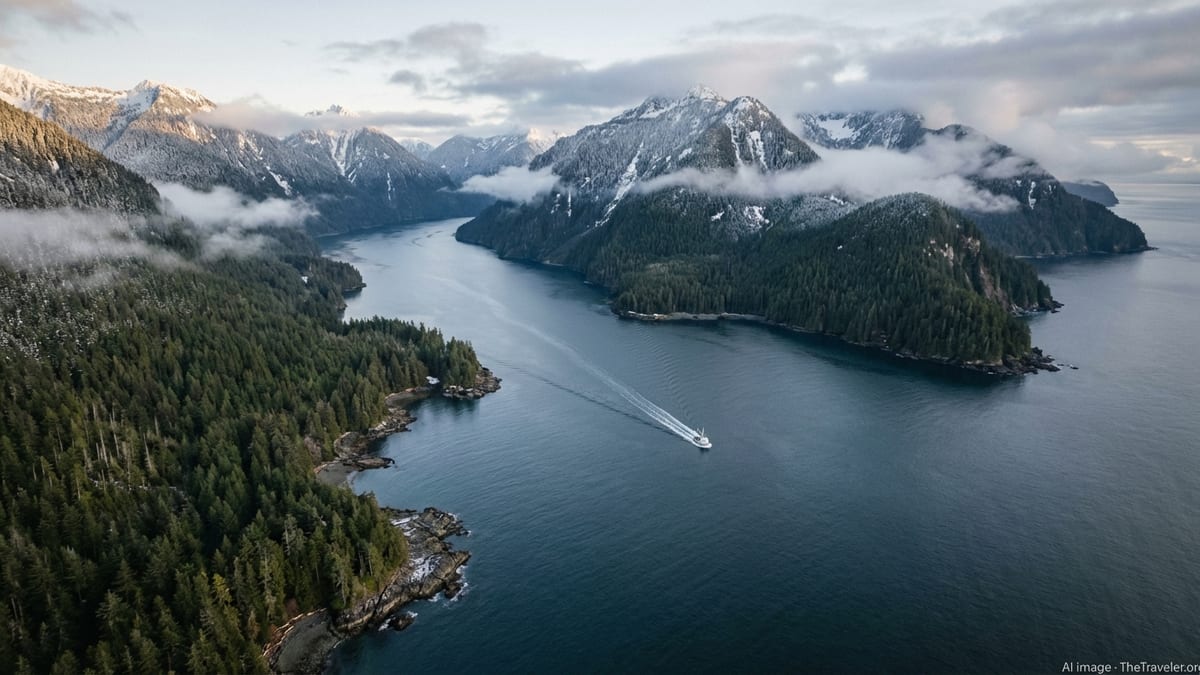
Fjorda is a compact lake district in Hadeland, in Eastern Norway, where dozens of narrow lakes and channels weave through low hills and dense forest. Public information from regional tourism portals describes it as one of the country’s most popular flatwater paddling areas, yet it remains largely unknown outside Scandinavia. Visitors arriving from Oslo typically drive past rolling farmland before the road drops into a quieter landscape of coves, islands, and glassy water.
Unlike the famous deep-cut sea fjords further west, Fjorda’s waters are inland and sheltered. The area’s appeal lies in easy-access adventure rather than dramatic cliffs. Canoes and kayaks slide past pine-clad islets, small rocky outcrops, and occasional cabins set just back from the shoreline. The low elevation and relatively mild summer climate mean the paddling season is long by Norwegian standards, stretching from late spring into early autumn.
This combination of accessibility and seclusion is giving Fjorda a growing profile among Norwegians looking for affordable, nature-focused short breaks. Travel industry coverage notes that increasing numbers of Oslo residents are choosing to skip long domestic flights and instead seek wilderness experiences in driving distance of the capital.
Fjorda Canoe Rental Anchors a Growing Micro-Destination
At the core of this quiet boom is Fjorda Canoe Rental, also referred to locally as Vestland Canoe Rental, which operates at the northern end of Saltbufjorden, one of the most scenic stretches of the lake system. Listings on national tourism platforms highlight the business as a key access point to the wider Fjorda network, offering fleets of traditional open canoes and related equipment.
The rental operation focuses on multi-hour and multi-day hires rather than quick laps close to the dock. Publicly available descriptions indicate that guests can load their gear and paddle to designated campsites or modest huts dotted along the shores, turning the interconnected lakes into a simple, self-guided expedition route. For many visitors, this model offers a first taste of Norwegian-style wilderness travel without the need for demanding mountain hikes.
Accommodation has become part of the draw. Fjorda Canoe Rental and associated local partners promote lakeside cabins, simple waterfront shelters, and tent pitches that allow paddlers to stay on the water’s edge. The emphasis is on basic comforts and quiet surroundings rather than resort-style facilities, aligning the area with Norway’s broader outdoor culture, which centers on self-catering and time outdoors.
Bookings for the current summer season, according to online calendars and regional travel portals, show high demand across weekends and school holidays. That pattern suggests Fjorda is transitioning from a regional secret into a more established micro-destination within the country’s nature tourism map.
Epic Adventures on Gentle Water
While the phrase “epic water adventures” is often associated with whitewater rivers or towering coastal fjords, Fjorda offers a subtler form of exploration. Paddling routes snake around sheltered bays and narrow channels, where journeys are measured less by vertical gain and more by how far visitors can get from road noise and phone signals. The area’s tight network of islands and peninsulas lends itself to route-finding and short crossings that feel adventurous but remain suitable for beginners.
The region’s rental operators present canoeing as accessible to most visitors who can swim and are comfortable spending time outdoors. Lifejackets and basic safety instructions are standard, and itineraries can be tailored to family-friendly circuits or longer one-way journeys linking several lakes. The relative lack of motorboat traffic on many stretches adds to the sense of remoteness despite the area’s proximity to urban centers.
For experienced paddlers, Fjorda’s appeal lies in the opportunity to design multi-day loops that combine long, quiet crossings with frequent landings to explore knolls, swim from smooth rock shelves, or cook over open fires where permitted. Reports from Scandinavian outdoor forums in recent seasons describe the area as a place where it is still possible to find a campsite out of sight and sound of other groups, particularly outside the busiest July weeks.
Even short visits can feel immersive. Travel descriptions emphasize early-morning fog lifting off the lake, late sunsets that stretch golden light across the water in midsummer, and the sound of loons and other birdlife carrying across the surface at night. These elements help explain why the destination is gaining word-of-mouth attention among both Norwegian and international travelers seeking slower experiences.
Wilderness Travel With a Light Footprint
The rise of Fjorda as a canoeing hub coincides with broader shifts in Norway’s approach to outdoor tourism. National and regional campaigns increasingly promote low-emission transport, longer stays, and activities that leave a smaller physical impact on fragile landscapes. Canoe-based travel in inland lake districts aligns closely with those priorities.
Official guidance on sustainable fjord tourism emphasizes reducing noise and pollution, supporting local operators, and following strict “leave no trace” principles. In Fjorda, that typically means camping only at established sites, packing out all rubbish, and using simple facilities where provided rather than creating new fire pits or informal trails. Rental companies and local tourism boards distribute information on these practices as part of booking and pre-trip communication.
Public discussion of Norway’s push toward emission-free fjord travel by the mid-2020s, especially in UNESCO-listed regions, has also raised awareness of lower-impact alternatives across the country. For some travelers, choosing a paddle-focused holiday in an inland lake district such as Fjorda is part of a wider effort to align vacations with climate-conscious values.
At the same time, local communities are keen to ensure that increased visitation does not overwhelm the landscape. Capacity limits on some cabin sites, encouragement of shoulder-season travel, and clear rules around campfires are among the tools being used to balance access with protection. Fjorda’s evolution into a recognized destination will likely depend on how successfully this balance is maintained.
Practical Access From Oslo and Beyond
One reason Fjorda feels “hidden” to many international visitors is that it does not appear as frequently in classic Norway itineraries, which typically focus on the western fjord towns of Bergen, Ålesund, or the Lofoten archipelago. However, access from the capital region is relatively straightforward. Travelers usually reach the area by car from Oslo in a few hours, following main roads toward Hadeland before turning onto smaller local routes.
Some regional tourism information indicates that limited bus connections serve nearby villages, though most paddlers still arrive by private vehicle to accommodate canoe rentals and camping gear. For visitors relying on public transport, combining train or bus journeys with short taxi transfers is often presented as a workable alternative during the main season.
Because Fjorda is a lake system rather than a single, clearly bounded park, planning typically starts with the canoe rental base itself. Advance reservations for boats, cabins, and tent platforms are widely recommended in peak months, both to secure equipment and to help avoid crowding at popular overnight spots. Weather conditions in eastern Norway are generally stable in summer, but trip planners still advise flexibility in case of heavy rain or strong winds.
As the 2026 travel season progresses, Fjorda appears set to welcome another wave of visitors seeking quiet water, simple infrastructure, and a form of “wilderness lite” that fits between day-trip tourism and full-scale expeditions. For travelers looking beyond Norway’s headline fjords, the canoe routes of this forested lake labyrinth offer a different, and increasingly sought-after, side of the country.