


Beaulieu-sur-Mer is often described as a quiet, elegant pause between Nice and Monaco. Many travelers know it mainly for its sheltered beaches, but the real appeal of this small Riviera town lies away from the sun loungers. From Greek Revival villas and Belle Époque promenades to harbor restaurants, coastal walks and easy day trips by train, Beaulieu rewards visitors who wander inland and along the headlands instead of staying on the sand.
Get the latest updates straight to your inbox!
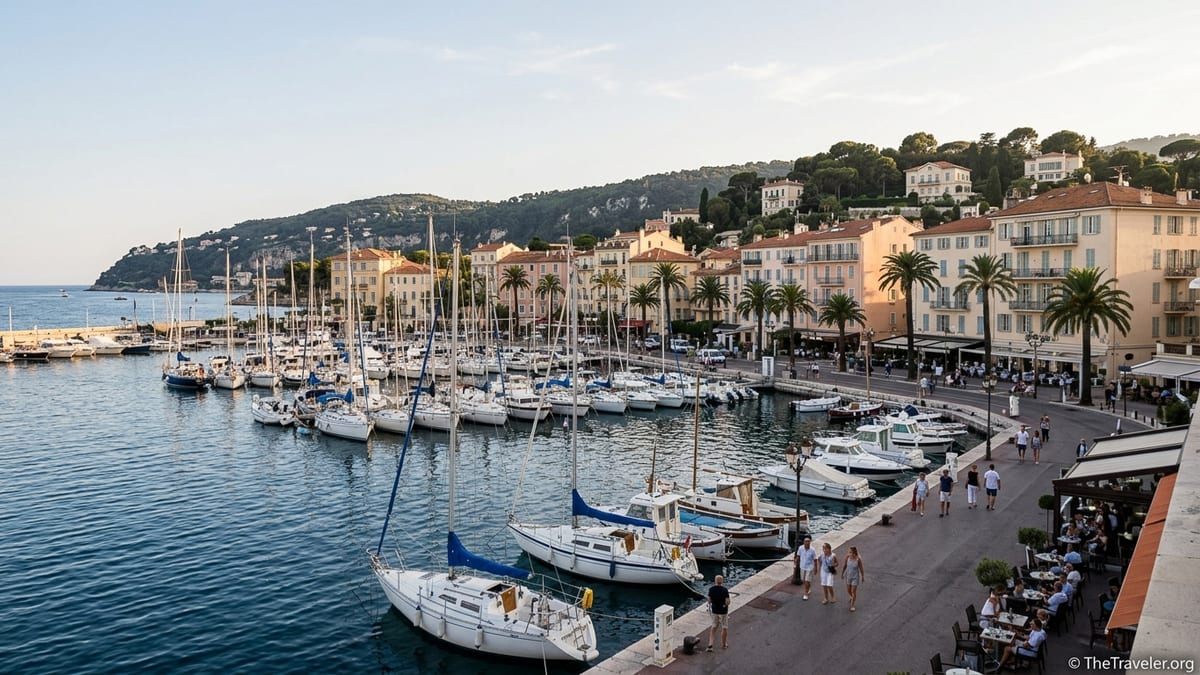
Getting Oriented: A Riviera Base Between Nice and Monaco
Beaulieu-sur-Mer sits on the main coastal train line between Nice and Monaco, which makes it an easy base for exploring the French Riviera without a car. Regional TER trains connect Beaulieu-sur-Mer station to central Nice in around 5 to 10 minutes, with dozens of services a day in normal timetable periods, and to Monaco in roughly 10 to 15 minutes depending on the service. Tickets are typically just a few euros each way, so visitors can move between city bustle and seaside calm without committing to long transfers.
The town itself is compact enough to cross on foot in 15 to 20 minutes. The station sits slightly inland on Place Georges Clemenceau, and from there it is a short downhill walk to the marina at Port de Beaulieu and the tree-lined Avenue des Hellènes. Many hotels and guesthouses are located between the station and the waterfront, so it is realistic to arrive by train, roll your suitcase down to your accommodation and not think about a car for the rest of your stay.
Because Beaulieu-sur-Mer is sandwiched between Villefranche-sur-Mer to the west and Saint-Jean-Cap-Ferrat to the south, it also works well for travelers who want a quieter atmosphere in the evenings while still being able to reach livelier dining and nightlife. A typical pattern is to spend days visiting nearby towns by train or bus, then return to Beaulieu for dinner by the marina or a stroll under the palm trees before turning in.
For practical questions on bus routes, local events or hiking conditions around Cap Ferrat, the municipal tourism office in town operates seasonally with an expanded summer team. English is commonly spoken at reception desks, but bringing key details such as accommodation address or preferred hiking routes written down can speed up conversations on busy days.
Step Into History at Villa Kérylos
One of the most distinctive experiences in Beaulieu-sur-Mer sits on a rocky outcrop just east of the town center. Villa Kérylos is an early 20th century mansion built as an idealized recreation of an ancient Greek noble house, complete with colonnaded courtyards, mosaics and marble details. The house was designed by architect Emmanuel Pontremoli and commissioned by archaeologist and patron Théodore Reinach, and it now operates as a historic monument and museum open to visitors.
Villa Kérylos is typically open daily with slightly shorter hours in winter and extended hours from spring into early autumn; as of 2026 standard closing time is around late afternoon, with selected evenings open later in the high season. Full-price entry for adults is around 15 euros, with reduced tickets for young visitors and students, and free admission for small children and certain categories such as job seekers and some disability card holders. There is also a combined ticket available that covers both Villa Kérylos and the celebrated Villa Ephrussi de Rothschild on nearby Cap Ferrat, usually valid for several days so you can spread the visits out rather than rushing them in a single afternoon.
Allow at least 60 to 90 minutes to explore the interior rooms and sea-facing terraces. Audio guides or printed explanations help make sense of the recreated Greek floor plans and the collection of objects, and the staff are used to welcoming international visitors who may have little background in classical architecture. Even travelers who are less interested in the scholarly side often find the contrast between the cool marble interiors and the open Mediterranean views striking, especially on warm days when the sea breeze moves through the colonnades.
The gardens around Villa Kérylos also reward slow exploration. Paths lead down toward the rocks, and you get views back to Beaulieu’s marinas and across to the peninsula of Cap Ferrat. Photography is allowed for personal use, and the location is particularly atmospheric just after opening in the morning or in the late afternoon when tour groups thin out and the light softens.
Elegant Streets, Belle Époque Villas and Local Life
Beaulieu-sur-Mer gained prominence at the end of the 19th century when winter tourism on the Riviera expanded and wealthy visitors from Paris, Britain and Russia commissioned grand villas and hotels. That heritage remains visible away from the waterfront in quiet residential streets lined with Belle Époque facades, wrought-iron balconies and citrus trees. A simple way to discover this side of town is to wander north from the port around the Boulevard Edouard VII and Avenue des Hellènes area, keeping an eye out for pastel-colored townhouses and decorative stonework.
Many of the grand villas are private or subdivided into apartments today, but you can still appreciate their exteriors and garden walls. Some hotels, such as those occupying former manor houses, preserve original staircases, stained glass and lounges; even if you are not staying there, you can sometimes stop in for a coffee on the terrace. This is an easy way to imagine what Beaulieu might have felt like a century ago when it hosted visiting royalty and industrialists escaping northern winters.
The town center around Avenue du Maréchal Foch and its side streets offers a more everyday slice of life. Here you will find bakeries selling morning croissants and still-warm baguettes, small supermarkets and specialist food shops, along with banks and pharmacies. Prices for coffee and pastries are often a little lower here than on the waterfront. Sitting on a terrace with an espresso and a simple tart or sandwich feels very different from the more polished harbor-side dining and gives a better sense of how locals use the town outside the peak of summer.
As in many French towns, markets are a good way to connect with seasonal produce. Beaulieu-sur-Mer hosts outdoor stalls on certain days for fruits, vegetables, flowers and sometimes regional specialties such as olives, tapenades and cheeses from the surrounding hills. Timetables and locations can shift slightly with the season, so it is worth checking posted notices in the main square or asking your accommodation host to confirm which mornings are best for a visit.
Harbor Dining and Evenings by the Marina
Port de Beaulieu is the heart of the town after sunset, particularly during the warmer months from late spring to early autumn. The yacht harbor is lined with cafes and restaurants ranging from casual pizzerias and brasseries to more refined Mediterranean tables with white tablecloths and carefully plated seafood. Typical menus feature local fish such as sea bream or sea bass, often grilled and served with roasted vegetables, along with risottos, pastas and classic dishes like steak tartare.
One example facing the marina is La Maison de Beaulieu, which presents itself as a traditional Mediterranean restaurant with an emphasis on homemade cooking. Here you might expect to pay somewhere in the region of 20 to 30 euros for a main course at dinner, with lunchtime set menus or plats du jour sometimes offering better value. Starters such as burrata with seasonal tomatoes or octopus salad, followed by grilled fish and a shared dessert, make for a leisurely meal that stretches into the evening as the harbor lights come on.
The ambiance along the quay is more about conversation than nightlife; Beaulieu-sur-Mer does not have a dense concentration of late-night bars or clubs. Many visitors pair dinner with a simple promenade along the harbor walls, watching boats come and go and listening to the low hum of engines and clinking rigging. For those who prefer a quieter stay, this is part of the town’s appeal. If you want a more energetic evening, it is simple to catch an early train into central Nice for drinks around the old town or the port district and return before services wind down for the night.
Prices at waterfront restaurants are understandably higher than inland, so travelers on tighter budgets sometimes opt for an aperitif by the port and then walk a few blocks back toward the station to dine in simpler bistros or pick up takeaway. Another option is to visit the marina in the late afternoon for a coffee or glass of wine during happy hour, when many places offer slightly reduced prices on drinks and snacks, and then seek out a more modest dinner later.
Walk the Coastal Path toward Saint-Jean-Cap-Ferrat
One of the most rewarding activities near Beaulieu-sur-Mer does not require any ticket at all: the coastal path that leads toward Saint-Jean-Cap-Ferrat. Starting near the eastern end of town, close to the small beach coves, a marked promenade follows the shoreline around low cliffs and through pockets of pine and Mediterranean scrub. Locals recommend this route in both directions, as it offers changing views back to Beaulieu and across to Villefranche-sur-Mer and Nice in the distance.
The path is generally well maintained, with stone paving or compacted earth in most sections and occasional railings along steeper drops. Sturdy walking shoes or trainers are preferable to beach sandals, particularly after rain when some rocks can be slick. In terms of difficulty, most reasonably fit visitors can handle the route, but there are sections with steps and moderate inclines, so it may be challenging for those with significant mobility issues or small children in strollers.
From Beaulieu to the village of Saint-Jean-Cap-Ferrat, you can expect a walking time of around 45 minutes to an hour one way at a relaxed pace, depending on how often you stop to take photographs or simply sit on a bench. Many travelers choose to walk in one direction and then return by bus, which generally runs back along the main road between the peninsula and Beaulieu, or to continue exploring the circular paths around the tip of Cap Ferrat before looping back to whichever bus stop or village cafe appeals.
The best times for the walk are early morning or late afternoon outside the hottest part of the day, especially in July and August. If you set out with a refillable water bottle, sun protection and perhaps a small picnic from Beaulieu’s bakeries or markets, you can turn the excursion into a half-day outing without any fixed schedule. On calm days, you will see small boats anchored in sheltered coves and hear little more than waves on the rocks and occasional voices from other walkers.
Day Trips: Nice, Monaco and the Hill Villages Above
A key advantage of staying in Beaulieu-sur-Mer is the ease of day trips without needing a car. To the west, Nice is an obvious destination, and regional trains typically cover the short distance in under 10 minutes depending on the service. This makes it realistic to spend an entire day exploring the city’s old town, museums and markets, then return to the quieter atmosphere of Beaulieu in the evening, without worrying about parking or long drives.
To the east, trains and buses link Beaulieu with Monaco and Menton. Monaco’s station is roughly a 10 to 15 minute ride away, and from there you can walk to the old town, the harbor or the casino district. Many visitors combine Monaco with a stop in the medieval village of Eze, perched on a hill above the sea. Reaching Eze village involves either a bus ride from the coast or a vigorous hike up from the seaside station at Eze-sur-Mer via the Nietzsche Path, which is steep and exposed to the sun but offers wide sea views.
Another option is to head inland to hill villages such as Eze village itself, La Turbie or Peille, either on organized excursions or via a combination of train and bus connections. These places offer narrow lanes, stone houses and cooler evening temperatures compared with the coast in midsummer. Travelers who base themselves in Beaulieu can leave after breakfast, spend the day exploring alleys and viewpoints, and still be back at the marina in time for a late dinner.
If you have more than a few days on the Riviera, you can also look west beyond Nice to destinations such as Antibes or Cannes using the same train line. From Beaulieu, trains typically run along the coast past Nice, Cagnes-sur-Mer and Antibes, making it possible to step out onto various seaside promenades and old towns. This flexibility is one reason some regular visitors choose Beaulieu-sur-Mer as their long-stay base rather than booking accommodation in larger and often busier cities.
Practical Tips: Getting Around and When to Visit
For most international visitors, the entry point to Beaulieu-sur-Mer is Nice Côte d’Azur Airport. From the airport, you can reach Beaulieu by taking a tram into central Nice and connecting to a TER train toward Monaco and Ventimiglia, or by using regional buses and occasional shuttle connections noted in local tourist information. Travel times vary with traffic and transfers, but as a rough guide, you can expect around an hour or less from landing to arriving in Beaulieu if connections are smooth and you are traveling with hand luggage.
Once in town, walking and public transport cover most needs. The train station and central stops on the main coastal road handle regular buses toward Nice, Villefranche-sur-Mer, Saint-Jean-Cap-Ferrat and Monaco. Tickets for regional buses are generally inexpensive, making them a good option for short hops, while trains are faster for longer stretches along the Riviera. In summer, services can be crowded at peak hours, so leaving a little earlier in the morning or later in the evening can make journeys more comfortable.
In terms of timing your visit, late spring and early autumn are often considered the most pleasant seasons in Beaulieu-sur-Mer. From May to June and September to early October, sea temperatures are usually warm enough for swimming, but crowds are lighter than in the core French holiday period of late July and August. Accommodation rates can also be more moderate, though the town is compact and popular enough that booking well ahead is still advisable for favored hotels and apartments.
Winter stays offer a quieter experience, with cooler but generally mild temperatures and the possibility of brisk coastal walks followed by warm meals indoors. Some restaurants and smaller shops may reduce hours in the off-season, and outdoor events or night openings at attractions like Villa Kérylos tend to focus on the warmer months. Checking specific dates for any temporary closures or renovation works before you travel can help you avoid disappointment if a particular site is high on your list.
The Takeaway
Beaulieu-sur-Mer rewards travelers who look beyond its well-known beaches to discover historic villas, elegant residential streets, working marinas and coastal paths that reveal the Riviera at a slower pace. Using the town as a base, you can move easily between major draws like Nice and Monaco while returning each evening to quieter squares and harbor promenades where local life continues year-round.
Whether you spend your days exploring Villa Kérylos and Belle Époque facades, walking the shoreline toward Saint-Jean-Cap-Ferrat, or catching short trains to hill villages and neighboring towns, Beaulieu offers a mix of culture, scenery and everyday French Riviera life. It is a place where you can enjoy the views that once attracted princes and writers while still shopping for fruit at a local market and sharing a simple seafood dinner overlooking moored boats.
For visitors seeking the Riviera without constant crowds or a heavy nightlife focus, Beaulieu-sur-Mer strikes a balance between accessibility and calm. With thoughtful planning and a willingness to wander away from the main beachfront, it becomes more than a beach stop: it turns into a small, livable seaside town that you may find yourself returning to on future trips.
FAQ
Q1. How do I get from Nice to Beaulieu-sur-Mer without a car? You can take a regional TER train from Nice’s main stations to Beaulieu-sur-Mer in around 5 to 10 minutes, or use coastal buses that stop in the town; both options are inexpensive and run frequently in normal operating periods.
Q2. Is Beaulieu-sur-Mer a good base for exploring the French Riviera? Yes, the town sits on the main coastal rail line between Nice and Monaco, so you can easily reach destinations such as Villefranche-sur-Mer, Eze, Monaco and Antibes while enjoying a quieter atmosphere in the evenings.
Q3. How much time should I allow to visit Villa Kérylos? Most visitors spend between 60 and 90 minutes exploring the interior rooms and terraces, plus extra time in the gardens and on the surrounding paths if the weather is pleasant.
Q4. Do I need to book tickets for Villa Kérylos in advance? Advance booking is not always essential outside peak periods, but checking current arrangements before your visit is sensible, especially in high season or during special evening openings when demand can be higher.
Q5. Are there hiking or walking trails starting from Beaulieu-sur-Mer? Yes, there is a popular coastal path that leads from Beaulieu toward Saint-Jean-Cap-Ferrat, offering sea views and access to further circular walks around the peninsula for those with time and suitable footwear.
Q6. What is the best time of year to visit Beaulieu-sur-Mer? Late spring and early autumn are often ideal, with warm but not extreme temperatures, swimmable seas and fewer crowds than during the peak holiday period of late July and August.
Q7. Is Beaulieu-sur-Mer suitable for families with children? The town’s compact size, calm atmosphere and accessible waterfront make it a comfortable choice for families, especially those who prefer quieter evenings and the option of short day trips rather than long drives.
Q8. How expensive are meals in Beaulieu-sur-Mer compared with Nice? Prices vary, but harbor-side restaurants in Beaulieu typically charge similar main-course prices to mid-range places in Nice, while simpler cafes and bakeries slightly inland can feel more budget-friendly for everyday breakfasts and lunches.
Q9. Can I visit both Beaulieu-sur-Mer and Monaco in one day? Yes, the short train ride between the towns makes it realistic to spend a morning or afternoon in Monaco and still have time for a harbor stroll or dinner back in Beaulieu the same day.
Q10. Do I need to speak French to get by in Beaulieu-sur-Mer? Basic French phrases are appreciated, but many people working in hotels, restaurants and the tourism office can communicate in English, so most visitors manage comfortably with a mix of simple French and English.