


More news on this day
Rapidly intensifying confrontation between Iran and several Gulf states is driving fresh concern for global aviation, tourism and maritime trade, as missile strikes, competing claims over the Strait of Hormuz and new embassy travel advisories reshape risk calculations for airlines, cruise operators and independent travelers.
Get the latest news straight to your inbox!
Strikes Across Bahrain, Kuwait, Qatar and Oman Deepen Regional Crisis
Recent days have seen Iran expand its missile and drone campaign across multiple Gulf states, with publicly available reporting describing coordinated attacks on targets in Bahrain, Kuwait, Qatar, Jordan and Oman. Coverage from regional and international outlets indicates that these strikes have largely focused on military facilities associated with United States and partner forces, but air raid sirens, intercepted projectiles and falling debris have heightened anxiety in densely populated areas and near key transport hubs.
Analysis from several conflict-monitoring groups describes the Iranian strikes as part of a broader effort to impose costs on states that host foreign bases and to pressure Washington over its own raids on Iranian territory and assets. While many projectiles appear to have been intercepted, the sheer geographic spread of the attacks has brought the risks closer to major passenger airports, seaports and logistics corridors that underpin tourism and business travel in the Gulf.
Publicly available information from shipping and aviation trackers shows that some carriers have already adjusted routings around the most exposed airspace and maritime zones. Even when infrastructure damage is limited, the pattern of recurring strikes is contributing to operational uncertainty that directly affects timetables, insurance premiums and traveler confidence.
Strait of Hormuz Closure Claims Rattle Global Shipping and Energy Routes
The Strait of Hormuz, the narrow maritime chokepoint linking the Persian Gulf with the wider Indian Ocean, has once again become the center of a high-stakes standoff. Iranian leaders have asserted that the strait is effectively closed to adversaries, while Western governments and maritime security agencies describe continued, but heavily contested, commercial traffic through the corridor.
Specialist industry bulletins report that at least one container vessel was recently hit and set ablaze in waters off Oman after an Iranian attack, underscoring how even isolated incidents can snarl traffic along one of the world’s most important energy and container routes. Maritime data firms cited in international coverage show a volatile pattern in transit numbers, with shipping companies alternately pausing voyages, rerouting via longer passages around the Arabian Peninsula or accepting higher insurance costs to maintain schedules.
For travelers, these tensions are already visible in the form of potential delays or rerouting for cruise itineraries, changes to embarkation ports and fluctuating prices on itineraries tied to the Gulf. Ports in the United Arab Emirates, Oman and Qatar, long marketed as stable gateways for fly-cruise packages and winter sun voyages, are now operating under heightened security postures as navies increase patrols and commercial captains weigh exposure to the strait.
Airspace Security Concerns Drive Rerouting and Schedule Disruptions
Missile and drone activity across Bahrain, Kuwait, Qatar and Oman is also reverberating in the skies. Flight-tracking data and airline statements show that a number of international carriers have begun diverting away from certain overflight corridors near the Strait of Hormuz, while some regional routes have seen reduced frequencies or temporary suspensions when threat levels spike.
Global aviation risk consultancies note that the Gulf region plays an outsized role in long-haul connectivity between Europe, Asia, Africa and Oceania. Hub airports in Doha, Kuwait City, Manama, Muscat and nearby Dubai serve as critical waypoints for millions of passengers every year. Heightened concern about stray missiles, drones or miscalculated interceptions near civilian aircraft is prompting airlines to file alternative flight plans that skirt the most sensitive airspace, often at the cost of longer flight times and higher fuel burn.
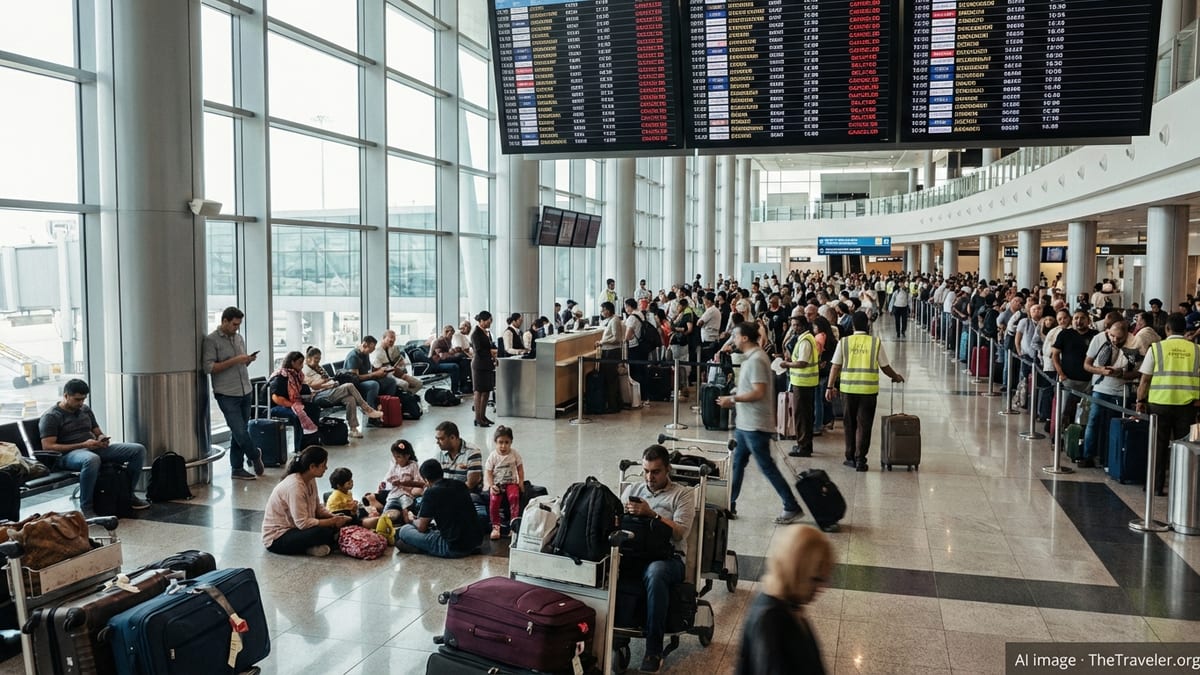
Travelers transiting these hubs are being advised by carriers and industry analysts to allow extra time for connections and to monitor itineraries closely for last-minute changes. While most flights continue to operate, rolling operational adjustments, coupled with occasional ground holds during nearby military activity, are creating an environment where predictability is harder to guarantee than in previous Gulf crises.
Thai Embassy Warnings Highlight Broader Shift in Travel Advisories
Thailand’s Ministry of Foreign Affairs has been among the more visible Asian actors responding to the deteriorating security picture. In recent months, official summaries of press briefings from Bangkok have described emergency coordination centers, evacuation efforts for Thai nationals in Iran and neighboring states, and persistent warnings to avoid high-risk areas or leave them as soon as practicable.
These briefings note that Thai embassies and consulates in the region have been working around closures of certain Gulf airspaces for commercial flights, including Bahrain, Qatar and Kuwait at various points, by arranging overland movements to alternative gateways in Saudi Arabia, Oman and Türkiye. The emphasis on registering with embassies, maintaining updated contact details and following local instructions reflects a wider shift from routine travel facilitation to crisis-management mode.
Other governments, including those in Europe, North America and East Asia, maintain their own layered advisory systems, many of which already categorize Iran as a destination to avoid entirely and urge heightened caution in nearby Gulf states. The combination of Iranian missile activity, U.S. retaliatory strikes and volatile conditions in the Strait of Hormuz is likely to keep these elevated warning levels in place, complicating tour operations, corporate travel planning and insurance coverage decisions.
Tourism and Cruise Markets Brace for Prolonged Uncertainty
Tourism boards and private-sector operators across the Gulf have spent years building the region’s reputation as a secure stopover and winter-sun destination, anchored by major airlines, cruise ports and high-profile cultural projects. The latest escalation with Iran, however, is testing that positioning. Industry analysts note that while leisure travel into the core city-states remains more resilient than during earlier regional conflicts, the optics of missile alerts, evacuated crew members and burning container ships are beginning to weigh on demand.
Package tours that combine city stays in Qatar, Bahrain or Oman with desert excursions, island resorts or regional cruise legs are under particular pressure. Tour operators are quietly revising itineraries to avoid the most sensitive maritime approaches, shifting departures to alternative ports or replacing Gulf segments altogether with Red Sea or Mediterranean alternatives when possible.
Looking ahead to the next peak travel seasons, booking patterns suggest that many travelers are adopting a wait-and-see approach rather than locking in long-haul trips through the Gulf. For now, the region’s connectivity advantages and resilient infrastructure are keeping most routes open, but the convergence of missile strikes, contested airspace and disruptive claims over the Strait of Hormuz has injected a level of uncertainty that global aviation, tourism and maritime shipping stakeholders will be watching closely in the weeks ahead.