


More news on this day
Fresh signals from Tehran that the Strait of Hormuz will not fully reopen without U.S. concessions are colliding with renewed U.S. warnings for Americans across West Asia, highlighting how quickly the region’s security and travel picture can shift for airlines, cruise lines, and anyone planning trips through Gulf hubs.
Get the latest news straight to your inbox!
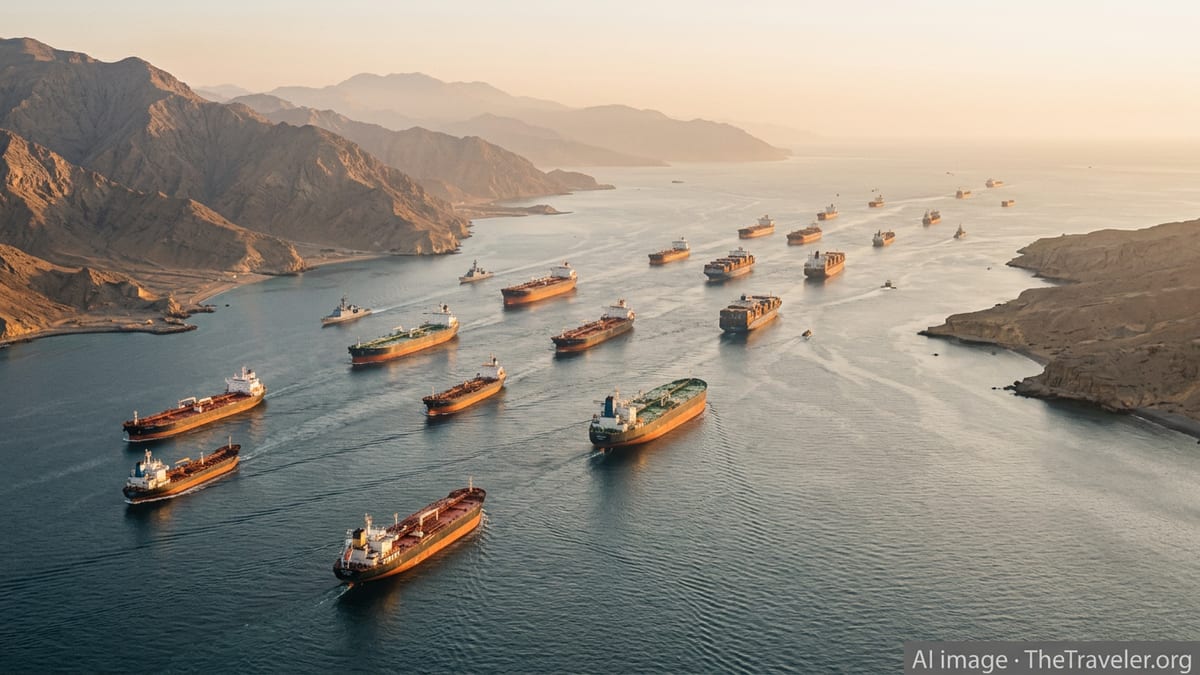
Hormuz remains a pressure point for global travel and trade
The Strait of Hormuz, a narrow maritime corridor linking the Persian Gulf with the Gulf of Oman and the Arabian Sea, is central not only to energy markets but also to the travel ecosystem that depends on stable Gulf airspace and port operations. When shipping risks rise, costs can cascade into airfare, cruise itineraries, cargo schedules, and even hotel demand in key stopover cities.
Recent coverage indicates Iran is again framing full reopening as conditional, rather than automatic. In August, multiple reports described Iranian officials linking any broader return to normal traffic through Hormuz to Washington meeting a package of political and economic conditions, including sanctions relief and other measures related to the conflict and its aftermath.
Even where discussion has focused on interim arrangements or managed routing, reporting has suggested Tehran is treating such steps as separate from a full reopening. That distinction matters for travelers because partial or inconsistent maritime access can keep insurance, freight and fuel volatility elevated, while regional security incidents can trigger sudden airspace changes.
Iran’s stated conditions: sanctions, compensation, and a security reset
Published coverage over recent weeks has outlined what Iranian officials have portrayed as prerequisites before Hormuz can fully reopen. Reported elements include lifting sanctions, releasing frozen Iranian assets, compensation for war-related damage, and changes to U.S. military posture and actions in and around Iran and allied groups in the region.
Reporting has also pointed to a June memorandum of understanding intended to extend a ceasefire and create a pathway toward resuming shipping. Subsequent coverage has described Tehran asserting that Washington has not met expectations tied to that framework and that a return to normal maritime flows depends on U.S. actions rather than maritime talks alone.
For travelers, the practical takeaway is that the Strait’s status may remain subject to political bargaining, not just navigational or technical deconfliction. That increases the chance of abrupt changes affecting cruise repositions, cargo-linked passenger routes, and the pricing of jet fuel and other inputs that can influence fares.
U.S. renews West Asia travel alert amid escalation risk
The U.S. State Department renewed a blanket travel alert for Americans in or traveling to the Middle East on Saturday, September 19, 2026, with public messaging emphasizing that the conflict with Iran has the potential to escalate rapidly and that travelers should anticipate disruptions.
State Department guidance circulating in recent alerts has urged heightened vigilance and specifically flagged the possibility of flight cancellations, periodic airspace closures, and broader travel disruptions. Those warnings are not limited to one destination: they are designed for Americans already in the region as well as those transiting through major hubs.
Separately, the State Department’s destination-specific advisories remain a key reference point for trip decisions. Iran continues to carry a Level 4 “Do Not Travel” advisory dated December 5, 2025. Other country advisories in the region vary and can change quickly, so travelers are advised to check their specific destination pages close to departure.
What it means for flights, stopovers, and Gulf hub itineraries
The renewed alert does not automatically mean flights will be canceled, but it reinforces that disruption risk is elevated and can be driven by factors outside travelers’ control, such as temporary route changes, airspace restrictions, or security incidents that ripple across airline networks. Gulf hubs function as connective tissue between North America, Europe, Africa, and Asia, so irregular operations can spread far beyond the Middle East.
Travelers using popular long-haul routings via the Gulf should expect airlines to adjust flight paths when necessary, which can add time in the air and complicate connections. Even when flights operate, schedule padding and last-minute gate or terminal changes are more likely during periods of heightened tension.
Because risks can shift within hours, travelers planning stopovers or tight same-day connections may want to build additional buffer time and verify rebooking rules before departure. Monitoring airline alerts and mobile app notifications becomes especially important when traveling through airports that are sensitive to regional airspace developments.
Practical steps travelers can take right now
Given the renewed U.S. messaging and the uncertainty around Hormuz, travelers with trips to the Gulf and surrounding areas should review official advisories for every country on their itinerary, including transit points. The most useful approach is to check for both broad regionwide alerts and destination-specific changes in the days leading up to travel.
It can also be prudent to plan for interruptions: confirm that passports and visas are in order, store digital and printed copies of key documents, and be prepared for itinerary changes if flights are rerouted or if airlines consolidate services. Travelers on complex itineraries may want to confirm how their carrier handles missed connections caused by operational changes.
Finally, travelers should pay attention to the possibility of sudden shifts in costs and availability. If maritime risks in and around Hormuz keep energy and shipping markets volatile, that can affect everything from airfare pricing to the timing and cost of goods and services that support tourism across the region.