


More news on this day
Manchester Airport issued a statement after flights were hit by delays and a small number of diversions linked in published coverage to a reported “hole in the runway,” with the airport framing the interruption as a short period of routine maintenance.
Get the latest news straight to your inbox!
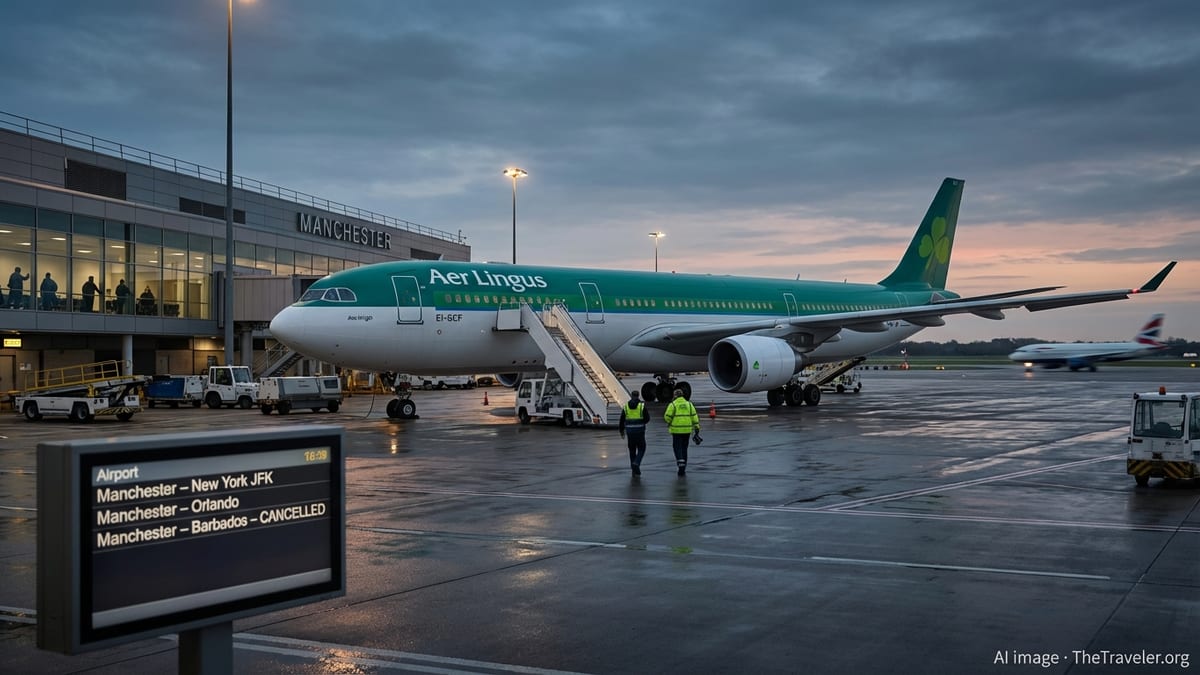
What happened and when flights were affected
Published coverage indicates disruption built on Saturday, September 19, 2026, when one of Manchester Airport’s runways was taken out of use for a short period to address a runway surface issue. While some reports described the defect as a “hole” or pothole, the airport’s publicly reported message characterized the event as routine maintenance and said the runway later reopened.
Travel monitoring coverage on the day described average departure delays of around 50 minutes during the worst of the disruption, underscoring how quickly a brief airfield restriction can ripple across a busy schedule. Even after normal runway availability resumes, aircraft and crews can be out of sequence, and departure slots may need to be rebuilt over several hours.
Local and national reporting also referenced a limited number of diversions during the period of reduced capacity, a common outcome when inbound aircraft arrive during a constraint and airlines or air traffic management opt to route flights to alternate airports rather than extend holding patterns.
Why a short runway restriction can cause long knock-on delays
Manchester Airport has two parallel runways, and its published community materials and operational guidance outline how runway use can shift depending on time of day and conditions. When capacity is temporarily reduced, arrival and departure flows can be constrained, and that congestion can persist even after the original issue is resolved.
Airline schedules add another layer of complexity. Many short-haul aircraft operate several sectors per day, and a delay to an early leg can cascade into later rotations. That means a flight showing only a short delay at midday can lengthen by evening if the inbound aircraft arrives late and crew duty limits or slot availability become tighter.
For passengers, the practical effect is often uneven disruption: some flights recover quickly, while others remain delayed longer as airlines prioritize repositioning aircraft, protecting later departures, and managing connections. The result can be a mixed picture on airport departure boards, even when the airfield is fully operational again.
The airport’s statement and the maintenance context
In published coverage, the airport’s statement emphasized that the runway closure was brief and undertaken so routine maintenance could be carried out. The statement did not describe the surface defect in technical terms, but it aligned with the airport’s broader public messaging that runways require continuous inspection and upkeep due to heavy use.
Manchester Airport’s own published runway-closure information provides additional context about planned maintenance: it schedules periodic nighttime closures for Runway 23R/05L (also referred to as Runway 1) during 2026, with operations routed to the other runway during those windows. The airport notes that routine work can include surface inspections, line painting, drainage tasks, and other maintenance activities that require closing a runway to traffic.
Not every maintenance event is planned, and airports also carry out short-notice or emergency work when defects are identified. In such cases, even a relatively short closure can create outsized disruption if it occurs during busy afternoon or evening periods.
What travelers can do if their Manchester flight was delayed
For travelers affected by Saturday’s disruption, published passenger guidance from airlines and airports generally emphasizes monitoring real-time status updates before leaving for the terminal. Manchester Airport’s public travel notices frequently advise passengers to check directly with their airline for the latest flight information, especially when wider operational issues can affect schedules.
Passengers dealing with a significant delay can also benefit from documenting key details such as the scheduled and actual departure time, any rebooking communications, and receipts for eligible expenses. In the UK, consumer rules can require airlines to provide assistance such as meals and refreshments when delays are long, and accommodation when an overnight stay becomes necessary, depending on circumstances and delay length.
For those traveling during periods of disruption, allowing extra time for check-in, security, and onward ground transport can help reduce missed connections on the landside as arrival waves bunch up. When several delayed flights land close together, terminal and baggage systems can feel the impact even after runway operations have returned to normal.
What to watch next at one of the UK’s busiest airports
By Sunday, September 20, the immediate runway restriction reported on September 19 had ended, but the episode highlighted how quickly surface defects can affect capacity at major hubs. Travelers planning to fly through Manchester in the days ahead may want to keep an eye on their airline’s app alerts and the airport’s live flight information, particularly during peak departure banks.
The airport’s published maintenance schedule also points to periodic single-runway operations during overnight windows throughout the year. While planned works are designed to minimize disruption, any unplanned airfield issue can amplify delays when combined with high traffic volumes, weather constraints, or network-wide airline challenges.