


More news on this day
The residential cruise ship MV Odyssey, operated by Florida-based Villa Vie Residences and once marketed as a "never-ending" global voyage, has left the Cambodian port of Sihanoukville with no passengers on board after abruptly halting operations and requiring all residents to disembark.
Get the latest news straight to your inbox!
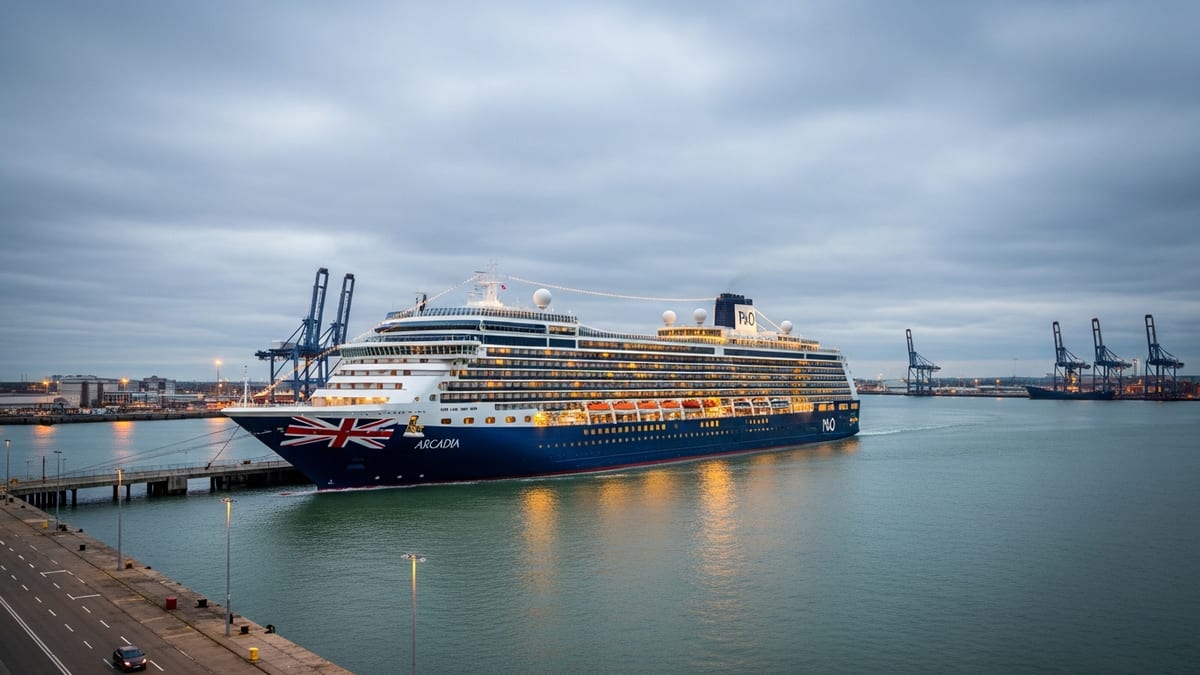
Residential "endless" voyage cut short in Sihanoukville
Publicly available information shows that the MV Odyssey departed Sihanoukville Autonomous Port shortly after midnight on Wednesday, November 4, 2026, sailing out with only crew and technical personnel on board. The move followed a suspension of operations announced in late October while the ship was docked in the Cambodian resort and port city on the Gulf of Thailand.
The Odyssey, a 650-passenger vessel, had been refitted and relaunched by Villa Vie Residences as a long-term, residential-style cruise promising years of continuous global travel. Reports indicate that around 203 residents, many of them American, were living on board when they were told in Cambodia that the voyage could not continue.
Cruise industry coverage and local Cambodian media report that residents were informed on October 28 that they had only hours to pack their belongings and leave the ship. The decision came after what the company described in public communications as a sharp and unsustainable rise in fuel costs, which it said had undermined the financial viability of the multiyear itinerary.
According to multiple news outlets, the abrupt halt brought an end to a voyage heavily marketed as an opportunity to “live at sea,” with some residents paying hundreds of thousands of dollars for suites structured as long-term or lifetime stays.
Soaring fuel prices and a fragile business model
In the weeks leading up to the shutdown in Cambodia, published coverage in international media documented warnings that the Odyssey’s operating model was under pressure from rising marine fuel prices. Reports citing company statements described increases of more than 300 percent in fuel costs compared with earlier projections used to design the three-year voyage.
Analyses in travel and business outlets note that residential and so-called “endless” cruises rely on relatively stable operating costs, because residents commit to long stretches of time onboard and pay upfront or on long-term plans. When costs surge, operators have limited ability to adjust pricing without disrupting contracts and expectations that attracted residents in the first place.
Commentary in financial and retirement-focused publications has highlighted how the Odyssey case underscores the particular risks of turning a cruise ship into a primary residence. Instead of conventional cruise guests booking a one- or two-week holiday, many Odyssey residents reportedly sold or rented out their homes on land, tying their housing and travel plans to the company’s ability to keep the ship in service.
Industry observers suggest that any future residential cruise products will likely face closer scrutiny over fuel hedging strategies, contingency funds, and the legal structure of long-term residence contracts, especially when marketed to retirees relying on fixed savings.
Residents stranded across Cambodia and beyond
When the Odyssey departed Cambodia empty of paying passengers, it left a trail of disrupted lives across Sihanoukville and other parts of the region. Local tourism officials quoted in regional news reports have said that nearly 100 former passengers remained in the Sihanoukville area in early November, while others dispersed to Phnom Penh, Siem Reap, neighboring countries, or back to their home nations.
Coverage from global and regional news organizations indicates that many of the passengers were responsible for arranging and paying for their own emergency flights, accommodation, and onward travel. Some residents shared through public social media posts and video channels that they were seeking short-term rentals or hotel rooms in Cambodia while they decided on next steps.
Consumer and travel reporting has also drawn attention to uncertainty over refunds and compensation. Residents have described, in publicly accessible interviews and online discussions, paying substantial sums in advance for cabins and onboard services. At the time of the ship’s departure from Sihanoukville without passengers, there was no widely reported, detailed plan for how outstanding claims would be resolved, beyond general statements about efforts to explore options.
The logistical challenges have extended beyond finances. Some residents reported that they had to pack up homes-worth of belongings in a matter of hours and arrange to move luggage off the vessel in an unfamiliar port, with visa rules, language barriers, and limited time adding complexity to already stressful departures.
Uncertain future for the Odyssey and its operator
While the Odyssey is now under way without passengers, reports from cruise and maritime outlets indicate that the ship’s long-term status remains unclear. Several media organizations have cited information suggesting that a lender has taken control of the vessel and that it may be sent to Singapore, a major regional maritime hub, for lay-up, inspection, or potential handover.
Publicly available corporate records and prior announcements show that Villa Vie Residences positioned the Odyssey as a flagship for an expanding residential cruise concept, including references to future vessels and itineraries. After the shutdown in Cambodia, however, much of the attention has focused on the company’s capacity to address resident concerns, potential legal claims, and its own financial stability.
Legal commentators following the case note that jurisdictional questions could complicate any dispute resolution, given that the ship sailed under one flag, was operated by a company registered in another country, and took on residents from multiple nationalities while docking in ports worldwide. How such issues are ultimately handled could influence future regulation and contract design for similar ventures.
For now, public tracking data and port information suggest that the Odyssey’s movements are limited to repositioning rather than commercial operations. There has been no widely reported new sales campaign or timetable for a relaunch, and published coverage describes the vessel as effectively laid up, with only essential crew remaining onboard.
Implications for would-be residents-at-sea
The empty departure of the Odyssey from Cambodia has prompted renewed debate among travelers considering long-term or full-time life at sea. Travel analysts and retirement planners interviewed in recent coverage have emphasized the importance of diversifying housing and lifestyle arrangements rather than relying entirely on a single cruise operator or vessel.
Specialist travel media point out that residential cruising remains a niche segment within the broader cruise market, one in which regulatory frameworks, consumer protections, and financial transparency are still evolving. Prospective residents are being encouraged, in those discussions, to examine ship ownership structures, financing arrangements, and contingency planning just as closely as they would study onboard amenities and itineraries.
For Cambodia and other ports that host long-stay and residential cruises, the Odyssey episode has also highlighted both opportunity and vulnerability. Sihanoukville had briefly functioned as a temporary hub for hundreds of relatively high-spending visitors, but the sudden end of the voyage also underscored how quickly such business can vanish when operators face financial strain.
As of early November 2026, the image of a large cruise ship sailing quietly away from Sihanoukville without a single paying passenger has become a potent symbol of the risks behind ambitious “live aboard forever” dreams, and a cautionary reference point for travelers contemplating tying their retirement plans to the fortunes of a single ship.